

High-Performance Sailing Rigs and Gear in 2026: Precision, Power and Responsible Innovation
A New Era of High Performance at Sea
By 2026, high-performance sailing rigs and gear have evolved from niche tools for elite race teams into a mature, globally relevant ecosystem that serves competitive sailors, performance cruisers, adventure charter operators and increasingly sophisticated family owners. What was once the closely guarded domain of America's Cup syndicates and The Ocean Race campaigns has been translated into solutions that are more accessible, more reliable and more aligned with the practical realities of long-distance cruising and premium leisure use across North America, Europe, Asia-Pacific, Africa and South America.
From the editorial vantage point of yacht-review.com, which has spent years analysing how grand-prix innovation filters into real-world yachts, the definition of "high performance" has shifted decisively. Speed remains a core metric, but it is now assessed alongside control, reliability, energy efficiency, crew safety and the quality of the onboard experience. Owners comparing independent yacht reviews and sea trials increasingly ask how a rig behaves in marginal conditions, how easily a short-handed crew can manage a powerful sail plan, what the lifecycle implications of advanced composites might be, and how digital systems can support better decision-making on long passages. In this context, high-performance rigs and gear are best understood as integrated platforms, where aerodynamics, structures, electronics and human-centred design converge to deliver both measurable gains and intangible confidence.
From Spars to Systems: How Rig Design Has Been Reimagined
The structural heart of the modern sailing yacht has undergone a profound transformation. Traditional aluminium spars and stainless-steel wire still dominate large sections of the legacy cruising fleet, particularly in North America and parts of Asia, yet the performance segment in 2026 is characterised by rigs conceived as fully integrated aero-structural systems rather than collections of discrete components. Leading composite spar specialists such as Southern Spars, Hall Spars and the sailmaking powerhouse North Sails have refined the art of matching mast stiffness, rigging elasticity and sail design into cohesive "aero platforms" that are tuned for specific operating profiles, whether that means transatlantic family cruising, Mediterranean regatta weeks or high-latitude expeditions.
For owners in the United States, the United Kingdom, Germany, France, Italy and Australia, the move to carbon spars has become less an indulgence and more a rational, quantifiable investment. Reduced weight aloft decreases pitching and rolling, improves comfort, and raises average passage speeds, which in turn allows busy professionals to execute more ambitious cruising itineraries within limited time windows. In yacht-review.com trials of new performance cruisers and refitted classics, available through its boats and model coverage, the difference in helm balance, acceleration out of tacks and responsiveness to trim between carbon and aluminium rigs is repeatedly confirmed by owners and test crews alike.
The influence of foiling monohulls and high-speed multihulls, especially those developed for the America's Cup, is clearly visible in contemporary rig geometry. Mast sections are optimised to act as fairings, sail plans are designed to minimise induced drag and maximise effective aspect ratio, and twist control has become a central design parameter rather than a secondary tuning consideration. The language of computational fluid dynamics, aero-elastic modelling and virtual prototyping, once confined to research labs and specialist forums, is now part of mainstream project discussions. Technical frameworks from organisations such as World Sailing and research disseminated by leading universities, including MIT, have helped owners, project managers and family offices engage more critically with design proposals and risk-reward trade-offs.
Materials and Structures: Carbon, Advanced Composites and Smart Rigging
In 2026, the materials narrative is no longer simply about "carbon versus aluminium" but about how advanced composites are deployed to achieve specific structural and performance outcomes. High-modulus carbon masts, designed using sophisticated finite element analysis and validated through non-destructive testing, are now standard on many semi-custom and custom performance yachts built in Europe, North America and Asia. Yards in Italy, France, the Netherlands and Germany routinely specify carbon spars on models that target discerning owners who expect not only superior performance but also enhanced resale value and charter desirability.
Standing rigging has followed a parallel trajectory. While stainless-steel wire and rod remain common in the mainstream market, the performance tier now frequently relies on carbon rigging or high-tensile fibre solutions such as PBO and Dyneema, which offer dramatic weight and windage reductions. The early concerns around durability, UV sensitivity and inspection complexity have been addressed through improved coatings, better termination methods and clearer service protocols, many of which are reflected in technical guidance from classification societies such as DNV and Lloyd's Register. Owners who once hesitated to embrace composite rigging now have more than a decade of field data, test results and refit experience to inform their decisions, supported by the analytical perspective that yacht-review.com brings to design and engineering coverage.
Running rigging has become an equally critical component of the performance equation. High-modulus cores based on Dyneema, Technora and other advanced fibres are now standard on halyards, sheets and key control lines, even on yachts primarily used for family cruising. The resulting reduction in stretch and friction allows crews to maintain precise sail shapes for longer periods, with less effort and fewer adjustments. On test sails from Scandinavia to New Zealand, yacht-review.com has consistently observed how upgraded rope packages, combined with low-friction hardware, materially change the way owners interact with their rigs, particularly older sailors and smaller family crews who benefit from reduced physical strain.
Structural integration between the rig and the hull has also advanced significantly. Naval architects in the United States, the United Kingdom, Italy and the Netherlands now treat mast steps, chainplates and bulkhead structures as part of a continuous load path, optimised using advanced modelling tools to avoid stress concentrations and fatigue hot spots. This is especially important for wide-beam, high-righting-moment designs and for performance catamarans, where fully powered-up sail plans generate loads that would have been considered extreme a decade ago. Owners evaluating new builds or major refits increasingly rely on independent expertise and resources like yacht-review.com to interpret these structural choices in the light of their intended cruising or racing profiles.
Sail Technology: Efficient Power for Real-World Conditions
Modern sail technology sits at the centre of the high-performance conversation, and by 2026 the available spectrum has become both broader and more clearly defined. Traditional woven dacron still serves entry-level and purely cruising-focused owners, but the performance and performance-cruising segments are dominated by laminates and custom membranes that are tailored to specific rigs and usage patterns. Sailmakers across North America, Europe, Asia and Oceania have refined their product lines so that owners can progress logically from robust cruising laminates to higher-end membrane solutions as their ambitions and budgets evolve.
Membrane sails, in particular, have become more accessible to performance cruisers in markets such as the United States, Canada, the United Kingdom, Germany and Australia. These sails are engineered with fibre layouts that match load paths identified in the design phase, providing exceptionally stable shapes across a wide wind range and delivering tangible gains in pointing ability, acceleration and light-air performance. In yacht-review.com cruising-oriented trials, owners upgrading from dacron to a carefully specified laminate or membrane inventory frequently describe the sensation as "sailing a different boat," with higher average speeds, reduced heel angles and less need for engine assistance in marginal conditions.
Downwind and reaching sail inventories have quietly but decisively transformed cruising behaviour. Code sails, furling asymmetric spinnakers and gennakers, combined with fixed or retractable bowsprits, allow even short-handed crews to harness large, powerful sail plans with a level of safety and predictability that would have been unthinkable in the era of symmetric spinnakers and poles. This is particularly relevant in regions such as the Mediterranean, Caribbean, Baltic Sea and Pacific Northwest, where long downwind legs and variable winds reward flexible and easily managed sail plans. Owners in Asia-Pacific cruising grounds, from Thailand to New Zealand, similarly report that accessible downwind power fundamentally changes routing decisions and passage planning.
The environmental dimension of sailmaking has gained urgency. Composite sails remain challenging to recycle, but leading lofts in France, Italy, the United States and Japan are experimenting with more recyclable fibres, modular panel designs and take-back programmes that reduce landfill impacts. As broader expectations around corporate responsibility rise, influenced by global initiatives tracked by bodies such as the World Economic Forum and the United Nations Environment Programme, owners now scrutinise not only performance specifications but also the sustainability claims of their sail suppliers. This aligns with a broader shift documented in yacht-review.com's sustainability coverage, where lifecycle thinking increasingly informs equipment choices across the yacht.
Hardware and Deck Systems: Precision, Power and Ergonomics
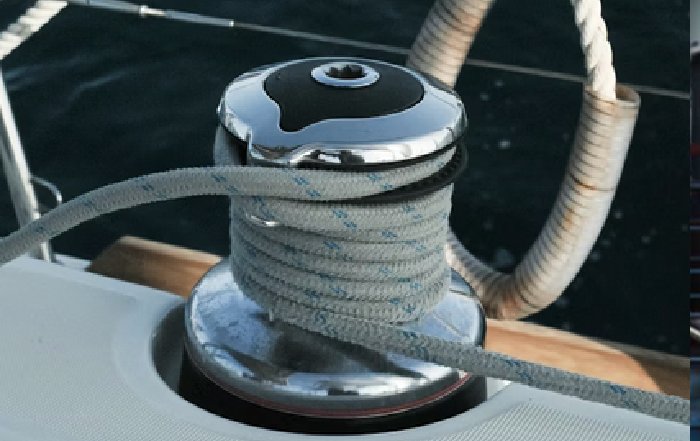
High-performance rigs demand equally refined deck hardware and control systems, and by 2026 the cumulative impact of incremental innovation in winches, furlers, travellers, clutches and blocks has fundamentally changed how owners and crews manage power. The emphasis is no longer on brute strength alone but on precision, ergonomics and the ability to manage high loads with small, often family-based crews.
Electric and hydraulic winches, once considered optional luxury items, are now specified as standard on many performance cruisers and premium production yachts aimed at markets in the United States, United Kingdom, Germany, Switzerland and Australia. Manufacturers in Italy and Switzerland have focused on integrating compact, efficient motors, improving noise control and optimising power draw to align with increasingly sophisticated onboard energy systems that often include large lithium battery banks and renewable inputs. For owners who approach yacht ownership with a business mindset, these developments are significant, as they enable powerful rigs to be managed safely by fewer crew, reduce fatigue and extend the useful sailing life of older or less physically robust sailors.
Furling systems have continued to evolve in both reliability and performance. Modern headsail furlers feature low-friction bearings, robust drums and sophisticated structural integration, while in-boom and in-mast furling mainsails have become lighter, more tolerant of imperfect furling technique and more closely aligned with performance expectations. Long-held assumptions that slab-reefed conventional mains are always superior for serious sailors are increasingly challenged by real-world data and owner feedback. yacht-review.com sea trials and refit case studies show that, when properly engineered and installed, furling mains can deliver impressive efficiency while significantly enhancing safety by keeping crews in the cockpit in heavy weather.
Improvements in low-friction hardware-ceramic-bearing blocks, high-load rings, advanced travellers and deck organisers-have further reduced the energy required to trim sails and adjust rig settings. This not only enhances performance by allowing more precise and frequent adjustments but also contributes to safety, as fewer high-load operations require crews to leave secure positions or rely on marginally sized equipment. Training bodies such as US Sailing and the Royal Yachting Association increasingly incorporate modern hardware and rig-tuning practices into their advanced curricula, reinforcing a culture in which owners understand and exploit the capabilities of the gear they invest in.
Digital Integration: Smart Rigs and Data-Driven Sailing
The most profound shift since the mid-2010s has arguably been the integration of digital technology into both the design and operation of high-performance rigs. By 2026, "smart rigs" are no longer experimental; they are a growing reality on high-end performance cruisers, race yachts and even some premium production models.
Load sensors embedded in shrouds, forestays, backstays and key running rigging points now provide continuous data streams on tension and dynamic loads. This information, fed into onboard displays and increasingly into cloud-based analytics platforms, allows skippers to keep loads within safe envelopes, tune rigs with unprecedented precision and spot emerging issues before they become failures. When combined with mast-bend sensors and sail-shape analysis tools, these systems enable owners to correlate rig adjustments with performance metrics such as speed, leeway, heel angle and motion comfort.
Navigation and performance software has matured in parallel. Integrated platforms now combine high-resolution weather data, polar performance curves, routing algorithms and real-time rig-load feedback into dashboards that support informed decisions about sail selection, reefing points and course optimisation. For business-oriented owners, particularly in markets such as the United States, United Kingdom, Germany, Singapore and Hong Kong, this convergence of operational data and predictive modelling mirrors the decision-support tools used in corporate environments, enhancing both enjoyment and risk management. Readers interested in how these systems are reshaping yacht operations can explore the dedicated technology insights on yacht-review.com, where digital integration is a recurring focus.
On the design side, the concept of the digital twin has become mainstream. Naval architects and spar designers routinely create virtual models of rigs and hulls that are tested across thousands of simulated conditions before a single laminate is laid. This approach reduces the need for over-engineering, sharpens performance targets and improves safety margins by revealing potential failure modes in silico. The methodology parallels developments in aerospace and automotive industries, as described in industrial analyses by groups such as Siemens Digital Industries, and it continues to push yacht design toward a more scientific, data-validated discipline.
Safety, Reliability and Professional Risk Management
Operating at the frontier of performance inevitably brings safety and reliability into sharp focus. High-performance rigs and gear work closer to material and structural limits than conservative cruising setups, which means that design quality, build integrity, maintenance discipline and crew training collectively determine whether the system delivers exhilarating performance or unacceptable risk.
In 2026, the most respected yards and suppliers in Europe, North America and Asia treat safety as a core differentiator. Rig surveys now frequently include non-destructive testing, endoscopic inspections of critical structural interfaces, thermal imaging of electrical and hydraulic components associated with powered systems, and detailed analysis of load histories where sensor data is available. Insurers in major markets such as the United States, United Kingdom, Germany, Switzerland and Australia increasingly incorporate rig specification and maintenance records into underwriting decisions, particularly for yachts with carbon spars, composite rigging and powerful sail plans. Owners who follow yacht-review.com's marine business coverage understand that rig decisions now carry direct financial implications in terms of insurance premiums, residual values and charter attractiveness.
Training has kept pace with these technical developments. Offshore safety courses and advanced cruising programmes, delivered by national authorities and organisations such as the Offshore Racing Congress, now emphasise rig management, heavy-weather sail handling, damage control and emergency de-rigging procedures. For family crews cruising in remote regions of Asia, Africa and South America, where professional support may be days or weeks away, the ability to diagnose early signs of fatigue, execute controlled depowering strategies and improvise repairs can be critical. In interviews and owner reports gathered by yacht-review.com, many high-performance yacht owners now view advanced rig-handling and emergency courses as an essential complement to their hardware investments, rather than optional extras.
Sustainability and Lifecycle Thinking in Rig Choices
Sustainability is no longer a peripheral issue; it is a structural factor shaping design, procurement and operational decisions across the yachting industry. High-performance rigs and gear, with their reliance on carbon fibre, advanced polymers and energy-intensive manufacturing processes, sit at the centre of this debate. The critical question in 2026 is not whether these materials are "green" in isolation, but how they perform when assessed over an entire lifecycle that includes build, operation, maintenance and end-of-life management.
Manufacturers in Europe, North America and Asia are beginning to publish more transparent data on embodied energy, recycling options and expected service life. Some spar builders now offer take-back schemes or partner with specialist recyclers to recover fibres and metals, while a growing number of sailmakers experiment with bio-based resins, partially recycled fibres and panel designs that simplify disassembly. Owners interested in aligning their rig choices with broader environmental values can find context in yacht-review.com's dedicated sustainability section, which explores both product innovations and operational strategies, such as optimised routing and sail plans that reduce engine hours.
Regulatory and normative frameworks are also evolving. While private yachts are not yet subject to the same decarbonisation mandates as commercial shipping, initiatives led by bodies such as the International Maritime Organization are gradually influencing expectations and best practices across the broader maritime ecosystem. Forward-looking owners in countries such as the Netherlands, Denmark, Sweden and Singapore increasingly view early adoption of more sustainable rig and gear solutions as a way to future-proof their assets against potential regulatory changes, as well as to meet the expectations of environmentally conscious charter guests and corporate stakeholders.
Global and Regional Perspectives: One Technology, Many Contexts
Although the core technologies behind high-performance rigs are globally shared, their application varies significantly by region, reflecting local sailing conditions, service infrastructure and cultural preferences.
In North America, particularly the United States and Canada, performance-cruising rigs that combine carbon spars, powerful sail plans and robust furling systems dominate the upper end of the market. Long coastal passages, mixed weather patterns and a strong do-it-yourself maintenance culture encourage solutions that balance speed with ruggedness and serviceability. In Europe, especially in France, Italy, Spain and the Netherlands, a dense network of specialist yards, sailmakers and rigging firms supports more aggressive experimentation, with lessons from offshore racing circuits rapidly influencing semi-custom cruising projects.
Northern European markets such as Germany, Sweden, Norway, Denmark and Finland place a premium on reliability and ease of operation in challenging conditions. Carbon rigs, heated line lockers, robust deck hardware and conservative safety margins are common features on yachts designed for Baltic and North Sea operations. In the Asia-Pacific region, including Australia, New Zealand, Japan, South Korea, Thailand, Malaysia and Singapore, owners frequently prioritise light-air performance, UV resistance and gear that can withstand intense solar exposure and sudden tropical squalls, leading to specific choices in sailcloth coatings, rigging protection and deck hardware finishes.
Emerging performance-oriented markets in South Africa, Brazil and other parts of Africa and South America are characterised by long distances between service hubs and a strong emphasis on self-sufficiency. Here, high-performance rigs are often specified with an eye toward simplicity, redundancy and conservative engineering, even when carbon spars and advanced sails are part of the package. yacht-review.com's international and global coverage regularly highlights how these regional nuances shape not only technical specifications but also the business strategies of builders, sailmakers and equipment manufacturers seeking to serve a genuinely global clientele.
The Human Dimension: Family, Lifestyle and Community
Technology alone does not explain the appeal of high-performance rigs and gear; the human experience on board is the ultimate measure. Across the United States, United Kingdom, Germany, Canada, Australia and beyond, families are increasingly choosing performance-oriented cruisers that allow them to cover greater distances in limited vacation time while maintaining high levels of comfort and safety. Faster passage times, more engaging sailing in light airs and better control in heavy weather translate directly into richer experiences and more ambitious itineraries.
In Mediterranean centres such as France, Italy and Spain, and lifestyle-focused hubs from Florida to Sydney, owners appreciate the way modern rigs transform day sailing and weekend cruising. Powerful yet easily managed sail plans turn what might once have been routine coastal hops into genuinely rewarding sailing experiences, encouraging owners and guests to hoist sails rather than defaulting to engine power. The social ecosystem around high-performance sailing-from regattas and rallies to online communities and owner gatherings-reinforces this trend, as sailors share tuning insights, gear recommendations and sea stories that demystify advanced equipment.
For yacht-review.com, which devotes substantial coverage to lifestyle features and community stories, the key observation is that well-conceived high-performance rigs do not make sailing more complicated; they make it more accessible, more controllable and more rewarding for a broader spectrum of owners. Business leaders, entrepreneurs and professionals who approach yacht ownership with a strategic mindset increasingly see these rigs as enablers of high-quality time with family and friends, delivered through platforms that combine engineering excellence with aesthetic appeal and long-term value.
The Road Ahead: Convergence of Performance, Technology and Responsibility
Looking toward the latter half of the decade, the trajectory of high-performance sailing rigs and gear is clear. Integration will deepen, as aerodynamics, structures, electronics and data analytics converge into ever more coherent systems. Digital twins will become more sophisticated, onboard sensors more pervasive, and decision-support tools more intuitive. At the same time, expectations around sustainability, transparency and responsible ownership will continue to rise, driven by broader societal trends and by the values of a new generation of yacht owners.
For the global audience of yacht-review.com, spanning racers, performance cruisers, family sailors and marine professionals across North America, Europe, Asia, Africa and South America, the central challenge and opportunity lies in making informed, context-aware choices. Whether commissioning a new build, planning a major refit or evaluating a brokerage acquisition, understanding the capabilities, trade-offs and lifecycle implications of modern rigs and gear is essential to aligning a yacht with its intended mission, crew profile and operating environment.
In this landscape, experience, expertise, authoritativeness and trustworthiness are critical. Owners benefit from working with reputable designers, builders and equipment suppliers, from consulting independent perspectives such as those provided in yacht-review.com's news and analysis, and from engaging with the wider sailing community that continually refines best practices through real-world use. As 2026 unfolds, high-performance rigs and gear remain at the heart of what makes contemporary sailing so compelling: a sophisticated synthesis of speed, control and efficiency, balanced by a growing commitment to safety, responsibility and the enduring human desire to explore the world under sail.