

Virgin Voyages: How a Disruptor Redefined Luxury at Sea
When Virgin Voyages entered the global cruise market, it did so with the unmistakable confidence of the Virgin Group, the multinational empire built by Sir Richard Branson. What began as a daring experiment has matured into one of the most influential case studies in contemporary maritime hospitality, a brand whose impact is now felt across yacht design, cruise operations, sustainability strategy, and experiential travel worldwide. For the editorial team and readership of Yacht-Review.com, Virgin Voyages has become a touchstone for understanding how superyacht-inspired aesthetics, technology-led service models, and values-based leadership can converge into a cohesive, commercially successful proposition at sea.
Unlike legacy cruise operators that built their reputations on scale, tradition, and multigenerational family offerings, Virgin Voyages deliberately targeted a different audience: adults seeking curated, design-forward, and immersive voyages that feel closer to boutique hotels and private yachts than to conventional large-ship cruising. That decision, initially viewed as a bold risk, now appears prescient, as demand for tailored, experience-rich, adult-centric travel has surged across North America, Europe, and Asia. In 2026, the brand's trajectory provides a powerful lens through which to examine the evolving expectations of affluent travelers in the United States, United Kingdom, Germany, Canada, Australia, and beyond, and it resonates strongly with the core themes of Yacht-Review.com's reviews and analysis.
From Concept to Brand: A Vision Reframed
The origins of Virgin Voyages date back to 2014, when the Virgin Group, in partnership with Bain Capital, formally announced its intention to enter the cruise sector under the working name Virgin Cruises. At that time, the market was dominated by established giants such as Royal Caribbean Group, Carnival Corporation, and Norwegian Cruise Line Holdings, companies whose fleets and operational frameworks had been refined over decades. Rather than attempting to emulate these incumbents, Virgin set out to challenge the assumptions underpinning their business models.
The appointment of Tom McAlpin, formerly a senior executive at Disney Cruise Line, as founding CEO was a pivotal strategic decision. McAlpin brought deep operational knowledge and a reputation for guest-centric innovation, ensuring that the new company's ambitions would be grounded in practical expertise. Under his leadership, the team interrogated nearly every aspect of the traditional cruise experience: dining formats, entertainment, cabin design, pricing structures, and even the language used to describe guests and crew. The subsequent rebranding from "Virgin Cruises" to "Virgin Voyages" in 2016 signaled a fundamental shift in positioning. The word "voyages" was carefully chosen to evoke a sense of narrative and discovery rather than simple vacationing, aligning with the brand's early tagline of delivering "an epic sea change for all."
For those who follow the evolution of yacht and cruise design through the lens of Yacht-Review.com's design coverage, this period marked the emergence of a philosophy that would come to define Virgin Voyages: the conviction that every technical or commercial decision should ultimately enhance the emotional quality of the journey. The early conceptual work was less about ship count and tonnage, and more about creating a coherent lifestyle proposition that could stand alongside the most admired boutique hotels and private yacht experiences in Europe, North America, and Asia-Pacific.
Building the "Lady Ships": Design, Scale, and Identity
Central to that proposition was the partnership with Fincantieri, the Italian shipbuilding group renowned for its work on both cruise ships and naval vessels. The contracts signed in 2015 for a series of mid-sized ships-each around 110,000 gross tons and carrying roughly 2,700 guests with 1,150 crew-reflected a deliberate choice not to chase the ever-larger megaship trend. Instead, Virgin Voyages prioritized intimacy, maneuverability, and a scale that would allow for both social vibrancy and personal retreat, a balance that is often celebrated in Yacht-Review.com's boats section.
The brand's design collaborators read like a roll call of contemporary hospitality and interior design talent. Studios including Tom Dixon Design Research Studio, Roman and Williams, and Concrete Amsterdam were tasked with creating spaces that felt more akin to urban members' clubs or avant-garde hotels than to the theatrical, sometimes ornate interiors of traditional liners. Cabins were conceived with a strong nod to yacht ergonomics, using flexible furniture, smart storage, and clean lines to maximize perceived space. Public areas were layered with distinct atmospheres-from quiet, contemplative lounges to high-energy nightlife venues-connected by a visual language of bold color, curated art, and maritime-inspired forms.
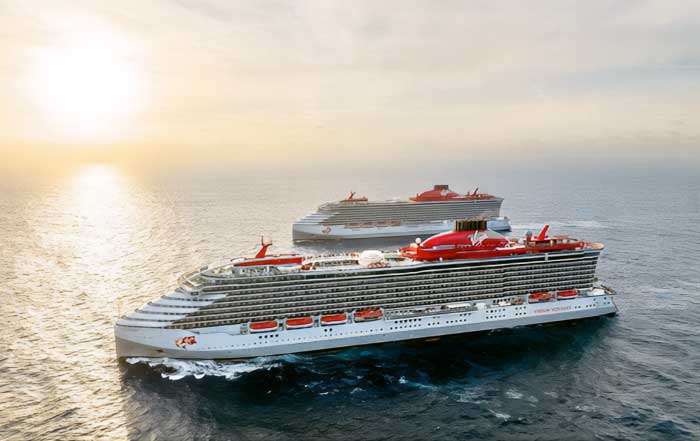
The decision to christen the vessels as "Lady Ships," beginning with Scarlet Lady, drew on Virgin Atlantic's heritage and infused the fleet with a coherent identity. Scarlet Lady, Valiant Lady, Resilient Lady, and the forthcoming Brilliant Lady each carry their own aesthetic nuances and regional flavor, yet share a consistent design DNA rooted in confidence, empowerment, and contemporary luxury. By 2026, this family of ships has become a recognizable presence in ports from Miami to Barcelona, Piraeus, and Sydney, and their silhouettes and livery have become a frequent subject of analysis in design-focused media, including the visual and technical narratives explored on Yacht-Review.com's design pages.
Navigating Disruption: COVID-19, Recovery, and Realignment
The initial commercial rollout of Virgin Voyages coincided with one of the most turbulent periods in modern travel history. The global onset of the COVID-19 pandemic in 2020 forced the postponement of Scarlet Lady's inaugural season and effectively froze the wider cruise industry. While this disruption created significant financial and operational challenges, it also gave Virgin Voyages time to refine its product, strengthen its health and safety protocols, and sharpen its brand storytelling.
By the time Scarlet Lady welcomed her first paying guests in late 2021, sailing initially from Portsmouth in the United Kingdom before repositioning to Miami, consumer expectations had changed. Travelers in the United States, Europe, and Asia-Pacific were increasingly seeking smaller-scale, design-led, and wellness-oriented experiences rather than purely mass-market leisure products. Virgin Voyages' adult-only model, open-air social spaces, and emphasis on personal choice aligned closely with this emerging mindset, accelerating its acceptance among younger affluent travelers and seasoned cruisers alike.
From a business perspective, the company's resilience during this period offers valuable insight for industry observers who follow the commercial dynamics of maritime travel through resources such as Yacht-Review.com's business analysis. Virgin Voyages leveraged its relatively small fleet and agile corporate structure to pivot quickly, adjusting itineraries, revisiting pricing strategies, and investing in digital engagement. Its eventual rebound contributed to a broader narrative of recovery in cruise tourism, particularly in North America and Europe, where ports and suppliers relied heavily on the return of passenger volumes.
An Adult-Only Proposition: Culture, Curation, and Differentiation
One of Virgin Voyages' most distinctive strategic choices remains its adults-only policy. By restricting voyages to guests aged 18 and over, the company freed itself from the need to design around family programming, water parks, and children's clubs, and instead curated an onboard culture oriented entirely around adult socialization, relaxation, and self-expression. This decision positioned the brand in a unique space between traditional premium cruise lines and high-end resort concepts in destinations such as the Caribbean, Mediterranean, and Southeast Asia.
Dining is a central pillar of that experience. Virgin Voyages eliminated the conventional main dining room and buffet model, replacing it with more than twenty distinct venues, each with its own culinary identity and no additional cover charges. Collaborations with chefs such as Brad Farmerie, Sohui Kim, and Matt Lambert brought a cosmopolitan range of flavors, from elevated street food and plant-based menus to refined tasting experiences. This approach resonated strongly with travelers from food-focused markets such as Italy, France, Spain, and the United States, and mirrored broader trends in luxury hospitality documented by organizations like The World's 50 Best Restaurants.
Entertainment and nightlife were similarly reimagined. Instead of Broadway-style productions, Virgin Voyages commissioned immersive, sometimes experimental performances from creative collectives including The 7 Fingers and PigPen Theatre Co., staged in flexible spaces like The Red Room and The Manor. Drag shows, cabaret, and participatory experiences complemented DJ-led parties and live music, creating a social environment that felt closer to the nightlife scenes of London, Berlin, New York, and Barcelona than to conventional cruise theaters. The overall tone-playful, inclusive, and deliberately informal-aligns closely with the lifestyle narratives explored in Yacht-Review.com's lifestyle features, where luxury is increasingly defined by authenticity and personal choice rather than formality.
Sustainability as Strategy, Not Slogan
From its earliest planning stages, Virgin Voyages integrated sustainability into the core of its business model rather than treating it as an afterthought. Partnerships with technology providers such as Climeon and Scanship enabled the deployment of waste-heat recovery systems, advanced wastewater treatment, and energy-efficient solutions that reduce fuel consumption and emissions. The company's decision to eliminate single-use plastics on board, invest in optimized hull forms, and pursue responsible sourcing for food and materials reflects a holistic approach that aligns with evolving regulatory frameworks and consumer expectations.
In 2023 and 2024, Virgin Voyages deepened its alignment with broader decarbonization efforts by working alongside Carbon War Room and Rocky Mountain Institute, organizations that advocate for market-based solutions to climate challenges. These initiatives are consistent with the International Maritime Organization's strategy to reduce greenhouse gas emissions from shipping, a framework that continues to shape investment decisions across the global maritime industry. Readers who wish to understand the wider context of these efforts can explore resources from the International Maritime Organization and environmental bodies such as the UN Environment Programme, which outline the policy and scientific backdrop against which brands like Virgin Voyages must operate.
For our audience at Yacht-Review.com's sustainability hub, Virgin Voyages now serves as a benchmark for how a large-scale passenger operation can integrate clean technologies, circular design principles, and community-focused destination strategies without compromising commercial performance. Its private destination, The Beach Club at Bimini, designed with solar power, habitat-sensitive planning, and controlled visitor flows, illustrates how resort-style infrastructure can be aligned with local ecosystems and community interests, a topic of increasing importance in regions from the Caribbean to Southeast Asia and the South Pacific.
Technology, Data, and the Connected Voyage
The guest experience on Virgin Voyages is underpinned by a sophisticated digital ecosystem that reflects the broader technological shifts shaping both the cruise and superyacht sectors. Upon embarkation, passengers receive a wearable device known as The Band, which functions as a cabin key, onboard payment method, and identifier within the ship's digital network. Integrated with the Virgin Voyages app, this system enables contactless boarding, seamless reservations, tailored recommendations, and personalized notifications.
Behind the scenes, data analytics inform everything from energy management and inventory planning to entertainment scheduling and spa staffing. Smart cabin systems allow guests to adjust lighting, temperature, and blinds via tablet or voice interface, while the "Shake for Champagne" feature-activated by physically shaking a smartphone-has become emblematic of the brand's playful integration of technology and service. For readers interested in how such innovations compare with developments in the yacht sector, Yacht-Review.com's technology section provides further exploration of digital integration, automation, and AI-driven personalization in marine environments.
From an engineering standpoint, Virgin Voyages' vessels incorporate advanced stabilizer technology, hydrodynamic hull optimization, and vibration-reduction strategies developed in collaboration with Fincantieri and classification societies such as DNV. These investments not only reduce energy consumption but also enhance comfort and acoustic performance, narrowing the experiential gap between large cruise ships and high-end private yachts. In markets like Germany, the Netherlands, Norway, and Denmark, where engineering excellence is highly valued, this technical sophistication has contributed significantly to Virgin Voyages' credibility among both consumers and industry professionals.
Global Deployment and Market Penetration
By 2026, Virgin Voyages has established a genuinely global footprint, with itineraries designed to appeal to travelers across North America, Europe, Asia, and Australasia. Scarlet Lady continues to anchor operations in Miami, serving the Caribbean and the Bahamas, while Valiant Lady has consolidated its presence in the Western Mediterranean, connecting ports in Spain, France, and Italy. Resilient Lady has expanded the brand's reach into the Eastern Mediterranean and Adriatic, with itineraries touching Greece, Croatia, and Turkey, and seasonal deployments have begun to test markets in Australia and New Zealand.
The long-awaited Brilliant Lady, whose deployment was reshaped by post-pandemic shipyard and logistics constraints, is now central to Virgin Voyages' expansion into new regions, including potential routes in Northern Europe and Asia. These itineraries are designed to balance marquee ports-such as Barcelona, Civitavecchia (Rome), and Singapore-with emerging destinations that value sustainable, higher-yield tourism. This approach supports local economies while offering guests a richer cultural experience, echoing the travel philosophy that underpins Yacht-Review.com's travel features, where itineraries are evaluated not only for scenery but for depth of engagement and regional authenticity.
The brand's expansion has had measurable economic impact. In ports across the United States, United Kingdom, Italy, Greece, and Australia, Virgin Voyages has contributed to tourism recovery, local procurement, and job creation, especially in the wake of COVID-19 disruptions. Reports from organizations such as the World Travel & Tourism Council highlight the importance of high-value, experience-led tourism in rebuilding regional economies, and Virgin Voyages' model aligns closely with those recommendations. For readers keen to situate this within the broader global context, Yacht-Review.com's global section offers commentary on how cruise and yacht movements intersect with international economic and regulatory trends.
Recognition, Reputation, and the Power of Narrative
Awards and third-party recognition have played an important role in consolidating Virgin Voyages' reputation. Since 2021, the company has garnered accolades from Cruise Critic, Travel + Leisure, and the World Travel Awards and more, with particular praise directed at its design, culinary program, sustainability initiatives, and guest satisfaction levels. Such recognition has been amplified by coverage in influential outlets across the United States, United Kingdom, Germany, and Asia, reinforcing the perception of Virgin Voyages as a thought leader rather than a mere newcomer.
Equally significant is the brand's narrative control. Through strong visual identity, consistent messaging, and a clear articulation of values, Virgin Voyages has cultivated a community of repeat guests who see themselves not simply as customers, but as participants in a broader lifestyle movement. This sense of belonging, fostered both onboard and via digital channels, mirrors trends observed in premium automotive, fashion, and hospitality sectors, where brands such as Tesla, Soho House, and Aman have leveraged community-building to deepen loyalty. For those tracking such developments, Yacht-Review.com's news coverage frequently highlights how narrative and brand architecture influence purchasing decisions in the yachting and cruising markets.
Leadership, Culture, and the Human Dimension
The transition from founding CEO Tom McAlpin to current CEO Nirmal Saverimuttu has been managed with careful continuity. Saverimuttu, who was involved in the company's early commercial strategy, has maintained the core pillars of design, sustainability, and adult-only positioning while accelerating geographic expansion and deepening trade partnerships. Under his leadership, Virgin Voyages has emphasized diversity, inclusion, and employee empowerment as central to its culture, recognizing that the onboard atmosphere is ultimately shaped by crew engagement and satisfaction.
Training programs focus not only on technical proficiency and service standards, but also on environmental awareness, cultural sensitivity, and emotional intelligence. Crew are encouraged to express individuality within a clearly defined brand framework, contributing to an onboard environment that feels both professional and relaxed. This emphasis on human capital resonates strongly with the values highlighted in Yacht-Review.com's community stories, which frequently underscore the role of crews, designers, and shipyard teams in creating meaningful experiences at sea.
Lessons for the Wider Maritime and Yachting Sectors
For the readership of Yacht-Review.com, which spans yacht owners, designers, shipyards, charter professionals, and experienced cruisers across Europe, North America, Asia, and beyond, Virgin Voyages offers several instructive lessons. First, it demonstrates that design integrity and commercial scalability are not mutually exclusive; a carefully curated aesthetic can be maintained across multiple vessels if supported by strong governance and a clear brand vision. Second, it shows that sustainability, when embedded from the outset, can become a competitive advantage rather than a compliance burden, particularly as regulators and consumers in markets such as the European Union, United States, and Asia-Pacific intensify their focus on environmental impact.
Third, Virgin Voyages highlights the importance of rethinking guest segmentation. By unapologetically focusing on adults and leaning into contemporary culture-music, wellness, gastronomy, and inclusive social spaces-the brand has captured a demographic that might otherwise have dismissed cruising as outdated or misaligned with their values. This approach offers a useful reference point for yacht charter operators and boutique cruise lines seeking to differentiate themselves in increasingly crowded markets. Readers exploring how such strategies play out across different vessel sizes and ownership models can find relevant parallels in Yacht-Review.com's cruising analysis and broader reviews.
Finally, Virgin Voyages underscores the value of coherent storytelling across every touchpoint-from hull graphics and onboard signage to digital interfaces and shore-excursion design. In an era where travelers from Singapore to London to Los Angeles share their experiences instantly via social media, the ability to deliver a visually and emotionally consistent journey is a powerful differentiator.
Looking Beyond 2026: The Future Course of Virgin Voyages
Virgin Voyages sits at an inflection point. With a maturing fleet, growing brand recognition, and established presences in key markets across North America, Europe, and Australasia, the company is now exploring further expansion into Asia, the Middle East, and potentially Africa and South America. Future vessels are expected to incorporate even more advanced energy systems, digital personalization tools, and flexible spaces that can adapt to shifting guest expectations and regional preferences.
The broader industry context is equally dynamic. Regulatory pressure on emissions is intensifying, technological innovation is accelerating, and traveler expectations continue to evolve toward deeper cultural immersion, wellness integration, and transparent sustainability practices. In this environment, Virgin Voyages' early decisions-to prioritize design, sustainability, and adult-centric experiences-appear increasingly aligned with the direction of travel for the global luxury segment. As yacht builders, designers, and operators consider how to position themselves for the next decade, the Virgin Voyages story offers a compelling reference point, one that will continue to inform the editorial perspective of Yacht-Review.com's global coverage.
For our readership, the significance of Virgin Voyages extends beyond its individual ships. It represents a proof of concept that large-scale maritime hospitality can be simultaneously profitable, progressive, and deeply experiential. Whether one approaches the brand as a competitor, collaborator, or simply as an observer of innovation at sea, its impact on design language, sustainability standards, and guest expectations is now undeniable. As we continue to track developments across cruising, yachting, and marine technology, Virgin Voyages will remain a central reference in our ongoing analysis of how luxury at sea is being redefined for travelers from New York to Tokyo, Sydney to Barcelona, and beyond.
For continued insight into the evolving intersection of design, technology, business, and lifestyle on the water, readers are invited to explore the broader editorial landscape of Yacht-Review.com, where the story of Virgin Voyages sits alongside in-depth coverage of yachts, cruising concepts, and maritime innovations shaping the next era of global sea travel.