

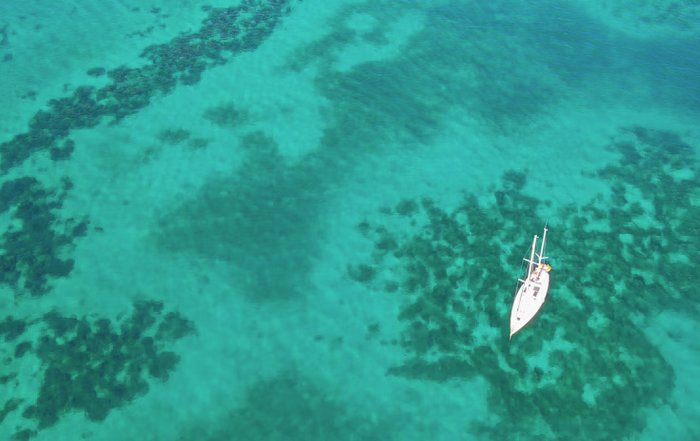
Exploring Australia's Great Barrier Reef by Yacht in 2026
The Reef as a Flagship Destination for the Modern Yachting Elite
By 2026, Australia's Great Barrier Reef has consolidated its position as one of the most strategically significant and carefully managed yachting destinations on the planet, standing at the intersection of luxury cruising, marine science, and sustainability in a way that few other regions can match. For the global readership of yacht-review.com, which now spans North America, Europe, Asia-Pacific, Africa, and South America, the Reef has evolved from a remote dreamscape into a sophisticated operating theatre where every decision-from hull design to itinerary planning-carries both experiential and ethical weight. It is no longer perceived simply as a spectacular backdrop for a superyacht; rather, it is understood as a living, vulnerable system whose health has become a barometer of how responsibly the high-end yachting community can behave in fragile marine environments.
Stretching over 2,300 kilometers along Queensland's coast, the Great Barrier Reef Marine Park remains the world's largest coral reef system and a UNESCO World Heritage site, yet in 2026 it is also a tightly regulated, data-rich maritime zone where access, anchoring, and activity are governed by increasingly nuanced rules. For owners and charterers from the United States, the United Kingdom, Germany, Canada, Australia, France, Italy, Spain, the Netherlands, Switzerland, China, Singapore, Japan, and the Nordic countries, the Reef now forms a central component of Southern Hemisphere and trans-Pacific itineraries, often linked with the Whitsundays, the Coral Sea, the Torres Strait, Papua New Guinea, and onward routes to Southeast Asia. As they plan their seasons, many turn to the destination coverage and route intelligence available through yacht-review.com/travel.html, using it as a trusted framework for understanding the Reef not as a single destination, but as a complex, multi-zoned cruising province that rewards preparation, local expertise, and long-term commitment to environmental stewardship.
Strategic Gateways and Itinerary Architecture
For international yachts arriving from North America, Europe, or Asia, the first pivotal decision remains the choice of gateway and operating base, a decision that shapes logistics, costs, guest experience, and regulatory exposure. In 2026, Brisbane, Cairns, and Townsville continue to function as primary superyacht gateways, supported by expanding infrastructure, specialist refit yards, and dedicated superyacht agents who understand both Australian regulatory frameworks and the expectations of a global clientele. Hamilton Island and the broader Whitsunday group have strengthened their status as mid-range operating bases, particularly for family-focused charters and owner cruises that prefer a balance between resort amenities and access to more secluded anchorages.
These hubs now offer more integrated services for customs, immigration, and biosecurity, reflecting Australia's continued insistence on rigorous environmental protection. International captains planning complex itineraries routinely consult the zoning maps and guidance issued by the Great Barrier Reef Marine Park Authority (GBRMPA), which delineate where vessels may anchor, fish, or dive, and where access is restricted for conservation purposes. In practice, understanding and complying with these zones has become a non-negotiable core competency for any yacht intending to spend more than a brief passage in the Reef system. Many captains and yacht managers supplement official material with strategic overviews from Tourism Australia and Queensland maritime agencies, while cross-referencing broader regional context through yacht-review.com/global.html, where the Reef is evaluated alongside the Mediterranean, Caribbean, and South Pacific as part of longer multi-region deployment strategies.
Traditional itineraries still highlight the Whitsundays, the Ribbon Reefs north of Cairns, and Lizard Island as marquee destinations, yet in 2026 a larger cohort of experienced owners is pushing further afield into the outer reefs and remote northern sectors, often in partnership with local pilots and specialist expedition leaders. This evolution reflects a shift toward experiential and purpose-driven cruising, where the yacht is treated less as a static luxury asset and more as a mobile platform for exploration, science, and cultural engagement. For many of the decision-makers who follow yacht-review.com/cruising.html, this kind of itinerary architecture-balancing comfort, risk management, and discovery-has become the defining hallmark of serious Reef-based programs.
Design Imperatives for Reef-Focused Yachts
The operational demands of the Great Barrier Reef are now exerting a visible influence on yacht design, refit strategy, and equipment selection, a trend that is closely documented in the design analysis at yacht-review.com/design.html. Naval architects in Europe, North America, and Asia increasingly treat shallow draft, hull efficiency, and precise station-keeping as essential criteria for yachts that will operate in coral-rich environments. Multihull platforms-particularly large catamarans and trimarans-have gained prominence for their stability, generous deck areas, and reduced draft, advantages that can be decisive when accessing tight anchorages or maneuvering in proximity to reef structures.
Hybrid propulsion and advanced energy systems, once considered progressive options, are rapidly becoming standard among new builds targeting the Reef and other sensitive regions. Shipyards and engineering teams are integrating diesel-electric configurations, large battery banks, and solar arrays to enable low-emission, low-noise operation, allowing yachts to drift, hold position, or move slowly through sensitive habitats with minimal disturbance. Owners who follow developments via yacht-review.com/technology.html often view silent, electric-mode operation not only as a comfort feature but as a visible commitment to responsible cruising, particularly when compared with traditional diesel-only systems.
Onboard systems for waste management, water treatment, and emissions control have also become more sophisticated, driven both by regulatory requirements and by reputational considerations. Advanced black and grey water treatment, high-capacity watermakers with energy recovery, and compact waste-compaction and recycling systems are increasingly specified as standard equipment for Reef-focused yachts. Interior and exterior layouts reflect the dual mandate of luxury and functionality: extended tender garages, dedicated dive centers with integrated compressors, decompression facilities on larger expedition vessels, and even modular laboratories or science workspaces are appearing in projects commissioned by owners who want their yachts to double as platforms for research or citizen science. These developments align closely with the sustainability narrative that yacht-review.com has been documenting at yacht-review.com/sustainability.html, where the Reef is frequently cited as a proving ground for genuinely lower-impact yacht concepts.
Technology, Navigation, and Risk Management in Coral Terrain
Navigating the Great Barrier Reef safely in 2026 requires a fusion of advanced technology, conservative seamanship, and local knowledge. High-resolution electronic charts, forward-looking sonar, and satellite-derived bathymetry have become standard tools on serious cruising yachts, yet captains remain acutely aware that coral structures, sand cays, and channels can shift over time. Integrated bridge systems now aggregate data from radar, AIS, depth sounders, motion sensors, and environmental inputs, providing a unified situational picture that enhances both safety and efficiency. Many yachts rely on marine safety guidance from the Australian Maritime Safety Authority, while drawing on detailed meteorological intelligence from the Bureau of Meteorology, whose cyclone tracking and marine forecasts are critical in planning seasonal movements and shelter strategies.
Cutting-edge situational awareness solutions, including augmented reality overlays on bridge displays, are increasingly deployed on larger superyachts operating within the Reef. These overlays can highlight shallow patches, marine park boundaries, and no-anchoring zones in real time, reducing the cognitive load on watchkeepers and providing an additional layer of protection against human error. The technology case studies featured on yacht-review.com/technology.html regularly emphasize how these innovations, when combined with prudent speed management and pilotage, can materially reduce risk in complex reef environments.
Despite these advances, experienced captains still stress the importance of conservative operational practices: approaching unfamiliar anchorages in daylight and favorable visibility, using tenders to scout tight passages, and engaging local pilots for challenging sectors or first-time entries. For many owners, particularly those from regions such as North America, Europe, and East Asia where coastal infrastructure is more forgiving, the Reef has become an instructive reminder that technology enhances but does not replace traditional seamanship. This blend of modern systems and disciplined operating culture is now seen by yacht-review.com readers as a hallmark of professional competence in Reef operations.
Cruising Experiences from the Whitsundays to the Outer Reefs
The emotional center of a Great Barrier Reef voyage lies in the daily rhythm of cruising, anchoring, and exploring, and in 2026 the range of experiences available to well-prepared yachts is broader than ever. The Whitsunday Islands remain the most accessible and family-friendly entry point, with protected anchorages, high-end marinas, and iconic locations such as Whitehaven Beach offering a blend of postcard beauty and reliable infrastructure. Here, yachts can move between resort-based experiences and secluded bays, tailoring each day to the preferences of multigenerational groups, a pattern that aligns closely with the lifestyle narratives explored at yacht-review.com/lifestyle.html.
Further north, the Ribbon Reefs and the Lizard Island region continue to attract serious divers and snorkelers from the United States, Europe, and Asia who expect world-class underwater experiences comparable to the best of the Maldives or French Polynesia, yet wish to avoid the crowds associated with more commercialized destinations. In these waters, large yachts often function as motherships to an ecosystem of tenders, chase boats, and specialized dive craft that enable access to sites too shallow or confined for the main vessel. Onboard dive teams, naturalists, and photography professionals are increasingly central to the guest experience, providing structured briefings, safety oversight, and interpretation that transform each dive into a deeper exploration of coral ecology and reef resilience. Those seeking to understand how different yachts perform in such conditions often consult yacht-review.com/reviews.html, where performance, comfort, and operational flexibility are evaluated through the lens of real cruising scenarios.
For the most experienced owners and charter clients, the outer reefs and remote northern sectors, including areas approaching the Torres Strait, offer an intensity of isolation and authenticity that is now rare in global yachting. These itineraries demand meticulous planning around fuel, provisioning, medical contingencies, and emergency extraction options, yet they reward that investment with experiences that feel genuinely off-grid: uninhabited sand cays, minimally visited dive sites, and encounters with marine life that have not become habituated to heavy tourism. In editorial coverage at yacht-review.com/cruising.html, these voyages are often presented as the logical next step for owners who have exhausted the conventional Mediterranean-Caribbean circuit and now seek a more demanding, more meaningful form of luxury.
Environmental Governance, Stewardship, and Reputation
By 2026, environmental governance has become inseparable from the operational reality of yachting in the Great Barrier Reef. The Great Barrier Reef Marine Park Authority has continued to refine zoning, mooring policies, and visitor guidelines, with a clear emphasis on minimizing anchor damage, controlling pollution, and managing cumulative visitor impact on sensitive sites. Compliance is monitored not only through traditional enforcement but increasingly through digital reporting, satellite monitoring, and community feedback channels. Owners and captains who ignore or attempt to circumvent these frameworks face not only legal penalties but also significant reputational risk in an industry where environmental performance is now closely scrutinized.
Leading yachts and charter fleets have moved beyond baseline compliance to adopt proactive stewardship programs. These may include exclusive use of environmentally friendly moorings where available, strict onboard protocols for waste segregation and reduction of single-use plastics, biofouling management regimes that minimize invasive species risk, and routing strategies designed to reduce fuel burn. Many vessels now provide guests with structured briefings on reef etiquette and climate realities, drawing on resources from organizations such as the Great Barrier Reef Foundation and global marine science institutions. For readers of yacht-review.com/sustainability.html, such initiatives are increasingly seen as core elements of a yacht's identity rather than optional extras.
From a business standpoint, environmental credentials have become a differentiator in charter marketing and owner positioning. Clients from markets with strong sustainability expectations-Germany, the Netherlands, Scandinavia, Canada, and parts of Asia-are actively seeking charters that can demonstrate alignment with broader environmental, social, and governance (ESG) principles. Industry observers tracking trends through yacht-review.com/business.html recognize the Reef as one of the most visible stages on which these values are tested, and where the gap between rhetoric and operational reality is quickly exposed.
Economics of Ownership and Charter in the Reef Region
The financial and operational calculus of exploring the Great Barrier Reef by yacht in 2026 remains complex, yet increasingly well understood by professional advisors and experienced owners. Australia's stringent biosecurity and customs regimes, while sometimes perceived as barriers to entry, are now better navigated thanks to specialized yacht agents and service providers in Cairns, Townsville, Brisbane, and the Whitsundays. These intermediaries handle clearance formalities, provisioning logistics, and coordination with local authorities, allowing captains to focus on safety and guest experience.
The charter market in the Reef region has grown steadily, buoyed by interest from clients in the United States, the United Kingdom, continental Europe, and Asia who view the Reef as a premium alternative to more saturated cruising grounds. Charter management firms now position Australian itineraries within broader Asia-Pacific deployment strategies, linking Great Barrier Reef seasons with New Zealand, Fiji, French Polynesia, and Southeast Asian destinations. This regional integration enables owners to optimize vessel utilization, crew rotations, and maintenance windows, a strategy that is frequently examined in the business coverage at yacht-review.com/business.html.
Operating costs in the Reef-encompassing fuel, pilotage, marina and yard fees, insurance, and compliance-related expenses-remain significant, particularly for large superyachts and expedition vessels. Family offices and corporate ownership structures in major markets such as the United States, the United Kingdom, Germany, Singapore, and Hong Kong increasingly demand granular budgets, risk analyses, and scenario planning before committing to extended Reef programs. Many rely on external benchmarks and macroeconomic insights from sources such as the OECD or World Bank when assessing broader regional risk, while turning to specialized yachting intelligence from yacht-review.com to understand how those macro factors translate into on-the-water realities.
Family, Community, and Experiential Learning Afloat
One of the qualities that most clearly distinguishes Great Barrier Reef cruising in 2026 is its suitability for multi-generational and family-centric programs. Unlike high-latitude expeditions or remote archipelagos with limited medical or logistical support, the Reef offers a broad spectrum of activities that can be tailored to different ages and abilities, from shallow snorkeling and beach exploration to advanced diving, game fishing in designated zones, and cultural visits to coastal communities. Families from North America, Europe, Asia, and Australia are increasingly using extended Reef charters as immersive educational experiences, combining leisure with structured learning in marine biology, climate science, and indigenous culture.
Many yachts now carry curated educational materials, underwater imaging equipment, and citizen science tools that allow guests to contribute to reef-monitoring initiatives. Partnerships with research institutions such as CSIRO or local universities enable yachts to participate in data collection projects, from coral health surveys to water quality sampling, often under the guidance of onboard or visiting scientists. Coverage at yacht-review.com/family.html frequently highlights how these experiences can reshape younger guests' understanding of the ocean, turning a luxury holiday into a formative encounter with environmental responsibility.
The community dimension of Reef cruising has also deepened. Coastal towns and indigenous communities along the Queensland coast are playing a more active role in shaping the yachting narrative, offering guided cultural experiences, art, and storytelling that bring local history and traditional ecological knowledge into the guest experience. Features on yacht-review.com/community.html have documented examples of yachts supporting local conservation initiatives, education programs, and cultural heritage projects, demonstrating how high-value visitors can create more equitable and resilient relationships with host communities.
Events, Research Collaborations, and Innovation Platforms
Beyond leisure cruising, the Great Barrier Reef has become a focal point for marine events, research collaborations, and innovation initiatives that use yachts as platforms rather than mere backdrops. Sustainability-focused regattas, environmental summits, and science expeditions increasingly choose Reef-adjacent ports and islands as staging grounds, bringing together yacht owners, scientists, policymakers, and technology entrepreneurs. These gatherings, often profiled on yacht-review.com/events.html, reflect a shift in perception: yachts are being recognized not only as symbols of wealth but as mobile, well-equipped assets that can contribute meaningfully to marine science and conservation.
Structured partnerships between private yachts and research institutions have become more common, underpinned by clear protocols for data quality, safety, and intellectual property. Some owners allocate vessel time during repositioning voyages or shoulder seasons to coral monitoring, climate research, or technology testing, working with organizations that adhere to best practices articulated by bodies such as the Intergovernmental Panel on Climate Change (IPCC) or the UN Environment Programme. For guests, the opportunity to interact directly with scientists and conservation professionals onboard can be transformative, adding a layer of purpose and intellectual engagement that many high-net-worth families now actively seek.
The Reef's Place in the Global Yachting Landscape
For a global audience that weighs cruising options across the Mediterranean, Caribbean, Northern Europe, Southeast Asia, and the polar regions, the Great Barrier Reef occupies a distinctive niche in 2026. It combines the safety, healthcare, and infrastructure of a developed nation with the biodiversity and remoteness associated with true expedition destinations, while imposing a higher standard of environmental literacy and regulatory compliance than many traditional hubs. This combination is particularly attractive to owners and charterers who have already experienced the main circuits of Europe and North America and are now seeking destinations that offer both challenge and consequence.
Within the editorial ecosystem of yacht-review.com, which spans boats, reviews, cruising, technology, sustainability, and broader news, the Great Barrier Reef serves as a lens through which many of the industry's most important trends can be examined. It showcases how yacht design is evolving toward efficiency and lower impact, how business models are adapting to multi-region deployment, how digital tools are reshaping navigation and safety, and how owners and guests are redefining luxury to encompass responsibility, learning, and contribution.
For decision-makers in the United States, the United Kingdom, Germany, Canada, Australia, France, Italy, Spain, the Netherlands, Switzerland, China, Sweden, Norway, Singapore, Denmark, South Korea, Japan, Thailand, Finland, South Africa, Brazil, Malaysia, and New Zealand, the Reef now represents both an opportunity and a test. It offers the chance to experience one of the world's most extraordinary marine environments from the comfort and capability of a modern yacht, while simultaneously demanding that they confront the realities of climate change, biodiversity loss, and regulatory complexity.
As yacht-review.com continues to track the evolution of this remarkable region, its editorial stance remains grounded in experience, expertise, authoritativeness, and trustworthiness. The goal is not only to help readers navigate the physical waters of the Great Barrier Reef, but also to guide them through the broader currents of technology, business, policy, and environmental responsibility that define yachting in 2026. For those willing to approach the Reef with preparation, humility, and a long-term perspective, it remains one of the most compelling and consequential destinations in the global yachting portfolio.