

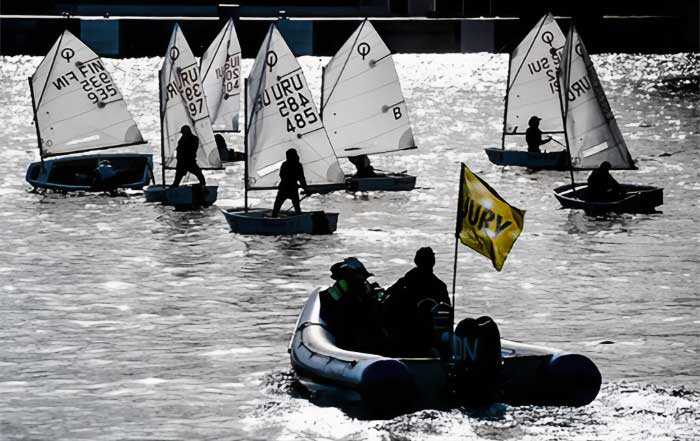
Monaco Optimist Team Race: Youth, Strategy, and Sustainability at the Heart of Modern Yachting
A Flagship for Youth Sailing
The Monaco Optimist Team Race has firmly established itself as one of the most influential youth sailing events in the world, and for the editorial team at Yacht Review, it has become a reference point whenever the conversation turns to how excellence, education, and sustainability can be woven into a single regatta. Hosted annually by the Yacht Club de Monaco (YCM), the event combines rigorous tactical racing with an environment that promotes personal growth, intercultural dialogue, and environmental responsibility, attracting junior sailors from leading yacht clubs and national programs across Europe, North America, Asia, Oceania, and beyond. In an era when the global yachting community is redefining what responsible leadership on the water should look like, the Monaco Optimist Team Race stands out as a living example of how an event can be both aspirational and deeply grounded in values, resonating with readers interested in reviews, design, cruising, business, technology, history, travel, and lifestyle across the worldwide audience that Yacht Review serves.
The regatta unfolds against the iconic backdrop of Monaco's Port Hercule, framed by the architectural statement of the Yacht Club de Monaco, designed by Norman Foster and recognized internationally as a symbol of contemporary maritime architecture. The building's terraced decks, advanced energy systems, and seamless integration with the harbor reflect the principality's dual commitment to innovation and tradition, themes that are central to the editorial perspective developed in our history section. For young sailors arriving from the United States, the United Kingdom, Germany, Canada, Australia, France, Italy, Spain, the Netherlands, Switzerland, China, Scandinavia, Singapore, Japan, South Africa, Brazil, and many other regions, the venue itself becomes an introduction to the standards of professionalism and sustainability that increasingly define top-tier yachting in 2026.
The Optimist: A Small Dinghy with Global Influence
Any serious discussion of the Monaco Optimist Team Race must begin with the boat at its core. The Optimist dinghy, created in 1947 by Clark Mills, remains the most widely used training platform for young sailors worldwide and is recognized by World Sailing as an international class. Compact, robust, and deceptively simple, the 2.3-meter Optimist has become a pathway into high-performance sailing for tens of thousands of children every year, with the International Optimist Dinghy Association (IODA) reporting fleets across more than 130 countries. The class's standardized design allows competitors from Monaco to Miami, Hamburg, Sydney, or Singapore to race on equal terms, building a truly global community of youth sailors whose skills can be compared on a common platform.
From the vantage point of Yacht Review, which often analyzes how design choices shape long-term performance and safety in our dedicated design section, the Optimist's success lies in the way its apparent simplicity hides a sophisticated learning curve. The boat forces young sailors to master balance, sail trim, and wind awareness at low speeds where every mistake is magnified, and it demands an early understanding of rules, right-of-way, and tactical positioning that will carry over into larger dinghies, keelboats, and offshore campaigns. For the participants in the Monaco Optimist Team Race, this foundation becomes the starting point for something more complex: a format where individual boat handling is only one element in a broader strategic puzzle that tests communication, anticipation, and resilience.
From Local Initiative to Global Benchmark
When the Yacht Club de Monaco launched the Monaco Optimist Team Race in 2010, the objective was relatively modest: to create a high-level youth event that would bring together promising sailors in the quiet winter months and showcase Monaco as a center of sailing education rather than only as a hub for superyachts. Over the past decade and a half, that vision has matured into a global benchmark for junior team racing. The event takes place each January, effectively opening the international youth sailing calendar and drawing teams from leading institutions such as the Royal Danish Yacht Club, Norddeutscher Regatta Verein (NRV), Royal Hong Kong Yacht Club, New York Yacht Club, Circolo della Vela Sicilia, and many more, each sending carefully selected squads that often include national-level talents.
For international federations and performance programs, participation in Monaco is now seen as both a test and a learning opportunity: it exposes under-14 sailors to intense tactical racing under pressure while offering coaches and managers a controlled environment to assess decision-making, mental toughness, and team dynamics. This dual function of the regatta-as both competition and development laboratory-aligns with the broader patterns in global sailing that Yacht Review follows closely on its events page, where the most influential regattas are increasingly those that combine elite sport with structured educational and sustainability components.
Monaco's Maritime Identity and Its Role in Youth Sailing
The principality's maritime identity is inseparable from the Monaco Optimist Team Race. Since the founding of the Yacht Club de Monaco in 1953 by Prince Rainier III, and under the continuing leadership and environmental advocacy of Prince Albert II, Monaco has deliberately positioned itself as a laboratory for the future of yachting. Port Hercule, with its mix of superyachts, traditional vessels, and training fleets, functions as a stage on which this narrative is played out in full view of residents, visitors, and the international media. The Optimist Team Race gives that identity a youthful dimension, placing children at the center of Monaco's maritime story and underscoring the idea that the future of the industry depends on how effectively the next generation is educated and inspired.
The club's headquarters, inaugurated in 2014, captures this philosophy in built form, with a design that prioritizes natural light, energy efficiency, and flexible spaces for classrooms, workshops, and regatta management. The building has often been cited in discussions on sustainable maritime infrastructure by organizations such as the World Green Building Council, and it provides a concrete case study for those who wish to learn more about sustainable business practices in coastal and marine environments. For the young sailors who attend the Monaco Optimist Team Race, this setting offers an implicit lesson: high performance and environmental responsibility are not mutually exclusive, but rather two sides of the same long-term strategy for the sport.
Inside the Team Racing Format
The Monaco Optimist Team Race uses a four-boat-per-team format that transforms what might otherwise be a series of short dinghy sprints into a chess match on water. Races are typically run on a compact course inside or just outside Port Hercule, allowing for close-quarters maneuvering and making it easier for spectators, families, and coaches to follow the action from shore and from support vessels. Each team's objective is not simply to win with one boat, but to secure a combination of finishing positions that produces the lowest aggregate score, which often means that a sailor in a leading position must slow down to interfere with rivals, create tactical traps, or open lanes for teammates.
This fundamental shift-from individual to collective optimization-forces sailors to develop a broader situational awareness and to communicate effectively under pressure, using pre-agreed signals and constant visual scanning to coordinate moves in real time. For readers of Yacht Review who are interested in how racing strategy and seamanship evolve in demanding environments, the team racing discipline provides a fascinating parallel to the tactical considerations we explore in our cruising section, where long-range planning, risk management, and cooperative decision-making play an equally central role, albeit over different time scales and in different sea states.
Camaraderie, Culture, and the Human Dimension
While the competitive intensity of the Monaco Optimist Team Race is undeniable, the event's enduring appeal lies in the way it blends rivalry with camaraderie. Young sailors from Europe, North America, Asia, Africa, and South America arrive representing their clubs and countries, yet they quickly discover that they also belong to a shared community connected by the sea. Off the water, the Yacht Club de Monaco organizes social gatherings, educational visits, and cultural activities that encourage participants to interact beyond the confines of their teams, often in multiple languages and across cultural boundaries. The harbor terraces, club lounges, and surrounding city become informal meeting points where friendships are formed that can last well beyond a single regatta cycle.
Visits to the Oceanographic Museum of Monaco, exposure to the initiatives of the Prince Albert II of Monaco Foundation, and discussions around marine biodiversity and climate change help contextualize the experience, turning a sporting event into a broader formative journey. For a publication like Yacht Review, which consistently examines how maritime culture intersects with diplomacy, education, and environmental stewardship in its global section, the Monaco Optimist Team Race offers a particularly vivid example of how youth sport can act as a conduit for soft power and shared values, especially among countries that may have limited interaction in other arenas.
International Reach and Reputation
By 2026, the list of nations and clubs that have participated in the Monaco Optimist Team Race reads like a cross-section of the global sailing elite, with entries from Italy, France, Spain, the United Kingdom, Germany, the Netherlands, Sweden, Norway, Denmark, the United States, Canada, Brazil, Argentina, Singapore, Japan, South Korea, China, Australia, New Zealand, South Africa, and several emerging sailing nations in Eastern Europe, the Middle East, and Southeast Asia. The presence of clubs such as the Royal Swedish Yacht Club, Royal Netherlands Yacht Club, and C.N. Andratx from Spain underscores the event's credibility, as these institutions are known for their rigorous training standards and track records in Olympic and professional sailing.
National authorities increasingly view a strong showing in Monaco as a sign that their youth development pathways are functioning effectively, and many coaches cite the event as a turning point in the careers of sailors who later progressed into high-performance classes such as the ILCA (formerly Laser), 420, 29er, and foiling dinghies. For Yacht Review, which frequently assesses the performance and evolution of youth and training fleets in its boats section, the Monaco Optimist Team Race offers a concentrated snapshot of how different countries are interpreting modern coaching principles, integrating technology, and adapting to changing climatic and economic conditions.
Training, Analytics, and the New Pedagogy of Youth Sailing
One of the defining features of the Monaco Optimist Team Race in recent years has been the integration of advanced training methodologies and data-driven feedback. The Yacht Club de Monaco has embraced tools such as GPS tracking, onboard cameras, and cloud-based analytics platforms that allow coaches and sailors to reconstruct races in precise detail, analyzing starting strategies, mark roundings, speed differentials, and tactical choices frame by frame. These systems echo the performance infrastructures used by professional campaigns in the America's Cup, SailGP, and The Ocean Race, but they are adapted to the needs and attention spans of young sailors who are still internalizing the basics of race management.
Debrief sessions often take place in dedicated classrooms where video playback is synchronized with wind data and positional traces, enabling participants to see how small decisions at one point on the course had cascading effects later in the race. This approach reflects a broader shift in sports education, in which evidence-based coaching and digital tools supplement, rather than replace, traditional mentorship and experiential learning. For readers interested in how this technological layer is reshaping the sport from the grassroots to the grand prix level, the editorial team at Yacht Review continues to follow these developments in depth in the technology section, where youth analytics solutions are increasingly discussed alongside foil design, hybrid propulsion, and onboard connectivity.
Mentorship, Leadership, and Character Building
Behind every successful youth regatta stands a network of mentors: professional sailors, Olympic veterans, experienced tacticians, and dedicated club coaches who see in these events an opportunity to transmit not only technical knowledge but also ethical and psychological frameworks. At the Monaco Optimist Team Race, the Yacht Club de Monaco's Sports Section places strong emphasis on leadership and character development, encouraging sailors to view themselves as ambassadors for their clubs, their countries, and the ocean itself. Briefings routinely address topics such as resilience under pressure, respect for competitors and officials, and responsible behavior on and off the water.
This holistic approach aligns closely with the values that Yacht Review highlights in its community section, where the focus is often on how clubs, associations, and regatta organizers can cultivate inclusive, supportive environments that welcome newcomers while maintaining high standards of performance. In Monaco, this philosophy manifests in initiatives such as pairing younger or less experienced sailors with more seasoned teammates, encouraging peer coaching, and highlighting examples of sportsmanship in daily prize-giving ceremonies, reinforcing the idea that success is measured not only by results but by conduct.
Environmental Stewardship and Sustainable Event Management
In 2026, sustainability is no longer an optional add-on for major yachting events; it is a central criterion by which they are evaluated by participants, sponsors, and regulators. The Monaco Optimist Team Race has been at the forefront of this shift, building on Monaco's broader environmental agenda and on international frameworks developed by organizations such as the United Nations Environment Programme and UNESCO's Intergovernmental Oceanographic Commission. The regatta has implemented comprehensive waste reduction strategies, strict limits on single-use plastics, water refill stations, and guidelines for responsible fueling and engine use for support boats, while actively encouraging the adoption of electric or hybrid chase boats where operationally feasible.
The Yacht Club de Monaco collaborates with specialist NGOs, including Surfrider Foundation Europe and Sailors for the Sea, to audit and certify the event's ecological performance, ensuring that it meets or exceeds recognized best practices for sustainable regatta management. Educational sessions for sailors and families address topics such as microplastic pollution, climate-driven changes in Mediterranean weather patterns, and the role of seagrass meadows in carbon sequestration, connecting the local context of Monaco with global environmental dynamics. These themes are explored in greater depth in Yacht Review's dedicated sustainability section, where the Monaco Optimist Team Race is frequently cited as an example of how youth sport can be used to embed environmental literacy at an early age.
Media, Innovation, and the Spectator Experience
The Monaco Optimist Team Race has also become a testbed for innovations in race management and media presentation. The Yacht Club de Monaco's Race Committee, working closely with World Sailing and the International Optimist Dinghy Association, has implemented digital scoring systems, high-definition drone coverage, and real-time tracking that allow parents, supporters, and remote audiences to follow the action with a level of detail that was unthinkable a decade ago. Onshore screens display live rankings and course layouts, while streaming platforms extend the event's reach to viewers in Europe, Asia, the Americas, and Oceania, supporting the global interest profile that Yacht Review observes in its readership analytics.
These developments mirror a broader transformation in how sailing is presented and consumed, with shorter race formats, enhanced graphics, and data overlays making the sport more accessible to non-specialist audiences without diluting its technical depth. In our news section, we have tracked how events from the Monaco Yacht Show to SailGP are experimenting with similar approaches, and the Optimist Team Race occupies a unique niche in this ecosystem by applying comparable production values to a youth event, thereby signaling to young sailors that their efforts and achievements are worthy of professional-level visibility.
Family, Lifestyle, and the Wider Economic Impact
For many families, the Monaco Optimist Team Race is not just a regatta but a focal point for travel, leisure, and shared experiences. Parents and siblings accompany young competitors from cities such as London, New York, Toronto, Sydney, Singapore, often extending their stay to explore the Riviera, visit museums, or attend cultural events. The Yacht Club de Monaco facilitates this dimension by organizing hospitality programs, marina tours, and social evenings that highlight the principality's culture and culinary scene, reinforcing Monaco's image as a sophisticated yet welcoming destination for family-oriented sports tourism.
Local hotels, restaurants, and service providers benefit from this influx of visitors during what would otherwise be a relatively quiet period in the tourism calendar, while sponsors and partners gain access to a demographic that combines high engagement with long-term loyalty to the sport. For the business-focused readership of Yacht Review, the Monaco Optimist Team Race thus provides a concrete example of how youth sailing can contribute to regional economies and brand positioning, themes explored regularly in our business section. At the same time, the event showcases a lifestyle in which sport, education, and family time are integrated rather than compartmentalized, echoing many of the narratives we develop in our lifestyle coverage across Europe, North America, Asia, and beyond.
Alumni Pathways and Long-Term Influence
The long-term impact of the Monaco Optimist Team Race can be measured not only in the number of trophies awarded but in the trajectories of its alumni. Many former participants have gone on to win medals at youth world championships, represent their countries at the Olympic Games, or join professional campaigns in the TP52, IMOCA, and foiling circuits. Others have chosen careers in naval architecture, marine engineering, or maritime law, citing their early exposure to Monaco's high-performance and sustainability-focused environment as a formative influence. A number of them now return to the event as coaches, mentors, or officials, closing the loop and reinforcing the intergenerational continuity that is so characteristic of the sport.
From the editorial perspective of Yacht Review, which regularly publishes in-depth reviews of regattas, programs, and vessels that shape the future of yachting, the Monaco Optimist Team Race stands out because its legacy is not confined to a single discipline or region. Instead, it contributes to a global network of sailors, engineers, entrepreneurs, and advocates who share a common set of experiences and values rooted in teamwork, respect for the sea, and a willingness to innovate responsibly.
Looking Ahead: The Next Decade of the Monaco Optimist Team Race
As of 2026, the Yacht Club de Monaco is already looking ahead to the next chapter of the Monaco Optimist Team Race, with plans to deepen its outreach to underrepresented regions, expand scholarship opportunities, and further reduce the event's environmental footprint through wider adoption of electric support craft and low-impact logistics. Partnerships with international sailing academies, universities, and environmental organizations are being strengthened to ensure that the regatta remains at the cutting edge of youth development, sustainability, and event design. For readers who follow how travel, culture, and sport intersect in different corners of the world, our travel section will continue to monitor how Monaco's model is being adapted in Asia, Africa, South America, and emerging sailing hubs from Thailand to Brazil and South Africa.
In parallel, the broader ecosystem of youth sailing is evolving, with new classes, foiling technologies, and digital learning tools entering the market. Yet, the Monaco Optimist Team Race demonstrates that, even in this rapidly changing landscape, a small, time-tested dinghy and a principality with a deep maritime heritage can still provide the ideal platform for cultivating the next generation of sailors and ocean stewards. The event's continued success suggests that the most resilient traditions in yachting are those that are willing to reinvent themselves without losing sight of their core values.
A Continuing Story for Yacht Review Readers Worldwide
For the international audience of Yacht Review, spread across Europe, North America, Asia, Oceania, Africa, and South America, the Monaco Optimist Team Race encapsulates many of the themes that define contemporary yachting: the interplay between design and seamanship, the integration of technology into training, the centrality of sustainability, the importance of community and family, and the economic and cultural significance of well-managed maritime events. It is a story that our editorial team returns to frequently, whether we are analyzing new Optimist training fleets in Germany, profiling youth programs in the United States and the United Kingdom, or examining how clubs in Singapore, Norway, or Brazil are adapting Monaco-inspired models to their local conditions.
As the sails of the Optimist fleets fill in the winter breeze over Port Hercule each January, they carry with them not only the hopes of young competitors but also a broader narrative about what the future of the sport can and should look like. In that sense, the Monaco Optimist Team Race is more than a regatta; it is a barometer of the health, ambition, and conscience of global yachting. For those who wish to continue following this evolving story-alongside coverage of design innovation, cruising experiences, technological breakthroughs, and the wider lifestyle of the sea-the editorial team invites readers to explore the full breadth of content available at Yacht Review, where the Monaco Optimist Team Race will remain a touchstone in our ongoing exploration of how tradition and progress meet on the world's waters.