

Underwater Scooters: Redefining Luxury Exploration for the Yacht-Review Audience
The culture of luxury yachting is increasingly defined not only by the scale and pedigree of the vessel, but by the quality of experiences it enables on and beneath the water. Among the many innovations that have reshaped life at anchor, underwater scooters have emerged as one of the most influential. Once regarded as specialist tools for divers or as niche toys for early adopters, they now sit at the center of the modern yacht "experience ecosystem," bridging high technology, lifestyle aspirations, and a growing sensitivity to the marine environment. For the global readership of Yacht-Review, spanning North America, Europe, Asia-Pacific, and beyond, understanding how the leading underwater scooter brands in 2026 support this new standard of immersive luxury has become a critical part of planning yacht acquisitions, refits, and charter programs.
From private anchorages in the Bahamas and Turks and Caicos to secluded coves along the Amalfi Coast, the Balearics, the Whitsundays, or the archipelagos of Thailand and Indonesia, these compact propulsion systems allow owners and guests to move through the water with a sense of grace and control that traditional fins or casual snorkeling cannot match. They extend the radius of exploration around the mother ship, transforming every clear-water anchorage into a three-dimensional playground. Onboard, they have become as integral to the guest experience as the beach club, the tender fleet, and the onboard spa. For readers who follow the evolution of yacht design, tender garages, and water-toy integration, the ongoing coverage in Yacht-Review's Design section provides a vital reference point for how these products are influencing the architecture and outfitting of next-generation yachts.
Underwater Freedom as a Core Luxury Value
Within the contemporary yachting mindset, true luxury is increasingly defined by access: access to remote destinations, to pristine ecosystems, and to moments of personal freedom that are difficult to replicate on land. Underwater scooters speak directly to this desire. They elevate snorkeling and diving from physical exertion into a refined, almost meditative experience, where propulsion is handled by intelligent electric systems and the user is free to focus on the nuances of the underwater world. The sensation of gliding weightlessly over coral gardens in the Maldives, drifting along the walls of the Red Sea, or following rays and turtles in the Great Barrier Reef becomes both effortless and cinematic.
The best scooters in 2026 are engineered to be intuitive for first-time users while still offering the performance needed by experienced divers. They are compact enough to be launched quickly from a swim platform or beach club, yet powerful enough to cover substantial distances with minimal energy expenditure from the user. For yacht owners and captains managing busy charter schedules in regions such as the Mediterranean, Caribbean, or Southeast Asia, this balance of accessibility and capability is key to delivering consistently high guest satisfaction. Readers who wish to understand how these guest-centric innovations are influencing cruising itineraries can explore Yacht-Review's Cruising coverage, where the interplay between destinations, equipment, and onboard service is analyzed in depth.
At the same time, the shift toward lower-impact, battery-driven propulsion reflects a broader transformation in the marine sector. Advances in lithium-ion technology, improved hydrodynamics, and quieter motor systems have significantly reduced noise and emissions, aligning underwater scooters with the environmental expectations now shaping yacht design and operation. Organizations such as the International Maritime Organization highlight the importance of reducing marine noise and pollution; those interested in the regulatory and scientific backdrop can review current initiatives through resources such as the IMO's marine environment pages. For a yachting-specific perspective on these trends, Yacht-Review's Sustainability section tracks how responsible innovation is becoming a hallmark of serious yacht ownership.
Luxury, Identity, and the Role of the Underwater Scooter
On board a superyacht in 2026, every visible element carries symbolic weight. Tenders, toys, furnishings, and art are chosen not only for utility but for the story they tell about the owner's taste and priorities. Underwater scooters are no exception. They function as extensions of the yacht's design language and lifestyle philosophy: minimalistic and sculptural on a Northern European-built explorer; colorful and playful on a charter-focused Caribbean motor yacht; or aggressively technical on an expedition vessel bound for polar waters.
The top-tier brands have responded to this reality by investing heavily in materials, finishes, and interface design. Ergonomic grips, configurable power modes, corrosion-resistant housings, and digital displays are now standard on many high-end models. Their aesthetic is not an afterthought but a deliberate expression of the same design values that inform the yacht's exterior styling, interior decor, and tender selection. For readers who follow product evaluations and comparative testing, Yacht-Review's Reviews section provides a trusted framework for assessing how each scooter brand aligns with different yacht profiles and operational patterns.
The result is that underwater scooters have moved beyond the category of "toys" into a more nuanced role as lifestyle instruments. They offer a tangible way to bring guests closer to the marine environment, deepen the experiential value of each anchorage, and reinforce the yacht's identity as a platform for exploration, wellness, and connection.
LEFEET: Modular Innovation for the Global Yacht Traveller
Among the leading names in 2026, LEFEET has become a reference point for modular, travel-friendly underwater propulsion. Its latest iterations of the LEFEET P1 and LEFEET XR build on the brand's now well-established philosophy: compact form factors, multi-configuration capability, and a design language that sits comfortably alongside contemporary Northern European and Italian yacht interiors. For owners who base their yachts in the Mediterranean during the summer and reposition to the Caribbean, Florida, or the Bahamas in winter, LEFEET's ease of storage and transport is particularly appealing.
The modularity at the heart of LEFEET's product line allows owners and crew to configure units for different purposes. Single-unit setups offer lightweight, casual propulsion for snorkeling in shallow bays, while dual configurations and extended battery packs support longer dives or more demanding underwater explorations. Accessories, including mounting systems and optional control interfaces, can be added or removed depending on the guest profile and itinerary. This flexibility aligns well with the operational realities of charter programs that serve guests from the United States, United Kingdom, Germany, and across Asia, each with varying expectations and comfort levels in the water.
Technically, LEFEET has focused on high-efficiency brushless motors, refined hydrodynamics, and quick-swap lithium batteries that integrate smoothly with onboard charging systems. Many yachts now use centralized monitoring for all electric toys, and LEFEET's predictable charging cycles and robust waterproofing simplify the work of engineers and deck crew. Owners interested in how such modular systems echo broader trends in yacht design can explore related features in Yacht-Review's Boats coverage, where the convergence between modular tenders, convertible deck spaces, and adaptable water toys is a recurring theme.
From an environmental standpoint, LEFEET's low-noise, low-emission profile aligns with the expectations of eco-conscious owners cruising in sensitive areas such as the Norwegian fjords, the Galápagos, or marine parks in Southeast Asia. Those wishing to explore the brand's current portfolio and technical specifications can refer to lefeet.com, which outlines how the company is positioning itself at the intersection of portability, performance, and responsible engineering.
Sublue: Visual Appeal and User-Friendly Design
Sublue has, over the past several years, consolidated its reputation as a leader in user-oriented underwater scooters, with models such as the Whiteshark Mix, Navbow+, and the playful WhiteShark Tini now a familiar sight in the toy lockers of yachts operating from Florida to France, from Singapore to Sydney. The brand's products are particularly favored by charter operators and family-focused owners who need equipment that can be used safely and enjoyably by guests with minimal training.
The hallmark of Sublue's approach is its emphasis on intuitive controls and visual appeal. Large, clearly marked triggers, buoyant housings, and integrated safety features reduce the learning curve for children and adults alike. Many models are designed to remain slightly buoyant, making retrieval easy if a guest releases the unit in the water. For social-media-conscious guests, the inclusion of camera mounts and stable, easily controlled propulsion makes it simple to capture high-quality underwater footage in destinations such as the Greek Islands, the Maldives, or the Great Barrier Reef. For a broader context on how such lifestyle-oriented equipment shapes guest experiences, readers can consult Yacht-Review's Lifestyle section, where the editorial focus often highlights the emotional and social dimensions of onboard recreation.
Technologically, Sublue has continued to refine its dual-motor configurations to deliver strong thrust with low noise and vibration, reducing disturbance to marine life while improving user comfort. This is particularly important in high-value dive and snorkel destinations where responsible tourism is encouraged by organizations such as PADI and Project AWARE; those interested in the broader framework of marine recreation standards can explore resources such as the PADI conservation pages. For technical and product-specific information, Sublue's official site at sublue.com provides details on performance, safety standards, and accessory integration.
Yamaha Seascooter: Global Reliability and Brand Trust
The Yamaha Seascooter range occupies a distinctive position in the underwater scooter landscape: it brings the engineering credibility and global support network of Yamaha to an accessible, family-oriented product line. For many owners and captains managing yachts that cruise between North America, the Mediterranean, and popular Asia-Pacific hubs such as Singapore and Phuket, the assurance of widespread parts availability and service expertise is a decisive factor.
Models such as the Yamaha RDS200 and RDS300 have become staples on mid-size motor yachts and larger charter vessels that prioritize safety, simplicity, and low-maintenance reliability. Their performance envelopes are intentionally moderate, making them suitable for supervised use by teenagers and adults in calm bays from the Balearics, from Miami to Mexico's Riviera Maya. The controls are straightforward, the housings robust, and the maintenance requirements minimal, which is appreciated by crew operating under tight turnaround schedules.
The understated aesthetics of Yamaha's scooters complement a wide range of yacht styles, from classic Italian designs to Northern European explorers. They do not seek the visual drama of some high-end lifestyle brands, but instead project a sense of functional competence and trustworthiness that resonates strongly with many owners. Those curious about how Yamaha's broader marine engineering expertise feeds into these products can review the company's portfolio via the Yamaha Marine global site, which illustrates the continuity between surface propulsion and underwater mobility.
Dive Xtras: Technical Performance for Serious Exploration
For yachts that support serious diving programs, particularly in regions such as the Red Sea, Indonesia, Micronesia, or cold-water destinations like Norway and British Columbia, Dive Xtras has become a leading name. The American manufacturer is renowned for its high-performance diver propulsion vehicles, including the BlackTip Tech and Cuda X, which are engineered for long-range, deep, and technically demanding dives.
These scooters are built around modular battery systems, advanced brushless motors, and hydrodynamic designs that deliver exceptional thrust-to-weight ratios. For expedition yachts operating far from major service hubs, this combination of endurance and robustness is critical. Divers can cover significant distances along walls, wrecks, or reef systems while conserving air and maintaining tight control over speed and buoyancy. For captains and expedition leaders, this capability expands the range of dive sites that can be safely explored within a given time window, enhancing the overall value of the yacht's exploration program.
Aesthetically, Dive Xtras units present a purposeful, professional look that aligns well with the ethos of explorer and research-oriented yachts built by shipyards such as Damen Yachting, or Oceanco. Their matte finishes, streamlined silhouettes, and precise controls make them feel more like scientific instruments than casual toys. Readers interested in the technology underpinning such performance can delve into Yacht-Review's Technology coverage, where propulsion systems, battery innovation, and hydrodynamic design are examined through a luxury-yachting lens. For direct technical data and configuration options, divextras.com remains the authoritative source.
Bonex: German Engineering for Professional-Grade Diving
In the upper echelon of underwater scooters, Bonex continues to stand out as a benchmark of German engineering excellence. Based in Bavaria, the company has long supplied professional, military, and technical diving communities with high-end diver propulsion vehicles, and its products have found a natural home on expedition and exploration yachts that demand uncompromising performance. Models such as the Bonex Ecos S and AquaProp L are engineered for serious depth, extended runtimes, and precise handling.
The carbon composite and high-grade polymer construction of Bonex scooters provides an appealing balance of strength and low weight, which is particularly important when handling equipment on pitching decks or transferring gear into tenders and dive boats. Their propulsion systems are optimized for efficiency and quiet operation, enabling divers to move through the water with minimal disturbance while maintaining tight control in currents and at depth. This is crucial for operations in complex environments such as wrecks, caves, or steep reef walls found in places like the Mediterranean's deeper sites, the fjords of Scandinavia, or the colder waters around the United Kingdom and Canada.
From a design perspective, Bonex products exude the same understated precision associated with high-end German automotive and engineering brands. Their minimalist controls, clean lines, and exacting build quality resonate with yacht owners who appreciate the craftsmanship of builders such as Abeking & Rasmussen or Feadship. For readers who follow the intersection of industrial design and marine performance, the editorial team at Yacht-Review continues to explore such synergies in the Design section. More detailed information on Bonex's current range can be found at bonex-systeme.de.
SEABOB: Iconic Glamour and High-Performance Fun
Few underwater scooters have achieved the cultural visibility of SEABOB, produced by Cayago AG in Germany. By 2026, SEABOB has firmly established itself as an icon of superyacht lifestyle, seen on beach clubs from Monaco and Saint-Tropez to Ibiza, Dubai, Miami, and Phuket. With models such as the SEABOB F5, F5 S, and F5 SR, the brand has positioned itself as the benchmark for high-performance, design-led aquatic leisure.
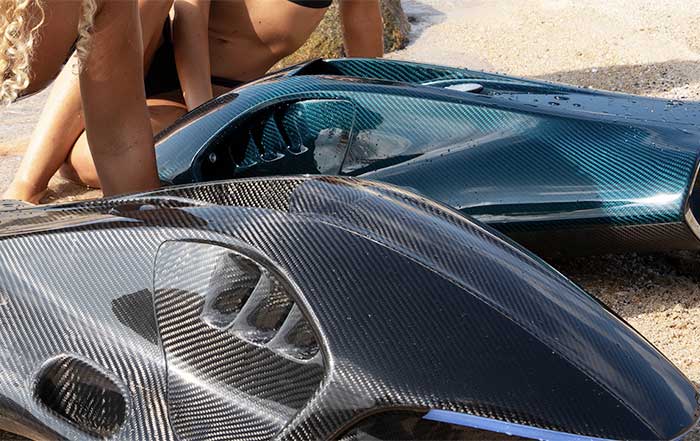
SEABOB's electric jet propulsion allows users to move swiftly both on the surface and underwater, with finely adjustable power levels suited to different comfort zones and experience levels. The sculpted bodywork, high-gloss automotive finishes, and precisely machined components convey a level of craftsmanship that matches the expectations of owners accustomed to bespoke tenders, custom interiors, and one-off artworks. For many, the presence of multiple SEABOB units in the toy garage has become a visual shorthand for a yacht that takes both fun and style seriously.
From an operational perspective, SEABOB units are designed to integrate seamlessly into the onboard infrastructure of large yachts, with dedicated charging racks, protective cradles, and often custom color schemes that echo the yacht's exterior livery. Their appeal spans generations, making them equally suited to family charters, corporate events, or private cruising. For readers seeking broader context on how such lifestyle-defining products influence perceptions of luxury at sea, Yacht-Review's Lifestyle section offers ongoing analysis. Official product information and customization options are available at seabob.com.
Integrating Underwater Scooters into the Yachting Ecosystem
For yacht owners, captains, and project managers, the question in 2026 is no longer whether to carry underwater scooters, but how best to integrate them into the overall yacht concept and guest program. This integration begins at the design and refit stage, where naval architects and interior designers now routinely allocate dedicated storage, charging, and maintenance spaces for a curated selection of scooters and complementary toys.
In advanced tender garages, scooters are displayed on custom racks or cradles that both protect and showcase them, echoing the way supercars might be presented in a private collection. Charging stations are often integrated into the same area, with power management systems linked to the yacht's broader energy architecture, sometimes incorporating solar or hybrid solutions on forward-thinking vessels. Readers interested in how such integration affects general arrangement plans and refit strategies can find relevant insights in Yacht-Review's Boats section and Business coverage, where operational considerations and investment value are frequent themes.
Crew training is another critical component. Professional deck teams are now expected to provide concise safety briefings, assist with equipment fitting, and accompany less experienced guests in the water. Clear operating zones, communication protocols, and emergency procedures ensure that enjoyment is balanced with safety. Many yachts also coordinate their underwater scooter usage with local regulations and best practices, particularly in marine protected areas where speed and distance from reefs or shorelines may be regulated. International guidelines on marine protection, such as those discussed by the UN Environment Programme, offer useful context; interested readers can explore these frameworks through resources like the UNEP oceans and seas portal.
Sustainability, Responsibility, and the Future of Electric Water Toys
As environmental awareness becomes central to the ethos of high-end yachting, underwater scooters have emerged as a relatively low-impact means of enhancing guest experience. Their electric propulsion systems produce no direct emissions in the water and operate with far less noise than many conventional surface toys. This contributes to the broader shift toward greener yachting practices, which includes hybrid propulsion, shore-power connectivity, and careful itinerary planning to reduce environmental footprints.
Manufacturers in 2026 are increasingly transparent about their material choices, production methods, and battery lifecycle strategies. Many are investing in more recyclable components, safer battery chemistries, and take-back or refurbishment programs. Owners and charterers who prioritize responsible luxury can use these factors as criteria when selecting brands and models, aligning their onboard equipment with broader ESG goals and family or corporate values. Those looking to deepen their understanding of sustainable business practices in the marine sector can consult resources such as the World Economic Forum's ocean initiatives, while Yacht-Review's Sustainability section (https://www.yacht-review.com/sustainability.html) continues to highlight practical steps that owners and operators can take.
In parallel, many yacht programs now use underwater scooters as tools for education and engagement. Guided excursions led by marine biologists or dive instructors allow guests to experience coral restoration sites, seagrass meadows, or kelp forests first-hand, fostering a sense of stewardship that extends beyond the charter or cruise. This experiential approach reflects a broader cultural shift in yachting toward more meaningful, knowledge-rich travel, a theme regularly explored in Yacht-Review's Global and Travel coverage.
The Human and Cultural Dimension of Underwater Adventure
Beyond the technical specifications and design narratives, underwater scooters in 2026 play a powerful role in shaping the social and emotional fabric of life aboard. Families use them to bridge generational gaps, with grandparents, parents, and children exploring side by side in sheltered bays from the Mediterranean to New Zealand. Couples value them as a means of creating shared, quietly exhilarating experiences away from the busier social spaces of the yacht. Groups of friends use them to turn a simple swim stop into an afternoon of exploration and content creation.
These experiences often become some of the most memorable moments of a cruise or charter: drifting together over a reef in the Bahamas, following dolphins in the wake of the yacht in the Aegean, or exploring volcanic formations in the Canary Islands or the Azores. They reinforce the idea that the true luxury of yachting lies not only in privacy and comfort, but in the ability to access and inhabit extraordinary natural spaces with ease and grace. For stories that capture this human dimension-from family narratives to community initiatives-readers can turn to Yacht-Review's Family and Community sections, where the focus is firmly on the people who bring the ocean to life.
Conclusion: Underwater Scooters as Expressions of Modern Yachting
By 2026, underwater scooters have firmly established themselves as essential components of the modern yachting experience. They encapsulate the values that define contemporary luxury at sea: advanced technology deployed in the service of effortless enjoyment, design that harmonizes with the yacht's aesthetic identity, and a growing commitment to environmental responsibility. For the discerning audience of Yacht-Review, they also represent a nuanced decision point in the broader process of curating a yacht's character and capabilities.
Whether an owner gravitates toward the modular elegance of LEFEET, the family-oriented accessibility of Sublue and Yamaha, the professional-grade performance of Dive Xtras and Bonex, or the iconic glamour of SEABOB, each choice signals a particular vision of what life on and under the water should feel like. The right combination of brands and models can transform a yacht's toy garage into a finely tuned ecosystem of experiences, suited to everything from tranquil exploration in Scandinavian fjords to high-energy fun off the coasts of Miami, Ibiza, or Phuket.
As yacht owners, charterers, and industry professionals look ahead to new builds, refits, and cruising plans, underwater scooters will continue to play a pivotal role in shaping how guests interact with the sea. For ongoing analysis of these developments-across technology, design, business, and lifestyle-readers are invited to follow the evolving coverage on Yacht-Review's News page and broader editorial platform at yacht-review.com, where the future of luxury yachting is documented with a focus on experience, expertise, authoritativeness, and trust.