

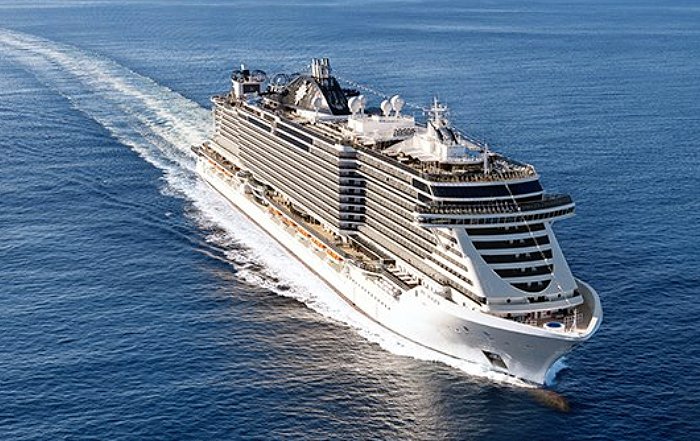
MSC Cruises: How a Family Company Redefined Global Cruising
MSC Cruises occupies a pivotal position in the global cruise sector, representing a rare combination of family ownership, large-scale industrial capability, design sophistication and environmental ambition. For the international audience of Yacht Review, which follows the evolution of yachts, superyachts and cruise vessels from a vantage point that values craftsmanship, technology and responsible luxury, the MSC story offers a detailed case study in how a traditional shipping group can transform itself into a benchmark for contemporary ocean travel. From the Caribbean and North America to Europe, Asia and beyond, the company has become a central reference point for how large passenger ships can be conceived, operated and experienced in an era defined by sustainability, digitalization and shifting traveler expectations.
From Cargo to Cruising: Heritage, Ownership and Strategic Growth
The origins of MSC Cruises are inseparable from the history of the Mediterranean Shipping Company (MSC Group), established by Gianluigi Aponte and still controlled by the Aponte family. What began as a container shipping business gradually expanded into passenger operations, with the cruise division formally founded in 1989. Over the following decades, MSC Cruises moved from operating refurbished tonnage to commissioning some of the most technologically advanced ships ever built, while preserving the entrepreneurial agility that comes from remaining privately held. This structure allows the company to pursue long-term fleet and infrastructure investments that might be more constrained in a purely listed corporate environment.
By 2026, MSC Cruises manages one of the largest and youngest fleets in the world, including headline ships such as MSC World Europa, MSC Euribia and the evolving World Class series, which have become reference points in discussions of sustainable large-ship design. The group's growth has closely tracked the expansion of the global cruise market in North America, Europe and Asia, and the company now competes directly with publicly traded giants such as Royal Caribbean Group and Carnival Corporation while maintaining a distinct European identity. Readers who follow the evolution of vessel design and brand strategies can find parallel developments across the yachting sector in the analyses published on Yacht Review Business and Yacht Review Reviews.
Redefining the Cruise Experience: The "Ship-Within-a-Ship" Era
One of the most significant contributions of MSC Cruises to the contemporary cruise landscape has been its approach to segmentation and onboard zoning. The MSC Yacht Club concept, introduced more than a decade ago and refined across successive classes of ships, effectively created a "ship-within-a-ship" model that combines the privacy and service levels associated with luxury yachts with the scale and facilities of a large resort vessel. Guests in Yacht Club suites enjoy dedicated lounges, private pool areas, butler service and priority access, while still having the option to engage with the wider ship's entertainment and dining ecosystem.
At the same time, ships such as MSC Seaside, MSC Seaview and MSC Seashore have been designed around an open-deck philosophy that enhances proximity to the sea through wraparound promenades, extensive outdoor dining and panoramic glass structures. These design decisions speak directly to the values that the Yacht Review community recognizes in high-end yacht design: a strong visual and physical relationship with the water, careful management of public and private space, and an emphasis on natural light and horizon lines. Those seeking a deeper technical perspective on evolving hull forms, superstructure design and passenger-flow optimization can explore related content on Yacht Review Design and Yacht Review Boats.
Global Itineraries and Destination Strategy in a New Tourism Landscape
As the cruise industry recovered from the disruptions of the early 2020s and demand surged again across North America, Europe and Asia, MSC Cruises pursued a destination strategy that combined consolidation in core markets with calculated expansion into emerging regions. The Mediterranean remains the emotional and operational heart of the brand, with sailings from ports such as Genoa, Barcelona, Marseille and Naples continuing to attract guests from Italy, France, Spain, Germany, the United Kingdom and beyond. However, the company's Caribbean presence, anchored by Miami and its private island Ocean Cay MSC Marine Reserve, has become equally central to its global portfolio.
Ocean Cay, located in the Bahamas, is emblematic of the group's environmental positioning. Once an industrial sand extraction site, it has been transformed into a marine reserve with coral restoration projects, protected lagoons and low-impact infrastructure, aligning with broader trends in regenerative tourism. In Northern Europe, itineraries through the Norwegian fjords, the Baltic Sea and the British and Irish coasts cater to travelers from Germany, the Netherlands, the United Kingdom and Scandinavia who prioritize scenery, culture and cooler climates. Meanwhile, deployments in Asia, including Japan, South Korea, Singapore, Thailand and the broader Southeast Asian region, address growing demand from regional travelers and long-haul guests from North America, Europe and Australia seeking more exotic routes.
For readers who track cruising patterns, port development and regional trends across continents, the destination-focused coverage on Yacht Review Cruising and Yacht Review Global provides a useful framework to compare large-ship operations with the more intimate itineraries of expedition vessels and private yachts.
Sustainability as Strategic Core: From LNG to Future Fuels
By 2026, sustainability is no longer a marketing add-on for MSC Cruises but the central pillar of its long-term competitiveness. The company has publicly committed to reaching net-zero greenhouse gas emissions by 2050, aligning its trajectory with the decarbonization ambitions of the International Maritime Organization (IMO) and broader international climate frameworks. Vessels such as MSC Euribia, powered by liquefied natural gas (LNG) and equipped with advanced waste management, heat recovery and energy optimization systems, serve as transitional platforms in the shift away from conventional marine fuels.
The hull artwork on MSC Euribia, created by Alex Flämig, symbolizes a broader narrative: that environmental technology and ocean stewardship must be integrated into the very identity of the ship. The company's collaboration with classification societies such as Bureau Veritas and environmental organizations including the World Wildlife Fund (WWF) has helped to establish clear benchmarks for emissions reduction, water treatment and biodiversity protection. Readers who wish to understand the regulatory context and technical pathways for decarbonization can refer to the IMO's official resources on greenhouse gas strategy, which frame many of the investments now visible across the MSC fleet.
Beyond LNG, MSC is investing in research related to bio-LNG, synthetic fuels, hydrogen fuel cells and ammonia-based propulsion, often in partnership with European shipyards such as Chantiers de l'Atlantique and technology suppliers that operate at the forefront of maritime engineering. These initiatives mirror the broader sustainability discourse in the yachting and superyacht community, where hybrid propulsion, battery systems and alternative fuels are reshaping vessel specification. For an industry-wide perspective on these innovations, the analysis on Yacht Review Sustainability and Yacht Review Technology provides additional depth.
Shipbuilding, Architecture and the Language of Design
The visual identity of MSC Cruises has become increasingly coherent over the last decade, with each new class of ship expressing an architectural language that blends Italian and broader European design influences with hydrodynamic and technical efficiency. Collaborations with firms such as De Jorio Design International, Martin Francis Design and leading Italian furniture and lighting brands including Kartell and Slamp have ensured that interior and exterior spaces reflect both aesthetic refinement and functional clarity.
Large-format glazing, sculptural atria, multi-level promenades and carefully orchestrated lighting schemes are used to enhance the perception of volume and connection with the outside world, even on ships that carry several thousand guests. The MSC World Europa, with its Y-shaped aft structure and integrated urban-style outdoor promenade, illustrates how architectural experimentation can coexist with strict operational and regulatory constraints. Its design seeks to maximize open-air public space while preserving energy performance, a challenge that is familiar to naval architects and yacht designers working on high-volume yet efficiency-conscious platforms.
From a technical standpoint, MSC's collaboration with Chantiers de l'Atlantique and Fincantieri has resulted in hull forms optimized through extensive computational fluid dynamics (CFD) modeling and towing-tank testing, aligning with best practices documented by organizations such as DNV and the Royal Institution of Naval Architects, whose insights on ship design and hydrodynamics remain influential across the sector. Readers who are particularly interested in the cross-pollination between cruise-ship and yacht architecture will find relevant case studies and design commentaries on Yacht Review Design.
Lifestyle, Wellness and Family: Curating Life at Sea
The value proposition of MSC Cruises is not limited to transport and accommodation; it extends to a curated lifestyle that aims to accommodate families, couples, solo travelers and multi-generational groups from markets as diverse as the United States, the United Kingdom, Germany, Canada, Brazil, South Africa, Australia, China and Singapore. Onboard experiences range from Michelin-influenced dining concepts to large-scale theatre productions, immersive digital attractions and wellness-focused retreats. The MSC Aurea Spa brand anchors the company's wellness offering, integrating thermal areas, beauty treatments and fitness programs that draw on Mediterranean and Asian traditions.
Family travel remains a strategic priority, with partnerships with LEGO® and Chicco® underpinning dedicated children's clubs and family zones. These facilities, together with waterparks, sports courts and teen lounges, make the fleet particularly attractive for North American, European and Asia-Pacific families seeking a single-vacation solution that balances adult relaxation with child-friendly entertainment. This multi-generational focus aligns with broader hospitality trends tracked by organizations such as the World Travel & Tourism Council (WTTC), which provides ongoing analysis of global tourism patterns and demographic shifts that influence product design in both the cruise and yachting sectors.
For readers at Yacht Review who are evaluating how large-ship operators interpret "lifestyle at sea" compared with private yachts and boutique vessels, the editorial coverage on Yacht Review Lifestyle and Yacht Review Family provides a useful comparative lens.
Digital Transformation and the Intelligent Ship
The digitalization of the guest journey has become a defining feature of MSC Cruises in the mid-2020s. The MSC for Me ecosystem, accessible via mobile applications, interactive screens and wearable devices, allows passengers to navigate ships, book dining and entertainment, manage spa appointments and communicate with crew members in real time. This platform has progressively integrated artificial intelligence to provide personalized recommendations and to optimize crowd management, energy usage and service delivery across the vessel.
Behind the scenes, the use of Internet of Things (IoT) sensors, advanced analytics and integrated control systems enables continuous monitoring of propulsion performance, hotel loads, waste streams and environmental parameters. These capabilities support compliance with tightening regulations and also create opportunities for predictive maintenance and operational efficiency, which are critical for a fleet that operates year-round across multiple regions. The adoption of facial recognition for embarkation, contactless payments and digital safety briefings reflects a broader shift towards frictionless travel experiences, comparable to trends observed in aviation and high-end hospitality.
Industry observers can contextualize these developments within the broader framework of the "smart ship" and "smart port" concepts described by organizations such as the International Chamber of Shipping (ICS) and technology leaders that outline maritime digitalization trends. For readers interested in how such systems may cascade into the yacht segment, the analyses on Yacht Review Technology and Yacht Review News offer valuable parallels.
Explora Journeys: A New Definition of Luxury Under the MSC Umbrella
Within the broader MSC Group, the creation of Explora Journeys has been a strategic move to address the upper luxury segment with a product that sits conceptually between large cruise ships and private yachts. Explora I and Explora II, built by Fincantieri, are characterized by low guest density, expansive suites with private terraces, a high ratio of outdoor space and a strong emphasis on wellness, gastronomy and destination immersion. Rather than focusing on maximal entertainment or sheer scale, Explora Journeys prioritizes longer port stays, less-visited destinations and a slower pace that appeals to experienced travelers from markets such as the United States, the United Kingdom, Germany, Switzerland, France and Japan.
The brand's sustainability framework is closely aligned with that of MSC Cruises, incorporating advanced energy-efficiency measures, waste reduction strategies and preparations for future fuel integration. Its positioning speaks to a global audience that values authenticity, personalization and discretion over spectacle, echoing many of the preferences seen among owners and charterers in the superyacht segment. For those interested in how luxury at sea has evolved from the early days of transatlantic liners to today's boutique and expedition vessels, the historical perspectives on Yacht Review History provide an illuminating backdrop.
Economic, Social and Port-City Impact
The scale of MSC Cruises means that its decisions have significant economic and social implications for port cities, shipbuilding regions and tourism ecosystems worldwide. Each new vessel represents billions of euros in orders for European shipyards and their supply chains, supporting employment and technological development in countries such as France, Italy, Germany and Finland. At the destination level, MSC's port calls generate revenue for local tour operators, hospitality businesses and transport providers across North America, Europe, Asia, Africa and South America.
The company's investments in dedicated terminals in locations including Miami, Barcelona and Doha indicate a long-term commitment to integrating port infrastructure with its operational and environmental objectives, particularly through shore-power capability and improved waste-handling systems. These efforts align with the priorities articulated by port authorities and organizations such as the European Sea Ports Organisation (ESPO), which promotes sustainable port development. For the Yacht Review audience, which often considers how yacht marinas and cruise terminals coexist and compete for waterfront space, these developments offer a broader context for understanding how coastal cities are rethinking their maritime interfaces.
Cultural, Educational and Environmental Partnerships
Beyond its commercial operations, MSC Cruises has sought to build credibility and trust through partnerships in the cultural, educational and environmental domains. The MSC Foundation, established to coordinate the group's philanthropic and sustainability activities, supports projects in marine conservation, education and humanitarian relief. Collaborations with UNESCO, The Ocean Race and other institutions focus on ocean literacy, heritage protection and public engagement, bringing expert voices onboard through lectures, exhibitions and citizen-science initiatives.
These partnerships help bridge the gap between leisure travel and environmental responsibility, an increasingly important consideration for guests from environmentally conscious markets such as the Nordic countries, Germany, Canada and New Zealand. They also contribute to crew training and awareness, reinforcing a culture in which environmental and social performance is treated as integral to operational excellence rather than as an external obligation. Readers who follow the intersection of maritime business, philanthropy and community engagement can explore similar themes in the coverage on Yacht Review Community.
Looking Toward 2030: Trends Shaping the Next Phase of MSC Cruises
As the cruise industry looks toward 2030, several macro trends are likely to shape the trajectory of MSC Cruises and, by extension, the broader passenger shipping sector. Climate policy and regulation will continue to tighten, accelerating the shift towards alternative fuels, hybrid propulsion and energy storage solutions. Digitalization will deepen, with ships functioning as highly integrated cyber-physical systems capable of optimizing every aspect of their operation in real time. Demographic shifts, including the rise of affluent middle classes in Asia, Africa and South America and the continued growth of multi-generational travel, will require product offerings that are both globally consistent and locally relevant.
In this environment, MSC's combination of family ownership, industrial scale, investment capacity and design-driven brand identity positions it as a central actor in defining what large-scale, responsible ocean travel looks like. Its decisions regarding fleet renewal, itinerary design, onboard lifestyle and environmental technologies will influence not only its own guests but also the expectations that travelers bring to other cruise lines, ferry services and even private yacht charters. For readers of Yacht Review, these dynamics underscore why understanding the strategies of major cruise brands is increasingly relevant, even for those primarily focused on the yacht and superyacht sectors.
Conclusion: A Reference Point for Modern Ocean Travel
By 2026, MSC Cruises has evolved into far more than a European cruise brand; it has become a global reference point for how large passenger ships can integrate design excellence, digital intelligence and environmental responsibility while serving a diverse clientele across continents. Its fleet, from the LNG-powered MSC Euribia to the architectural statement of MSC World Europa and the boutique elegance of Explora Journeys, illustrates a continuous effort to reconcile scale with intimacy, innovation with tradition and profitability with long-term stewardship of the oceans.
For the international business audience of Yacht Review, the MSC case offers a rich lens through which to examine the convergence of commercial shipping heritage, hospitality culture, advanced naval architecture and sustainability science. As the company continues to expand its presence from North America and Europe to Asia, Africa, South America and Oceania, it is not only transporting millions of guests each year but also shaping expectations of what it means to live, work and relax at sea. In doing so, MSC Cruises contributes to a broader maritime narrative in which yachts, cruise ships and expedition vessels are all part of a single, evolving ecosystem-one that will define the future of global voyaging for decades to come.
Readers seeking further insight into how these trends intersect with yacht design, travel lifestyles and sustainable innovation can explore the in-depth features and analyses across Yacht Review Cruising, Yacht Review Technology, Yacht Review Sustainability and the wider editorial coverage available at Yacht Review.