

Marine Safety Equipment Reviews in 2026: Strategy, Technology, and Trust at Sea
Marine Safety as a Strategic Pillar in 2026
By 2026, marine safety has become one of the defining strategic issues for yacht owners, builders, charter operators, and investors across all major yachting regions, from North America and Europe to Asia-Pacific, the Middle East, and emerging hubs in Africa and South America. What was once treated as a compliance-driven necessity is now recognized as a core component of asset protection, brand reputation, and long-term operational resilience. Within this global context, yacht-review.com has deliberately positioned its editorial and analytical work at the intersection of safety, design, technology, and lifestyle, ensuring that marine safety equipment is assessed not as a narrow technical category, but as an integral part of how contemporary yachts are conceived, built, operated, and experienced.
This strategic reorientation has been accelerated by several converging forces. Regulatory frameworks led by the International Maritime Organization (IMO) have continued to evolve, with more rigorous enforcement and greater scrutiny of private and commercial yachts operating in busy and sensitive waters, from the Mediterranean and the Caribbean to the Baltic and the South China Sea. Insurance markets in the United States, the United Kingdom, Germany, Switzerland, and Singapore have tightened underwriting standards, linking premium structures to demonstrable safety performance and documented maintenance histories. At the same time, owners and family offices in regions such as North America, Europe, and Asia have become markedly more sophisticated in their expectations, demanding not only regulatory compliance but also demonstrable best practice, transparent reporting, and verifiable performance of safety systems in real-world conditions.
Technology has been a major catalyst for this shift. Advances in sensors, satellite connectivity, artificial intelligence, data analytics, and sustainable materials have transformed marine safety equipment from isolated, passive devices into fully networked, intelligent systems capable of continuous monitoring, remote diagnostics, and predictive maintenance. In this environment, the role of yacht-review.com has expanded from traditional product evaluation into a broader, experience-rich assessment of how safety equipment integrates with hull design, onboard systems architecture, crew workflows, and owner expectations. Through its in-depth yacht reviews and technology coverage, the platform evaluates not only whether equipment is compliant today, but whether it is robust, future-ready, and aligned with the realities of global cruising and charter operations in the late 2020s.
How Professional Reviews Shape High-Stakes Safety Decisions
In the contemporary yacht market, professional safety equipment reviews have become central to high-value decision-making, particularly for buyers and operators managing assets across multiple jurisdictions such as the United States, the United Kingdom, France, Italy, Spain, Australia, Singapore, and the wider European and Asia-Pacific regions. Owners no longer rely solely on shipyard brochures or broker assurances; instead, they look for independent, technically informed voices that can explain how systems perform in demanding cruising scenarios, whether navigating the crowded approaches of Fort Lauderdale and Palma, the tidal complexities of the English Channel, the fjords of Norway, or the remote anchorages of Thailand and Indonesia.
On yacht-review.com, safety evaluations are embedded within comprehensive boat and equipment assessments, allowing the editorial team to examine equipment performance in authentic operational contexts. Stability characteristics, hull form, propulsion choices, crew complement, and typical cruising profiles are all taken into account when evaluating life-saving appliances, navigation suites, and emergency communications. This holistic approach echoes the perspective of professional captains, surveyors, and risk managers, who understand that safety is an ecosystem rather than a checklist. When a business-focused reader in Canada, Germany, or the Netherlands compares models, the decisive factor is often whether the safety systems have been observed under conditions similar to their intended use, from family cruising and corporate hospitality to high-latitude expedition work.
External reference points have become equally important. Owners and managers routinely cross-check product claims against regulatory and advisory sources such as the U.S. Coast Guard, whose official resources provide authoritative guidance on approved equipment and inspection standards, and the Royal National Lifeboat Institution (RNLI) in the United Kingdom, which publishes incident analyses and safety recommendations that reveal how equipment behaves in real emergencies. Readers also turn to organizations like the International Maritime Organization for insight into SOLAS and related conventions that influence design and operational requirements worldwide. Reviews that interpret this ecosystem of regulations, guidelines, and incident data in clear, actionable language have become particularly valuable for a global audience that recognizes both the complexity and the risk profile of modern yachting.
Life-Saving Appliances in 2026: Intelligent, Integrated, and User-Centric
Life-saving appliances remain the backbone of marine safety, yet by 2026 their design, functionality, and evaluation criteria have evolved significantly. Lifejackets, liferafts, man-overboard devices, and emergency beacons are now judged not only on durability and certification, but also on connectivity, ergonomic performance, and their ability to integrate seamlessly into the broader safety and navigation architecture of the yacht. From coastal cruising yachts in Canada and New Zealand to large expedition vessels operating in polar regions, the expectations for intelligent, user-friendly safety gear have never been higher.
The most advanced personal flotation devices combine ISO or SOLAS-compliant buoyancy with integrated AIS or DSC transmitters, multi-constellation GNSS positioning, and automatic inflation mechanisms calibrated for different climatic and sea-state conditions. Onboard experience has shown that guests and crew are more likely to wear comfortable, unobtrusive lifejackets for extended periods, especially during night passages or heavy-weather transits. Consequently, reviews on yacht-review.com devote increasing attention to long-duration comfort, ease of donning, and the clarity of status indicators, as well as to the robustness of integrated electronics in environments ranging from the humid tropics of Southeast Asia to the cold, spray-laden decks of Scandinavian and North Atlantic passages.
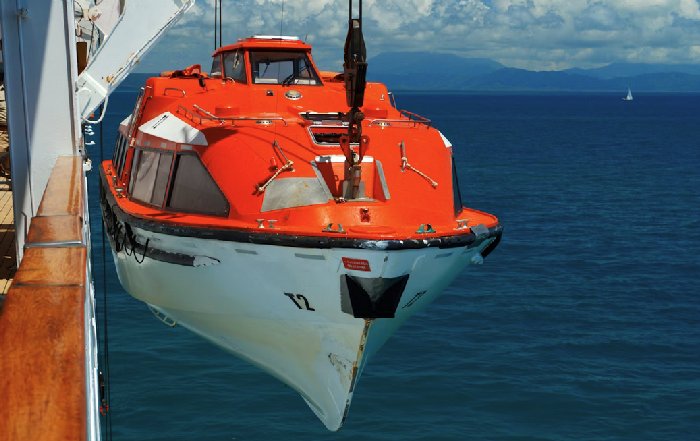
Liferafts and survival craft have also undergone a quiet revolution. High-quality models now incorporate insulated floors, improved canopy ventilation, integrated ballast systems for enhanced stability, and compact packaging that accommodates both superyachts and smaller family cruisers with limited stowage. For owners in France, Italy, Spain, and Australia, the service network and repacking infrastructure have become as important as initial purchase decisions, since lifecycle cost and downtime during servicing can materially affect operational plans. In response, yacht-review.com connects its safety coverage to broader design and engineering analysis, examining how liferaft selection influences deck layout, weight distribution, and access in emergencies, particularly for yachts with complex multi-deck arrangements.
EPIRBs, PLBs, and Global Distress Signaling in a Hyper-Connected Era
Distress signaling technology has matured rapidly, and by 2026 the distinctions and synergies between EPIRBs, PLBs, AIS man-overboard devices, and integrated satellite communicators have become a central theme in safety reviews. Modern Emergency Position Indicating Radio Beacons are now expected to support multi-constellation GNSS, rapid acquisition times, robust self-test protocols, and clear status feedback, while Personal Locator Beacons have become sufficiently compact and affordable that many owners equip every crew member and, in some cases, frequent guests.
Independent evaluations increasingly focus on how effectively these devices interact with the global Cospas-Sarsat system, how quickly they transmit accurate position data, and how well they integrate with onboard navigation displays and communication systems. For yachts crossing the Pacific, Indian, or Southern Oceans, as well as those cruising remote regions of the Arctic and Antarctic, the reliability and clarity of distress signaling are decisive. Reviews on yacht-review.com emphasize real-world usability: the ease of activation under stress, the accessibility of devices in an emergency, the practicality of battery replacement, and the clarity of instructions for non-professional users.
Regulatory trends add another layer of complexity. Agencies such as the European Maritime Safety Agency (EMSA) continue to refine guidance on carriage requirements, performance standards, and digital integration for distress alerting equipment in European waters. Owners operating under European flags, or cruising extensively between Mediterranean and Northern European ports, increasingly look for reviews that not only confirm current compliance but also anticipate upcoming regulatory shifts. In parallel, technical information from bodies like the International Telecommunication Union (ITU) helps clarify spectrum allocation and interoperability issues, shaping the criteria by which equipment is assessed for long-term suitability in an evolving communication landscape.
Navigation, Collision Avoidance, and the Intelligent Bridge
Navigation and collision avoidance systems have become central to safety evaluations as yachts grow larger, faster, and more technologically integrated. Radar, AIS, ECDIS and advanced chart plotters, autopilots, and integrated bridge systems are now viewed as critical safety infrastructure rather than purely navigational aids. In congested areas such as the English Channel, the approaches to major U.S. ports, the Straits of Malacca, and key Chinese and Japanese shipping lanes, the difference between a near miss and a serious incident often lies in how effectively these systems support situational awareness and decision-making.
Modern radar units increasingly use solid-state technology, providing higher resolution, reduced power consumption, and enhanced target discrimination. Reviews on yacht-review.com examine not just range performance, but also how well radar data fuses with AIS targets, chart overlays, and camera feeds to create an intuitive, low-clutter picture for the bridge team. Human factors have become a decisive element: even the most capable hardware can undermine safety if the user interface is confusing or if critical alarms are easily overlooked during high workload situations. Drawing on its technology insights, the platform evaluates menu structures, alarm hierarchies, and display ergonomics, reflecting the operational realities of both professionally crewed superyachts and owner-operated vessels.
AIS technology has also advanced, with improved transmission rates, enhanced collision prediction algorithms, and tighter integration with VHF DSC calling. External resources such as NOAA in the United States provide important context on electronic navigation standards, charting updates, and the transition to new digital products, all of which influence how navigation suites are specified and reviewed. Owners planning transatlantic passages, high-latitude expeditions, or complex coastal itineraries around Europe, North America, and Asia increasingly rely on reviews that explain whether specific systems are ready for the latest electronic chart formats and data services, and how gracefully they can be updated as standards evolve.
Fire Safety, Lithium-Ion Risks, and Passive Protection
Fire remains one of the most serious threats aboard any yacht, and the proliferation of lithium-ion batteries, high-capacity energy storage systems, and increasingly complex electrical installations has intensified scrutiny of both active and passive fire safety measures. In 2026, safety equipment reviews devote substantial attention to detection, suppression, and the underlying design choices that influence how effectively a yacht can prevent, contain, and respond to fire incidents.
Networked fire detection systems now employ multi-criteria sensors capable of distinguishing between harmless aerosols and real fire events, reducing false alarms while ensuring rapid response to genuine threats. Reviews assess detection speed, zone granularity, resilience to environmental conditions, and the clarity of alarm annunciation on bridge and crew panels. For larger yachts with distributed service spaces, guest areas, and technical compartments, the ability to pinpoint an incident within seconds is essential. yacht-review.com draws on its design coverage to examine how fire zones, escape routes, ventilation systems, and material choices combine with equipment selection to create a coherent fire safety strategy.
Suppression systems have diversified to address different risk environments. Engine rooms may rely on fixed gas or water mist systems, galleys on targeted wet chemical solutions, and accommodation areas on discreet sprinklers or mist nozzles. The rise of large lithium-ion battery banks for propulsion and hotel loads has driven demand for specialized detection and suppression technologies tailored to thermal runaway risks. External standards and guidance from organizations such as the National Fire Protection Association (NFPA) help frame these evaluations, particularly for yachts built or operated in North America. Reviews for owners in the United Kingdom, France, Italy, and other European markets also consider how unobtrusively fire safety systems can be integrated into high-end interiors, ensuring that safety enhancements do not compromise the aesthetic and experiential expectations of discerning guests.
Cybersecurity, Digital Safety, and Remote Monitoring
As yachts have become floating digital ecosystems, cybersecurity and digital safety have emerged as critical dimensions of overall risk management. Navigation systems, propulsion controls, hotel automation, entertainment networks, and even life-saving appliances can now be connected to onboard and shore-based networks. This connectivity enables powerful capabilities, from predictive maintenance to real-time performance analytics, but it also introduces vulnerabilities that can affect both safety and privacy.
By 2026, professional reviews increasingly assess not only physical equipment, but also the cyber resilience of the systems that control and monitor it. Network segmentation, intrusion detection, secure remote access, and robust update policies have become key evaluation criteria. Guidance from bodies such as ENISA, the European Union Agency for Cybersecurity, informs best practice on secure system design, and industry awareness has grown as high-profile cyber incidents in the broader maritime sector have highlighted the potential consequences of inadequate protections. yacht-review.com, through its business and technology reporting, evaluates vendor transparency on software maintenance, patching regimes, and incident response capabilities, recognizing that long-term trust depends as much on digital stewardship as on mechanical reliability.
Remote monitoring platforms are now widely used by fleet managers, family offices, and technical teams to track the status of bilge pumps, fire systems, power management, and even consumable safety items across yachts operating in different regions. For operators with assets in the Mediterranean, the Caribbean, Southeast Asia, and the South Pacific, these systems provide a unified view of safety readiness and maintenance needs. Reviews assess the usability of dashboards, the clarity of alerts, and the degree to which data can be transformed into actionable insights rather than mere information overload. Owners and managers increasingly expect that a modern yacht's safety profile can be monitored and audited remotely, supporting more rigorous governance and more efficient maintenance planning.
Sustainability, Safety, and Responsible Ownership
Sustainability has become a defining theme in the yachting sector, and by 2026 it extends well beyond propulsion and fuel choices to encompass materials, manufacturing, and end-of-life management of safety equipment. Owners in environmentally progressive markets such as Germany, Sweden, Norway, Denmark, Finland, the Netherlands, New Zealand, and Canada, as well as a growing number of clients in the United States and Asia, now scrutinize the environmental footprint of lifejackets, liferafts, flares, extinguishing agents, and packaging.
In this context, safety equipment reviews increasingly evaluate recyclability, material toxicity, and manufacturer take-back programs alongside traditional performance metrics. Some producers are experimenting with bio-based fabrics, reduced-plastic designs, and modular components that can be more easily separated and recycled. Readers who follow the dedicated sustainability coverage on yacht-review.com expect clear analysis of whether such innovations offer genuine environmental benefits without compromising safety or durability. The platform's editorial stance emphasizes that sustainability and safety must reinforce rather than undermine each other, particularly when equipment is intended for long-term use in demanding marine environments.
Broader frameworks, such as those discussed by the United Nations Environment Programme (UNEP), shape how the industry thinks about circular economy principles and marine pollution. As more yachts adopt hybrid or fully electric propulsion systems, the interplay between energy efficiency and fire safety becomes more complex, prompting detailed reviews of battery management systems, compartmentalization strategies, and extinguishing technologies suitable for high-energy storage. Owners and operators increasingly look for guidance that connects environmental responsibility with robust risk management, recognizing that future regulatory and market expectations will favor those who address both dimensions coherently.
Regional Nuances and Global Best Practice
One of the defining strengths of yacht-review.com is its genuinely global lens, which reflects the international nature of yacht construction, ownership, and operation in 2026. A single yacht may be designed in Italy, engineered in Germany, built in the Netherlands, flagged in a Caribbean registry, managed from London or Zurich, and cruised between the East Coast of the United States, the Mediterranean, the Red Sea, and Southeast Asia. This complexity demands safety equipment evaluations that account for multiple regulatory regimes, climatic conditions, and operational cultures.
In North America, alignment with U.S. Coast Guard and Transport Canada standards remains paramount, and owners often prioritize equipment with strong local service networks and clear documentation in English and French. In Europe, compliance with IMO conventions and EU directives is central, and there is growing emphasis on harmonization of standards across flag states and classification societies. In Asia-Pacific markets such as Singapore, Japan, South Korea, Australia, and Thailand, regional search and rescue infrastructure, tropical weather patterns, and long-distance island-hopping itineraries shape equipment requirements and review priorities. Through its global reporting, yacht-review.com incorporates case studies and operational feedback from these diverse regions, ensuring that its assessments are grounded in real-world usage rather than generic assumptions.
Cultural expectations also influence safety decisions. In family-oriented markets such as the United Kingdom, Canada, New Zealand, and parts of Northern Europe, there is particular interest in child-appropriate lifejackets, intuitive emergency signage, and training materials that support non-professional users. This focus is reflected in the platform's family-oriented content, which links equipment reviews with broader guidance on onboard education, drills, and inclusive safety culture. In markets where charter and corporate hospitality dominate, including France, Spain, Italy, and popular Caribbean and Mediterranean destinations, reviews often emphasize capacity, redundancy, and the ability to protect larger groups of guests with widely varying levels of experience.
Training, Community, and Continuous Improvement
No matter how advanced the equipment, safety ultimately depends on people. Training, drills, and the sharing of lessons learned remain critical, and by 2026 there is a growing recognition that equipment reviews must be connected to the broader ecosystem of professional development, industry events, and community initiatives.
Professional training centers and maritime academies across Europe, North America, and Asia provide structured courses on the use of life-saving appliances, firefighting, crisis management, and crowd control, and their experience often informs the criteria used in equipment evaluations. yacht-review.com highlights these connections through its events coverage and community reporting, documenting how demonstrations, workshops, and live trials at major boat shows and safety conferences influence both product development and buyer expectations. The platform's cruising and lifestyle sections further reinforce the message that safety is embedded in everyday practice, from routine checks before departure to regular guest briefings and realistic emergency drills.
For business-oriented readers, continuous improvement in safety is a tangible competitive advantage. Yachts that can demonstrate robust safety cultures, meticulously maintained equipment, and well-trained crews are more attractive in charter markets, command higher resale values, and often secure more favorable insurance terms. By integrating safety equipment analysis with broader industry news and business insights, yacht-review.com supports owners, managers, and captains in aligning technical choices with long-term commercial and operational strategies.
Looking Beyond 2026: The Evolving Role of Safety Reviews
As the industry looks toward the 2030s, the trajectory of marine safety equipment points toward deeper integration, greater intelligence, and more stringent expectations from regulators, insurers, and clients. Artificial intelligence and machine learning are likely to play expanding roles in collision avoidance, anomaly detection, and predictive maintenance. Satellite connectivity will become more ubiquitous and affordable, enabling continuous monitoring and richer data flows even in remote regions. New materials and energy systems will reshape both the risk landscape and the tools available to manage it.
In this evolving environment, the need for independent, experience-based, and technically rigorous safety equipment reviews will only intensify. Owners, shipyards, technology providers, and regulators from the United States, the United Kingdom, Germany, France, Italy, Spain, the Netherlands, Switzerland, China, Japan, South Korea, Singapore, Australia, Brazil, South Africa, and beyond will continue to rely on trusted platforms to interpret complex information, benchmark competing solutions, and translate regulatory developments into practical guidance. By maintaining its focus on experience, expertise, authoritativeness, and trustworthiness, and by integrating safety analysis across its core editorial pillars, yacht-review.com remains uniquely positioned to guide the global yachting community toward a future in which safety is not merely an obligation, but a defining attribute of responsible and rewarding life at sea.