

Cruising the US East Coast: Strategic Stops for the Modern Yachting Traveller
The East Coast: A Mature, High-Value Cruising Corridor
The United States East Coast has consolidated its position as one of the most strategically important and experientially diverse cruising corridors in global yachting, functioning not simply as a north-south transit route, but as a sophisticated sequence of high-value destinations where operational efficiency, lifestyle, culture and innovation intersect in increasingly integrated ways. From the cool, pine-framed harbors of Maine to the subtropical inlets of South Florida and the gateway routes to the Bahamas and wider Caribbean, the coast now operates as a mature migration axis for owner-operated yachts, family cruisers and professionally crewed superyachts alike, serving audiences from the United States, Europe, Asia and beyond who expect world-class infrastructure, reliable service ecosystems and meaningful onshore experiences.
For the editorial team at yacht-review.com, which has spent years tracking developments across reviews, design, cruising, business and lifestyle, the East Coast has become a living test bed where theory and practice converge. Investments by marinas, shipyards, technology providers and hospitality operators have accelerated since 2020, with significant capital flowing into upgraded berths for larger yachts, shore power systems, high-bandwidth connectivity and environmentally responsible infrastructure. These developments, combined with the region's dense network of airports, financial centers and cultural hubs, make the East Coast particularly attractive to internationally mobile owners from the United States, United Kingdom, Germany, Canada, Australia, Italy, France, Spain, the Netherlands, Switzerland, China, Singapore and other leading yachting markets who wish to combine leisure cruising with business activity and family life without compromising on standards.
In this context, cruising the East Coast in 2026 is less about ticking off ports and more about curating a strategic itinerary that balances operational considerations, seasonal conditions, cultural interests and sustainability commitments. The route has become a showcase for Experience, Expertise, Authoritativeness and Trustworthiness in practice, where decisions about where to berth, refit or cruise are informed by data, professional advice and the accumulated knowledge that yacht-review.com continuously gathers and shares with its global readership.
Seasonal Strategy, Risk Management and Route Design
Successful East Coast cruising in 2026 begins with a rigorous approach to seasonal planning, risk management and regulatory awareness, as climate variability, insurance conditions and evolving local rules have made traditional assumptions less reliable. The broad migration pattern remains familiar: yachts typically head north in late spring and early summer to capitalize on the optimal conditions in New England and the Mid-Atlantic, then turn south in early autumn to avoid harsher weather and to position for winter seasons in Florida, the Bahamas and the Caribbean. However, the timing of these movements is now more closely tied to dynamic risk assessments that incorporate updated hurricane forecasts, sea surface temperature data and increasingly granular regional weather models.
The National Hurricane Center, operating under the umbrella of the National Oceanic and Atmospheric Administration (NOAA), continues to be the primary reference for storm tracking and seasonal outlooks, and prudent captains treat its updates as integral to voyage planning rather than background information. Owners and managers increasingly rely on long-range routing services, satellite communications and real-time data feeds to align their itineraries with insurance requirements and port regulations, while also maintaining the flexibility to adjust course as conditions shift. Those seeking deeper insight into climate trends, coastal risk and oceanographic data frequently consult resources from NOAA, integrating this information into both operational decisions and longer-term asset planning.
A defining geographic and logistical feature of the East Coast remains the Intracoastal Waterway (ICW), which provides a partially sheltered alternative to offshore passages and is particularly attractive to family cruisers, smaller yachts and international visitors who value scenic, lower-stress navigation. Yet the ICW is not a simple corridor; shoaling, tidal ranges, bridge schedules and localized regulations require up-to-date electronic charts, reliable depth sounders and well-briefed crew. Modern navigation suites, integrated helm systems and real-time AIS and depth data, which yacht-review.com regularly evaluates in its technology coverage, have significantly improved predictability and safety, but they have not eliminated the need for traditional seamanship, pilotage skills and constant situational awareness, especially for larger yachts with deeper drafts and taller air drafts.
New England: Heritage, Innovation and High-Summer Cruising
At the northern end of the typical East Coast itinerary, New England remains a magnet for sophisticated cruisers from North America, Europe and Asia who seek a blend of maritime heritage, refined culture and comfortable summer conditions. The coastline of Maine, with its granite headlands, dense forests and intricate archipelagos, offers a cruising environment that is both visually striking and technically engaging, with numerous sheltered anchorages, working harbors and small towns that retain an authentic character often prized by experienced owners who prefer understatement over spectacle. Ports such as Camden, Rockland and Bar Harbor have continued to upgrade marina facilities, provisioning options and concierge services, while still preserving the working-waterfront atmosphere that distinguishes them from more resort-oriented destinations.
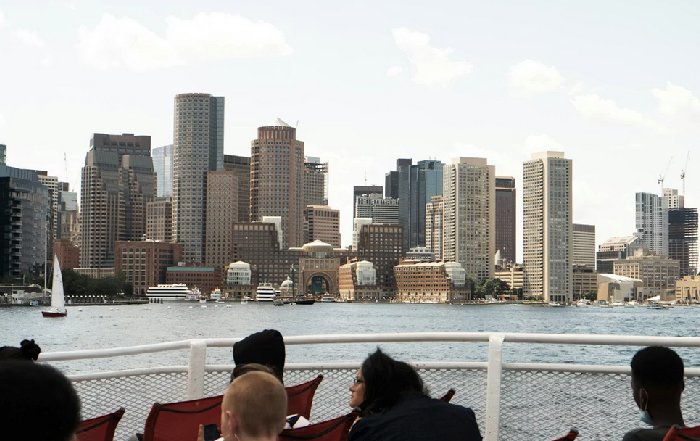
Further south, Boston has strengthened its role as a strategic stop for owners and charterers who operate at the intersection of leisure and business. With its concentration of financial institutions, technology companies and educational powerhouses such as Harvard University and the Massachusetts Institute of Technology (MIT), the city provides a unique context in which yachting intersects with advanced research in materials science, autonomy, propulsion and sustainability. Owners interested in understanding how cutting-edge research may influence future yacht systems and design often explore publicly accessible material from MIT, using it as a lens through which to evaluate emerging technologies that appear in new-build projects and refits.
Newport, Rhode Island occupies a special place in the East Coast narrative and in the editorial focus of yacht-review.com, combining deep sailing heritage, high-end lifestyle and serious technical capability. Its association with the America's Cup, its grand Gilded Age mansions and its dense ecosystem of marinas, yards, sail lofts and service providers make it a natural gathering point for regattas, classic yacht events and superyacht rendezvous. For readers following history, boat reviews and events, Newport offers a uniquely rich environment where traditional craftsmanship and contemporary innovation coexist, providing case studies of refits, race campaigns and design collaborations that influence practices far beyond New England.
New York and the Mid-Atlantic: Global Capital Meets Coastal Tradition
As yachts turn south from New England, New York City emerges not only as a dramatic visual waypoint, with its approach through the Verrazzano-Narrows and past the Statue of Liberty, but also as a global capital where maritime activity intersects with finance, law, media and art at the highest levels. For internationally active owners from the United States, United Kingdom, Germany, Switzerland, Singapore and other major financial centers, New York serves as a critical node where board meetings, deal-making and cultural engagements can be seamlessly combined with time aboard. The city's marina infrastructure, particularly on the Hudson and in Brooklyn, has continued to evolve, with expanded berths for larger yachts, enhanced security protocols and improved shore power capacity, reflecting broader trends toward professionalization and environmental responsibility.
Beyond the city itself, the Mid-Atlantic coastline offers a sequence of destinations that reward more detailed exploration. The Hamptons, coastal Connecticut and historic ports in New Jersey and Delaware provide seasonal hubs for affluent residents and charter guests, while the Chesapeake Bay remains one of North America's most significant and versatile cruising grounds. Annapolis, home to the United States Naval Academy, combines a strong sailing culture with a compact, walkable historic center and a concentration of yacht brokers, equipment suppliers and technical specialists, making it a favored stop for owners who appreciate a maritime town that genuinely lives its nautical identity. Nearby Baltimore complements Annapolis with big-city amenities, major-league sports and access to specialized marine and industrial services.
Operationally, the Chesapeake's extensive rivers, coves and protected anchorages make it an ideal environment for family cruising, crew training and equipment testing, offering relatively benign conditions in which to refine onboard routines and assess systems performance. Owners and captains looking to understand safety, compliance and enforcement in US waters routinely consult the U.S. Coast Guard, whose regulatory and guidance material, accessible through USCG resources, underpins many of the operational standards that serious operators now treat as baseline requirements. For yacht-review.com, which emphasizes community and family as core themes, the Chesapeake also exemplifies how yacht clubs, sailing schools and youth programs can nurture the next generation of sailors and owners, reinforcing the idea of yachting as an intergenerational culture rather than a purely transactional luxury.
The Carolinas and Georgia: Intracoastal Character and Industrial Capability
South of the Chesapeake, the coasts of North Carolina, South Carolina and Georgia present a distinctive blend of historic cities, barrier islands and low-country waterways that are particularly well suited to Intracoastal Waterway cruising. Towns such as Beaufort in North Carolina, Charleston in South Carolina and Savannah in Georgia offer rich architectural heritage, vibrant culinary scenes and a growing array of high-end hospitality options, making them attractive to owners and guests from Europe, Asia and the Americas who wish to experience the cultural fabric of the American South in comfort and privacy.
From an industrial and business perspective, the Carolinas have become increasingly significant players in yacht construction, refit and maintenance, with several respected yards handling complex projects for both domestic and international clients. Competitive labor costs, a skilled workforce and supportive regulatory environments have encouraged investment from builders, equipment manufacturers and service providers, contributing to a robust marine industrial base that complements the more internationally known facilities in Florida and the Northeast. Industry stakeholders monitoring production trends, sales data and policy developments often turn to the National Marine Manufacturers Association (NMMA), whose market insights, available via NMMA, help benchmark costs, capacity and quality standards across different US regions.
For family cruisers and owner-operators, the ICW through the Carolinas and Georgia offers calm waters, abundant wildlife and numerous opportunities for secluded anchorages, aligning closely with the travel and family interests of the yacht-review.com audience. Yet the technical demands of this stretch should not be underestimated: shoaling, tidal currents, narrow cuts and low bridges require precise planning and disciplined execution, particularly for larger yachts. The widespread adoption of forward-looking sonar, high-resolution bathymetric charts and integrated route-planning software has reduced uncertainty, but captains still rely on local knowledge, updated notices to mariners and peer-to-peer information exchange to navigate safely and efficiently.
Florida: Subtropical Hub, Global Gateway and Industry Nerve Center
By the time a yacht reaches Florida, it has effectively transitioned from temperate to subtropical cruising, and with that shift comes a new set of opportunities and responsibilities. Florida is both a destination and a gateway: its ports provide direct access to the Bahamas, the wider Caribbean and, via the Panama Canal, onward routes to the Pacific and global circumnavigation. Cities such as Fort Lauderdale and Miami sit at the heart of this ecosystem, acting as nerve centers for brokerage, charter, refit, technology and finance that serve clients from North America, Europe, the Middle East, Asia and Latin America.
Fort Lauderdale, often described as the yachting capital of the world, offers one of the highest concentrations of marinas, shipyards and specialist service providers anywhere, with the capability to handle everything from routine maintenance on family cruisers to complex refits on large superyachts. Miami, with its global financial, cultural and media presence, has expanded its marina and waterfront infrastructure, providing high-end berthing, shore power and security that meet the expectations of a cosmopolitan clientele. The state's international airports, private aviation facilities and hospitality sector make embarkation and disembarkation straightforward for owners and charter guests who may be flying in from London, Zurich, Dubai, Singapore, Hong Kong, Sydney.
Florida also hosts some of the industry's most influential trade and consumer events, including the Fort Lauderdale International Boat Show and the Miami International Boat Show, which function as critical platforms for product launches, networking, market analysis and trend-spotting. The editorial team at yacht-review.com uses its news and events coverage to contextualize these shows within broader shifts in design, propulsion, digitalization and sustainability, helping readers interpret not only what is being displayed, but why it matters strategically.
At the same time, Florida sits at the forefront of discussions about coastal resilience, sea-level rise, storm impacts and water quality, issues that directly affect marina viability, insurance costs and long-term asset values. State and local authorities collaborate with federal agencies and scientific institutions, including NOAA, to monitor environmental conditions and to develop adaptation strategies. Owners, managers and investors increasingly recognize that understanding these dynamics is essential not only for responsible cruising, but for informed decision-making about where to base yachts, where to invest in infrastructure and how to future-proof their operations.
Sustainability and Regulation: Responsible Cruising as a Strategic Imperative
Across the entire East Coast, 2026 has brought a sharper focus on sustainability, regulatory compliance and transparent governance, driven by a combination of policy developments, stakeholder expectations and the personal values of many owners and their families. Emissions regulations, waste management rules and protections for sensitive habitats have become more stringent, and while large commercial shipping remains the primary regulatory target, the superyacht sector is increasingly expected to align with global standards and to demonstrate proactive environmental stewardship.
Technological advances have delivered more efficient engines, hybrid and fully electric propulsion options, advanced hull coatings, energy management systems and optimized routing tools, all of which contribute to lower fuel consumption and reduced environmental footprints. Behavioral changes are equally important: careful anchoring to avoid seagrass and coral damage, rigorous waste segregation and shore-based recycling, preference for marinas with effective pump-out and shore power facilities, and adherence to speed limits in manatee zones and other protected areas now form part of the standard operating expectations for serious operators along the East Coast. International frameworks developed by the International Maritime Organization (IMO) and environmental guidelines from organizations such as the United Nations Environment Programme (UNEP) provide a broader context, and those wishing to learn more about sustainable business practices increasingly integrate such guidance into their internal policies and yacht management mandates.
For yacht-review.com, sustainability has moved from a specialist topic to a central editorial pillar, reflected in its dedicated sustainability section and in the way environmental performance is woven into reviews, design features and business analysis. The East Coast, with its mix of heavily trafficked urban harbors, fragile wetlands and climate-exposed communities, illustrates the real-world implications of these issues more vividly than abstract policy debates ever could. Owners who invest in efficient systems, crew training and responsible cruising protocols not only reduce their ecological impact, but also enhance the reputational and financial resilience of their assets in a market where charterers, buyers and regulators increasingly reward demonstrable responsibility.
The Business Ecosystem: Brokerage, Charter, Finance and Professional Services
Beyond its scenic and cultural appeal, the US East Coast functions as a powerful economic engine for the global yachting sector, encompassing brokerage, charter, new-build and refit activity, finance, insurance and a broad range of professional services. Key hubs such as New York, Newport, Fort Lauderdale and Miami host offices of major brokerage houses, management companies, law firms and family offices, creating an ecosystem in which complex transactions can be structured and executed with high levels of expertise and regulatory clarity. For internationally active owners from North America, Europe and Asia who value transparent legal frameworks, robust contract enforcement and sophisticated financial services, this environment is a significant competitive advantage.
The charter market along the East Coast has evolved from a niche alternative to the Mediterranean and Caribbean into a mature offering that features prominently in global charter calendars. New England in summer and South Florida in winter are now well-established options for high-net-worth clients seeking variety, privacy and access to distinctive onshore experiences that differ from traditional European and tropical itineraries. Supporting this growth is a network of marinas, provisioning specialists, concierge services and experience providers capable of delivering consistent, high-end service across multiple ports, a development that yacht-review.com follows closely through its business and global coverage.
Risk management and insurance have become more complex and central to strategic planning as climate-related risks, geopolitical uncertainties and evolving regulations converge. Underwriters now routinely require detailed hurricane preparedness plans, evidence of crew training and robust maintenance documentation, particularly for yachts that spend significant time in hurricane-prone regions such as the southeastern United States and the Caribbean. Owners and managers increasingly work with specialized advisors, legal counsel and technical consultants to navigate this landscape, recognizing that disciplined operations, transparent governance and data-backed decision-making are now integral components of long-term value preservation.
Technology and Connectivity: Enhancing Safety, Productivity and Experience
Modern East Coast cruising is shaped profoundly by advances in digital technology, connectivity and automation, which have transformed both onboard life and shore-based support. High-bandwidth satellite systems, supplemented by 5G coastal networks in urbanized areas, allow owners and guests to maintain business continuity, access global entertainment platforms and communicate seamlessly, turning yachts into fully functional mobile offices, homes and family spaces. For entrepreneurs, executives and investors who divide their time between hubs in North America, Europe and Asia, this connectivity is no longer a luxury but a prerequisite for extended cruising.
On the operational side, integrated bridge systems, augmented reality navigation overlays, advanced radar and sonar suites and comprehensive monitoring platforms enable crews to manage navigation, propulsion, hotel systems and safety equipment with greater precision and situational awareness. Predictive maintenance algorithms, remote diagnostics and over-the-air software updates allow manufacturers and service providers to support vessels proactively, reducing downtime and improving reliability. The editorial team at yacht-review.com has devoted significant attention to these developments in its technology reporting, recognizing that equipment choices, software ecosystems and cybersecurity practices now play a crucial role in purchase decisions and long-term satisfaction.
At the same time, the human factor remains central. Even the most advanced systems require well-trained crew, clear procedures and thoughtful user interface design to deliver their full potential without introducing new risks. The East Coast, with its combination of busy commercial ports, narrow channels, shifting shoals and rapidly changing weather, provides an ideal proving ground for evaluating how technology performs under real-world conditions, and yacht-review.com continues to draw on direct field experience, sea trials and owner feedback to inform its assessments.
Lifestyle, Culture and Community: The Human Dimension of the East Coast Route
Ultimately, what distinguishes an extended East Coast cruise is not only the quality of its infrastructure or the sophistication of its technology, but the richness of its human and cultural landscape. From the museums and performing arts institutions of Boston and New York to the galleries, restaurants and nightlife of Miami, and from the maritime museums of New England to the jazz, culinary and historical traditions of the American South, the route offers a tapestry of experiences that can be tailored to diverse interests, age groups and cultural backgrounds. For many owners and guests from Europe, Asia, Africa and South America, an East Coast itinerary provides an immersive yet controlled introduction to regional American cultures, framed by the privacy and comfort of their own yacht.
Onboard, the lifestyle dimension is expressed through interior design, wellness facilities, service standards and the ability to support both relaxation and productivity. Designers and builders respond to these expectations by creating flexible spaces that can shift between family living, formal entertaining and remote working, integrating wellness areas, outdoor social zones and intuitive control systems that allow guests to personalize lighting, climate and entertainment. yacht-review.com, through its lifestyle and design coverage, documents how these trends play out across different size segments and user profiles, and the East Coast offers numerous examples of yachts in active, multi-season use rather than static display.
Community is another defining element of the East Coast experience. Marinas, yacht clubs and event organizers foster networks of owners, captains, crew and industry professionals who share knowledge, collaborate on safety and environmental initiatives and support charitable causes, from ocean conservation to youth sailing programs. Regattas, fishing tournaments, classic yacht gatherings and philanthropic cruises along the coast contribute to a sense of shared identity and purpose that transcends individual ownership and national boundaries. This community orientation aligns closely with the ethos of yacht-review.com, which views yachting as a global culture and network that connects people across continents, industries and generations, rather than merely a collection of high-value assets.
Conclusion: The East Coast in 2026 as a Living Laboratory for Modern Yachting
In 2026, cruising the US East Coast offers yacht owners, charter guests and industry stakeholders a uniquely comprehensive lens through which to experience and evaluate the state of modern yachting. From Maine and Newport to New York, the Chesapeake, the Carolinas, Georgia and Florida, the route's must-see stops form a coherent narrative that encompasses design innovation, operational best practice, sustainability, business sophistication, technological progress and rich lifestyle opportunities. For yacht-review.com, which has built its reputation on Experience, Expertise, Authoritativeness and Trustworthiness, the East Coast functions as a living laboratory where ideas are tested, refined and translated into real-world outcomes that matter to a demanding, globally dispersed audience.
For readers planning their own voyages, considering charter itineraries or assessing investments in yachts and related businesses, the East Coast provides both inspiration and practical lessons. Its marinas, shipyards, cities and communities collectively demonstrate how a mature cruising corridor can evolve to meet the expectations of a sophisticated international clientele while confronting environmental, economic and social challenges with increasing realism and responsibility. As yacht-review.com continues to broaden its global and cruising coverage, the US East Coast remains a cornerstone reference point: a dynamic, strategically important coastline where the future of yachting is being shaped in real time, and where informed decisions about design, technology, sustainability and lifestyle can be observed, analyzed and shared with a worldwide community of enthusiasts and professionals.