

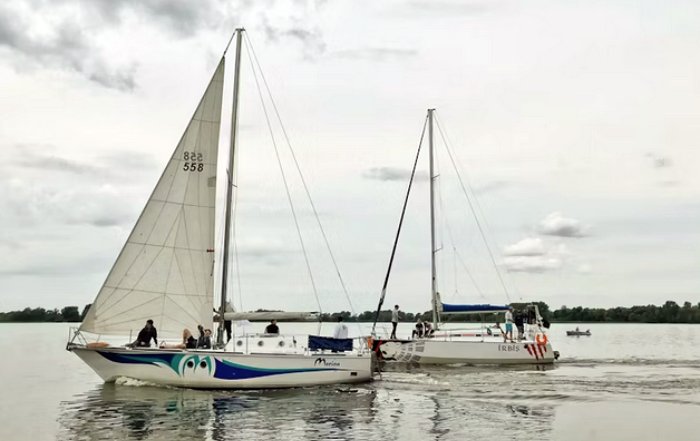
Sailing vs. Motor Yacht Lifestyles: A Strategic Comparison for the Modern Owner
The Evolving Landscape of Yachting Lifestyles
The global yachting sector has matured into a highly sophisticated, data-aware, and value-driven ecosystem in which the choice between a sailing yacht and a motor yacht has become a strategic decision rather than a purely emotional or aesthetic one. For the international audience of yacht-review.com, which includes experienced owners, first-time buyers, charter clients, family cruisers, and industry professionals across North America, Europe, Asia, Africa, and South America, the question is no longer framed as a simple technical comparison of sails versus engines. Instead, it is increasingly understood as a reflection of personal identity, professional and family priorities, financial strategy, and long-term views on sustainability and technological change.
The distinction between sailing and motor yacht lifestyles now extends into design philosophy, ownership structures, crew dynamics, regulatory frameworks, global cruising patterns, and the social cultures that develop around each community. As yacht-review.com continues to expand its coverage across reviews, design, cruising, business, technology, sustainability, and lifestyle, the editorial team increasingly observes owners approaching this choice as they would a diversified investment decision, weighing risk, return, and experiential value with a level of rigor that mirrors their onshore professional lives.
In this environment, the role of an authoritative, independent platform such as yacht-review.com is to connect the emotional appeal of life at sea with evidence-based insight, operational realities, and a global context. The aim is to help owners in the United States, United Kingdom, Germany, Canada, Australia, France, Italy, Spain, the Netherlands, Switzerland, China, Singapore, the Nordic countries, South Africa, Brazil, and beyond understand not simply what each lifestyle offers, but how it aligns with who they are and how they intend to use their time and capital over the coming decade.
Core Philosophies: What Defines a Sailing Yacht Lifestyle?
The sailing yacht lifestyle in 2026 remains deeply rooted in participation, seamanship, and an intimate relationship with the natural environment, yet it is now equally shaped by advanced materials, digital navigation, and performance analytics. Owners and families who share their experiences with yacht-review.com consistently describe sailing not as a passive form of travel but as a continuous dialogue between human judgment, technical skill, and the changing conditions of wind and sea.
On a practical level, life aboard a sailing yacht is structured around weather systems, routing decisions, and the efficient management of energy and resources. Captains and owners routinely rely on real-time meteorological and oceanographic data from institutions such as NOAA in the United States, accessible at noaa.gov, and European agencies such as Météo-France, to refine departure windows, optimize sail plans, and mitigate risk during passages. The daily rhythm on board is shaped by watch schedules, sail changes, and adjustments to sea state, which in turn foster a culture of shared responsibility and situational awareness among all on board.
For many families, particularly those from Europe, North America, Australia, New Zealand, and South Africa, the sailing lifestyle has become a framework for education and personal development. Through the cruising narratives featured on yacht-review.com/cruising.html, it is evident that children and teenagers who grow up on sailing yachts acquire not only practical seamanship and navigation skills but also resilience, patience, and an ability to remain composed under pressure. The collective experience of reefing sails in rising winds, troubleshooting systems at sea, or navigating tight anchorages in the Mediterranean, the Caribbean, or Southeast Asia often becomes a defining element of family history.
At the same time, sailing in 2026 is not a retreat into nostalgia. Modern performance cruisers, bluewater monohulls, and multihulls increasingly incorporate carbon fiber spars, advanced laminates, optimized hull forms, and integrated electronics, topics that yacht-review.com explores in depth on design and technology pages. Owners are now highly data-literate, using polar diagrams, routing software, and sensor-driven performance monitoring to fine-tune trim, course, and speed. This fusion of traditional seamanship with contemporary engineering appeals to technically minded professionals in Germany, the Netherlands, Scandinavia, the United States, and Asia who see their yachts as both demanding partners and sophisticated machines.
Fundamentally, the sailing philosophy emphasizes process over instant gratification. Voyages are measured not only in miles covered but in decisions made well, skills refined, and the satisfaction of harnessing natural forces. For many readers of yacht-review.com, this is the essence of the sailing lifestyle: a commitment to active engagement and continuous learning.
Core Philosophies: What Defines a Motor Yacht Lifestyle?
The motor yacht lifestyle, in contrast, is anchored in control over time, predictability of experience, and the ability to deliver consistent comfort and hospitality regardless of wind conditions. Owners of motor yachts in the United States, United Kingdom, Italy, Spain, the Middle East, Southeast Asia, and emerging markets such as China and Brazil often view their vessels as mobile extensions of their primary residences, corporate environments, or boutique hospitality concepts.
Motor yachts are typically designed as high-comfort platforms that prioritize space, privacy, and amenity-rich environments. Interior arrangements emphasize full-beam owner's suites, guest cabins with hotel-level comfort, wellness areas, cinemas, and beach clubs that open directly onto the sea. Features on yacht-review.com/lifestyle.html regularly highlight how these yachts function as floating villas or penthouses, enabling owners to maintain a familiar standard of living while cruising between the Bahamas and New England, the Côte d'Azur and the Balearics, the Whitsundays and the Great Barrier Reef, or the islands of Thailand and Indonesia.
The operational philosophy of motor yachting is inherently service-oriented. Professional crews, trained under regulatory frameworks such as those of the Maritime and Coastguard Agency (MCA) in the United Kingdom and equivalent authorities worldwide, manage navigation, engineering, hotel operations, and guest services to a level that rivals luxury hotels. Owners are shielded from technical complexity and can focus on relaxation, business, or entertainment. Technical reviews on yacht-review.com/reviews.html frequently emphasize redundancy in propulsion, power generation, and critical systems, reflecting the premium placed on reliability and uptime in this segment.
For time-pressed executives, entrepreneurs, and multi-generational families, particularly in North America, Europe, and Asia, the motor yacht lifestyle offers a strategic advantage: the ability to transform limited vacation windows or long weekends into high-value experiences. The capacity to cruise at higher speeds, adhere to precise itineraries, and synchronize yacht operations with private aviation schedules is central to this appeal. For these owners, the yacht becomes a controlled environment where business meetings, family gatherings, and leisure time can unfold without the unpredictability associated with wind-dependent travel.
Design and Space: How Form Follows Function
Design considerations provide a clear lens through which to understand the fundamental differences between sailing and motor yacht lifestyles. The physical constraints and opportunities inherent to each propulsion type shape not only aesthetics but also the daily experience of those on board.
Sailing yachts must reconcile interior volume with hydrodynamic efficiency, stability, and the structural demands of carrying a rig. Designers featured on yacht-review.com/design.html often describe these vessels as exercises in disciplined optimization, where every decision about beam, freeboard, superstructure height, and interior layout must respect performance criteria. The presence of masts, standing rigging, and running rigging influences deck design and circulation, creating a more direct relationship between operational areas and living spaces. Cockpits, helm stations, and deck saloons are typically integrated into a cohesive environment where those on board remain visually and physically connected to the act of sailing.
The interior design language of contemporary sailing yachts tends toward refined understatement, favoring natural woods, tactile fabrics, and a strong visual connection to the sea through low-slung windows and open sightlines. Owners in markets such as Scandinavia, Germany, the Netherlands, New Zealand, and Canada often gravitate toward this aesthetic, which aligns with broader cultural preferences for functional minimalism and craftsmanship. The result is a living environment that feels purposeful and authentic, reinforcing the core philosophy of active engagement.
Motor yachts, free from the need to accommodate masts and extensive sail-handling gear, enjoy far greater flexibility in terms of volume and spatial organization. Wider beams, higher superstructures, and multi-deck configurations allow designers to create expansive salons, sky lounges, beach clubs, and owner's decks that rival luxury residences. Over the last few years, yacht-review.com has documented the trend toward floor-to-ceiling glazing, open-plan layouts, and seamless transitions between interior and exterior spaces, particularly in the 30- to 70-meter segment favored by clients in the United States, United Kingdom, Italy, France, Spain, the Middle East, and Asia.
This spatial freedom also enables more sophisticated back-of-house arrangements, including dedicated crew circulation, commercial-grade galleys, storage for large tenders and toys, and specialized spaces such as gyms, spas, dive centers, and offices. These capabilities support complex charter operations, corporate hospitality, and branded events, themes that are analyzed regularly on yacht-review.com/business.html and yacht-review.com/events.html. For many owners, the design of a motor yacht is not only about personal comfort but also about projecting a particular brand of lifestyle and corporate identity.
Cruising Profiles: Where and How Owners Travel
The cruising patterns associated with sailing and motor yachts reveal how propulsion and design influence the way owners engage with the world. Although both vessel types can operate globally, they tend to favor different styles of movement and different categories of destination.
Bluewater sailing yachts often follow seasonal migration routes that leverage prevailing winds and ocean currents. Owners and crews may cross the Atlantic on trade wind passages, spend winters exploring the Caribbean, Bahamas, or Cape Verde, and then reposition to the Mediterranean, Northern Europe, or the Pacific for the summer. Long-form travel features on yacht-review.com/travel.html and yacht-review.com/global.html highlight how this pattern encourages slower, more immersive exploration, with extended stays in remote anchorages and less reliance on shore-based infrastructure.
This style of cruising resonates strongly with owners in Europe, New Zealand, South Africa, and a growing number of North American and Asian sailors who treat long-distance voyaging as a sabbatical, a floating classroom for their children, or a phased transition into retirement. Destinations such as French Polynesia, the Azores, the Canary Islands, high-latitude Norway and Sweden, Patagonia, and the South Pacific archipelagos are particularly well suited to sailing yachts that can manage fuel consumption carefully and operate comfortably at modest speeds while maintaining range and self-sufficiency.
Motor yacht cruising, by contrast, is often organized around hub-and-spoke patterns anchored in well-serviced marinas, premium resort destinations, and aviation gateways. Owners and charter clients in the United States may base their yachts in Florida or the Bahamas and range north to New England or south to the Caribbean, while European owners focus on the Western and Eastern Mediterranean, the Adriatic, and the Aegean. In Asia, hubs in Singapore, Phuket, Hong Kong, and increasingly Hainan support itineraries through Southeast Asian archipelagos and the broader Indo-Pacific.
The speed and range of modern motor yachts enable ambitious multi-country itineraries within a single season, supported by professional yacht management companies and regulatory frameworks shaped by bodies such as the International Maritime Organization (IMO), whose global standards can be explored at imo.org. For many owners in Europe, North America, the Middle East, and Asia, the ability to combine business travel, family holidays, and high-level networking within a tightly managed schedule is a decisive advantage of the motor yacht model.
Financial and Operational Realities
Behind the lifestyle narratives, the financial and operational profiles of sailing and motor yachts differ in ways that materially influence owner satisfaction and long-term strategy. Readers of yacht-review.com increasingly approach these questions with the same analytical rigor they apply to other major asset classes.
Sailing yachts generally benefit from lower fuel consumption, particularly when owners and captains are willing to optimize routes and schedules to take advantage of favorable winds. Over long distances, this can translate into meaningful savings, especially in regions where fuel is expensive or logistically challenging to source. However, the cost structure of a sailing yacht includes specialized rigging, sail wardrobes, and periodic replacement of high-performance components such as carbon spars and advanced composite sails. These elements require expert maintenance and can represent significant capital expenditures over the life of the vessel.
Motor yachts, especially those above 30 meters with multiple engines and generators, incur higher fuel and engineering costs, but they also tend to command higher charter rates and enjoy strong demand in established markets such as the Mediterranean, Caribbean, and North America. Analytical pieces on yacht-review.com/business.html explore how owners use charter income, corporate structures, and professional management to offset operating expenses, while also navigating tax regimes, regulatory requirements, and crewing regulations across jurisdictions in Europe, Asia, and the Americas. For many owners in Germany, Switzerland, the United Kingdom, Singapore, and the United States, the decision between sailing and motor yachts is therefore closely linked to their appetite for commercial deployment and their broader wealth management strategy.
Crew requirements further differentiate the two lifestyles. Larger sailing yachts require captains and deck crew with advanced sailing and racing experience, as well as engineers and stewards who can operate effectively in more constrained spaces. Motor yachts typically employ larger crews with a strong emphasis on engineering, hotel services, and guest-facing roles. Training and certification pathways governed by authorities such as the U.S. Coast Guard, Transport Canada, and European flag states help standardize competence and safety across both segments, reinforcing trust for owners and charter clients who rely on professional crews to manage complex operations.
For the readership of yacht-review.com, which includes both seasoned yacht investors and first-time buyers in markets as diverse as the United States, United Kingdom, China, Brazil, South Africa, and Scandinavia, understanding these operational and financial dynamics is central to making an informed, sustainable choice.
Technology and Innovation: Convergence and Divergence
Technological innovation is reshaping both sailing and motor yacht experiences, sometimes driving convergence in areas such as navigation and safety, and sometimes accentuating differences in propulsion and energy management. Coverage on yacht-review.com/technology.html reflects how rapidly these developments are moving from prototype to mainstream adoption.
Both sailing and motor yachts now benefit from integrated bridge systems, advanced radar and AIS, satellite communications, and remote monitoring platforms that allow owners, captains, and management companies to track performance, maintenance needs, and safety parameters in real time. High-bandwidth connectivity at sea, supported by evolving satellite constellations, has transformed yachts into viable remote offices, classrooms, and telemedicine hubs, enabling owners and families to maintain professional and educational commitments while cruising. This shift is particularly significant for younger owners in North America, Europe, and Asia, who expect seamless digital integration as a baseline requirement.
In sailing yachts, technology is focused on enhancing performance and safety while preserving the core experiential value of harnessing the wind. Automated sail handling systems, push-button winches, advanced autopilots, and foiling solutions have made it possible for smaller crews, including couples and families, to manage larger and more powerful yachts with confidence. Performance analytics originally developed for elite racing series such as the America's Cup are increasingly applied to cruising designs, allowing owners to understand and optimize their yachts in ways that were previously accessible only to professional teams.
Motor yachts, meanwhile, are at the forefront of hybrid propulsion, energy storage, and advanced hull design. Builders and classification societies such as DNV and Lloyd's Register play a critical role in validating new technologies, from battery-assisted propulsion and alternative fuels such as methanol and hydrogen to dynamic positioning systems and optimized hull coatings that reduce drag and fuel consumption. Owners and their advisors rely on these institutions, alongside independent platforms like yacht-review.com, to assess which innovations are sufficiently mature and reliable to justify adoption.
Across both segments, the digitalization of onboard systems is changing how yachts are managed and maintained. Predictive maintenance, remote diagnostics, and software-driven upgrades are reducing downtime and improving safety, while also requiring a higher level of technical literacy from captains, engineers, and shore-based managers. For owners in technologically advanced markets such as the United States, Germany, the Netherlands, Scandinavia, Singapore, South Korea, and Japan, these developments reinforce the perception of yachts as sophisticated, future-ready assets rather than static luxury goods.
Sustainability and Environmental Responsibility
By 2026, sustainability has moved to the center of strategic decision-making for many yacht owners, particularly in Northern Europe, Canada, Australia, New Zealand, and parts of Asia. The perception that sailing yachts are inherently more sustainable because they rely on wind power remains broadly accurate in terms of operational emissions, but the reality is more nuanced and increasingly informed by lifecycle assessments and regulatory trends.
Sailing yachts clearly benefit from reduced fuel consumption when under sail, but they still depend on engines for harbor maneuvers, power generation, and motoring in calms. The environmental footprint of hull materials, rigging, and sails, as well as the eventual disposal or recycling of composite structures, is receiving closer scrutiny. Owners and industry stakeholders are looking to global frameworks such as those developed by the UN Environment Programme, where readers can learn more about sustainable business practices, to inform decisions on materials, supply chain transparency, and end-of-life strategies. Sector-specific analysis on yacht-review.com/sustainability.html helps translate these concepts into practical guidance for yacht projects and refits.
Motor yachts face a more immediate challenge due to higher fuel consumption and associated emissions, yet they also serve as important test-beds for low- and zero-emission technologies. Hybrid propulsion systems, shore power connections in marinas, optimized hull designs, advanced antifouling coatings, and sophisticated energy management software are all contributing to incremental reductions in environmental impact. Organizations such as the Water Revolution Foundation and bodies linked to World Sailing have been promoting science-based approaches to sustainability, encouraging transparent reporting and measurable progress across both sailing and motor segments.
Beyond technology, there is a growing emphasis on responsible cruising practices in both communities. Owners and captains are increasingly attentive to minimizing anchor damage in sensitive seabeds, reducing underwater noise, managing waste and grey water responsibly, and supporting marine protected areas. Features on yacht-review.com/travel.html highlight destinations from Norway's fjords and Greece's island groups to marine reserves in Thailand, South Africa, and Brazil that are adapting to these expectations through regulation, infrastructure, and local partnerships. For the global readership of yacht-review.com, which includes environmentally conscious owners in Europe, North America, Asia, and Africa, these developments are becoming central to how they define a successful yachting lifestyle.
Community, Culture, and Events
The cultural and community dimensions of yachting are often decisive in shaping long-term satisfaction, and in this respect sailing and motor yacht lifestyles offer distinct but overlapping ecosystems of events, networks, and shared rituals.
The sailing community remains strongly anchored in regattas, rallies, and long-distance cruising associations that foster camaraderie, mentorship, and intergenerational continuity. Classic yacht regattas, offshore races, and circumnavigation rallies attract participants from Europe, North America, Oceania, and Asia, creating a global tapestry of shared experiences. Historical perspectives on yacht-review.com/history.html trace how these traditions evolved from early ocean racing and exploration, while contemporary coverage on yacht-review.com/events.html documents their modern incarnations and growing inclusivity.
Motor yacht culture, while less competition-oriented, is rich in social gatherings, yacht shows, and curated destination events that blend lifestyle, business, and philanthropy. Major shows in Monaco, Cannes, Fort Lauderdale, Miami, Dubai, Singapore, and other hubs bring together builders, designers, financiers, and owners to shape trends in design, technology, and investment. The news desk at yacht-review.com, accessible via yacht-review.com/news.html, regularly reports on these events, emphasizing not only product launches and sales data but also the strategic conversations and partnerships that emerge in these environments.
For families, both lifestyles offer powerful community-building opportunities. Children growing up aboard sailing yachts may participate in junior sailing programs, offshore passages, and cultural immersion in remote coastal communities, experiences that align with the family-focused coverage on yacht-review.com/family.html. Motor yacht families, meanwhile, often prioritize shared experiences around water sports, wellness, and curated travel, using their yachts as bases for exploring coastal cities, national parks, and island chains with a high degree of comfort and security. Community-focused content on yacht-review.com/community.html reflects how owners and crews in both segments are increasingly engaged in charitable initiatives, local partnerships, and ocean conservation projects, reinforcing a broader sense of purpose beyond leisure.
Making the Choice in 2026: Aligning Yacht Type with Personal Strategy
In 2026, the decision between a sailing yacht and a motor yacht is best understood as a strategic alignment exercise rather than a contest of superiority. The most satisfied owners in the yacht-review.com community are those who have matched their vessel type, design, and operating model with their personal values, time horizons, and long-term life plans.
Owners who prioritize active participation, technical seamanship, and a deep connection with natural forces often find that the sailing lifestyle offers a uniquely rewarding path. It demands patience, skill development, and a willingness to embrace uncertainty in favor of authenticity and engagement. For these individuals and families, the yacht becomes an instrument of personal growth, cross-cultural exploration, and intergenerational storytelling, a theme that runs through many profiles and boat features on the site.
Conversely, owners who place a premium on time efficiency, expansive onboard space, high-end hospitality, and the seamless integration of business and leisure frequently conclude that motor yachts better support their objectives. For them, the yacht functions as a mobile asset that enables them to navigate demanding global schedules while preserving privacy, comfort, and control over their environment. Reviews and analyses on yacht-review.com/reviews.html and yacht-review.com/lifestyle.html consistently show how this model resonates with entrepreneurs, executives, and multi-generational families across North America, Europe, Asia, and the Middle East.
An increasing number of owners are also exploring hybrid strategies, whether by maintaining both a sailing yacht and a motor yacht, opting for performance-oriented sailing catamarans with generous living spaces, or choosing long-range displacement motor yachts with hybrid propulsion and reduced environmental footprints. The market's response to this demand is evident in the diversity of new projects and refits covered on yacht-review.com, reflecting a more segmented and globally distributed clientele.
Ultimately, the critical factor is alignment: between yacht type and intended use, between design and cruising plans, between financial structure and operational realities, and between environmental values and technological choices. In this complex decision-making landscape, yacht-review.com positions itself not merely as a source of news and inspiration but as a trusted, globally informed partner, providing the analytical depth, independent perspective, and real-world insight that modern owners require.
For readers across the United States, United Kingdom, Germany, Canada, Australia, France, Italy, Spain, the Netherlands, Switzerland, China, Sweden, Norway, Singapore, Denmark, South Korea, Japan, Thailand, Finland, South Africa, Brazil, Malaysia, New Zealand, and the wider regions of Europe, Asia, Africa, South America, and North America, the essential question in 2026 is not whether sailing or motor yachting is objectively superior. The more meaningful question is which lifestyle offers the most authentic, sustainable, and strategically sound expression of who they are, how they wish to allocate their time and resources, and how they intend to experience the oceans of the world in the years ahead.