

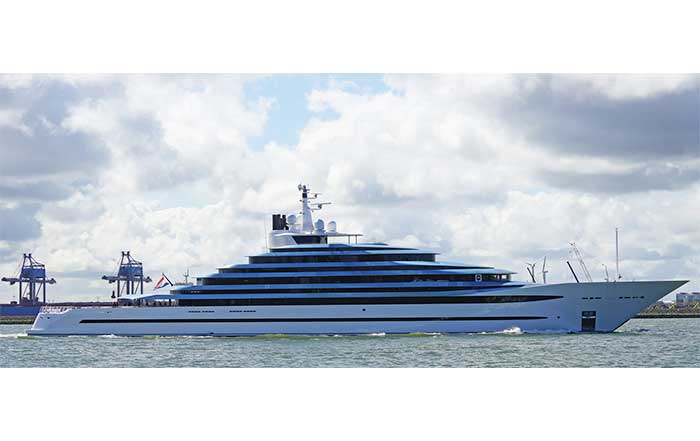
Superyachts: How Technology, Sustainability and Lifestyle Are Rewriting Ocean Luxury
Now the superyacht sector bobs up and down at a pivotal moment where design experimentation, environmental responsibility, and digital sophistication converge to create vessels that are as much strategic assets as they are expressions of personal identity and taste. For the global audience of Yacht-Review.com, which spans North America, Europe, Asia-Pacific, the Middle East, and beyond, the conversation has clearly moved beyond raw size or ostentatious display; the benchmark of excellence is now measured in experience, engineering depth, and long-term value, all underpinned by trust in the brands, designers, and shipyards that shape this rarefied world.
Across leading markets such as the United States, United Kingdom, Germany, France, Italy, Spain, the Netherlands, Switzerland, China, Australia, Singapore, the Nordic countries, South Korea, Japan, and the major hubs of the Middle East, superyachts have become platforms where innovation and lifestyle intersect. Owners and charter clients increasingly demand vessels capable of crossing oceans in comfort, operating with lower emissions, supporting scientific or philanthropic missions, and offering secure, private environments for family, business, and leisure. Within this context, the iconic yachts that defined the mid-2020s-Azzam, Eclipse, Dilbar, Flying Fox, Fulk Al Salamah, A+, Nord, REV Ocean, Solaris, and Somnio-remain essential reference points for understanding how the industry has evolved and where it is heading.
On Yacht Review's reviews hub, these vessels are not simply catalogued as impressive statistics; they are studied as case studies in experience, expertise, authoritativeness, and trustworthiness, illustrating how the world's most ambitious owners and shipyards are redefining what it means to travel the oceans in absolute yet increasingly responsible grandeur.
Redefining the Modern Superyacht
Today the modern superyacht is best understood as a highly integrated ecosystem that combines naval architecture, interior design, digital infrastructure, and environmental engineering into a single coherent narrative. Leading shipyards such as Oceanco, Feadship, Benetti, Heesen, and Blohm + Voss have moved beyond incremental improvements in comfort and styling to embrace hybrid propulsion, energy recovery, advanced hull forms, and circular-material thinking as core design principles rather than optional extras. At the same time, owners from the United States to the Gulf states and from Europe to Asia expect vessels that function as private resorts, mobile offices, wellness retreats, and secure family homes at sea.
This convergence is evident when examining the most influential yachts of the decade. Azzam, still the longest and among the fastest private yachts in the world, remains a masterclass in hydrodynamics and power management. Eclipse continues to set the standard for integrated security and privacy. Dilbar and Flying Fox illustrate the fusion of spa-level wellness, cutting-edge technology, and charter-ready versatility. REV Ocean and the forthcoming residential vessel Somnio demonstrate how research, sustainability, and co-ownership models are reshaping the economic and ethical frameworks of yachting. For readers who follow design evolution in depth, Yacht Review's design section offers detailed perspectives on how these flagships influence new builds from 40 to 150 meters and beyond.
Azzam: Longevity at the Top of the Size and Speed Pyramid
More than a decade after her launch, Azzam by Lürssen Yachts remains a towering example of what can be achieved when engineering ambition is pushed to its limit. At 180 meters, she continues to dominate the global fleet in length, yet what truly distinguishes her in 2026 is the sustained relevance of her underlying technology and design philosophy. Conceived for the Emirati royal family, Azzam combines gas turbines and diesel engines in a complex propulsion arrangement that allows her to exceed 30 knots, a feat still unmatched by any vessel of comparable scale.
The exterior by Nauta Design has aged with remarkable grace; its disciplined minimalism and carefully proportioned superstructure demonstrate that restraint can be as powerful a statement as extravagance. Inside, the work of Christophe Leoni, inspired by classical French decor, remains a case study in how to create palatial spaces that are nonetheless coherent and navigable for guests and crew. Even today, naval architects and project managers studying hydrodynamic efficiency and noise reduction continue to reference Azzam as a benchmark, particularly in the context of long-range, high-speed cruising. Those interested in how large yachts balance performance and comfort can explore related analyses on Yacht Review's technology pages, where propulsion, stabilization, and acoustic engineering are examined in detail.
Eclipse: Security, Privacy and the Architecture of Discretion
When Roman Abramovich commissioned Eclipse from Blohm + Voss, he effectively created a new category: the ultra-secure, ultra-private superyacht designed as much around risk mitigation as around luxury. At 162.5 meters, Eclipse remains instantly recognizable, but it is her layered security architecture that continues to influence large yacht projects across Europe, North America, and Asia. Missile detection systems, fortified glass, secure zones, and sophisticated surveillance integration have become standard talking points among high-net-worth individuals operating in increasingly complex geopolitical environments.
The vessel's two helipads, expansive beach club, large pools, and accommodation for dozens of guests and crew illustrate how security can coexist with lavish hospitality. Interior spaces, furnished with bespoke European craftsmanship, showcase how high-grade materials and artisanal detailing contribute to both perceived and real value over time. For decision-makers considering new builds or refits in 2026, Eclipse remains a compelling example of how to future-proof a yacht against emerging threats while maintaining a refined onboard experience. A broader overview of large yacht typologies and market positioning can be found in the boats section of Yacht Review, where vessels of different sizes and missions are compared from an owner's perspective.
Dilbar: Power, Volume and the Business of Mega-Yacht Operations
Dilbar, commissioned by Alisher Usmanov, still commands attention as one of the heaviest and most voluminous yachts ever constructed, with a displacement exceeding 15,000 tons and a length of 156 meters. Her reputation as a "floating palace" is well deserved, not only because of her 25-meter pool and expansive guest areas, but also due to her pioneering diesel-electric powerplant, which set a new standard for integrated power management on large yachts.
In 2026, Dilbar's significance extends into the business domain: running costs, crew management, and compliance for such a vessel provide valuable insight into the operational realities of the uppermost tier of the market. Her hybridized electrical architecture, advanced HVAC systems, and waste-handling solutions continue to inform how shipyards design for efficiency, comfort, and regulatory alignment. Executives and family offices evaluating long-term ownership models increasingly study yachts like Dilbar not simply as status symbols but as complex assets requiring governance, risk management, and technical oversight. Readers interested in the economics and governance structures behind these projects can explore Yacht Review's business coverage, which addresses topics from charter revenue strategies to refit ROI and crew retention.
Flying Fox: Charter Benchmark and the Rise of Wellness-Centric Design
Among yachts available on the global charter market, Flying Fox has, over the past years, become a touchstone for what an ultra-luxury charter platform can and should be. Measuring 136 meters, she integrates an exterior by Espen Øino with an interior by Mark Berryman Design, both of which prioritize flow, sightlines, and the seamless transition between indoor and outdoor spaces. Her two-deck spa, complete with cryotherapy, hammam, and professional-grade treatment rooms, anticipated the current wave of wellness-focused yacht concepts that now dominate shows in Monaco, Fort Lauderdale, Dubai, and Singapore.
Flying Fox remains highly sought after, particularly among North American, European, and Middle Eastern charter clients who view the yacht not merely as accommodation but as a curated wellness and adventure experience. Dive centers, watersports infrastructure, cinema lounges, and adaptable dining spaces support multi-generational travel and corporate retreats alike. For readers seeking to understand how charter expectations are reshaping design briefs and operational models, Yacht Review's lifestyle section provides ongoing commentary on experiential trends, complemented by external resources such as Fraser Yachts and Burgess Yachts, which track global charter demand.
Fulk Al Salamah: State Yachts and Maritime Soft Power
The Omani royal vessel Fulk Al Salamah, built by Mariotti Yards in Italy and measuring around 164 meters, occupies a distinct category within the superyacht universe: the state or government yacht. Employed primarily for official and ceremonial purposes, it functions as a maritime extension of national identity and diplomatic protocol rather than as a purely private asset. Its majestic white profile, disciplined detailing, and secure onboard infrastructure reflect the expectations placed on such vessels by governments from the Middle East to Europe and Asia.
In 2026, as geopolitical dynamics evolve and maritime diplomacy gains renewed importance, state yachts like Fulk Al Salamah offer a lens into how nations deploy soft power and cultural symbolism on the water. The vessel's operational patterns, refit cycles, and security arrangements often mirror broader strategic priorities, from regional influence to naval cooperation. For those interested in the historical roots of such ships-from royal barges to 20th-century presidential yachts-Yacht Review's history coverage explores how ceremonial and state vessels have shaped and reflected political narratives across continents.
A+: Engineering Refinement and the Pursuit of Quiet Performance
Formerly known as Topaz, A+ exemplifies how a large yacht can combine assertive styling with understated, highly refined engineering. Built for Emirati ownership, and measuring 147 meters, A+ features an exterior by Tim Heywood and interiors by Terence Disdale, creating a balance between athletic lines and warm, inviting living spaces. What sets her apart in 2026 is the attention paid to vibration reduction, acoustic comfort, and energy-efficient propulsion, all of which contribute to an exceptionally smooth cruising experience.
As regulatory frameworks tighten and owner expectations evolve, such engineering refinements are no longer peripheral; they are central to the value proposition of any large yacht. Reduced noise levels, optimized hull resistance, and intelligent hotel-load management translate directly into guest satisfaction and lower long-term operating costs. Professionals tracking marine-technology innovation can find broader context on these developments in Yacht Review's technology section as well as in external resources such as Yachting World, which follow performance trends across both motor and sail segments.
Nord: Design Boldness and Expedition-Ready Capability
With its distinctive metallic blue hull and sharply contoured superstructure, Nord, delivered by Lürssen and designed by Nuvolari Lenard, remains one of the most visually polarizing and discussed yachts afloat. Commissioned by Alexey Mordashov, the 142-meter vessel demonstrates how aesthetic boldness can be paired with serious expedition capability. Multiple pools, a comprehensive sports center, cinema, and expansive tender storage coexist with a robust hull and systems architecture intended to support high-latitude cruising, including Arctic itineraries.
In practice, Nord exemplifies the growing appetite for explorer-style superyachts among owners in Europe, North America, and Asia-Pacific who wish to access remote regions, from the Norwegian fjords and Svalbard to Patagonia and the South Pacific, without sacrificing comfort or security. Her design language, combining industrial cues with luxurious finishes, has influenced a wave of explorer concepts launched at major boat shows. Readers seeking to understand how global cruising patterns and expedition planning are changing can refer to Yacht Review's cruising coverage, and design aficionados can explore the philosophy behind Nord and similar projects at Nuvolari Lenard's website.
REV Ocean: Where Science, Philanthropy and Luxury Converge
Among all the vessels launched in the past decade, REV Ocean may be the most emblematic of the industry's shift toward environmental responsibility and scientific collaboration. Built by VARD in Norway and backed by Norwegian businessman Kjell Inge Røkke, this 182.9-meter vessel is designed to operate as a research and expedition platform with accommodation for scientists, crew, and guests. Equipped with advanced laboratories, sonar arrays, and facilities for deploying submersibles and ROVs, REV Ocean is tasked with studying ocean health, climate dynamics, and marine biodiversity.
In 2026, as regulatory pressure mounts and public scrutiny intensifies, REV Ocean stands as a powerful counter-narrative to the perception of yachting as purely consumptive. It demonstrates how private capital, technical expertise, and luxury infrastructure can be aligned with global scientific and conservation goals. Readers interested in parallel initiatives and broader frameworks can explore Yacht Review's sustainability section, as well as external efforts such as the UN Ocean Decade and international projects documented by National Geographic's ocean coverage.
Solaris: Minimalist Aesthetics and the Maturation of Electric Propulsion
Solaris, another major project and also associated with Roman Abramovich, remains a key reference in the transition toward quieter, lower-emission propulsion systems on large yachts. At 139 meters, with an exterior conceived by Marc Newson, Solaris showcases a minimalist, almost architectural design language-clean planes, careful symmetry, and an avoidance of unnecessary visual clutter-that has influenced a new generation of Northern European and Mediterranean builds.
Beneath the surface, Solaris's advanced electric propulsion and integrated energy systems reflect a broader industry shift toward hybrid and fully electric solutions, especially for operations in emission-controlled zones in Europe and North America. The vessel's sophisticated security, radar, and communications suites also align with the heightened privacy and cyber-security demands of globally mobile UHNW individuals. For readers who wish to follow developments in electric and hybrid propulsion at scale, external resources such as Boat International offer technical features that complement the news and analysis available on Yacht Review's news pages.
Somnio: Residential Yachting and the Institutionalization of Life at Sea
Perhaps the most conceptually disruptive project in this group is Somnio, a 222-meter residential superyacht being built by VARD with design contributions from Winch Design and Tillberg Design of Sweden. Rather than being owned by a single individual or family, Somnio is structured as a floating residential community with 39 individually owned apartments, each tailored to the preferences of its resident owner. This model, which draws on precedents in luxury residential ships yet pushes far beyond them in terms of scale and specification, effectively institutionalizes "life at sea" as a long-term lifestyle and investment choice.
In 2026, Somnio's progress is closely watched by investors, family offices, and private clients from Europe, North America, Asia, and the Middle East who are exploring new ways to combine privacy, mobility, and community. The vessel's amenities-private spas, fine-dining venues, medical and wellness services, and curated global itineraries-position it at the intersection of real estate, hospitality, and yachting. For a deeper exploration of how such models are reshaping ownership structures and global mobility, readers can consult Yacht Review's business and global sections, while project-specific updates are available directly from Somnio Global.
Sustainability and Technology: From Aspirational to Operational
Sustainability in yachting has shifted from aspirational marketing language to an operational imperative. Regulatory developments in Europe and North America, evolving standards from organizations such as the International Maritime Organization (IMO), and growing environmental consciousness among owners and charter clients have accelerated the adoption of hybrid propulsion, shore-power capability, advanced waste treatment, and low-impact materials. Many of the yachts discussed above, from Dilbar and Solaris to REV Ocean, have played important roles in normalizing these technologies at the top end of the market.
Hydrogen fuel cells, methanol-ready engines, and battery systems are now appearing in concept designs and early-stage projects, particularly from forward-looking yards such as Feadship and Oceanco, which are actively exploring pathways toward carbon-neutral or near-zero-emission operations. Simultaneously, digitalization-AI-assisted navigation, predictive maintenance, real-time emissions monitoring, and integrated automation-has become central to safe and efficient operation, particularly for yachts that cruise globally. Readers wishing to deepen their understanding of international regulatory frameworks can learn more about sustainable maritime practices through the IMO and follow innovative cleanup initiatives via organizations such as The Ocean Cleanup, while Yacht Review's sustainability hub continues to track how these developments translate into real-world projects.
Lifestyle, Family and Global Cruising: The Human Dimension
Amid all the focus on engineering and regulation, the core appeal of superyachting remains profoundly human: time, privacy, and shared experiences in extraordinary surroundings. From the Mediterranean and Adriatic to the Caribbean, the South Pacific, Southeast Asia, and high-latitude destinations in Norway, Iceland, and Antarctica, large yachts have become platforms for multi-generational family travel, discreet business gatherings, and immersive cultural exploration. Owners and charter guests from the United States, Canada, the United Kingdom, Germany, France, Italy, Spain, the Netherlands, Switzerland, China, Singapore, Australia, New Zealand, South Africa, Brazil, and beyond increasingly view yachting as a way to connect rather than to withdraw.
Interior layouts now routinely prioritize flexible family spaces, children's playrooms, educational technology, and wellness zones that cater to all ages. Shore excursions are curated to include local culture, gastronomy, and conservation experiences, reflecting a more engaged and informed clientele. For those planning itineraries or assessing how different regions-from the Greek islands and Balearics to Thailand, Japan, and Patagonia-fit into a broader cruising strategy, Yacht Review's cruising and travel sections provide destination insights, while Yacht Review's family coverage addresses the specific needs of family-oriented yachting.
A Global Conversation Shaped by Expertise and Trust
The story of these ten yachts and the wider fleet is ultimately a story about expertise and trust. Owners and charter clients are making decisions that involve significant capital, complex regulation, and long-term reputational and environmental implications. They are looking to shipyards, designers, naval architects, captains, and independent platforms such as Yacht Review to provide not only inspiration but also rigorous, experience-based guidance.
On Yacht-Review.com, the aim is to chronicle this evolving landscape with the depth and professionalism that a global business audience expects, whether the focus is on a groundbreaking propulsion system, an innovative residential model like Somnio, a historic state yacht, or the latest wellness-centric charter platform. Through dedicated sections on reviews, design, technology, business, global developments, and more, the platform seeks to connect readers to the people, projects, and ideas that are redefining luxury at sea across Europe, Asia, the Americas, Africa, and Oceania.
As hydrogen-ready concepts move from drawing boards to shipyards, as AI-driven systems quietly optimize routes and energy use, and as owners increasingly align their vessels with scientific and philanthropic missions, the next generation of superyachts will continue to push boundaries in ways that are both technically impressive and culturally significant. For professionals, families, and enthusiasts who wish to follow that evolution closely, Yacht Review remains committed to delivering informed, authoritative coverage of the art, innovation, and responsibility that define oceanic luxury.