

MSC Cruises: How a Family-Owned Vision is Reframing Global Luxury at Sea
A Strategic Case Study for Yacht-Review.com Readers
MSC Cruises has consolidated its position as one of the most influential forces in global maritime tourism, and its trajectory offers a particularly compelling lens for the audience of Yacht-Review.com. At a time when the boundaries between superyachts, expedition vessels, and large cruise ships are increasingly blurred by shared technologies, design philosophies, and sustainability imperatives, MSC's evolution from a European family enterprise into a worldwide cruise leader illustrates how long-term vision, engineering innovation, and environmental responsibility can combine to reshape expectations of life at sea. For professionals and enthusiasts who follow developments in cruising, design, business, technology, and global travel, the company's current strategy functions as both a benchmark and a bellwether for the broader marine leisure ecosystem.
From Container Giant to Cruise Powerhouse
The origins of MSC Cruises are inseparable from the story of the Mediterranean Shipping Company (MSC Group), founded by Gianluigi Aponte in 1970 and now recognized as one of the world's largest container shipping lines. When the cruise division was formally established in 1988, it drew directly on the group's deep operational expertise in global logistics, port management, and fleet deployment, yet it also carried the more intangible inheritance of a seafaring family whose decision-making horizon extended well beyond quarterly earnings. This privately owned structure continues to distinguish MSC from many of its listed competitors, allowing the company to pursue multi-decade investment cycles in shipbuilding, terminal infrastructure, and destination development without the constant pressure of short-term shareholder demands.
Over the past three and a half decades, this governance model has enabled MSC Cruises to transition from operating a handful of refurbished vessels in the Mediterranean to commanding one of the industry's youngest and most technologically advanced fleets, with a guest base spanning Europe, North and South America, Asia, Africa, and Australasia. The company's long-standing commitment to reinvesting profits into new tonnage and new markets has created a self-reinforcing growth engine, while the continuity of Aponte family leadership has preserved a distinctively European identity-rooted in Mediterranean hospitality, multi-generational travel, and understated luxury-that differentiates the brand in a competitive global landscape.
For readers of Yacht-Review.com/history, this continuity of ownership and culture is particularly noteworthy, since it mirrors the heritage narratives of many iconic yacht builders whose reputations are grounded in generational craftsmanship and a consistent design ethos rather than rapid, acquisition-driven expansion.
Fleet Innovation: Platforms for Technology and Experience
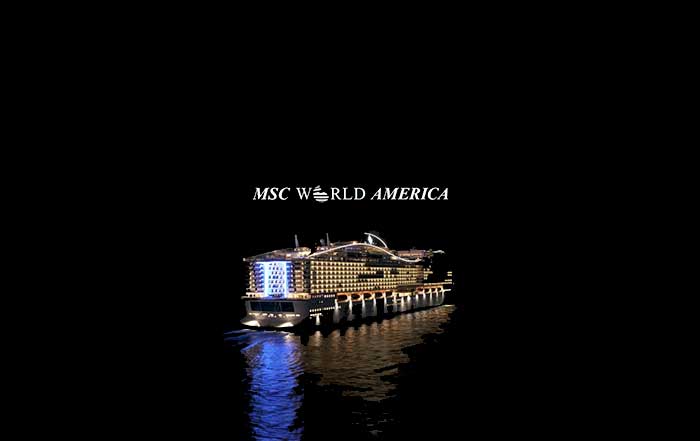
By 2026, MSC Cruises operates a fleet that spans multiple classes and size segments, from family-oriented mid-size ships to the flagship MSC World Class vessels such as MSC World Europa and MSC World America. These mega-ships, each capable of carrying more than 6,000 guests, function as testbeds for propulsion systems, digital ecosystems, and hospitality concepts that will influence not only future cruise builds but also the expectations of the wider luxury marine market.
The adoption of liquefied natural gas (LNG) propulsion on the World Class ships marked a decisive shift towards lower-emission operations, reducing local air pollutants and providing a bridge technology while the industry explores scalable solutions such as green methanol, ammonia, and hydrogen-based fuels. Complementing LNG, advanced hull forms, optimized hydrodynamics, and waste-heat recovery systems contribute to significant efficiency gains, while comprehensive energy-management platforms monitor consumption in real time. These developments echo broader maritime trends documented by organizations such as the International Maritime Organization, which continues to tighten emissions regulations and encourage innovation in low- and zero-carbon propulsion.
Inside the vessels, MSC has invested heavily in digital infrastructure that redefines how guests interact with the ship. Integrated apps, wearable devices, and smart-cabin technologies streamline everything from boarding and payments to climate control and activity planning. For yacht owners and designers who follow Yacht-Review.com/technology, the relevance is clear: many of the same principles-seamless connectivity, centralized monitoring, and data-driven comfort management-are now considered baseline expectations on large private yachts and new-build projects. The cruise sector's scale accelerates the development and testing of these systems, which then migrate into the custom and semi-custom yacht segments.
A Truly Global Deployment Strategy
MSC's deployment pattern in 2026 reflects a deliberate balance between consolidating core markets and nurturing emerging regions. Europe remains the company's operational heartland, with dense Mediterranean and Northern European itineraries departing from Italy, Spain, France, Germany, and the United Kingdom. Ports such as Genoa, Barcelona, Marseille, Southampton, and Hamburg serve as gateways for travelers from across Europe and beyond, reinforcing the company's status as a primary conduit for regional tourism flows.
In North America, MSC has significantly expanded its footprint through MSC Cruises USA, anchored by its state-of-the-art terminal in Miami, which ranks among the largest privately operated cruise facilities in the Western Hemisphere. This terminal, designed to handle multiple next-generation vessels simultaneously, integrates advanced passenger-flow systems, automated check-in technologies, and shore-power readiness, aligning with evolving port standards across the United States and Canada. For business observers, this investment underscores a long-term strategic commitment to the North American market, positioning MSC alongside established giants such as Royal Caribbean Group and Carnival Corporation.
Beyond the Atlantic, MSC has deepened its presence in South America, particularly along the Brazilian and Argentine coasts, where cruising has become an integral part of regional tourism culture. In Asia, itineraries from Japan, South Korea, Singapore, and Thailand demonstrate the company's confidence in the region's long-term growth potential. Here, MSC has worked with local authorities and international bodies such as the World Travel & Tourism Council to ensure that port development and tourism growth align with sustainable best practices, a concern that resonates strongly in destinations where coastal ecosystems are both economically vital and environmentally vulnerable.
For readers of Yacht-Review.com/global, this multi-continent strategy offers insight into how major operators are reshaping maritime tourism flows in Europe, North America, Asia, and beyond, with implications for marina development, yacht charter routes, and ancillary marine services.
Sustainability as a Strategic Imperative
The 2020s have placed cruise lines under intense scrutiny regarding their environmental footprint, and MSC Cruises has responded by embedding sustainability into the core of its corporate strategy rather than treating it as a peripheral compliance issue. The company publicly aligns its roadmap with international frameworks such as the Paris Agreement and the decarbonization trajectories outlined by the International Chamber of Shipping, committing to net-zero greenhouse gas emissions by 2050 and reporting incremental progress along the way.
Newbuilds launched since 2022 incorporate a suite of technologies aimed at reducing emissions, managing waste, and protecting marine ecosystems. Advanced wastewater treatment plants ensure that discharges meet or exceed the most stringent global standards, solid waste is systematically sorted and recycled where infrastructure allows, and hull coatings are selected to minimize biofouling without resorting to harmful biocides. Shore power compatibility is increasingly standard across the fleet, enabling ships to connect to local grids in ports that provide the necessary infrastructure, thereby eliminating stack emissions during layovers and supporting urban air-quality objectives.
Perhaps the most visible symbol of MSC's sustainability narrative is Ocean Cay MSC Marine Reserve in the Bahamas, a former industrial sand-mining site transformed into a marine sanctuary and guest destination. Working with marine scientists and conservation organizations, the company has developed coral nurseries, seagrass restoration projects, and habitat protection programs that turn the island into a living laboratory for regenerative tourism. Visitors are encouraged to engage with educational content on marine ecology, reinforcing the message that luxury and environmental stewardship can coexist.
For the community around Yacht-Review.com/sustainability, Ocean Cay and the broader MSC program offer a large-scale analogue to the sustainability measures increasingly adopted in the superyacht sector, from hybrid propulsion and battery systems to eco-conscious interior materials and reduced single-use plastics. The same underlying principle applies across segments: long-term brand value and guest loyalty are now closely tied to demonstrable environmental responsibility.
The MSC Yacht Club: A "Superyacht Within a Ship"
One of the most consequential innovations for Yacht-Review.com's audience is the MSC Yacht Club concept, which effectively embeds a high-end, yacht-like experience within the framework of a large cruise ship. This exclusive enclave, present on an expanding number of vessels, offers a self-contained world of suites, a private restaurant, a dedicated lounge, an exclusive pool and sun deck, and butler service, all physically separated from the ship's high-traffic public spaces while remaining fully integrated with its broader amenities.
From a design and operational standpoint, the Yacht Club illustrates how spatial zoning, access control, and service differentiation can create layered experiences onboard a single platform, catering simultaneously to mass-market travelers and high-net-worth guests. For many clients who might charter a superyacht in the Mediterranean or Caribbean, the Yacht Club provides a more accessible entry point into ultra-personalized maritime hospitality, while still offering the scale of entertainment, wellness, and dining options that only a large ship can provide.
This approach has clear parallels with trends in the yacht world, where owners increasingly seek flexible layouts that can support multiple modes of use-family cruising, corporate entertaining, and private retreat-within a single vessel. The way MSC manages guest flows, acoustics, and privacy in the Yacht Club has become a case study often referenced in Yacht-Review.com/design and Yacht-Review.com/reviews, demonstrating that the principles of intimacy and exclusivity can be scaled up without being diluted.
Culinary, Cultural, and Lifestyle Positioning
Beyond hardware and infrastructure, MSC's differentiation strategy rests heavily on lifestyle, gastronomy, and culture-areas where its Mediterranean roots remain particularly evident. Partnerships with renowned chefs from Italy, France, Spain, and Japan bring a level of culinary sophistication that aligns with the expectations of discerning travelers from markets such as the United States, United Kingdom, Germany, Canada, and Australia, while also resonating with guests from gastronomically rich regions such as France, Italy, and Spain. Menus are designed to showcase both regional authenticity and contemporary creativity, with a strong emphasis on fresh ingredients and curated wine programs.
Onboard entertainment and enrichment follow a similarly curated philosophy. Theatres host original productions, classical concerts, and international music performances, while art installations and exhibitions draw on European and global influences. Increasingly, itineraries are paired with themed programming-such as wellness voyages, food and wine cruises, or cultural festival routes-that extend the guest experience beyond conventional leisure into the realm of personal development and discovery. This direction aligns with broader luxury travel trends documented by sources such as Virtuoso, where experiential depth and authenticity are now as important as comfort and spectacle.
For the lifestyle-focused readership of Yacht-Review.com/lifestyle, MSC's positioning underscores how successful brands are moving away from purely entertainment-driven models toward integrated lifestyle propositions that blend wellness, culture, gastronomy, and family experiences into a cohesive narrative.
Economic Impact, Partnerships, and Industry Influence
The economic footprint of MSC Cruises extends far beyond ticket revenue. Each newbuild represents billions of euros in contracts for shipyards such as Chantiers de l'Atlantique and Fincantieri, supporting thousands of skilled jobs in France, Italy, and Finland and driving advancements in naval architecture and marine engineering that benefit the entire maritime sector. Supply chains span from German and Dutch equipment manufacturers to Italian interior designers and Scandinavian technology providers, creating a pan-European industrial ecosystem.
On a regional level, MSC's port calls stimulate tourism economies across Europe, North America, South America, Asia, and Africa. According to analyses from bodies such as the OECD Tourism Committee, cruise tourism can significantly boost local employment and infrastructure investment when managed sustainably, and MSC's long-term partnerships with port authorities often include joint initiatives in terminal development, environmental management, and workforce training. In South Africa, Brazil, and other emerging cruise markets, the company has supported vocational programs that help local residents gain skills in hospitality, maritime operations, and technical trades, reinforcing the link between cruise growth and socio-economic development.
For the business-oriented audience of Yacht-Review.com/business, MSC's integrated approach-combining ownership of critical infrastructure, close shipyard relationships, and long-term destination partnerships-demonstrates a sophisticated understanding of value-chain control and risk management. It also illustrates how large operators can shape industry standards in areas such as safety, sustainability, and guest-experience technology, setting benchmarks that influence yacht marinas, refit yards, and charter bases worldwide.
Lessons for Design, Technology, and Community in 2026
As 2026 unfolds, the trajectory of MSC Cruises offers several key insights that resonate strongly with the editorial mission of Yacht-Review.com. First, the company's commitment to design excellence-expressed in everything from hull lines and superstructure profiles to interior lighting and material selection-confirms that aesthetic coherence and emotional resonance remain vital differentiators in a crowded marketplace. Whether on a 200-metre cruise ship or a 60-metre custom yacht, guests respond to spaces that feel intentional, balanced, and connected to the sea.
Second, the integration of advanced digital systems, from AI-driven operational platforms to guest-facing apps and wearables, underscores the inevitability of smart-ship paradigms across all segments of maritime leisure. As the technology matures, yacht owners and operators will increasingly expect the same seamless integration of navigation, hotel systems, and guest services that MSC has begun to normalize on its fleet, a theme explored regularly within Yacht-Review.com/technology.
Third, the company's sustainability roadmap demonstrates that environmental responsibility is now inextricable from long-term commercial viability and brand equity. For yacht builders, brokers, and owners who engage with Yacht-Review.com/sustainability, MSC's scale provides a valuable reference point for understanding how regulatory, technological, and market forces are converging to make low-impact operations a baseline expectation rather than a niche differentiator.
Finally, MSC's focus on community-both onboard, where multi-generational families from around the world share a common space, and ashore, where port communities in Europe, North America, Asia, Africa, and South America rely on cruise tourism for economic stability-highlights the social dimension of maritime travel. This emphasis on connection, inclusion, and shared experience aligns with the values that underpin Yacht-Review.com/community, where the human stories behind boats, crews, and destinations are as important as the hardware itself.
Looking Ahead: MSC Cruises and the Future of Ocean Luxury
As the industry looks toward 2030, MSC Cruises stands at the intersection of scale and sophistication, using its growing fleet as a platform to experiment with new propulsion technologies, reimagined guest experiences, and regenerative destination models. Hydrogen-ready and hybrid-electric concepts are moving from feasibility studies into concrete design briefs, while collaborations with research institutions and classification societies contribute to the development of next-generation safety and sustainability standards, topics closely followed by technical observers and regulators via resources such as DNV.
For the readership of Yacht-Review.com, the company's journey offers more than a corporate success story; it provides a living laboratory for the ideas that will define maritime luxury in the coming decade. From the "superyacht within a ship" logic of the MSC Yacht Club to the regenerative vision embodied by Ocean Cay, MSC is continuously testing how far large-scale operators can go in aligning guest expectations with environmental and social responsibility. Those experiments, successes, and occasional course corrections will inevitably inform the choices of yacht owners, designers, shipyards, and charter clients who seek to navigate the same waters with smaller vessels but similarly high ambitions.
In 2026, MSC's message to the world of ocean travelers is clear: the future of cruising-and by extension, the future of yachting-lies in the intelligent fusion of technology, design, and stewardship. For those who follow that evolution through the lens of Yacht-Review.com/reviews and Yacht-Review.com/cruising, MSC Cruises stands as a powerful case study in how a family-owned company can scale up without losing sight of the sea itself, remaining anchored in the timeless appeal of open horizons, shared journeys, and the enduring allure of life on the water.