

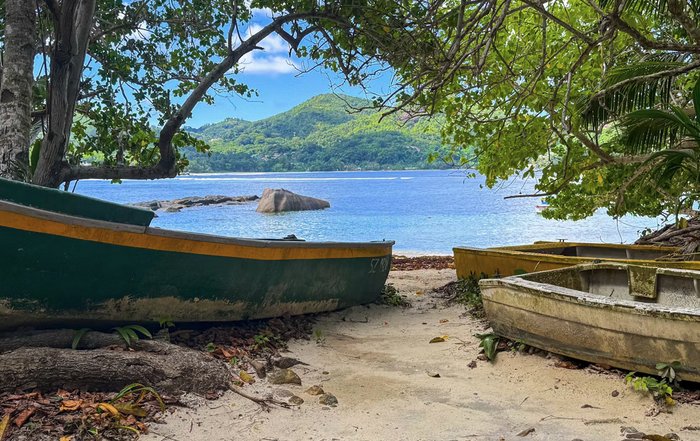
Exploring the Caribbean's Hidden Anchorages
The Evolving Quiet Side of the Caribbean
The Caribbean has entered a new phase in its long relationship with the global yachting community. The region's classic postcard harbours remain vibrant and commercially important, yet an increasing share of discerning owners, charter guests and professional captains are turning their attention toward the quieter, less-developed anchorages that still exist in the shadow of the marquee islands. For the editorial team at yacht-review.com, which has followed this evolution closely through its global network of contributors and professional reviewers, this movement toward seclusion is best understood not as a passing fashion but as a structural shift in how serious cruisers define value, experience and responsibility on the water.
The Caribbean's geography, stretching from the shallow banks of the Bahamas to the lush volcanic arcs of the Windwards and down toward Trinidad, has always promised variety, but for decades many itineraries compressed that diversity into a familiar circuit of high-profile marinas and well-known bays. Since the early 2020s, as post-pandemic travel patterns stabilised and owners from the United States, United Kingdom, Germany, Canada, Australia, France, Italy and beyond began spending longer continuous periods on board, appetite has grown for anchorages where a yacht may be the only visiting vessel in sight. Readers who follow the long-form cruising narratives and analytical reviews at yacht-review.com/cruising consistently report that the most memorable Caribbean experiences now emerge not from crowded harbours, but from those moments when the boat lies quietly at anchor off a village shoreline, a mangrove creek or a reef-fringed cay that rarely appears in mainstream brochures.
This turn toward the Caribbean's "quiet side" has been further reinforced by a broader cultural realignment in luxury travel. High-net-worth travellers from North America, Europe and Asia increasingly seek authenticity, privacy and a sense of purpose alongside comfort and service. Hidden anchorages, once the preserve of long-range cruisers and delivery skippers, now sit at the centre of that conversation, providing a setting in which advanced yacht technology, professional seamanship, environmental stewardship and meaningful local engagement converge in ways that resonate strongly with the readership of yacht-review.com.
Why Hidden Anchorages Matter to Modern Yachting
The appeal of secluded bays and little-known coves goes far beyond the obvious aesthetic rewards of empty beaches and clear water. For experienced captains and owners, these anchorages offer a stage on which the full capabilities of a modern yacht can be exercised, from shallow-draft tenders and dynamic positioning systems to energy-efficient hotel loads that support long periods of autonomy. The technology-focused features at yacht-review.com/technology regularly demonstrate that it is in these remote settings, not in the safety of a sheltered marina, that investments in redundancy, advanced navigation and hybrid propulsion truly prove their worth.
Hidden anchorages are also becoming an operational proving ground for the practices and technologies that will define premium cruising over the coming decade. As global yachting traffic has increased, especially in peak winter seasons, pressure on well-known Caribbean hotspots has grown. Owners and charter clients from markets as diverse as the United States, United Kingdom, Switzerland, China, Singapore and Brazil now ask brokers for itineraries built around "quiet bays" and "untouched islands" rather than a checklist of fashionable venues. Leading builders such as Feadship, Benetti and Sanlorenzo have responded with designs that prioritise extended autonomy, enhanced tender capacity and robust onboard systems, reflecting a clear recognition that time spent far from shore infrastructure is no longer a niche requirement but a mainstream expectation in the superyacht sector.
From a business perspective, this shift has implications across the entire value chain, from design offices and shipyards to insurance underwriters and yacht management firms. Charter brokers in Fort Lauderdale, Monaco, London and Singapore report that explorer-style Caribbean programs command a premium when supported by experienced crews and properly equipped vessels, a trend explored in depth at yacht-review.com/business. Insurers and classification societies, in turn, are refining guidelines for remote-area cruising, placing greater emphasis on crew training, maintenance standards and risk assessment. The result is a feedback loop in which demand for hidden anchorages drives innovation and professionalism, while those same innovations make it safer and more practical to operate in such locations.
Mapping Seclusion: From Bahamas Banks to Windward Reefs
Understanding how hidden anchorages fit into the Caribbean's broader cruising geography requires a nuanced view of the region's diverse maritime landscapes. In the north, the Bahamas and Turks and Caicos form a complex mosaic of shallow banks, sandbars and narrow channels that reward careful pilotage and detailed preparation. The Exumas and the more remote Out Islands, in particular, have become a laboratory for shallow-water exploration, where yachts with modest draft or well-equipped tenders can access creeks and lagoons that remain inaccessible to larger or less agile vessels. Captains planning such routes increasingly rely on high-resolution electronic charts from providers like Navionics and C-Map, but they still complement digital tools with visual navigation techniques and local knowledge, in line with best practices promoted by institutions such as the Royal Yachting Association and the United States Coast Guard.
Further south, the arc of the Lesser Antilles-from the Virgin Islands through the Leewards and Windwards to Grenada-offers a very different kind of seclusion. Here, hidden anchorages are often found in the lee of steep headlands, behind offshore islets or within intricate reef systems that demand precise approach planning. While high-profile islands such as St Barths, Antigua and St Maarten remain central nodes of the regional yachting economy, captains contributing to yacht-review.com/reviews and yacht-review.com/cruising increasingly highlight nearby bays where the water is just as clear and the holding just as reliable, yet where the shore consists of fishing villages, forested hillsides or agricultural land rather than beach clubs and designer boutiques.
In the southern Caribbean, including the Grenadines and the less frequented coasts of islands such as St Vincent, Dominica and Guadeloupe, the sense of discovery can be even stronger. Many of these areas fall within marine parks or conservation zones, where anchoring restrictions, mooring fields and no-take areas are designed to protect fragile ecosystems. Captains and owners who wish to explore such places responsibly often consult environmental data and regulatory updates from organizations like the International Union for Conservation of Nature, aligning their itineraries with conservation objectives and ensuring that their presence supports rather than undermines local marine management efforts. The interplay between access, protection and experience is a recurring theme in the sustainability coverage at yacht-review.com/sustainability, where Caribbean case studies are regularly examined in a global context.
Design and Technology Driven by Remote Cruising
The move toward secluded Caribbean anchorages is reshaping both new-build and refit priorities. Naval architects and interior designers interviewed by yacht-review.com describe a clear trend: owners now request layouts and systems that support longer stays at anchor, with increased storage for provisions, more sophisticated waste management solutions and versatile deck spaces that can shift from watersports staging areas to open-air offices or wellness zones. Detailed analysis of these design evolutions, from explorer yachts and shadow vessels to hybrid propulsion platforms, is available through yacht-review.com/design, where technical features are linked directly to real-world cruising requirements in regions such as the Caribbean, Mediterranean and South Pacific.
On the engineering side, advances in propulsion and energy management are particularly relevant to hidden anchorages. Hybrid systems combining conventional engines, electric drives and substantial battery banks allow yachts to operate in "silent mode" for extended periods, shutting down generators and dramatically reducing noise, vibration and emissions. For guests anchored off an otherwise untouched Caribbean beach, the absence of mechanical hum and exhaust fumes significantly enhances the sense of immersion in the natural environment. Looking further ahead, methanol-ready and hydrogen-ready designs, championed by forward-thinking shipyards and classification societies, suggest a future in which large yachts can reduce their carbon footprint even while operating in remote tropical waters. Those wishing to place these developments within the broader decarbonisation agenda can learn more about sustainable business practices and maritime transition strategies through institutions such as the International Maritime Organization and the World Economic Forum.
Equally transformative has been the rapid improvement in connectivity and navigation tools. The deployment of low-Earth-orbit satellite constellations has made high-bandwidth internet available in many previously marginal areas, enabling owners and guests from financial centres in New York, London, Frankfurt, Zurich, Singapore, Hong Kong and Sydney to maintain business-grade communications while anchored in secluded Caribbean bays. Integrated bridge systems now fuse radar, AIS, high-resolution charting, satellite imagery and real-time weather routing, giving captains a more comprehensive situational picture when approaching unmarked reefs or anchorages with limited chart coverage. Detailed test reports and technology reviews at yacht-review.com/technology consistently show that these systems are no longer optional extras for serious Caribbean cruising, but essential components of safe and efficient operation in hidden anchorages.
Safety, Risk Management and Professional Seamanship
While the romance of a solitary anchorage is compelling, professional captains and yacht managers approach such locations with an acute awareness of risk. Hidden bays often present uncertain holding ground, uncharted rocks, limited shelter from shifting wind and swell, and reduced access to emergency services. Responsible operations therefore depend on meticulous passage planning, conservative decision-making and a culture of continuous training. Many captains operating in the Caribbean's quieter corners hold advanced certifications and follow guidance from authorities such as the Maritime and Coastguard Agency, which emphasise redundancy in critical systems, robust watchkeeping practices and clear contingency plans for unexpected weather or technical failures.
For owners and charter clients, risk management extends beyond navigation to encompass medical readiness, security considerations and hurricane-season planning. The mid-2020s have been marked by heightened awareness of climate volatility, and forecasts for the Atlantic basin continue to suggest periods of intense tropical activity. Professional operations in the Caribbean now rely on specialised meteorological services, predefined evacuation routes and flexible itineraries that can be adjusted rapidly if conditions deteriorate. The operational insights shared through yacht-review.com/news and yacht-review.com/cruising repeatedly underline that the freedom associated with hidden anchorages is made possible only by the invisible discipline of preparation, training and prudent judgment.
Insurance underwriters and flag states have responded to these realities by refining their expectations for yachts operating far from established ports. Some policies now include specific clauses for remote cruising, while certain flag administrations provide guidance on minimum equipment levels, communication capabilities and crew qualifications for vessels intending to spend significant time in less-developed areas. Owners based in jurisdictions such as the United States, United Kingdom, Germany, Switzerland and Singapore, where regulatory and reputational standards are particularly demanding, increasingly rely on experienced yacht management firms and legal advisors to ensure that their Caribbean operations meet both the letter and the spirit of evolving norms.
Community and Culture at the Edge of the Anchorage
Hidden anchorages are seldom truly isolated; they are often adjacent to small communities whose economies and cultures have been shaped over generations by fishing, small-scale agriculture and inter-island trade. As more high-value yachts visit these areas, questions of cultural sensitivity, equitable economic impact and social responsibility become central. The editorial stance at yacht-review.com, reflected in its coverage at yacht-review.com/community and yacht-review.com/global, is that responsible yachting in the Caribbean must recognise local agency and treat host communities as partners rather than backdrops.
In practical terms, this approach encourages captains and guests to engage thoughtfully with local businesses, hire licensed guides, purchase regional products and support community-led initiatives instead of relying exclusively on imported luxury services. Charter brokers and yacht managers are increasingly collaborating with destination management companies that maintain strong local relationships, helping to direct yacht-related spending into island economies rather than global intermediaries. In several Caribbean islands, community-based mooring schemes, marine stewardship projects and cultural tourism initiatives have emerged, often in partnership with NGOs and universities. Those wishing to explore the broader framework of sustainable tourism and community development can draw on resources from the United Nations World Tourism Organization, which provides guidance that is highly relevant to yachting in small island contexts.
For families cruising with children, these interactions can be particularly meaningful. Informal exchanges with fishermen, visits to local schools, participation in village festivals or simply spending time in small shops and cafes provide experiences that extend far beyond curated resort activities. The family-oriented reporting at yacht-review.com/family highlights how such encounters can shape younger guests' understanding of culture, environment and global interdependence, turning a Caribbean cruise into an educational journey as well as a holiday.
Environmental Stewardship in Fragile Bays
The environmental stakes in hidden Caribbean anchorages are high, precisely because these areas often host relatively intact ecosystems: coral reefs, seagrass beds, mangrove forests and seabird nesting sites that may have escaped the cumulative impacts seen in more heavily trafficked zones. Anchoring a large yacht in such environments demands careful attention to bottom composition, swing radius and local regulations, and in many cases, the use of well-designed mooring buoys is strongly preferable to traditional anchoring. The sustainability features at yacht-review.com/sustainability repeatedly stress that a single careless anchoring incident can cause long-lasting damage to sensitive habitats, particularly in bays that see low overall traffic and therefore have limited resilience to disturbance.
Forward-looking owners and captains are responding by adopting comprehensive environmental management plans that address wastewater treatment, waste segregation, fuel handling, hull maintenance and tender operations. Many yachts operating in the Caribbean now install advanced black- and grey-water treatment systems, minimise single-use plastics, and implement strict protocols for offloading garbage in appropriate facilities. These measures align closely with guidelines promoted by the UN Environment Programme and reflect growing expectations among guests and crew from environmentally conscious markets in Scandinavia, Germany, the Netherlands, Canada and New Zealand. Within the yacht-review.com audience, there is a clear recognition that environmental performance is no longer an optional add-on but an integral component of a yacht's overall quality and reputation.
At the same time, yachts are increasingly being recognised as potential platforms for marine science and conservation. In several Caribbean locations, collaborations between yacht crews and local NGOs have led to citizen-science initiatives, including reef-health monitoring, water-quality sampling and species surveys. These projects, often documented in the sustainability and lifestyle sections of yacht-review.com, demonstrate that luxury cruising and environmental stewardship can be mutually reinforcing when approached with expertise, transparency and a willingness to engage with local scientific communities.
Lifestyle and Onboard Experience in Secluded Waters
For many owners and guests, the decision to prioritise hidden anchorages in the Caribbean is ultimately about lifestyle and the quality of time spent on board. Life at anchor in a quiet bay follows a rhythm shaped by natural cycles of light, tide and wind rather than the schedules of restaurants, boutiques and shore-based events. The lifestyle coverage at yacht-review.com/lifestyle frequently illustrates how early-morning swims, paddleboarding sessions, sunrise yoga on deck and unhurried breakfasts in the cockpit replace the bustle of marina socialising and tender shuttles.
The broader wellness trend that has swept through the global luxury travel market finds a particularly natural expression in this setting. Onboard gyms, spa facilities, meditation spaces and dedicated wellness decks take on new significance when the backdrop is a secluded Caribbean anchorage rather than a busy harbour. Many yachts now embark wellness professionals-trainers, yoga instructors, nutritionists-who can design personalised programs that leverage the calm waters, clean air and relative solitude of remote bays. Those interested in placing these developments within the global wellness economy can explore research and analysis from the Global Wellness Institute, which tracks how high-net-worth travellers integrate health, longevity and mental wellbeing into their travel choices.
Culinary experiences also evolve in hidden anchorages. Chefs on board increasingly seek out local ingredients-fresh fish, tropical fruits, regional spices-and adapt menus to reflect both the slower pace of life at anchor and the cultural character of nearby communities. Long lunches on deck, informal beach barbecues and starlit dinners become focal points of the day, allowing guests to savour not only the cuisine but also the tranquillity and changing light of the bay. Travel narratives and destination features at yacht-review.com/travel and yacht-review.com/cruising often describe these meals as some of the most enduring memories of Caribbean voyages, overshadowing even the attractions of famous restaurants and nightlife ashore.
Market, Charter and Investment Implications
The rise of hidden anchorages in the Caribbean has tangible implications for the business of yachting. Charter markets in North America, Europe and increasingly Asia now distinguish clearly between conventional Caribbean itineraries and those designed around exploration and seclusion. The latter, when supported by suitable vessels and experienced crews, often command higher rates and deliver stronger repeat bookings, as shown in the market analyses published at yacht-review.com/business. Yachts that can demonstrate a track record of safe, sustainable operations in remote areas, supported by positive guest feedback, are particularly well positioned in this segment.
For marinas, shipyards and service providers, more dispersed cruising patterns present both strategic challenges and new opportunities. Established hubs such as the Bahamas, Antigua and St Maarten remain essential for refit, provisioning and crew logistics, but there is growing interest in developing smaller-scale facilities closer to emerging anchorages. Governments and tourism authorities across the Caribbean, from larger states like the Dominican Republic to smaller island nations in the Windwards and Leewards, are exploring how best to attract high-value yacht traffic without compromising environmental integrity or community wellbeing. Policy discussions often draw on international best practices in coastal planning and blue-economy development, including guidance from the World Bank and regional development agencies, and these debates are increasingly followed by the global readership of yacht-review.com/global.
Investors, family offices and corporate stakeholders in Europe, North America and Asia are also reassessing the Caribbean's long-term position within the global yachting landscape. In an era marked by climate change, geopolitical uncertainty and evolving travel preferences, the region's ability to offer both sophisticated infrastructure and genuinely low-density, nature-focused experiences is seen as a significant competitive advantage. Historical perspectives at yacht-review.com/history trace how the Caribbean has repeatedly reinvented its role in yachting, from early ocean crossings to the rise of charter superyachts; today's focus on hidden anchorages can be viewed as the latest chapter in that ongoing story, one that aligns closely with the values of a new generation of owners and guests.
Looking Ahead: The Future of Caribbean Seclusion
It is evident that the Caribbean's hidden anchorages will continue to shape the future of global yachting. They concentrate many of the forces currently driving change across the industry: the search for authentic, low-density experiences by sophisticated travellers from North America, Europe, Asia, Africa and South America; the integration of advanced technology into everyday seamanship; the growing centrality of environmental and social responsibility; and the need for differentiation in an increasingly competitive luxury market. For yacht-review.com, whose editorial mission spans reviews, design, cruising, technology, business, history and lifestyle, these anchorages are more than scenic backdrops. They are living laboratories in which new ideas about yacht capability, guest experience and responsible practice are being tested, refined and shared with a global audience.
The challenge for owners, captains, charter guests and industry stakeholders is to ensure that the pursuit of seclusion remains compatible with long-term sustainability and local prosperity. That requires approaching hidden anchorages not as private assets to be consumed, but as shared spaces to be respected, protected and, where possible, enhanced. It calls for continued investment in crew training, vessel capability and environmental management systems, as well as a willingness to engage constructively with local communities and regulatory frameworks. It also depends on open dialogue and knowledge-sharing across the international yachting community, something that yacht-review.com is committed to supporting through its main platform at yacht-review.com, its event coverage at yacht-review.com/events and its continuously updated analysis at yacht-review.com/news.
Ultimately, the enduring attraction of the Caribbean's hidden anchorages lies in their ability to reconnect even the most technologically advanced yachts and the most globally connected guests with the elemental pleasures of life at sea: the sound of water along the hull, the changing play of light across a quiet bay, the sense of distance from the noise and urgency of daily life in major locations. For the readership of yacht-review.com, many of whom balance demanding professional responsibilities with a deep passion for the ocean, these places offer not only refuge but perspective, reminding them why, long before marinas, satellite domes and hybrid propulsion systems, people first set sail in search of new horizons.