

Exploring the Fjords of Norway by Sailboat: Perspective for the Modern Yachting Enthusiast
The Strategic Allure of Norway's Fjords for a Global Yachting Audience
Norway's fjords have firmly transitioned from a niche high-latitude curiosity into a core component of serious long-range cruising strategies for yacht owners, charterers and industry professionals across North America, Europe, Asia and beyond. What was once perceived as a remote, weather-dependent playground has become a carefully planned, premium segment in annual deployment schedules, standing alongside the Mediterranean, Caribbean and South Pacific as a must-experience theatre for modern sailing yachts and explorer vessels. For a global audience that increasingly values authenticity, environmental responsibility and experiential depth over simple sunshine and marina glamour, the Norwegian coast offers a rare combination of drama, safety, infrastructure and narrative richness.
For Yacht-Review.com, whose editorial mission is grounded in Experience, Expertise, Authoritativeness and Trustworthiness, the fjords of Norway now represent one of the most compelling case studies in how a destination can scale up in popularity while retaining its integrity and operational challenge. The country's immense network of fjords, stretching from the Skagerrak near the Danish border to well above the Arctic Circle, provides a natural laboratory for advanced seamanship, technical innovation and sustainable cruising practices. Owners evaluating where to send their vessels for the northern summer, captains weighing routing options between the United States, United Kingdom, Germany, Canada and Mediterranean bases, and charter brokers seeking distinctive, story-rich itineraries all regard Norway as a central pillar of the modern high-latitude portfolio. Within this context, curated analysis from the Yacht-Review.com cruising section has become an essential reference point for decision-makers who demand more than brochure-level descriptions.
Historical Continuity: Sailing in the Wake of the Vikings
Any credible 2026 assessment of fjord cruising must acknowledge the deep historical continuity that underpins Norway's maritime culture. The same waterways now navigated by carbon-rigged sloops and hybrid-assisted expedition yachts once served as the arteries of Viking exploration, trade and conquest, linking sheltered inner leads to the open North Atlantic. Modern sailors tracing the coastline from Oslo to Bergen, onwards, are effectively moving through a living archive of seafaring history in which coastal villages, fishing fleets and traditional wooden craft still echo practices refined over more than a millennium.
Institutions such as the Norwegian Maritime Museum and the Viking Ship Museum in Oslo, widely profiled by Visit Norway and international cultural organizations, offer structured context for visitors who wish to deepen their understanding of how clinker-built longships once ventured into the same waters now frequented by performance cruisers and superyachts. Owners and captains who integrate cultural stops into their itineraries report that these experiences significantly enrich guest engagement, transforming a scenic cruise into an immersive narrative that connects modern yacht technology with ancient navigation and boatbuilding skills. Those seeking a broader heritage framework increasingly turn to resources such as UNESCO's World Heritage Centre to learn how sites like Bryggen in Bergen and the Geirangerfjord area are protected and interpreted within a global context.
For the editorial team at Yacht-Review.com, this historical dimension is not a decorative add-on but a core element of high-latitude cruising literacy. The platform's history section regularly explores parallels between traditional seamanship and contemporary tools, examining how local pilotage knowledge, respect for weather and conservative decision-making remain as relevant to a 30-metre performance cruiser as they were to a Viking longship, even in an age of satellite navigation and predictive routing.
Geography, Climate and Seasonal Strategy in 2026
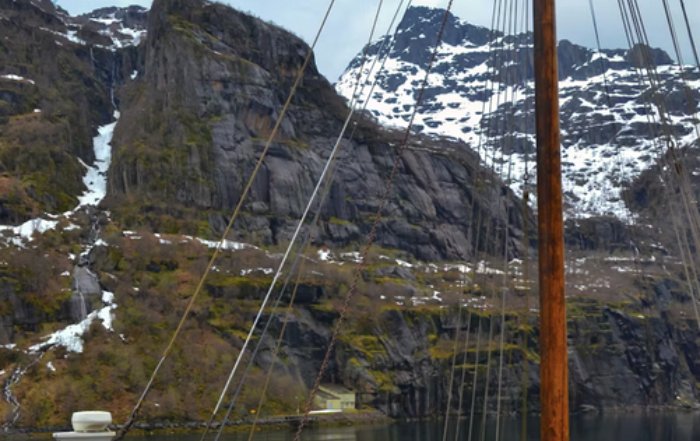
Norway's coastline remains one of the most complex and strategically demanding cruising environments in the world, not because of a lack of infrastructure but because of its extraordinary geographical morphology. Thousands of fjords and inlets carve deep into the mainland, creating towering granite walls, narrow navigable channels and deep basins that can plunge to several hundred meters within a boat length of the shore. This verticality introduces a distinctive set of operational variables, including katabatic winds, funnelled gusts, rapid visibility changes and localized weather systems that differ dramatically from open-coast sailing in the Mediterranean or Caribbean.
By 2026, the primary foreign-flag yacht season still runs from late May through early September, but improved vessel insulation, more efficient heating systems, and advanced weather-routing technologies have allowed well-prepared explorer yachts and robust sailing vessels to extend their operational windows into early spring and late autumn. Long-range climate data from agencies such as the Norwegian Meteorological Institute, combined with global modelling from organizations like NOAA's climate services, now feed directly into the planning tools used by professional captains, enabling them to balance guest expectations for stable conditions with the realities of North Atlantic weather regimes.
Strategic itineraries increasingly blend southern highlights such as Lysefjord, Hardangerfjord and the iconic Sognefjord with mid-coast gems like Geirangerfjord and northern arcs through Lofoten, Vesterålen. The south offers relatively easy access from major aviation hubs in United Kingdom, Germany, Netherlands, France and Switzerland, making it attractive for one-week charters and owner visits, while the north rewards longer commitments with midnight sun, sparse traffic and a heightened sense of remoteness that appeals strongly to experienced owners from United States, Canada, Australia and New Zealand. The Yacht-Review.com travel section has responded by publishing increasingly granular comparative analyses of these subregions, helping readers match their ambitions, time budgets and crew capabilities with realistic routing and seasonal strategies.
Vessel Selection and Design: Building for the Fjords and Beyond
Not every yacht is equally suited to the demands of Norwegian fjord cruising, and the design community has continued to refine its response to high-latitude requirements through 2026. The extreme depth of many fjords means that conventional anchoring in comfortable depths is often impossible, shifting the operational emphasis towards secure marina berths, mooring systems and stern-to arrangements against rock faces or quays. This reality places a premium on precise low-speed maneuverability, reliable bow and stern thrusters, and robust ground tackle that can cope with steep shorelines and variable holding.
Leading yards in Italy, France, Germany, Netherlands and United Kingdom have increasingly integrated such considerations into mainstream performance-cruiser and semi-custom designs, recognizing that owners now expect a single vessel to perform credibly in both tropical archipelagos and northern fjords. Protected cockpits, hard biminis or deck saloons, generous fuel and water tankage, and well-insulated interiors with efficient heating solutions have become standard options rather than exotic customizations for clients who intend to cruise in Norway, Sweden, Finland and Scotland as well as Mediterranean and Caribbean waters. On Yacht-Review.com, the design section and boats section evaluate new launches through this dual-theatre lens, assessing whether a yacht marketed as "global capable" truly offers the redundancy, protection and comfort required for extended high-latitude operations.
The rise of expedition-style sailing yachts, informed by technologies and philosophies borrowed from commercial shipping and polar research vessels, has further broadened the palette of options available to ambitious owners. Reinforced hull structures, advanced glazing systems, integrated de-icing solutions and sophisticated monitoring platforms are now offered by several high-end builders and refit yards serving clients from United States, China, Singapore, Japan and South Korea who view Norway as one waypoint in a multi-year circumnavigation or polar-capable program. Industry observers, including experts associated with the Royal Institution of Naval Architects, have noted that this trend is driven not only by safety and comfort considerations but by a desire to protect asset value and operational flexibility in an era of increasingly unpredictable climate patterns and tightening regulatory requirements.
Technology and Navigation: Managing Complexity in Narrow, Deep Waters
By 2026, the technological toolkit available to yachts operating in Norwegian fjords has reached a level of sophistication that would have been difficult to imagine a decade earlier, yet the underlying message from experienced captains remains consistent: technology enhances, but never replaces, fundamental seamanship. High-resolution electronic charts, forward-looking sonar, AIS integration, dynamic positioning and satellite-based communication systems now form the baseline for serious fjord operations, allowing bridge teams to maintain situational awareness even when steep terrain disrupts traditional visual references and radio propagation.
The Yacht-Review.com technology section has tracked the evolution of integrated bridge systems that fuse radar, sonar, chartplotters, engine data and environmental sensors into unified interfaces, often augmented by head-up displays or augmented-reality overlays at the helm. Manufacturers such as Raymarine, Garmin and Navico have intensified their focus on modelling tidal currents, wind acceleration zones and local weather anomalies within fjord systems, providing captains with predictive tools for planning entries, exits and close-quarters manoeuvres near waterfalls, glacial outflows and steep headlands. The ability to combine this data with shore-based intelligence and real-time updates via satellite has become particularly valuable for yachts transiting less frequented northern areas where traditional cruising guides may be sparse or outdated.
Global standards bodies and safety regulators, most notably the International Maritime Organization (IMO), continue to refine guidance on electronic navigation and e-navigation frameworks, influencing the training regimes and operational checklists adopted by professional crews in Europe, North America, Asia and Oceania. Those seeking to understand the broader regulatory and safety context increasingly consult the IMO's official website as part of their preparation process, aligning onboard procedures with best practices in bridge resource management, redundancy planning and cyber-security. For guests, the visible presence of such systems, combined with disciplined watchkeeping and clear communication, reinforces confidence and underlines the professionalism that defines serious fjord operations.
Environmental Stewardship: Sustainable Cruising as a Core Competency
Environmental stewardship has moved from aspirational rhetoric to operational necessity in Norway's fjords, and by 2026 any yacht seeking to operate in the most sensitive areas must demonstrate a credible sustainability profile. Norwegian authorities have tightened emissions, noise and discharge regulations in several UNESCO-listed fjords, including Geirangerfjord and Nærøyfjord, and are actively considering further restrictions for high-traffic periods as part of a broader national climate and biodiversity strategy. These measures sit within an international context shaped by organizations such as the World Resources Institute and the International Energy Agency, whose research highlights both the urgency of decarbonization and the opportunities for innovation in maritime sectors.
Forward-looking owners and operators are responding with investments in hybrid propulsion, advanced battery systems, solar integration, and hydrogeneration technologies that reduce fuel consumption and enable low- or zero-emission transits through sensitive areas. Waste-management systems capable of treating black and grey water to high standards, along with policies minimizing single-use plastics and promoting local, low-impact provisioning, are increasingly viewed not as optional extras but as prerequisites for responsible high-latitude cruising. The Yacht-Review.com sustainability section documents how these macro trends translate into day-to-day decisions on hull coatings, antifouling strategies, refrigeration technologies and even tender selection.
Norway's own environmental agencies, including the Norwegian Environment Agency, together with global conservation organizations such as WWF, provide detailed guidance on best practices for wildlife interaction, anchoring, greywater management and shore access in fragile coastal and Arctic ecosystems. Yachts arriving from United States, United Kingdom, Germany, France, Italy, Spain, Netherlands, Switzerland, China, Sweden, Norway, Singapore, Denmark, South Korea, Japan, Thailand, Finland, South Africa, Brazil, Malaysia and New Zealand are expected to align with these standards, not only to comply with regulations but to preserve the very qualities that make fjord cruising so attractive. For serious operators, environmental performance has become a core competency, integral to brand reputation and long-term access to premium cruising grounds.
Economics, Charter and the Business Logic of Northern Deployment
The emergence of Norway as a prime sailing destination has clear economic implications for the global yachting industry. As traditional hubs in the Mediterranean and Caribbean face congestion, climate-related disruptions and evolving regulatory frameworks, owners and charter management companies are diversifying their portfolios to include high-latitude destinations that offer exclusivity, resilience and a compelling experiential narrative. For charter guests from United States, United Kingdom, Germany, France, Italy, Spain and Switzerland, a tailored fjord itinerary now ranks alongside or above classic island-hopping routes, particularly among younger high-net-worth individuals who prioritize adventure, authenticity and environmental responsibility.
The Yacht-Review.com business section has analyzed how this shift influences pricing, asset utilization and risk management. Northern itineraries generally command premium rates, reflecting higher crewing costs, complex logistics, repositioning expenses and the need for enhanced training and equipment. However, owners increasingly view these investments as strategic differentiators that enhance charter appeal, support brand-building and future-proof their vessels in a market where demand for sustainable, meaningful experiences is rising. Research from industry analysts, including Superyacht Group, Boat International Media and Innovation Norway, indicates that demand for curated northern experiences is likely to grow through the late 2020s, particularly among clients in North America, Europe and Asia who see fjord cruising as a refined expression of modern luxury rather than a rugged niche.
For management companies, the challenge lies in integrating Norway into broader global deployment patterns that may also include Mediterranean, Caribbean, South Pacific and Southeast Asian circuits, while ensuring regulatory compliance and maintaining service standards. Insurance considerations, crew rotation planning, provisioning strategies and local partnership development all require careful attention. In this context, authoritative, experience-based information becomes a strategic asset, and Yacht-Review.com positions itself as a trusted partner by offering data-driven insights, case studies and best-practice guidance grounded in real-world operations.
Family, Lifestyle and Experiential Luxury in the Fjords
Beyond business logic and technical considerations, the emotional and lifestyle appeal of Norway's fjords has become a decisive factor for many owners and charter clients. The region lends itself naturally to multi-generational cruising, offering a spectrum of activities that can be tailored to families from Canada, Australia, Netherlands, Sweden, Norway, Denmark, New Zealand and other markets where outdoor culture is deeply embedded, as well as to urban-based clients from China, Japan, South Korea, Singapore, Thailand, Brazil, South Africa and Malaysia seeking a profound contrast to city life.
Kayaking beneath sheer cliffs, hiking to panoramic viewpoints, learning about Sami traditions in northern regions, fishing in pristine waters and observing whales and seabirds in their natural habitats all contribute to an experiential narrative that extends far beyond the yacht itself. The Yacht-Review.com family section and lifestyle section increasingly profile itineraries and onboard programs designed to foster shared discovery, education and well-being. Wellness-focused charters that combine yoga on deck in secluded anchorages, cold-water immersion, locally sourced cuisine and structured digital-detox programs align strongly with global trends documented by organizations such as the Global Wellness Institute, which has highlighted the growth of wellness tourism and transformative travel.
In this environment, luxury is defined less by opulent interiors and more by access, privacy, authenticity and the quality of human interaction. Owners are asking their captains and management teams to curate experiences that are both emotionally resonant and environmentally responsible, and Norway's fjords, with their combination of dramatic scenery, cultural depth and strong regulatory frameworks, provide an ideal stage for this evolving definition of high-end yachting.
Community, Events and Norway's Growing Role in Yachting Culture
The increased prominence of Norway within global cruising circuits has naturally influenced the social and cultural fabric of the yachting community. Regattas, rallies and owner events now regularly incorporate Norwegian ports and fjords into their routes, offering structured frameworks for those who may lack the confidence or inclination to tackle high-latitude sailing entirely on their own. These gatherings facilitate peer-to-peer learning, foster collaboration on safety and sustainability initiatives, and build long-term relationships between international yachts and local service ecosystems.
Coverage in the Yacht-Review.com events section and community section demonstrates how yacht clubs and associations across United Kingdom, Germany, France, Italy, Spain, Netherlands, Switzerland, United States and other regions in Europe and Asia are organizing seminars, flotillas and mentoring programs focused on cold-water preparation, high-latitude navigation and environmental best practices. Partnerships with Norwegian marinas, technical service providers and tourism boards have improved access to specialized maintenance, provisioning and logistics support, making it easier for sophisticated sailing yachts to operate efficiently and safely along the coast.
Training organizations such as the Royal Yachting Association (RYA) and NauticEd have expanded their curricula to address topics ranging from survival in cold waters to advanced radar interpretation in confined, mountainous environments, ensuring that crews are equipped not only with the right hardware but with the necessary skills and mindset. This growing ecosystem of training, events and community engagement reinforces Norway's position not just as a destination, but as a formative arena for the next generation of professional and private sailors.
Reviews, News and the Editorial Role of Yacht-Review.com
As Norway's fjords have moved to the centre of high-latitude cruising discourse, the demand for rigorous, experience-based information has intensified. Owners and charter clients contemplating a first Norwegian season require far more than generic tourism advice; they seek credible assessments of marinas, anchorages, seasonal patterns, regulatory updates, onboard configuration choices and risk management strategies. In this environment, the role of specialized platforms such as Yacht-Review.com has become increasingly pivotal.
The reviews section provides detailed evaluations of yachts, equipment and technologies that have been tested in Norwegian conditions, highlighting strengths, limitations and suitability for different cruising profiles. The news section tracks regulatory changes, infrastructure investments, notable voyages and market developments that influence how and when yachts operate in the region. Meanwhile, the global section situates Norway within broader patterns of destination diversification, comparing its trajectory with emerging cruising grounds in Asia, Africa, South America and North America, and assessing how climate change, geopolitical shifts and technological innovation are reshaping long-range cruising strategies.
Throughout this coverage, Yacht-Review.com maintains a consistent editorial commitment to Experience, Expertise, Authoritativeness and Trustworthiness, drawing on contributors who combine professional qualifications with extensive practical time in Norwegian waters. This approach ensures that readers receive not only descriptive content but nuanced analysis of trade-offs, from the choice between a deck-saloon cruiser and a pilothouse expedition yacht, to the implications of new emissions rules for charter operations in UNESCO-listed fjords. For a sophisticated, globally distributed audience, this depth and clarity are essential to informed decision-making.
Looking Beyond 2026: Norway's Fjords in the Future of Global Yachting
Looking ahead from 2026, Norway's fjords appear well positioned to retain and even strengthen their status as a benchmark destination for serious sailors and forward-thinking yacht owners. The convergence of dramatic natural scenery, robust maritime infrastructure, progressive environmental policy and rich cultural heritage aligns closely with evolving definitions of luxury, success and responsibility within the yachting sector. For many owners, a well-executed Norwegian season has become a rite of passage that validates both the capabilities of their vessel and the professionalism of their crew.
However, sustaining this trajectory will require careful stewardship and ongoing collaboration among governments, local communities, industry stakeholders and the global yachting community. Balancing visitor growth with ecosystem protection, managing the impacts of climate change on glaciers, weather patterns and coastal infrastructure, and ensuring that local communities share in the economic benefits of maritime tourism are all complex challenges that demand evidence-based policy and adaptive management. Research and guidance from bodies such as the Intergovernmental Panel on Climate Change provide a critical scientific foundation for these efforts, reminding all participants that high-latitude cruising is inseparable from broader planetary dynamics.
For Yacht-Review.com, Norway's fjords will continue to serve as a focal point where all core editorial themes intersect: reviews and performance assessments, design and technology innovation, business and charter economics, historical and cultural context, travel strategy, global trends, family-oriented experiences, sustainability imperatives, event culture, community building and evolving lifestyle expectations. As more yachts from United States, United Kingdom, Germany, Canada, Australia, France, Italy, Spain, Netherlands, Switzerland, China, Sweden, Norway, Singapore, Denmark, South Korea, Japan, Thailand, Finland, South Africa, Brazil, Malaysia, New Zealand and other regions set their courses toward Norway, the platform remains committed to documenting and interpreting this movement with the depth, rigour and practical relevance that its readership demands.
Ultimately, exploring Norway's fjords by sailboat in 2026 is not simply about visiting another scenic coastline; it is about engaging with a demanding yet rewarding environment that tests equipment, skills and values in equal measure. It challenges owners and crews to align cutting-edge technology with timeless seamanship, to pair luxury with humility before nature, and to pursue adventure within a framework of responsibility and respect. Through its ongoing coverage across reviews, cruising, business, technology and sustainability, Yacht-Review.com will continue to guide the global yachting community as it navigates this remarkable region and the broader future of high-latitude sailing.