

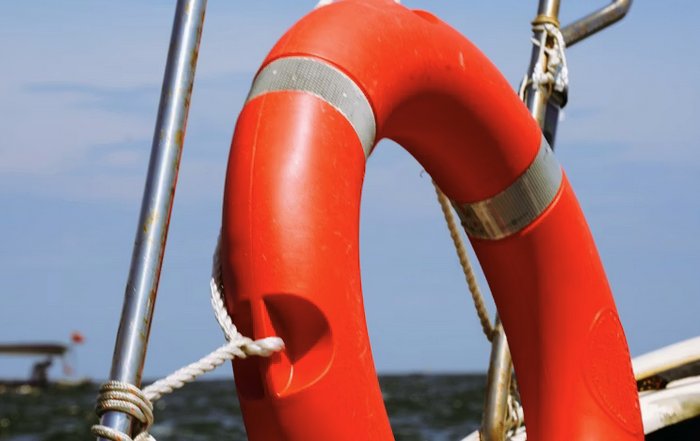
Family Cruising Safety Essentials in 2026
Family cruising has, by 2026, matured into a sophisticated global lifestyle that blends luxury, exploration, and multigenerational travel in ways that would have seemed ambitious only a decade ago. What began as a passion for seasoned sailors in select regions has become a structured, knowledge-driven pursuit for families across North America, Europe, Asia-Pacific, Africa, and South America. As this evolution has unfolded, safety has moved from being an assumed background condition to a central, explicitly managed pillar of the entire experience. For yacht-review.com, which has spent years documenting the realities of life at sea through sea trials, in-depth reviews, and direct engagement with owners, captains, designers, and shipyards, family cruising safety is not an abstract notion; it is a daily practical concern that shapes how yachts are chosen, equipped, and operated.
In 2026, the families stepping aboard yachts in the United States, the United Kingdom, Germany, Canada, Australia, France, Italy, Spain, the Netherlands, Switzerland, China, Singapore, and beyond bring with them expectations formed by broader trends in travel, technology, and risk management. They expect the same level of transparency and professionalism in yachting that they see in aviation, premium hospitality, and other regulated industries. As a result, family cruising safety is now understood as a holistic ecosystem, encompassing vessel design, equipment, training, procedures, connectivity, and environmental responsibility. This integrated view underpins the analysis presented here, shaped by the Experience, Expertise, Authoritativeness, and Trustworthiness that yacht-review.com has built across its design, cruising, technology, and business coverage.
The Evolving Landscape of Family Cruising
The continued rise of remote and hybrid work, the prioritization of meaningful experiences over material consumption, and the increasing accessibility of high-quality yachts have combined to make family cruising a realistic option for a broader demographic. In key markets such as the United States, the United Kingdom, Germany, Canada, Australia, and across Europe and Asia, families see time at sea as an investment in shared memories, education, and personal wellbeing rather than a discretionary luxury. This shift has also taken root in emerging markets in Asia, Africa, and South America, where new marinas, service networks, and charter fleets are opening coastal and island regions to long-distance family voyages.
Parallel to this expansion, the risk awareness of owners has deepened. Families now actively seek objective information about the safety record of different yacht types, the reliability of onboard systems, and the quality of regional infrastructure. They are more likely to consult independent platforms such as yacht-review.com, professional associations, and classification societies before committing to a yacht or route. Resources from bodies like the International Maritime Organization are increasingly used not only by professionals but by private owners to understand how global safety frameworks apply to their vessels and cruising plans. The result is a more informed, more demanding clientele that expects safety to be embedded at every level, from naval architecture to day-to-day operating routines.
Vessel Selection and Design as Strategic Safety Decisions
The first and most consequential safety decision a family makes is the choice of yacht. By 2026, this process has become far more data-driven and evidence-based than in the past. Families compare construction quality, stability curves, redundancy in critical systems, and classification status with the same seriousness they apply to financial or real estate decisions. Within the boats and yacht selection coverage of yacht-review.com, readers increasingly look for clear commentary on how a vessel's hull design, displacement, and engineering translate into predictable handling, seakeeping, and resilience under stress.
Leading builders in Italy, the Netherlands, Germany, the United Kingdom, France, Spain, and the United States now invest heavily in computational modeling, tank testing, and simulation to validate their designs against a wide range of sea states and loading conditions. Owners and captains use frameworks from organizations such as Lloyd's Register and the American Bureau of Shipping as benchmarks when assessing hull integrity, stability, and system redundancy. These classification regimes, while originally developed for commercial shipping, increasingly influence expectations in the private yacht sector, especially for vessels intended for family bluewater cruising.
Interior and exterior layouts have also undergone a quiet revolution, driven by the realities of cruising with children and older relatives. Wide, well-protected side decks with robust handholds, high guardrails, and non-slip finishes are now standard expectations for serious family cruisers, rather than optional upgrades. Cockpit and flybridge spaces are being reimagined as secure, semi-enclosed family hubs with clear sightlines, minimizing the risk of unsupervised movement near winches, anchoring gear, or open railings. Inside, designers are paying closer attention to stair geometry, lighting, and grab rails to reduce trip and fall risks for both young children and older family members. In its design analysis, yacht-review.com increasingly evaluates these details not merely as aesthetic or ergonomic features, but as core elements of a vessel's safety proposition.
Safety Equipment: From Minimum Compliance to Integrated Readiness
Regulatory compliance remains the baseline for safety equipment, but by 2026, active family cruisers have moved well beyond minimum requirements. Lifejackets sized for infants, children, and adults; correctly specified liferafts; emergency position-indicating radio beacons (EPIRBs); personal locator beacons (PLBs); fire detection and suppression systems; and well-stocked medical kits are now seen as the starting point rather than the endpoint of preparation. Guidance from authorities such as the U.S. Coast Guard and the Royal National Lifeboat Institution continues to shape best practice in equipment selection and maintenance.
For yachts cruising transoceanic routes or visiting remote regions in Asia, the South Pacific, the Arctic, or the Southern Ocean, the standard of care has expanded to include automated external defibrillators, oxygen delivery systems, advanced trauma supplies, and specialized pediatric medications. Dedicated storage solutions that keep gear dry, accessible, and logically organized are being engineered into new builds and refits, recognizing that equipment which cannot be reached or deployed quickly is effectively useless. In the technology section of yacht-review.com, coverage increasingly focuses on how these systems are integrated into the yacht's overall layout and workflow, rather than treating them as isolated devices.
Digital safety equipment has also advanced rapidly. Wireless man-overboard systems, wearable trackers for children, remote bilge and fire monitoring linked to smartphones or bridge displays, and satellite-based distress systems capable of transmitting vessel status and position in real time are now widely available. Families are learning to treat these tools as part of a layered defense strategy, where early warning, clear situational awareness, and rehearsed responses work together to reduce the likelihood and severity of incidents. To stay current with evolving standards and technologies, many owners follow expert commentary from bodies such as the World Sailing safety programs and cross-reference it with practical experience shared through platforms like yacht-review.com.
Navigation, Weather, and Route Planning with Families in Mind
Safe navigation has always been central to seamanship, but the widespread availability of high-resolution weather data, satellite imagery, and advanced routing software has transformed how family cruisers plan their voyages. In 2026, prudent owners and captains treat these tools as decision-support systems, combining them with conservative judgment and local knowledge rather than relying on them blindly. Families cruising along the coasts of North America, Europe, Asia, Africa, and South America increasingly seek routes and schedules that prioritize comfort and predictability over speed or distance.
This often means timing passages outside of peak storm seasons in the North Atlantic, Western Pacific, and Indian Ocean; choosing legs that allow daylight arrivals; and building flexible itineraries with multiple bail-out options. Reliable sources such as the World Meteorological Organization and national weather services in countries including the United States, the United Kingdom, Australia, and Japan are integrated into onboard navigation systems, allowing crews to monitor evolving conditions and adjust plans proactively. Within its cruising and travel features, yacht-review.com increasingly evaluates destinations through this lens, highlighting not only scenic anchorages and cultural attractions but also prevailing weather patterns, shelter options, and shore-side support relevant to families.
Marinas and ports in popular regions such as the Mediterranean, the Caribbean, the Baltic, Southeast Asia, and the Pacific coasts of North and South America are now frequently assessed by family cruisers for their safety-related attributes: chart accuracy, navigational aids, pilotage services, medical facilities, and availability of skilled technicians. As the global yachting network expands into new regions in Africa, South America, and Asia, families rely on trusted media and professional networks to distinguish between well-prepared destinations and those still developing the necessary infrastructure.
Training, Competence, and Professional Standards
Despite the sophistication of modern yachts and the power of digital tools, the human factor remains the decisive element in family cruising safety. In 2026, there is growing alignment between insurers, flag states, training organizations, and responsible owners around the idea that structured education and ongoing competence assessment are non-negotiable for anyone operating a family cruising yacht. Whether the yacht is owner-operated or run by a professional crew, all adults on board are increasingly expected to understand basic safety procedures, emergency responses, and their own roles in the event of an incident.
Training frameworks from organizations such as the Royal Yachting Association, national sailing and powerboating schools, and recognized offshore safety programs are widely adopted across Europe, North America, Asia, and Oceania. Courses covering day skipper skills, coastal and offshore navigation, radar and electronic navigation, engine maintenance, and safety at sea provide a structured path from novice to competent skipper. Many families now schedule formal man-overboard drills, fire simulations, and abandon-ship exercises as part of their preparation, treating them as essential practice rather than optional or intimidating activities. For those operating in high-latitude or remote regions, specialized training in cold-water survival, ice navigation, or long-range medical care is increasingly common.
In its business coverage, yacht-review.com has documented how insurers in Europe, North America, and Asia are tightening their requirements around skipper qualifications, crew training, and documented safety procedures, especially for policies covering family cruising yachts. Charter regulations in regions such as the Mediterranean, the Caribbean, and Southeast Asia are also evolving to reflect higher expectations around crew competence and vessel safety management. This convergence of market expectations and regulatory frameworks reinforces a culture in which professional standards are seen as an integral part of family cruising, rather than an optional overlay.
Child Safety and Multigenerational Cruising
Cruising with children, grandparents, and extended family members requires an additional layer of planning and awareness that extends well beyond standard maritime protocols. Each age group brings distinct capabilities, vulnerabilities, and expectations, and successful family cruisers recognize that safety must be tailored accordingly. Physical safeguards such as netting on guardrails, secure gates on companionways, high-traction deck surfaces, and clearly delineated "no-go" zones around winches, anchoring systems, and engine spaces create a baseline of protection for younger passengers.
Equally important are clear, age-appropriate rules and routines that children can understand and follow consistently. Many experienced families develop simple, non-negotiable guidelines around wearing lifejackets on deck, staying within designated safe zones while underway, and always informing an adult before moving between interior and exterior spaces. Teenagers may be progressively introduced to watchkeeping, tender handling, and basic navigation, building both their competence and their respect for the responsibilities involved. For older family members, considerations such as handhold placement, step heights, seating ergonomics, and access to cabins and heads become central to safety and comfort.
Within its dedicated family section, yacht-review.com has chronicled the practical realities of multigenerational cruising across regions including the Mediterranean, the Caribbean, Scandinavia, Southeast Asia, and the South Pacific. These real-world accounts highlight the importance of aligning itineraries with the energy levels and interests of all generations, balancing more demanding passages with restful days at anchor, and ensuring that shore excursions, cultural visits, and water sports are planned with clear safety frameworks. The most successful family programs treat children and grandparents as active participants in safety culture, rather than passive passengers.
Building and Sustaining a Safety Culture Onboard
Beyond hardware and training, the defining characteristic of a safe family cruising program is a strong, consistent safety culture onboard. This culture is expressed through written procedures, regular drills, clear communication, and a shared understanding that safety is everyone's responsibility. Many well-run family yachts develop standardized checklists for departure, arrival, anchoring, tender operations, and night watches, along with documented plans for responding to fire, flooding, man-overboard incidents, medical emergencies, and abandon-ship scenarios.
These documents only become meaningful when they are rehearsed and internalized. Pre-departure briefings, in which the captain or owner-operator explains the day's plan, expected conditions, and individual responsibilities, are increasingly seen on serious family cruising yachts. Communication tools such as handheld VHF radios, internal intercoms, and pre-agreed hand signals or phrases help ensure that instructions are understood even in noisy or stressful situations. Within its community and events coverage, yacht-review.com has highlighted how yacht clubs, marinas, and regional associations in countries such as the United States, Italy, Spain, Australia, South Africa, and Singapore are promoting this culture through seminars, safety demonstrations, and collaborative exercises.
This focus on culture extends beyond individual yachts to the wider yachting ecosystem. Responsible marinas and service providers are increasingly conscious of their role in reinforcing good practice, from enforcing speed limits and safe fueling procedures to providing clear guidance on local hazards and emergency contacts. As the global community of family cruisers grows, peer-to-peer learning and shared norms are becoming powerful drivers of safety improvements, often amplified by independent media platforms that prioritize factual, experience-based reporting.
Technology, Connectivity, and Remote Support in 2026
Advances in maritime technology and connectivity have continued at pace into 2026, reshaping what is possible in terms of monitoring, communication, and remote assistance. High-bandwidth satellite systems, increasingly accessible even for mid-size yachts, enable real-time data exchange, video communication, and cloud-based monitoring of critical systems. Integrated bridge systems consolidate radar, AIS, electronic charts, engine data, and weather overlays into unified displays, improving situational awareness for both professional crews and owner-operators.
Telemedicine has become a particularly important element of family cruising safety. Through secure satellite links, yachts can connect with medical professionals who provide real-time guidance on diagnosis and treatment, review images and vital signs, and help crews decide whether to continue, divert, or evacuate. Organizations such as the International Maritime Health Association and specialized maritime medical providers have refined protocols tailored to yachts and small commercial vessels, recognizing that many family cruisers operate days away from shore-based care. Families who wish to understand the broader context of maritime health can explore resources from the World Health Organization, adapting general guidance to the specific realities of life at sea.
In its technology reporting, yacht-review.com pays close attention not only to the capabilities of new systems, but also to their usability, redundancy, and resilience. The rise of connected yachts brings with it new considerations around cybersecurity, data privacy, and the risk of overreliance on automation. Responsible owners are learning to ensure that digital tools augment rather than replace core seamanship skills, and that manual backups and analog procedures remain viable in the event of system failures.
Environmental Responsibility as a Dimension of Safety
By 2026, the link between environmental responsibility and safety is widely recognized in the yachting community. The health of the oceans and coastal ecosystems directly affects the predictability of weather, the reliability of navigation, and the long-term viability of cherished cruising grounds. Climate-driven changes in storm patterns, sea levels, and ice conditions introduce new risks, while pollution and habitat degradation can compromise both safety and enjoyment. Families increasingly understand that adopting sustainable practices is not only an ethical choice but also a form of long-term risk management.
Within its dedicated sustainability coverage, yacht-review.com explores how hybrid propulsion systems, advanced battery technology, solar and wind generation, and efficient hull designs can reduce fuel consumption, extend range, and provide additional redundancy in power systems. Learn more about sustainable business practices and regulatory frameworks through organizations such as the United Nations Environment Programme, which offers a broader context for understanding how individual choices align with global environmental goals. Waste management, greywater treatment, and the use of environmentally responsible coatings and cleaning products are increasingly treated as standard expectations for serious family cruising yachts.
By operating sustainably, families help protect the coral reefs of the Pacific and Indian Oceans, the fjords of Norway, the islands of Greece and Croatia, the archipelagos of Thailand and Indonesia, and the coastal ecosystems of North America, South America, Africa, and Asia that they wish to share with future generations. At the same time, they position their yachts to comply with evolving regulations in Europe, North America, and Asia, where environmental performance is becoming a key component of port access, taxation, and resale value.
The Role of Independent Media and Expert Guidance
In a world where marketing messages and social media content can easily overshadow sober analysis, independent, expert-driven platforms play a vital role in guiding families through the complexities of cruising safety. yacht-review.com has deliberately positioned itself as a trusted reference point, combining technical rigor with practical, on-the-water experience. Across its news, global, and history sections, safety considerations are woven into reviews, destination reports, and feature articles, rather than treated as a separate or secondary topic.
For newcomers, yacht-review.com offers a pathway from aspirational imagery and lifestyle content to grounded, operational guidance covering vessel selection, design, equipment, and training. For experienced owners and captains, it provides a way to benchmark current practices against emerging standards, new technologies, and lessons learned from incidents and innovations around the world. By maintaining editorial independence and a clear commitment to Experience, Expertise, Authoritativeness, and Trustworthiness, the platform acts as a counterweight to purely promotional narratives, helping families make decisions that balance ambition with responsibility.
Looking Ahead: A Safer, More Informed Future for Family Cruising
As 2026 progresses, the trajectory of family cruising safety is defined by both progress and complexity. Yachts are more capable, better engineered, and more intelligently designed for multigenerational use. Technology offers unprecedented situational awareness, connectivity, and remote support. Training frameworks and regulatory expectations are converging toward higher, more consistent standards. At the same time, families must navigate new challenges, including climate-related weather volatility, increasing congestion in popular cruising grounds, evolving geopolitical risks in certain regions, and the sheer volume of information-of varying quality-available online.
Against this backdrop, safety must be treated not as a static checklist but as a living, evolving practice that adapts to new knowledge, technologies, and personal circumstances. For yacht-review.com, the commitment is to continue providing the depth of analysis, the global perspective, and the practical insight that families require to turn their cruising aspirations into safe, rewarding realities. By connecting design, technology, seamanship, sustainability, and lifestyle through a safety-focused lens, the platform supports a vision of family cruising in which parents can relax knowing that risks have been thoughtfully managed, children can explore with confidence, and grandparents can join voyages that are as secure as they are inspiring. In this way, the yacht becomes not just a symbol of freedom, but a trusted, well-prepared home on the water, capable of carrying families safely across the world's seas for many years to come.