

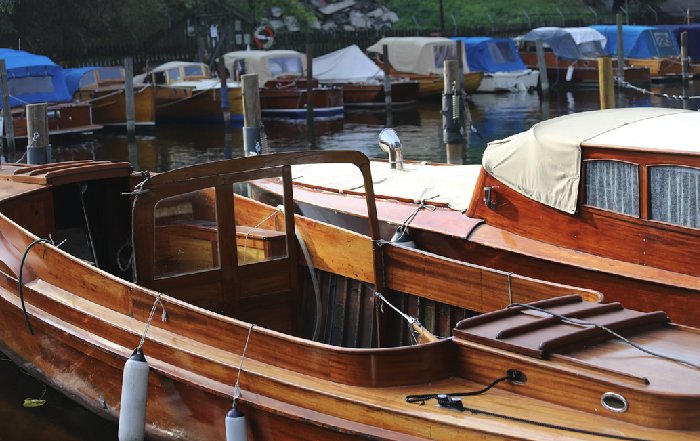
The Enduring Power of Vintage Boats in 2026's Modern Fleets
A Mature Market Rediscovers Its Past
By 2026, the global yachting sector has reached a level of technological maturity that would have been difficult to imagine even a decade ago, with advanced composite structures, hybrid and fully electric propulsion, predictive maintenance powered by artificial intelligence, and integrated digital bridges now standard features on many new-builds. Yet alongside these innovations, marinas from the United States and Canada to Italy, France, Spain, Australia, Singapore, and Japan are increasingly populated by vessels that predate the current era of automation and connectivity: wooden runabouts, classic sailing yachts, gentleman's cruisers, and mid-century production icons that carry the visual language of a different age. What once might have been dismissed as obsolete has become aspirational, and vintage boats have moved from the periphery of yacht culture to the center of serious ownership and charter strategies worldwide.
For the editorial team and expert contributors at yacht-review.com, this shift is not a passing fashion but a structural realignment in how value is defined in yachting. Performance, range, and onboard technology remain important, but they now share the stage with narrative depth, craftsmanship, and a more nuanced understanding of sustainability and asset stewardship. Within this context, the appeal of vintage boats is no longer simply about nostalgia; it reflects a sophisticated convergence of design heritage, experiential luxury, technological adaptation, and evolving business models. The way yacht-review.com approaches reviews of significant boats, long-form design analysis, and market reporting has therefore become increasingly anchored in this dual lens of innovation and heritage.
Heritage, Craftsmanship, and the Search for Identity
At the core of vintage boat appeal lies a design language that is immediately recognizable and fundamentally different from the majority of contemporary production craft. The sweeping sheerlines of mid-century wooden runabouts, the long overhangs and slender hulls of classic sailing yachts, and the carefully proportioned superstructures of early motor yachts embody an era in which hand craftsmanship, rather than digital modeling, guided the final form. For the specialist writers and photographers at yacht-review.com, documenting these boats in the design section is as much about recording cultural history as it is about discussing naval architecture.
Historic builders such as Riva, Chris-Craft, Feadship, Baglietto, and other European and North American yards produced vessels in which joinery, metalwork, and detailing were integral to the design rather than applied decoration. Varnished teak, hand-laid planking, custom bronze hardware, and bespoke interior carpentry contribute to a tactile richness that many experienced owners from the United Kingdom, Germany, Switzerland, and the Netherlands now regard as irreplaceable. In an age of modular interiors and industrially produced composites, these boats offer a level of material authenticity that resonates with clients who are increasingly sensitive to the difference between true craftsmanship and surface imitation. Institutions such as UNESCO have helped shape a wider discourse on safeguarding traditional skills, and classic boatbuilding is now often discussed in the same breath as architectural conservation and heritage crafts.
For many owners in Italy, France, Spain, and Greece, choosing a vintage yacht has become a deliberate statement of identity and continuity. Rather than commissioning a new vessel that risks blending into a sea of similar silhouettes, they acquire and restore boats that carry a specific lineage-linked to a renowned designer, a particular yard, or even a notable previous owner. This sense of custodianship over a floating artifact is central to how families and private offices frame their yachting narrative, particularly when assets are intended to pass between generations. The editorial team at yacht-review.com explores these lineages in depth within its history features, tracing how certain hull forms, deck plans, and stylistic details have evolved and reappeared across decades, influencing not just niche classics but mainstream production in the United States, United Kingdom, and Europe.
Experiential Luxury in an Age of Overabundance
As global high-net-worth and ultra-high-net-worth populations have grown, so too has the number of large, technologically advanced yachts competing for attention in prime cruising grounds from the Mediterranean and Caribbean to Southeast Asia, Australia, and New Zealand. This expansion has inevitably created a degree of visual and experiential homogeneity, with many new vessels offering similar interior layouts, amenity packages, and styling cues. Against this backdrop, vintage boats provide a distinctly different proposition, one that aligns closely with the rise of experiential luxury documented by organizations such as the World Travel & Tourism Council.
A restored wooden motor yacht cruising the Amalfi Coast, a classic ketch sailing among the islands of Croatia or Greece, or a mid-century commuter yacht threading through the harbors of New England or British Columbia delivers more than comfort and service; it delivers an immersive story. Original helm wheels, period-correct instruments, patinated brass fittings, and carefully preserved interior details allow guests to inhabit a different time without sacrificing safety or core conveniences. For charter clients in France, Italy, Spain, Thailand, and Japan, this narrative dimension has become a decisive factor when choosing between otherwise comparable itineraries. The experiential value lies not only in where the boat goes but in how it feels to travel there.
Onboard, the human scale of many vintage boats fosters an intimacy that is increasingly prized by multi-generational families from the United States, Canada, Australia, and Germany who seek deeper connection rather than sheer volume of space. Cabin arrangements may be more compact, and deck layouts less open than on contemporary yachts, yet these characteristics often encourage shared rituals: varnishing railings together, hoisting sails by hand, planning passages with paper charts as well as digital systems. In the family-focused coverage on yacht-review.com, owners frequently describe how these activities become part of the family narrative, creating memories that are more enduring than any specific destination.
For the editorial team, this emphasis on experiential depth rather than simple hardware specification has reoriented how cruising stories are told. In the cruising and travel section, vintage boats are often presented as platforms for slow travel and reflective leisure, well suited to itineraries in Norway, Sweden, Finland, South Africa, Brazil, and Malaysia where the journey itself is as meaningful as the arrival. The emotional resonance of a classic yacht at anchor in a secluded bay, its lines reflected in calm water, is a recurring theme in the imagery and narratives that define the brand identity of yacht-review.com.
Technology Integration Without Diluting Character
One of the most significant developments between 2020 and 2026 has been the refinement of techniques for integrating advanced technology into vintage hulls without compromising their visual and tactile character. Owners in North America, Europe, and Asia now expect modern standards of safety, navigation, and comfort, even when operating vessels that may be several decades old. The challenge lies in meeting these expectations while preserving the heritage value that makes the boat desirable in the first place, a topic that is examined in detail in the technology coverage on yacht-review.com.
Refit yards in the Netherlands, Italy, United Kingdom, United States, and Germany have developed sophisticated approaches to concealing digital navigation systems, engine monitoring, and communications equipment behind period-appropriate joinery and cabinetry. Touchscreens and multifunction displays are carefully positioned to be accessible to crew while remaining visually unobtrusive, and wiring looms are routed with an eye to reversibility and minimal intervention in original structures. At the same time, research by classification societies such as DNV and Lloyd's Register has encouraged the adoption of more efficient engines, hybrid drivetrains, and improved fuel systems that can reduce emissions and operating costs without altering the essential character of the vessel.
Comfort systems have advanced just as rapidly. Owners from Switzerland, Singapore, China, Japan, and South Korea, accustomed to precise climate control and low noise levels in their homes and offices, are increasingly unwilling to compromise on these standards at sea. Modern insulation materials, compact and efficient air-conditioning units, refined stabilizer technologies, and vibration-damping solutions now allow a classic yacht to offer a level of onboard comfort that rivals or exceeds that of a new build. When executed well, these upgrades are practically invisible, preserving the visual coherence of the interior while quietly transforming the lived experience. For readers of yacht-review.com, case studies of such refits provide a practical framework for understanding how technology can serve heritage rather than overwhelm it.
Economics, Asset Strategy, and Market Maturity
From a business perspective, vintage boats occupy a nuanced position that bridges luxury asset management, cultural preservation, and experiential tourism. While new-build order books at major shipyards remain strong, the market for classic and vintage vessels has become more structured and transparent, with specialized brokers, surveyors, insurers, and refit yards now active across North America, Europe, Asia, and Oceania. For the business-oriented audience of yacht-review.com, understanding the economic logic of vintage ownership has become essential, and this is reflected in the site's dedicated business analysis.
Unlike many contemporary production boats that experience steep early depreciation, well-maintained or expertly restored vintage yachts from respected builders can demonstrate relatively stable values over time, particularly when provenance and documentation are strong. This behavior is increasingly compared to that of classic automobiles, fine art, and collectible watches, where scarcity, condition, and historical significance drive long-term appreciation or value preservation. Wealth reports from organizations such as Knight Frank and the ongoing global wealth studies by institutions like Credit Suisse have highlighted the growing role of alternative luxury assets in diversified portfolios, and vintage yachts are now often discussed in family office strategy meetings alongside real estate, art, and private aviation.
The charter market has also evolved. In destinations such as the Mediterranean, Caribbean, Southeast Asia, and South Pacific, operators have discovered that a carefully curated classic yacht can command premium rates when positioned as a unique, story-rich alternative to larger but more conventional vessels. This is particularly evident in Italy, France, Spain, Croatia, and Greece, where heritage, gastronomy, and coastal culture are closely intertwined, and where classic regattas and yacht gatherings attract significant media attention. The news section of yacht-review.com increasingly covers strategic acquisitions of vintage boats by charter brands, as well as the emergence of boutique operators that build their entire value proposition around heritage fleets.
However, the economics of vintage ownership remain complex. Restoration and refit costs can be substantial, particularly when structural work, engine replacement, and extensive interior reconstruction are required. Ongoing maintenance demands a higher level of attention than many modern vessels, and regulatory compliance-especially in relation to safety and emissions-can add layers of cost and complexity. For professional investors and families in the United States, United Kingdom, Germany, Switzerland, Singapore, and Hong Kong, the key is to approach acquisition with a fully modeled total cost of ownership, informed by technical due diligence and realistic refit planning. The editorial stance at yacht-review.com is to present these realities clearly, reinforcing the platform's commitment to trustworthiness and informed decision-making.
Sustainability, Circularity, and Responsible Refit
Sustainability has moved from the margins of yachting discourse to its center, driven by regulatory pressure, client expectations, and a broader recognition of environmental responsibility across luxury sectors. In this context, vintage boats present a complex but compelling case. On the one hand, older engines, coatings, and materials can be less efficient and more polluting than their modern counterparts. On the other, the restoration and continued use of existing hulls align strongly with principles of circularity and lifecycle thinking promoted by bodies such as the International Maritime Organization and the World Resources Institute.
For yacht-review.com, which has established sustainability as a core editorial pillar through a dedicated sustainability section, vintage yachts offer an opportunity to demonstrate how heritage and environmental responsibility can reinforce rather than contradict each other. Modernizing propulsion systems, installing cleaner generators or hybrid solutions, optimizing hull coatings, and improving insulation can significantly reduce the operational footprint of a classic vessel. At the same time, careful selection of sustainably sourced timbers, low-VOC varnishes, and environmentally responsible cleaning products allows owners to maintain the aesthetics of wood and brightwork without reverting to outdated, high-impact materials.
In regions such as Scandinavia, Germany, the Netherlands, New Zealand, and Australia, where environmental regulation and public awareness are particularly advanced, refit yards and designers are experimenting with solar integration, advanced battery systems, and waste-management technologies on vintage platforms. These projects often serve as demonstrators for a more circular yachting economy, in which the embodied energy of existing hulls is respected and extended rather than discarded. For businesses and families seeking to learn more about sustainable business practices, the way a vintage yacht is restored and operated can become a tangible expression of broader environmental, social, and governance (ESG) commitments.
Community, Events, and the Social Fabric of Classic Yachting
The appeal of vintage boats is magnified by the communities and events that surround them. Across Europe, North America, Asia, Africa, and South America, classic yacht regattas, wooden boat festivals, and heritage gatherings create a social infrastructure that supports owners, crews, craftsmen, and enthusiasts. In the United Kingdom, long-established classic regattas bring together fleets of restored sailing yachts; in Italy and France, Mediterranean classic weeks combine racing with shore-side cultural programs; in Australia, Canada, South Africa, and Brazil, wooden boat festivals showcase both local traditions and international icons.
For yacht-review.com, these gatherings are vital field laboratories for understanding how vintage boats function as social connectors. In the community coverage and reporting on major events, owners frequently emphasize the collaborative spirit of the classic scene, where sharing parts, knowledge, and skilled labor is common practice and where the line between competitor and collaborator is often blurred. Shipwrights, riggers, sailmakers, and metalworkers use these events to demonstrate their expertise, while younger apprentices are introduced to skills that might otherwise risk fading from the market.
In emerging markets such as China, South Korea, Thailand, Malaysia, and parts of South America and Africa, the classic yacht community is still in a formative phase, yet interest is rising among collectors who see vintage boats as both cultural objects and globally recognized status symbols. Cross-border collaborations between maritime museums, heritage organizations, and private owners are helping to document regional boatbuilding traditions and connect them to the broader narrative of classic yachting. For a readership that spans Europe, Asia, North America, South America, and Africa, yacht-review.com plays a bridging role, presenting these stories within a coherent global framework that emphasizes shared heritage as well as regional distinctiveness.
Lifestyle, Brand Storytelling, and Media Influence
Beyond the dock and the regatta course, vintage boats have become powerful tools of lifestyle storytelling. Luxury hotels and resorts in Italy, France, Greece, Croatia, Thailand, and Indonesia increasingly partner with owners of classic yachts to offer curated day cruises, sunset charters, and special-event experiences that differentiate their offerings from competitors. Fashion, watch, and automotive brands frequently feature classic vessels in campaigns to evoke timelessness, craftsmanship, and understated sophistication, reinforcing the association between heritage yachting and broader notions of cultivated taste.
In film and television, directors working on projects set in New York, London, Monaco, Sydney, or the French Riviera often choose vintage boats to signal character depth, historical continuity, or a particular aesthetic sensibility. This media presence has a feedback effect: viewers in the United States, United Kingdom, Germany, Japan, Singapore, and Canada absorb images of classic yachts as emblems of refined luxury, which in turn influences aspiration and demand in both ownership and charter markets. The lifestyle features on yacht-review.com analyze these dynamics, examining how visual culture, hospitality partnerships, and brand collaborations shape perceptions of what yachting represents in the 2020s.
Digital media has further transformed how vintage boats are discovered, evaluated, and discussed. High-resolution photography, drone footage, and immersive virtual tours allow enthusiasts in Norway, Finland, Netherlands, Sweden, South Africa, Brazil, and New Zealand to engage with classic vessels they may never encounter physically. Social platforms amplify striking imagery, but serious buyers and charter clients increasingly seek out deeper, more authoritative resources to support their decisions. In this environment, yacht-review.com has positioned itself as a trusted reference point, with detailed boat profiles, analytical cruising coverage, and regionally informed global reporting that move beyond surface aesthetics to address engineering, ownership models, and long-term stewardship.
Integrating Vintage Boats into Contemporary Fleets
For private owners, family offices, and commercial operators, integrating vintage boats into a broader fleet strategy requires clarity of purpose and a disciplined approach to execution. Some opt for a mixed fleet, pairing a large modern motor yacht with a smaller classic tender, chase boat, or sailing yacht, thereby offering guests a choice between cutting-edge comfort and heritage charm. Others build entire brands around vintage vessels, positioning themselves as specialists in authentic, narrative-driven cruising experiences in markets such as the Mediterranean, Caribbean, Baltic, and Asia-Pacific. The editorial team at yacht-review.com has observed that, in both models, success depends on aligning the unique characteristics of vintage assets with clearly defined operational and lifestyle objectives.
Crew training is a critical factor. Operating a classic sailing yacht with traditional rigging, or a wooden motorboat with idiosyncratic systems, demands skills that differ from those required on a contemporary composite vessel with standardized systems and automation. Owners in the United States, United Kingdom, Netherlands, Italy, and Germany increasingly seek crew with hybrid profiles: individuals who understand traditional seamanship and mechanical systems but are also comfortable with modern safety, navigation, and guest-service standards. Technical support networks must likewise be tailored, often relying on a mix of local artisans and specialized yards capable of handling wooden or steel structures, classic engines, and historically accurate interiors.
Regulatory compliance presents another layer of complexity, particularly in regions with stringent safety and emissions rules such as Europe, North America, and parts of Asia. Successful integration of vintage boats into modern fleets therefore depends on thoughtful refit planning that anticipates survey requirements, classification standards, and evolving environmental regulations. For many owners and fleet managers, expert consultants and surveyors have become indispensable partners, helping to reconcile the historical significance of a vessel with contemporary expectations of safety and reliability. The coverage on yacht-review.com reflects this reality, emphasizing not only the romance of classic yachting but also the governance and risk-management frameworks that underpin responsible ownership.
Conclusion: Stewardship, Trust, and the Future of Vintage Appeal
By 2026, vintage boats have firmly established themselves as more than a niche curiosity within global yachting. Across North America, Europe, Asia, Africa, and South America, they are recognized as strategic assets, cultural artifacts, and experiential platforms that offer something modern boats often struggle to replicate: a combination of narrative depth, material authenticity, and human-scale intimacy. When restored and operated with care, they embody a form of luxury that is not only visually compelling but intellectually and emotionally resonant, appealing to seasoned yachtsmen and new entrants to the lifestyle alike.
For the discerning audience of yacht-review.com, the continued rise of vintage boats raises important questions about expertise, authoritativeness, and trust in a market that is both emotionally charged and technically complex. Decisions to acquire, restore, or charter a classic vessel demand reliable information, from structural assessments and refit strategies to market valuations and regulatory considerations. By providing rigorous reviews, historically grounded design analysis, regionally nuanced global coverage, and clear business insight, yacht-review.com has positioned itself as a trusted guide for owners, charterers, and professionals who see vintage boats not as relics but as active participants in the future of yachting.
Ultimately, the long-term appeal of vintage boats will depend on three interlocking forms of stewardship: the preservation and transmission of traditional skills; the thoughtful integration of modern technology and sustainability principles; and the cultivation of communities and events that keep classic yachting socially and culturally vibrant. As new generations in the United States, United Kingdom, Germany, China, Japan, Singapore, Australia, and beyond discover the distinctive pleasures of heritage yachts, the role of informed, independent platforms will only grow in importance. In chronicling this evolution from a position of experience and critical engagement, yacht-review.com affirms that vintage boats are not merely echoes of a vanished era, but key components of a more reflective, responsible, and culturally rich vision of life on the water.