

Asia's Coastal Yachting Renaissance: A Business Perspective
Asia's Consolidated Role in the Global Yachting Circuit
Asia has firmly consolidated its position as a core pillar of the global yachting circuit rather than an outlying frontier, and this shift is now clearly visible in the itineraries, investment strategies, and design decisions of yacht owners and industry stakeholders from the United States, United Kingdom, Europe, and the wider Asia-Pacific region. What was once regarded largely as a domain for commercial shipping and mass-market tourism has evolved into a sophisticated, multi-layered cruising arena, where intricate coastlines, deep maritime heritage, and rapidly maturing marina infrastructure combine to offer an experience that rivals, and in many respects surpasses, the traditional draws of the Mediterranean and Caribbean. For yacht-review.com, which has followed this transformation closely through its dedicated coverage of cruising trends and destination reports, Asia has become both a showcase of natural beauty and a live case study in how design, technology, sustainability, and lifestyle expectations are reshaping the modern yachting value proposition.
This evolution is underpinned by broader macro-economic and demographic shifts. The continued rise in ultra-high-net-worth individuals across China, Singapore, Japan, South Korea, and increasingly India has accelerated demand for sophisticated cruising itineraries and more curated onboard experiences, while investors in Germany, France, Italy, Spain, Netherlands, Switzerland, Canada, Australia, and beyond have begun to view Asian marinas, service hubs, and charter operations as viable long-term assets rather than speculative plays. Leading brokerage houses and management firms such as Fraser, Burgess, and Northrop & Johnson now market Asian itineraries as integral components of annual cruising programs, while analytical platforms like Boat International and SuperYacht Times continue to report steady growth in charter days, marina occupancy, and refit activity across the region. Readers who regularly follow the business and finance coverage on the yacht-review.com business channel will recognize that Asia's prominence is no longer a cyclical trend tied to a few fashionable destinations, but a structural change in how and where global yachting capital is deployed.
Why Asia Aligns with Contemporary Cruising Demands
Asia's coastal geography is inherently suited to the evolving expectations of yacht owners and charter guests who now seek more than a sequence of crowded anchorages and predictable beach clubs. The region offers a mosaic of archipelagos, coral atolls, fjord-like inlets, and culturally vibrant port cities, many of them within manageable cruising distances yet still remarkably uncrowded, particularly when compared with peak-season congestion in the Western Mediterranean. From the sculpted limestone formations of Thailand's Andaman Sea to the subtropical chains of southern Japan and the wild expanses of Indonesia, Asia presents a near-continuous tapestry of anchorages where privacy, authenticity, and variety can be combined in a single extended voyage. The editorial team at yacht-review.com has repeatedly observed, through first-hand reports and owner interviews, that clients who undertake their first extended Asian cruise often return with a recalibrated benchmark for what "remote luxury" and experiential travel can mean in practice.
Infrastructure has advanced rapidly to support this new demand profile. Strategic hubs including Singapore, Phuket, Hong Kong, and Sydney in Australia now field marinas capable of accommodating large superyachts, with competent shore services, high-quality refit yards, and efficient international air links. Policy-focused organizations such as the UN World Tourism Organization and the World Travel & Tourism Council have emphasized the role of marine and coastal tourism in regional development, encouraging governments in Thailand, Indonesia, Vietnam, and other Asian nations to refine customs procedures, streamline yacht entry regulations, and invest in port infrastructure. This, in turn, has lowered the operational barriers for owners based in North America, Europe, and the Middle East who now see Asia as a logical seasonal base rather than an occasional detour.
Equally important is the shift in guest expectations toward more immersive and narrative-rich travel. Instead of limiting their cruising to a circuit of high-profile beach venues, today's charterers and private owners increasingly seek itineraries that integrate local culture, gastronomy, wellness, and conservation. Private visits to temples in Cambodia, culinary explorations in Vietnam, dive expeditions in Malaysia and Indonesia, and art-focused cruising in Japan are no longer seen as niche experiences but as central elements of high-end itineraries. This aligns closely with the editorial direction of the yacht-review.com lifestyle section, where the focus is on place-specific, meaningful encounters that elevate yachting from a purely recreational pursuit to a more holistic lifestyle choice.
Southeast Asia: The Strategic Heart of Tropical Cruising
Southeast Asia has emerged as the strategic heart of tropical cruising for both private and charter yachts, offering a long season, warm waters, and a range of destinations that can be configured into either short, high-impact trips or extended multi-country voyages. For many owners from Europe, North America, and Australia, it is the natural entry point into Asian waters.
Thailand's Andaman Sea and the Phuket Platform
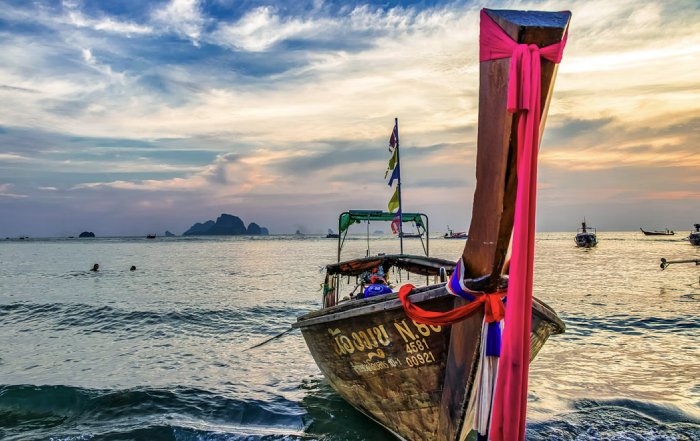
Phuket remains the primary operational platform for high-end yachting in Southeast Asia, anchored by marinas such as Ao Po Grand Marina and Royal Phuket Marina, which offer deep-water berths, technical support, provisioning, and efficient access to international flights. From this hub, yachts can fan out into the iconic landscapes of Phang Nga Bay, with its cinematic limestone karsts, the clear waters and protected anchorages of the Similan Islands, and the more remote Surin Islands, which retain a sense of wilderness and are prized by serious divers and nature-focused guests. With careful itinerary design, captains can still secure quiet anchorages even during busier periods, a key differentiator for owners accustomed to crowded European hotspots.
Environmental management has become a central concern in the Andaman region. Collaboration between local operators and international conservation organizations, including initiatives highlighted by the World Wildlife Fund, has led to more structured approaches to reef protection, mooring buoy deployment, and waste reduction. For readers who wish to understand how Phuket and its surrounding islands are handling the pressures of increased yacht traffic, the yacht-review.com sustainability coverage provides regular analysis of best practices and evolving regulatory frameworks.
Indonesia: Raja Ampat, Komodo, and the High-Value Frontier
The Indonesian archipelago, spanning more than 17,000 islands, represents one of the world's most compelling yet operationally demanding cruising arenas, attracting experienced captains, expedition-style yachts, and owners willing to invest in advanced planning. Raja Ampat, frequently cited by marine scientists and organizations such as Conservation International as a global epicenter of biodiversity, has become a flagship destination for diving-focused charters and private expeditions, where steep jungle-covered islands, hidden lagoons, and exceptionally clear waters create a setting that remains unmatched in its combination of remoteness and ecological richness.
Further south, the Komodo National Park offers a contrasting, volcanic landscape and the unique wildlife encounter of the Komodo dragon, making it particularly attractive for multi-generational family groups seeking both adventure and education. Responsible operators increasingly coordinate their activities with local communities and park authorities, guided by frameworks promoted by entities such as UNESCO and the International Union for Conservation of Nature, to ensure that visitor numbers and practices remain compatible with long-term conservation. For families and owners designing educational, conservation-minded itineraries, the family-focused features on yacht-review.com often reference Indonesia as a model of how high-end cruising and environmental stewardship can coexist.
Vietnam and Cambodia: Emerging Nodes on the Yachting Map
Vietnam and Cambodia, once peripheral to the region's yachting narrative, are now emerging as credible additions to multi-country itineraries, particularly for owners and charterers who value cultural depth and evolving hospitality scenes. Vietnam's coastline, stretching from Ha Long Bay in the north to Nha Trang and Phu Quoc in the south, offers a blend of dramatic karst formations, sandy beaches, and energetic coastal cities. Ha Long Bay, recognized as a UNESCO World Heritage Site, has long been dominated by local cruise vessels, but private yachts are increasingly visible among its limestone pillars, especially outside domestic peak seasons. Further south, upgraded marinas and resort developments are making it easier to integrate urban stays in Hanoi or Ho Chi Minh City with coastal cruising segments.
Cambodia's quieter coastline, centered around Sihanoukville and the Koh Rong archipelago, appeals to owners seeking a less commercialized environment where rustic charm still predominates, even as boutique resorts and improved transport links begin to shift the region's profile. As both countries refine their marine regulations and port facilities, they are likely to feature more prominently in cross-border itineraries that combine Thailand, Vietnam, and Cambodia, a pattern already reflected in the global destination coverage on yacht-review.com, where itineraries increasingly span multiple jurisdictions and cultural zones.
East Asia: Tradition, Technology, and Design-Led Cruising
East Asia offers a markedly different cruising proposition, one that brings together long-standing maritime traditions, cutting-edge urban development, and a sophisticated design culture. For owners with strong interests in architecture, gastronomy, and technology, the coasts of Japan, South Korea, and China present a compelling alternative to purely tropical routes.
Japan's Inland Sea and Southern Archipelagos
Japan's Seto Inland Sea remains one of the world's most underappreciated yachting regions, characterized by sheltered waters, intricate island chains, and a pronounced seasonality that brings changing colors and atmospheres throughout the year. The area's network of small ports, fishing communities, and contemporary art destinations, including Naoshima and Teshima, enables itineraries that combine cultural immersion, quiet anchorages, and high-level dining, a combination that resonates strongly with sophisticated owners from the United States, United Kingdom, Germany, and across Asia. Further south, Okinawa and the Yaeyama Islands offer a subtropical environment with coral reefs, white-sand beaches, and a distinct cultural identity that differentiates them from mainland Japan, making them particularly attractive for owners seeking variety within a single national jurisdiction.
Japan's broader design ethos, encompassing minimalism, craftsmanship, and advanced engineering, has begun to influence yacht interiors, exterior lines, and onboard technology. Collaborations between Japanese designers and European shipyards are now more frequently featured on the yacht-review.com design pages, where the editorial team examines how regional aesthetics and technical standards are reshaping global expectations of comfort, efficiency, and understated luxury.
South Korea: Lifestyle Marinas and Technology Transfer
South Korea has invested deliberately in the development of its leisure marine sector, with new and upgraded marinas in Busan, Yeosu, and along the southern coastline catering to both domestic and foreign-flagged vessels. While the climate is more seasonal than in Southeast Asia, the combination of dramatic coastal scenery, modern infrastructure, and proximity to major urban centers such as Seoul makes South Korea well-suited to shorter, high-intensity cruises that blend yachting with city-based business or cultural engagements. The growth of watersports, regattas, and yacht clubs reflects a broader lifestyle shift among affluent Koreans, for whom boating is increasingly associated with wellness, networking, and personal branding.
South Korea's global leadership in shipbuilding, electronics, and digital connectivity also has significant implications for yachting technology. Advances in navigation systems, integrated bridge solutions, smart onboard connectivity, and alternative propulsion are often pioneered in the commercial sector before filtering into the luxury segment. The technology editors at yacht-review.com closely track these developments, recognizing that the innovations emerging from Korean and Japanese yards and suppliers are likely to shape the performance, safety, and sustainability profile of yachts operating not only in Asia but worldwide.
China's Coastal Strategy and Hainan's Role
China's extensive coastline, ranging from temperate regions such as Qingdao to the tropical environment of Hainan, represents a complex but increasingly important arena for yachting. Hainan in particular has been positioned as a flagship hub for leisure boating, with expanding marinas, free-trade policies, and integrated resort developments aimed at attracting both domestic and international visitors. While regulatory considerations for foreign-flagged yachts remain a critical planning factor, the general trajectory is toward greater openness and more structured marine tourism offerings, particularly as China continues to refine its coastal development strategy.
Major coastal cities such as Shanghai, Shenzhen, and Guangzhou are concurrently at the forefront of urban innovation and sustainable development, raising important questions about how large-scale coastal urbanization can coexist with increased yacht traffic and marine tourism. Organizations like the OECD have produced extensive work on coastal cities and resilience, providing useful context for industry stakeholders evaluating long-term investment in Chinese marinas and service hubs. Policy shifts, infrastructure announcements, and regulatory updates are increasingly covered on the yacht-review.com news platform, where their implications for access, taxation, and operational flexibility are analyzed in detail for a global professional audience.
South Asia: Heritage Coasts and Long-Range Opportunities
South Asia remains less developed as a leisure yachting destination compared with Southeast and East Asia, yet it offers substantial potential for owners and charter clients prepared to engage with a more complex regulatory and logistical environment. The rewards lie in a combination of cultural depth, varied coastlines, and strategic positioning along key Indian Ocean routes.
India's Konkan Coast and the Andaman Gateway
India's western Konkan Coast, extending from Mumbai through Goa and further south, presents a mix of historic ports, palm-fringed beaches, and dynamic coastal communities. While marina infrastructure is still at an early stage relative to European or Southeast Asian standards, interest from Indian entrepreneurs and international investors has grown steadily, particularly around Goa, which already enjoys strong brand recognition as a tourism destination. Incremental regulatory reforms have made it more feasible for foreign-flagged yachts to operate seasonally in Indian waters, although careful planning and experienced local agents remain essential.
Further east, the Andaman and Nicobar Islands offer a different, more remote cruising experience, with clear waters, coral reefs, and a genuine sense of isolation that appeals to expedition-style yachts and owners seeking to disconnect from traditional yachting circuits. Access permits and environmental regulations require rigorous preparation, but the islands' natural assets and their strategic location between Southeast Asia and Sri Lanka make them an increasingly relevant consideration for long-range itineraries. The planning tools and destination analyses available in the yacht-review.com reviews section often emphasize the importance of combining technical readiness with cultural and environmental awareness when operating in such sensitive areas.
Sri Lanka and the Indian Ocean Crossroads
Sri Lanka, positioned at a critical juncture in the Indian Ocean, has intensified its efforts to attract yachts in transit between Asia, the Middle East, Africa, and Europe. Ports such as Galle and Colombo offer not only safe harbor and provisioning but also access to a rich array of inland cultural sites, including the famed Cultural Triangle, tea country, and wildlife reserves. The island's varied coastline, with established surf destinations in the south and more tranquil bays in the east and northeast, enables seasonal cruising strategies aligned with monsoon patterns and prevailing winds.
From a policy and investment perspective, Sri Lanka's marine tourism strategy reflects a broader trend identified in the World Bank's tourism analyses, which highlight coastal and marine tourism as key levers for sustainable economic growth in emerging markets. For yacht owners and charter stakeholders, this translates into a growing number of destinations eager to welcome high-value marine visitors, provided that engagement is structured to benefit local communities and ecosystems. This theme of community-centric development is regularly explored in the yacht-review.com community coverage, which examines how yachting can be integrated into local economies in a balanced and responsible manner.
Design, Technology, and the Asian Operational Profile
The rise of Asia as a central cruising theatre has had a pronounced impact on yacht design, onboard technology, and operational planning. The combination of longer distances between key service hubs, high humidity, intense sunlight, and increasingly multi-generational guest profiles has prompted shipyards and designers to adapt both technical specifications and lifestyle features to better suit Asian conditions.
Leading European shipyards such as Feadship, and Benetti, alongside regional builders including Horizon Yachts and Sanlorenzo Asia, are now routinely asked to deliver yachts with extended range, robust tropical ventilation, and highly flexible indoor-outdoor living spaces. Shaded decks, adaptable dining areas, wellness zones, and spa facilities inspired by Asian hospitality traditions are becoming standard requests, particularly from owners based in China, Singapore, Hong Kong, and Southeast Asia. The boats and new-build coverage on yacht-review.com frequently highlights how these design choices directly support long-range cruising programs that include Thailand, Indonesia, Japan, Vietnam, and beyond.
Technological innovation is equally central to this evolution. Hybrid propulsion systems, advanced stabilization technologies, and high-efficiency air-conditioning and air-filtration solutions are increasingly prioritized to ensure comfort and environmental performance in warm, humid climates. Regulatory bodies such as the International Maritime Organization continue to tighten standards on emissions and safety, pushing shipyards and owners to adopt cleaner technologies, optimized hull forms, and smarter energy management systems. The technology-focused reporting on yacht-review.com offers in-depth analysis of how these regulatory and technological shifts are shaping the specification of yachts intended for extended operations in Asian waters.
Sustainability and Responsible Cruising as Strategic Imperatives
The growth of yachting activity across Asia has made sustainability and responsible cruising not just ethical considerations but strategic imperatives for owners, charter companies, and marinas seeking long-term viability. Coral reefs, mangroves, and seagrass meadows, which are critical to fisheries, coastal protection, and tourism, are highly vulnerable to anchor damage, pollution, and climate-related stress. Organizations such as the Coral Reef Alliance and numerous regional NGOs have consistently warned that unmanaged marine tourism can cause irreversible harm to these ecosystems, undermining the very assets that attract high-end visitors.
Forward-looking stakeholders are responding with concrete measures: deploying and using mooring buoys in sensitive areas, minimizing single-use plastics onboard, investing in advanced black- and grey-water treatment systems, and partnering with local conservation projects. These practices not only mitigate environmental impact but also enhance the reputational standing of the yachting community at a time when regulators, media, and the public are increasingly scrutinizing luxury travel. The sustainability section of yacht-review.com regularly presents case studies of yachts, marinas, and destinations in Asia, Europe, North America, and Africa that have successfully embedded environmental stewardship into their operational models, offering practical guidance for owners and captains planning voyages through ecologically sensitive regions.
Equally important is the social and cultural dimension of responsible cruising. Many of Asia's coastal communities maintain long-standing traditions and livelihoods that can be disrupted by sudden influxes of high-spending visitors. By working with local guides, sourcing provisions locally where feasible, supporting community-led tourism initiatives, and respecting cultural norms and sacred sites, yacht guests can ensure that their presence contributes positively rather than creating friction. This approach aligns closely with the editorial values of yacht-review.com, which treats yachting not merely as a symbol of affluence but as a platform for respectful, mutually beneficial engagement between global travelers and host communities.
Events, Community, and the Consolidation of an Asian Yachting Culture
Events and networks play a critical role in consolidating Asia's identity as a mature yachting region. Boat shows, regattas, and lifestyle festivals in Singapore, Hong Kong, Phuket, Shanghai, and other hubs act as focal points where shipyards, brokers, designers, owners, and service providers converge to present new yachts, technologies, and destinations. These gatherings also serve as venues for policy dialogue, sustainability initiatives, and cross-border collaboration, shaping the region's trajectory in ways that extend far beyond the event dates themselves. The events coverage on yacht-review.com tracks these developments closely, providing context for how they influence charter availability, new-build orders, and infrastructure investment.
Alongside formal events, a more organic sense of community has emerged among owners and captains who choose to base their yachts in Asia or undertake extended regional cruising. Informal rallies, online forums, and private owner networks facilitate the exchange of information on regulations, seasonal weather patterns, local agents, and service providers, effectively lowering the barriers for newcomers and increasing operational resilience for those already active in the region. This community-building process is part of a broader lifestyle and identity shift documented in the yacht-review.com lifestyle and global sections, where Asia is increasingly portrayed not just as a set of destinations but as a cohesive, evolving yachting culture.
Asia by Boat in 2026: A Core Chapter in Contemporary Yachting
In 2026, choosing to integrate Asia into a yacht's cruising program is no longer an experimental option reserved for the most adventurous owners; it has become a core strategic decision for those seeking to realize the full potential of their vessels and their time. From the tropical anchorages of Thailand, Indonesia, and Vietnam to the culturally rich and technologically advanced coasts of Japan, South Korea, China, and India, Asia offers an unparalleled diversity of seascapes, climates, and cultural experiences that can be woven into bespoke itineraries tailored to individual preferences, whether the priority is family time, business networking, wellness, exploration, or a combination of all four.
For the editorial team at yacht-review.com, which has spent years documenting this evolution across its reviews, destination cruising features, business analyses, and global market reports, Asia represents both a present reality and a forward-looking frontier. As marina infrastructure continues to improve, as technology makes long-range cruising more efficient and sustainable, and as owners and guests seek deeper, more meaningful engagement with the places they visit, Asia's coasts are set to play an even more central role in the global yachting narrative.
For yacht owners, charter clients, designers, and industry professionals planning the next decade of their yachting strategies, the implications are clear. Asia is no longer an optional extension to a world cruise or a one-off adventure to be checked off and forgotten. It is a foundational chapter in contemporary yachting, one that rewards expertise, cultural curiosity, and a long-term commitment to responsible, high-quality cruising. As yacht-review.com continues to expand its coverage of design, technology, travel, and lifestyle in this dynamic region, its readers are uniquely positioned to navigate, with confidence and insight, the opportunities and responsibilities that Asia's remarkable coasts now present.