

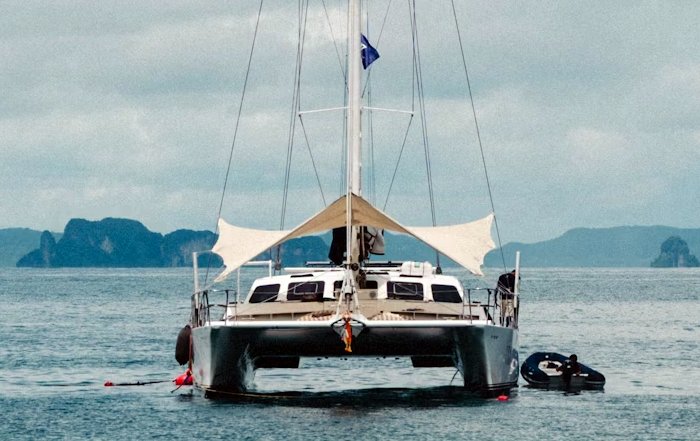
A Luxurious Catamaran from a World-Leading Brand
A New Benchmark in Luxury Catamarans
The luxury catamaran segment has matured into one of the most dynamic and innovation-driven corners of the global yachting industry, and nowhere is this more evident than in the latest flagship multihull from a world-leading brand that has deliberately chosen to redefine expectations of comfort, performance and sustainability in a single platform. For the team at yacht-review.com, which has followed the evolution of high-end multihulls across the United States, Europe, Asia and beyond for more than a decade, this new catamaran represents not only an incremental product update but a meaningful shift in how serious owners, charter operators and family cruisers think about space, technology and long-range capability on two hulls rather than one.
In a market where discerning buyers compare every detail with established names such as Sunreef Yachts, Lagoon, Fountaine Pajot, Gunboat and Privilege, a "world-leading brand" is not a marketing cliché but a status that must be earned through consistent delivery of design quality, seaworthiness, after-sales support and long-term value. This new model, positioned in the 70- to 80-foot range and aimed squarely at global cruising itineraries from the Caribbean and the U.S. East Coast to the Mediterranean, Southeast Asia and the South Pacific, has been conceived as a flagship that can function equally well as a private family retreat, a corporate entertainment platform or a high-end charter asset.
Readers familiar with the in-depth boat assessments on yacht-review.com's review section will recognize the editorial emphasis on real-world usability, build quality and ownership experience, and this catamaran has been evaluated through exactly that lens, taking into account not only its immediate visual impact but the operational realities that owners and captains will face over years of global cruising.
Exterior Design: Architecture of Space and Light
At first encounter, the catamaran's exterior lines reveal a careful balance between the sculpted, almost architectural aesthetic now common among large multihulls and the more timeless proportions that appeal to traditional monohull owners considering their first step into the catamaran world. The design office behind this yacht, led by a chief naval architect with a long history of collaboration with Oyster Yachts, CNB and other respected European yards, has chosen a high-volume hull form with pronounced chines and subtly reversed bows, giving the yacht both a powerful stance at the dock and a hydrodynamically efficient footprint under way.
The glazed superstructure, which stretches almost the full beam between the hulls, is one of the defining visual signatures of the yacht. Full-height windows wrap around the main deck saloon, while the forward bulkhead is softened by angled glass that draws the eye toward the foredeck lounge. This extensive use of glazing is more than an aesthetic flourish; it directly supports the brand's goal of creating an uninterrupted sense of connection between interior and exterior spaces, especially for owners who plan to spend extended seasons aboard in regions such as the Mediterranean, the Bahamas or the Indonesian archipelago. For readers interested in the broader design trends shaping contemporary multihulls, the analysis in yacht-review.com's design insights provides helpful context for understanding how this particular model fits into the global picture.
On the aft deck, the designers have prioritized versatility. A wide, teak-lined cockpit spans the entire beam, offering a combination of fixed sofas, modular lounge furniture and a large dining table that can be configured for intimate family meals or expanded for corporate events and charter groups. The integration of the hydraulic swim platforms on each hull is particularly well executed, allowing the yacht to carry a substantial tender and a selection of water toys without compromising day-to-day access to the sea. For owners accustomed to the boarding platforms of large monohull superyachts, the symmetry and stability offered by twin hulls at water level will feel immediately reassuring, particularly when operating in busy marinas in the United States, the Mediterranean or Southeast Asia.
Above, the flybridge is conceived as a true second deck rather than a simple helm extension. A hardtop with integrated solar panels provides shade and energy generation, while the layout offers a blend of helm, lounge and bar areas that can be adapted to different cruising styles. The helm station itself is offset to starboard, giving the captain excellent sightlines forward, aft and to the docking side, which is an important safety consideration for a yacht of this beam. The remaining space is devoted to relaxation, with sunpads, sofas and a fully equipped bar that transforms the flybridge into the social heart of the yacht at anchor. For many owners, especially those from markets such as Australia, South Africa and Brazil where outdoor living is integral to the boating lifestyle, this elevated deck will be a decisive factor in their purchase decision.
Interior Philosophy: Residential Comfort at Sea
Stepping inside, the catamaran reveals a design philosophy that aims to deliver residential-grade comfort while remaining faithful to the functional requirements of offshore cruising. The main saloon is dominated by panoramic windows, low-profile cabinetry and a neutral palette of natural woods, stone surfaces and textured fabrics, creating an atmosphere closer to a contemporary city penthouse than a traditional yacht interior. This trend toward "home-like" spaces has been gathering momentum across the industry, as documented by organizations such as the Superyacht Builders Association (SYBAss) and design awards covered regularly on yacht-review.com's lifestyle pages.
The layout follows a familiar but refined arrangement: a generous lounge area aft, a central dining zone and a forward-facing navigation and watchkeeping station that allows the owner or captain to monitor systems and passage progress from within the climate-controlled saloon. The galley can be specified either as an open "galley up" configuration, suitable for private family use where cooking is part of the social experience, or as a "galley down" layout with professional-grade equipment and segregated crew circulation, ideal for charter operations or owners who prefer a more discreet service environment. This flexibility is particularly appealing to buyers in North America and Europe who may alternate between private use and charter to offset ownership costs.
In the hulls, the accommodation has been designed with both privacy and comfort in mind. The owner's suite occupies a large portion of one hull, typically the starboard side, and benefits from a full-beam bathroom, a private lounge or office area and direct access to the water via a dedicated stairway. The remaining cabins, which can be configured as VIP doubles, guest twins or convertible spaces, are distributed along both hulls, each with large hull windows that bring in natural light and sea views. Attention to acoustic insulation, vibration damping and air-conditioning zoning reflects a commitment to genuine live-aboard comfort, something that experienced cruisers and families with children will appreciate on long passages.
From a materials standpoint, the brand has made a conscious effort to integrate more sustainable options, including FSC-certified woods, low-VOC finishes and fabrics sourced from suppliers committed to responsible production practices. Owners interested in the broader sustainability context can learn more about sustainable business practices from the United Nations Environment Programme, which has highlighted the marine industry as an important arena for innovation in materials and energy efficiency. The catamaran's interior does not advertise its eco-credentials loudly, but the underlying procurement choices demonstrate that luxury and responsibility are no longer mutually exclusive.
Performance and Seakeeping: Stability with Purpose
In performance terms, this catamaran has been engineered to offer a balanced compromise between speed, comfort and fuel efficiency, recognizing that its primary mission is long-range cruising rather than racing. The hulls feature moderate length-to-beam ratios and carefully optimized underwater sections, developed through extensive CFD analysis and tank testing in collaboration with a leading European hydrodynamics institute. For readers who follow the technical evolution of yacht design, resources such as Delft University of Technology and the Wolfson Unit MTIA have published research on multihull performance that mirrors some of the principles applied here.
Under power, twin diesel engines in the 500- to 800-horsepower range, depending on the chosen specification, deliver a comfortable cruising speed of 10 to 12 knots, with top speeds approaching 18 knots in calm conditions. The key advantage of the catamaran configuration is its efficiency at moderate speeds, where the slender hulls reduce resistance compared to an equivalently voluminous monohull. This translates into lower fuel consumption and extended range, enabling transoceanic passages without frequent refuelling, a feature of particular interest to owners planning routes across the Atlantic, the Indian Ocean or the Pacific.
Under sail, the yacht is offered with several rig options, ranging from a conservative cruising setup with a self-tacking jib and in-boom furling mainsail to a more performance-oriented package with a square-top main, overlapping headsails and a suite of downwind sails. While this catamaran is not positioned as a high-performance racer like some carbon-intensive multihulls, it is capable of maintaining respectable average speeds when the wind cooperates, especially on reaching courses. Its inherent stability and reduced heel angle compared to monohulls will appeal to families, older owners and corporate guests who may be less comfortable with pronounced motion at sea.
The seakeeping characteristics have been carefully tuned to handle a wide range of conditions, from the short, steep chop often encountered in the English Channel and the North Sea to the long ocean swells of the Atlantic and Pacific. The bridge deck clearance has been set high enough to minimize slamming, while the structural engineering of the crossbeams and central nacelle ensures that the yacht maintains rigidity and comfort even when driven hard in adverse weather. Those interested in the broader context of cruising routes and seasonal weather patterns will find complementary insights in yacht-review.com's cruising coverage, which frequently addresses the practical realities of planning passages across Europe, North America, Asia and the Southern Hemisphere.
Technology and Systems: Quiet Innovation
Beneath the surface, this catamaran serves as a showcase for the digitalization and automation trends reshaping the yachting industry in 2026. The vessel's central nervous system is a fully integrated monitoring and control platform, developed in partnership with a leading marine electronics manufacturer and drawing on technology similar to that used by brands such as Raymarine, Garmin and Navico. From a series of touchscreens at the helm, the navigation station and the crew areas, the captain can monitor engines, generators, tank levels, electrical loads, climate control, lighting and security systems, with remote access available via encrypted connections when the owner wishes to check on the yacht from shore.
Energy management is a central theme, with a hybrid architecture that combines high-capacity lithium-ion battery banks, inverter-chargers, solar arrays integrated into the hardtop and optional wind generation. This configuration allows the yacht to operate for extended periods at anchor with minimal generator use, significantly reducing noise, vibration and emissions. Owners who prioritize silent nights in remote anchorages or who wish to minimize their environmental footprint will appreciate the ability to run air-conditioning, refrigeration and entertainment systems almost entirely on stored energy during typical use cycles. For a broader industry perspective on marine electrification and hybrid systems, the technical reports published by DNV and the coverage on yacht-review.com's technology pages offer valuable background.
Navigation and safety systems are equally comprehensive, with redundant chartplotters, radar, AIS, forward-looking sonar and thermal imaging cameras all integrated into a unified situational awareness environment. Compliance with the latest standards of the International Maritime Organization (IMO) and national authorities in key markets such as the United States, the United Kingdom and Australia has been built into the design from the outset, simplifying registration, insurance and commercial charter certification. The yacht's digital backbone is also future-ready, with provision for software updates, additional sensors and emerging technologies such as AI-assisted route optimization and predictive maintenance, which are beginning to move from commercial shipping into the yachting sphere.
Sustainability and Responsibility: Beyond Marketing
In 2026, any serious review of a flagship luxury catamaran must address sustainability not as a marketing add-on but as a core component of the design and operational philosophy. This world-leading brand has adopted a multi-layered approach, recognizing that true environmental responsibility extends from the shipyard floor to the yacht's daily operation in fragile marine ecosystems around the world.
At the construction stage, the yard has invested in more efficient production processes, including vacuum infusion and resin systems with reduced environmental impact, as well as improved waste management and recycling practices. Partnerships with suppliers who adhere to recognized standards such as ISO 14001 and who participate in initiatives led by organizations like the World Wildlife Fund (WWF) signal a willingness to align with broader global sustainability goals rather than pursuing isolated gestures. For readers who wish to explore the intersection of business and sustainability in more depth, resources from the World Economic Forum offer a useful macro-economic perspective on how luxury industries are adapting to environmental and social expectations.
On board, the catamaran's low-emission propulsion options, energy-efficient HVAC systems, LED lighting and water-saving technologies such as advanced watermakers and greywater treatment contribute to a reduced operational footprint. The large deck areas and stable platform of a catamaran make it particularly suitable for carrying additional solar capacity and for integrating waste-segregation and recycling systems that are more challenging on smaller monohulls. Owners, captains and crew can further enhance this baseline by adopting responsible cruising practices, from anchoring techniques that protect seagrass and coral to careful selection of marinas and service providers that adhere to environmental best practices. Guidance on such topics is increasingly available, and the editorial team at yacht-review.com's sustainability hub has been actively curating resources and case studies relevant to both private and charter operations.
Ownership Experience and Business Considerations
For many prospective buyers, particularly in mature markets such as the United States, the United Kingdom, Germany, France and Australia, the decision to invest in a yacht of this size and complexity is as much a business and lifestyle calculation as it is a passion project. The brand behind this catamaran is acutely aware of this reality and has structured its offering accordingly, with a network of regional support centers, standardized maintenance programs and charter-friendly layouts designed to enhance residual value and revenue potential.
The yard's after-sales infrastructure, supported by trained technicians and authorized service partners across North America, Europe, Asia and the Pacific, plays a crucial role in maintaining the yacht's long-term reliability and resale appeal. Owners are offered comprehensive training programs for captains and crew, as well as digital documentation and remote support tools that simplify troubleshooting and maintenance planning. For those considering placing their yacht into charter, the brand collaborates with established operators in the Caribbean, the Mediterranean and Southeast Asia, helping to position the vessel within premium fleets that attract high-value clients. Discussions of such ownership models and their financial implications are a regular feature on yacht-review.com's business pages, where industry trends in charter demand, financing and resale values are tracked closely.
Insurance, regulatory compliance and tax considerations vary significantly between jurisdictions, from the United States and Canada to Italy, Spain, Singapore and South Africa, and the brand's sales advisors typically work alongside specialized maritime law firms and tax consultants to guide buyers through these complexities. In many cases, the catamaran's classification, safety equipment and crew accommodation have been designed to meet or exceed the requirements for commercial registration in key markets, giving owners the flexibility to switch between private and commercial use as their circumstances evolve.
Global Cruising Lifestyle: A Platform for Experiences
Ultimately, a yacht of this caliber is a platform for experiences rather than an end in itself, and this is where the catamaran configuration truly comes into its own. The combination of expansive deck spaces, stable motion at anchor and generous interior volume makes it particularly well suited to multi-generational family cruising, corporate hospitality and extended voyages that blend work and leisure. With reliable connectivity solutions now available almost worldwide, from the fjords of Norway and the islands of Greece to the atolls of French Polynesia and the coasts of Thailand and Malaysia, owners increasingly view their yachts as mobile residences and offices rather than occasional holiday assets.
The editorial team at yacht-review.com has observed a clear shift in reader interest toward destination-driven content, and the new catamaran aligns perfectly with this trend. Whether exploring the Pacific Northwest from British Columbia to Alaska, following the classic Mediterranean circuit from Spain and France to Italy, Croatia and Greece, or venturing into emerging cruising grounds in Asia, Africa and South America, this yacht offers the autonomy, comfort and storage capacity needed for serious itineraries. Those seeking inspiration for such voyages can turn to yacht-review.com's travel features and global coverage, which highlight both iconic routes and lesser-known gems.
For families, the safety and predictability of a catamaran's motion, combined with the clear separation of guest and crew areas, create an environment where children, parents and grandparents can share time together without feeling crowded. The ability to carry a wide array of water toys, from tenders and RIBs to kayaks, paddleboards and dive gear, further enhances the onboard lifestyle, transforming the yacht into a floating resort that can adapt to different age groups and interests. Insights into such family-oriented cruising are regularly shared on yacht-review.com's family section, reflecting a demographic trend that is reshaping the expectations placed on modern yachts.
Position in the Market and Final Assessment
Positioning this luxurious catamaran within the broader competitive landscape of 2026 requires consideration of not only its technical specifications and aesthetic qualities but also the brand's reputation, build quality and commitment to long-term support. In a segment populated by strong players from France, Poland, South Africa, China and other regions, a "world-leading" label must be justified through consistent delivery of yachts that perform reliably in demanding conditions, retain their value over time and earn the trust of professional captains and experienced owners.
From the perspective of yacht-review.com, which has evaluated a wide range of models across sail and power, mono and multihull, this new catamaran stands out for the coherence of its concept. The exterior design, interior philosophy, performance envelope, technology stack and sustainability initiatives all support a clear vision: a global cruising platform that can be tailored to different ownership profiles without losing its core identity. It is neither an extreme performance machine nor a static floating villa; rather, it is a capable, comfortable and technologically advanced yacht that invites its owners to use it extensively, across seasons and regions.
Potential buyers from North America, Europe, Asia and the Southern Hemisphere will find that the yacht's appeal lies as much in its everyday practicality as in its headline features. Docking, provisioning, maintenance access and crew workflows have been thought through with the same care as the owner's suite finishes and entertainment systems, which is a hallmark of mature design. For those who wish to explore comparable models and competing offerings, the curated listings and analyses on yacht-review.com's boats section and news coverage provide a useful starting point, while the broader community discussions and event reports on yacht-review.com's community pages and events coverage offer insights into how such yachts are used and perceived in real-world contexts.
In conclusion, this luxurious catamaran from a world-leading brand represents a compelling synthesis of design, engineering and lifestyle thinking that is thoroughly aligned with the expectations of discerning owners in 2026. It embodies the Experience, Expertise, Authoritativeness and Trustworthiness that readers of yacht-review.com look for when evaluating major yachting investments, and it underscores the continuing evolution of the multihull as not merely an alternative to the traditional monohull but as a primary choice for those who value space, stability, efficiency and global reach. As the industry continues to innovate in response to technological advances, environmental imperatives and changing patterns of work and leisure, yachts of this type will play a central role in shaping what luxury cruising means in the years ahead.