

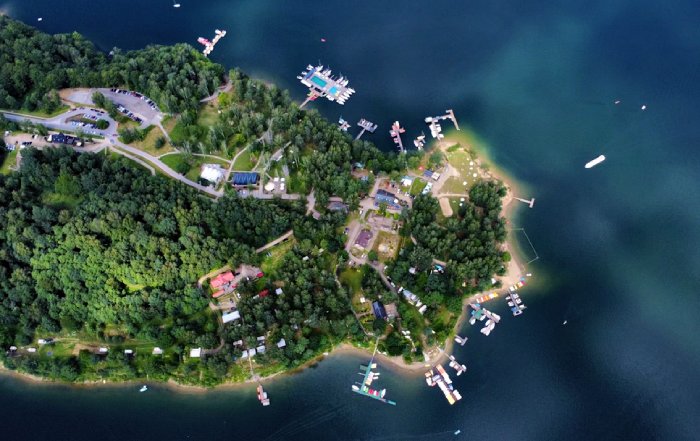
Private Island Marinas in 2026: Where Regenerative Luxury Redefines Yachting
The world of yachting in 2026 has matured into a sophisticated reflection of global priorities, where freedom, adventure, and refined comfort are increasingly measured against a backdrop of environmental responsibility and cultural awareness. Nowhere is this evolution more visible than in the rise of private island marinas, which have moved far beyond their origins as secluded havens for the global elite to become living laboratories for sustainable design, regenerative tourism, and technologically enabled stewardship of fragile marine environments. For Yacht Review, whose editorial lens is firmly focused on experience, expertise, authoritativeness, and trustworthiness across the international yachting landscape, these island enclaves represent not just a trend but a structural shift in how luxury on the water is conceived, delivered, and sustained.
Private island marinas today are not simply places to berth a superyacht away from crowded harbors; they are highly curated ecosystems where architecture, energy systems, conservation programs, and guest experience are orchestrated to align with the values of a new generation of owners and charterers. From the Caribbean to the South Pacific, from the Mediterranean to Southeast Asia, these destinations are redefining what it means to travel by sea, and they are doing so in ways that resonate deeply with the discerning, globally mobile audience that turns to Yacht Review for insight into the future of high-end maritime life.
From Seclusion to Purpose: The Rebirth of the Island Marina
Historically, the appeal of a private island marina was rooted in seclusion: a sheltered bay or purpose-built harbor where owners from the United States, the United Kingdom, Germany, or the Middle East could escape the scrutiny and congestion of traditional yachting hubs in the Mediterranean or Caribbean. By 2026, however, exclusivity has acquired a far more nuanced meaning. It is no longer defined solely by privacy or geographic remoteness, but by the ability to offer an experience that reflects personal ethics, environmental consciousness, and a sense of long-term responsibility toward the oceans that make yachting possible.
In regions such as the Bahamas, the Maldives, and the South Pacific, private island marinas have embraced integrated renewable energy systems, advanced desalination, and reef restoration as core elements of their operating models rather than as marketing afterthoughts. Solar microgrids, battery storage, and increasingly, hybrid and hydrogen-ready marina infrastructures are becoming standard, ensuring that the energy demands of visiting superyachts and land-based facilities are met with minimal emissions. At the same time, sophisticated wastewater treatment and circular waste management systems are deployed to protect surrounding coral reefs and seagrass meadows, which are essential to both biodiversity and coastal resilience. Readers wishing to see how these developments compare to broader sustainability trends across yachting can explore Yacht Review's sustainability coverage.
Pioneering destinations such as Kokomo Private Island Fiji and Thanda Island off Tanzania exemplify this new philosophy. They have invested heavily in marine protected areas, coral nurseries, mangrove regeneration, and community partnerships, embedding conservation into the guest journey. For the international audience that follows Yacht Review from Europe, North America, Asia, and beyond, these islands demonstrate that the pinnacle of luxury now lies in the ability to enjoy pristine waters while actively contributing to their preservation.
Architectural Innovation and Biophilic Integration
The design language of private island marinas has undergone a parallel transformation, driven by a fusion of biophilic design, coastal engineering, and culturally grounded aesthetics. Where once the focus lay on imposing structures and conspicuous architectural statements, today's leading island marinas are conceived as extensions of the landscape, shaped by tidal flows, erosion patterns, coral health, and local ecological constraints long before the first pile is driven into the seabed.
Biophilic design principles, which emphasize the human need to connect with nature, are now embedded in master plans. Elevated wooden walkways protect dune systems and mangrove roots; overwater pavilions are oriented to maximize natural ventilation and daylight, reducing reliance on mechanical cooling; and living roofs, rainwater harvesting, and native landscaping support local biodiversity while softening the visual impact of development. In some marinas, living seawalls with textured surfaces and integrated habitat modules are replacing conventional concrete barriers, encouraging colonization by oysters, corals, and other marine organisms, and thereby enhancing water quality and shoreline stability. Those interested in the broader evolution of yacht and marina aesthetics can delve into Yacht Review's design features.
This architectural shift has been enabled by close collaboration between developers, marine biologists, and conservation organizations such as The Ocean Foundation and Blue Marine Foundation, whose guidelines and advocacy have helped mainstream ecological performance criteria in high-end coastal projects. At the same time, institutions and initiatives highlighted by organizations like the United Nations Environment Programme provide a global framework for those wishing to learn more about sustainable business practices within the ocean economy through resources such as the UNEP ocean and seas portal.
The New Economics of Exclusivity
Behind the serene imagery of solar-powered villas and coral-fringed marinas lies a complex economic architecture. Building a private island marina that meets the expectations of ultra-high-net-worth individuals in markets such as the United States, the United Kingdom, Germany, China, or Singapore, while simultaneously complying with stringent environmental regulations and community engagement requirements, demands capital investment on a formidable scale. Infrastructure for renewable energy, advanced water systems, and resilience against storms and sea-level rise can elevate project costs into the hundreds of millions of dollars.
Yet the return on such investments is measured in more than nightly rates or berth fees. For many owners and investors, the ability to align their portfolios with environmental, social, and governance (ESG) criteria has become indispensable. Private island marinas that can demonstrate credible sustainability credentials, transparent governance, and long-term ecological commitments command a premium in reputation and valuation, particularly among next-generation wealth holders in North America, Europe, and Asia. For analysis of how these trends intersect with broader maritime finance and ownership models, readers can refer to Yacht Review's business section.
Most of these marinas adopt highly curated access models-membership-only, invitation-based, or tightly capped capacity-to preserve environmental carrying capacity and maintain an aura of discretion. This creates a sense of community among guests and berth holders who share similar values around conservation and philanthropy. In practice, this means that the economics of exclusivity now hinge less on volume and more on depth of engagement, long-term loyalty, and the ability to offer transformative experiences that cannot be replicated in traditional marinas.
A New Generation of Owners and Their Expectations
The demographic profile of yacht ownership has shifted significantly over the last two decades, with a growing number of owners hailing from technology, finance, and entrepreneurial sectors in the United States, Europe, and Asia-Pacific. These individuals are typically data-literate, globally exposed, and deeply aware of climate and biodiversity challenges. They are also more likely to scrutinize the environmental footprint of their assets and experiences, from the propulsion systems of their yachts to the sourcing of materials in the resorts where they stay.
For this cohort, the appeal of a private island marina is not simply the ability to anchor in a secluded bay in the Caribbean, the Mediterranean, or the South Pacific. Instead, the value lies in curated, meaningful experiences: participating in coral planting with marine scientists, supporting local education initiatives in host communities, or testing emerging green technologies on their vessels in cooperation with forward-thinking marinas. Yacht Review has documented this transition in its lifestyle coverage, where luxury is increasingly defined by purpose, narrative, and impact rather than by scale alone.
This change in mindset has influenced yacht design as well. Leading builders in Italy, the Netherlands, Germany, and South Korea are investing in hybrid propulsion, advanced hull forms, and recyclable materials, responding to owner demand for lower emissions and quieter, more efficient cruising. These technical innovations dovetail with the infrastructure of private island marinas that can provide shore power from renewable sources, green hydrogen bunkering, or advanced waste reception facilities. Readers seeking a deeper understanding of these technological shifts can explore Yacht Review's technology insights.
Global Hotspots of Sustainable Island Luxury
The geography of private island marinas reflects the global scope of contemporary yachting, with hotspots emerging across traditional cruising grounds and new frontiers alike. Each region brings its own regulatory context, cultural heritage, and environmental challenges, shaping distinct models of sustainable luxury.
In the Caribbean and the broader Americas, destinations in The Bahamas, Turks and Caicos, St. Vincent and the Grenadines, Panama, and Costa Rica have moved beyond conventional resort-marina formulas to embrace conservation-led development. Marina Papagayo in Costa Rica, for example, integrates forest and marine protection programs into its operations, reflecting the country's long-standing environmental leadership. In the Bahamas and other island states, developers are increasingly required to integrate reef restoration, mangrove protection, and local employment targets as conditions of approval. For those considering itineraries that combine these marinas into extended voyages from North America or Europe, Yacht Review's cruising section offers route ideas and in-depth destination analysis.
Across the Mediterranean, which remains the beating heart of the global yachting scene, a quieter revolution is underway. Countries such as Greece, Italy, Spain, France, and Croatia have begun to apply stricter environmental standards to marina development and refurbishment, with an emphasis on heritage-sensitive architecture and habitat restoration. Projects like Porto Montenegro and Costa Smeralda demonstrate how high-end marinas can support regional economies while protecting coastal ecosystems. For a broader view of how these developments fit into global patterns of sustainable yachting, readers can consult Yacht Review's global reporting.
In the Pacific and Indian Oceans, private island marinas have become testbeds for advanced sustainability concepts. The Maldives, French Polynesia, Fiji, and Indonesia host properties that experiment with near-total solar reliance, innovative water-cooling systems, and large-scale coral gardening. Destinations such as Bawah Reserve in Indonesia and next-generation Thai island retreats are increasingly appealing to yacht owners from Singapore, Hong Kong, Australia, and Japan, who seek both remoteness and credible sustainability credentials. Those wishing to integrate such islands into transoceanic journeys can find inspiration in Yacht Review's travel features.
Technology, Data, and Energy Independence
The operational backbone of modern private island marinas is technological rather than purely architectural. Energy management platforms, predictive maintenance systems, and digital monitoring tools are now essential to achieving the efficiency and transparency demanded by both regulators and guests. AI-driven analytics help optimize everything from battery charging cycles and water production to logistics and staff deployment, ensuring that marinas can deliver consistently high service standards with minimal waste. The World Economic Forum's Centre for Nature and Climate provides useful context on how such digital solutions are being deployed in nature-based sectors, which can be explored in more detail on the WEF climate hub.
Energy independence has become a central strategic goal. Many island marinas across the Caribbean, Indian Ocean, and Pacific now combine solar arrays, wind turbines, and in some cases ocean thermal energy conversion or wave energy devices to reduce or eliminate fossil fuel dependence. Battery storage, increasingly supported by second-life EV batteries, enables smooth operation even during periods of low generation, while emerging hydrogen technologies promise to decarbonize both on-island transport and yacht refueling in the medium term. Yacht Review regularly profiles such developments in its sustainability and innovation coverage, reflecting the growing importance of technical literacy among yacht owners and managers.
At the guest level, connectivity has reached a point where remoteness no longer equates to isolation. High-bandwidth satellite services such as Starlink Maritime enable real-time video conferencing, remote yacht diagnostics, and continuous environmental monitoring feeds, making it possible for owners to manage global businesses from a lagoon in French Polynesia or a sheltered bay in the Bahamas. Publications such as Forbes, through its technology analysis, have highlighted how this digital layer is reshaping expectations of maritime connectivity; interested readers can explore these perspectives via Forbes Technology coverage.
Governance, Certification, and Accountability
As private island marinas have become more visible as symbols of responsible luxury, scrutiny of their governance and environmental performance has intensified. Regulators in regions such as Europe, Australia, and Southeast Asia increasingly require rigorous environmental impact assessments, long-term monitoring, and adherence to recognized certification schemes as conditions for licensing. Frameworks such as LEED, BREEAM, and tourism-specific systems like EarthCheck have become benchmarks for responsible design and operation, guiding everything from energy efficiency standards to community engagement strategies. Those seeking to understand how these frameworks apply in practice can find further information via the EarthCheck website.
At the same time, the most credible private island marinas have embraced voluntary transparency. Many now publish annual sustainability reports, disclose key performance indicators on water use, energy mix, and biodiversity outcomes, and invite third-party audits of their social and environmental programs. This level of accountability resonates with the expectations of globally aware guests from markets like Canada, Switzerland, the Netherlands, Singapore, and Scandinavia, who are accustomed to ESG reporting in their professional lives and expect similar standards from their leisure investments. Yacht Review's business and community coverage has tracked this convergence between corporate governance and hospitality practices, underscoring the professionalization of sustainability in the yachting ecosystem.
Culture, Community, and Climate Resilience
No private island marina can credibly claim to be sustainable without meaningful integration with local culture and communities. Increasingly, leading developments in the Caribbean, the Pacific, the Indian Ocean, and Southeast Asia are built around partnerships with indigenous groups and local stakeholders, ensuring that economic benefits-from employment to supply chains-are distributed fairly and that cultural heritage is respected rather than commodified. Architecture incorporates vernacular motifs; culinary programs highlight regional ingredients and traditional techniques; and on-island events showcase local music, art, and craftsmanship. Yacht Review regularly highlights such initiatives in its events and lifestyle reporting, recognizing that cultural authenticity has become a core differentiator in the global luxury market.
Climate resilience, meanwhile, has shifted from a theoretical concern to an operational imperative. Rising sea levels, more intense storms, and shifting weather patterns are already affecting yachting seasons in regions such as the Caribbean, Mediterranean, and South Pacific. In response, private island marinas are investing in elevated structures, amphibious or floating villas, flexible dock systems, and materials engineered to withstand saltwater corrosion and extreme winds. Visionary projects by organizations such as Oceanix and BIG - Bjarke Ingels Group, in collaboration with the United Nations Human Settlements Programme, are exploring scalable models for floating neighborhoods and climate-resilient coastal infrastructure. For readers interested in the historical trajectory that has led to these innovations, Yacht Review's history section provides useful context on how marina and yacht design have adapted over time.
Ethical Tourism, Regenerative Experiences, and the Psychology of Luxury
The psychological foundations of luxury have shifted in ways that directly benefit private island marinas committed to ethical tourism. The most sophisticated travelers from markets as diverse as the United States, the United Kingdom, Australia, China, Scandinavia, and the Gulf states increasingly seek experiences that are not only exclusive but also restorative-both personally and environmentally. This has paved the way for regenerative tourism models in which guests are invited to participate in reef restoration dives, mangrove planting, turtle monitoring, or data collection for marine research institutions.
Destinations that align their guest programming with the work of organizations such as Woods Hole Oceanographic Institution, Scripps Institution of Oceanography, or the University of Queensland can offer a rare blend of leisure and learning, turning a yacht-based holiday into an opportunity for meaningful engagement with cutting-edge science. Those wishing to understand how such collaborations are reshaping the ethics of high-end travel can explore relevant features in Yacht Review's sustainability hub and in external resources such as National Geographic Travel, which has extensively documented the rise of conservation-led tourism; further reading is available via National Geographic's sustainability-focused travel content.
Exclusivity, in this new paradigm, resides not in the ability to consume more, but in the ability to contribute more-to leave a positive legacy in the places one visits. This resonates strongly with family-oriented owners from Europe, North America, and Asia who wish to use yachting as a platform to educate the next generation about environmental stewardship. For these readers, Yacht Review's coverage of family-oriented cruising and responsible travel, accessible via its family and lifestyle pages, offers practical insights into aligning family experiences with long-term values.
Policy, Science, and the Road to 2030
The trajectory of private island marinas over the remainder of this decade will be shaped not only by market demand and design innovation but also by evolving policy frameworks and scientific understanding. International bodies such as the International Maritime Organization (IMO), through initiatives like GreenVoyage2050, are driving decarbonization and efficiency gains across the maritime sector, including the yachts that frequent private island marinas. Those seeking an overview of these regulatory currents can consult the IMO's official site, which outlines current and future measures affecting vessel operations and port infrastructure.
At the national and regional levels, countries including Australia, Singapore, the United Arab Emirates, and several European states are experimenting with sustainability-linked licensing regimes, blue carbon credit schemes, and marine spatial planning tools that influence where and how private island developments can proceed. In parallel, advances in marine science-from coral genetics to oceanographic modeling-are enabling more precise, adaptive management of marine protected areas and coastal developments. Private island marinas that position themselves as partners to research institutions and policy-makers, rather than as isolated commercial ventures, are likely to enjoy preferential access to emerging opportunities and to maintain their social license to operate.
For Yacht Review and its global readership spanning Europe, North America, Asia, Africa, and South America, this convergence of science, policy, and private capital is central to understanding the future of yachting. It underscores that private island marinas are not peripheral curiosities but critical testbeds for how humanity might inhabit and steward coastal and marine spaces in an era of climate change.
Redefining Luxury for the Yachting World
In 2026, private island marinas stand as powerful symbols of what the yachting industry can become when ambition is channeled through the lenses of sustainability, cultural respect, and technological sophistication. They demonstrate that it is possible to reconcile the desire for exceptional experiences-quiet anchorages, world-class service, architectural beauty-with the imperative to protect the oceans that make those experiences possible. For the international business audience that relies on Yacht Review for authoritative insight into reviews, design, cruising, technology, and lifestyle, these marinas offer a preview of the standards that will increasingly define excellence across the sector.
As more owners from the United States, Europe, Asia, and beyond choose to align their cruising patterns with destinations that embody regenerative principles, market pressure will continue to favor marinas and shipyards that invest in sustainable innovation. In this sense, private island marinas are not merely luxurious retreats; they are prototypes for a broader transformation of maritime culture, in which prosperity and preservation are no longer opposing goals but mutually reinforcing pillars of long-term value.
For Yacht Review, chronicling this evolution is more than editorial duty; it is an expression of the publication's own commitment to a future in which the pleasures of yachting-from Mediterranean summers to Pacific crossings-are secured for generations to come. In the interplay of solar-powered docks, coral-rich waters, and thoughtfully designed architecture, a new definition of luxury is emerging-one in which the rarest privilege is to experience the world's most beautiful seascapes in a way that leaves them healthier, more resilient, and more vibrant than before.