

Reducing Waste During Long-Distance Cruising
Why Waste Matters More Offshore Than Onshore
Long-distance cruising concentrates many of the world's most pressing environmental and operational challenges into a small, self-contained space. A yacht that is weeks from its next marina becomes a floating microcosm of resource management, where every kilogram of waste and every litre of fuel or water consumed has a direct impact on range, comfort, safety, and environmental footprint. For the global often newsletter subscribing community that follows Yacht Review, this is no longer a niche concern reserved for expedition yachts or high-latitude explorers; it is rapidly becoming a core element of responsible ownership and modern seamanship.
Regulatory frameworks such as the International Convention for the Prevention of Pollution from Ships (MARPOL), administered by the International Maritime Organization (IMO), have long set minimum standards for waste discharge at sea. Annex V of MARPOL, which covers garbage from ships, has been progressively tightened, with most forms of plastic discharge now prohibited and stricter rules in designated special areas. Detailed guidance is available directly from the IMO's official resources, and leading flag states regularly issue updated circulars to help owners and captains interpret their obligations.
However, the most progressive owners and captains now see regulatory compliance as a baseline rather than an end goal. They recognise that reducing waste during long-distance cruising is not only an environmental imperative but also a strategic advantage, improving vessel efficiency, enhancing guest experience, and reinforcing the reputation of yachting in the eyes of coastal communities and regulators worldwide. As yacht-review.com has highlighted across its daily coverage of business and policy trends in yachting, the alignment of operational excellence with environmental responsibility is increasingly central to the industry's long-term licence to operate.
Designing a Yacht Around Low-Waste Principles
The most effective waste-reduction strategies begin long before departure and, in many cases, before the yacht is even launched. Naval architects, interior designers, and shipyards are progressively embedding circular-economy thinking into their projects, optimising layouts, systems, and material choices to minimise waste generation over the vessel's entire life cycle.
On the naval architecture side, efficient hull forms and propulsion systems reduce fuel consumption and associated emissions, which are a critical component of the yacht's broader waste and carbon profile. Hybrid and diesel-electric propulsion, advanced hull coatings, and optimised routing all contribute to lower fuel burn. Reputable technical insights can be found through organisations such as RINA, DNV, and ABS, which publish guidance notes and research on energy efficiency and emissions reduction, and through technology-focused portals like DNV's maritime decarbonization hub.
Interior design plays a quieter but equally important role. Increasingly, leading studios and shipyards are selecting durable, repairable, and in many cases recycled or responsibly sourced materials for joinery, soft furnishings, and decking. The shift away from single-use plastics in guest areas, the use of refillable amenity dispensers, and the specification of robust galley and laundry equipment all support a low-waste operational philosophy. Owners and designers who follow our coverage on yacht design innovation will recognise how this mindset is now influencing everything from storage solutions to waste segregation spaces and cold-room capacity.
In the most advanced projects, shipyards are also rethinking how yachts are built, working to reduce construction waste, increase the recyclability of composite structures, and incorporate modular systems that can be upgraded rather than discarded. While full recyclability of large composite yachts remains a technological challenge, research initiatives documented by organisations such as Icomia and The Yacht Harbour Association indicate a clear trajectory towards more circular material flows in leisure marine construction.
Provisioning Strategies That Prevent Waste Before It Starts
Once a yacht is in service, provisioning is the first and most powerful lever for reducing waste during long-distance cruising. The way food, beverages, and consumables are purchased, packaged, and stored determines not only how much waste is generated but also how efficiently the yacht can operate between ports.
Experienced captains and chefs increasingly rely on detailed consumption data from previous passages to refine provisioning lists, reduce over-ordering, and align purchasing with actual guest and crew preferences. This data-driven approach, when combined with flexible menu planning and the creative use of leftovers, can dramatically reduce food waste, which is a significant issue across the global hospitality sector according to research by the Food and Agriculture Organization of the United Nations (FAO), accessible via the FAO's food loss and waste resources.
Packaging is another critical dimension. Many long-range cruising programs now favour suppliers who can deliver in bulk, using reusable crates or minimal secondary packaging, and who are willing to collaborate on reducing plastics. For yachts operating out of major yachting hubs in the United States, Europe, and Asia-Pacific, specialist yacht provisioning companies have begun to offer low-waste or plastic-reduced options, and some marinas now actively promote suppliers aligned with sustainable practices. Owners and captains can learn more about sustainable business practices in hospitality and tourism through resources from the World Travel & Tourism Council (WTTC) and initiatives such as UNEP's sustainable tourism programme.
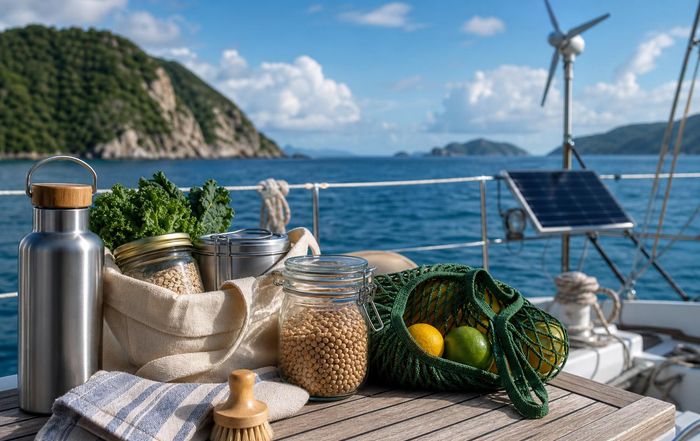
On board, the adoption of refillable systems for cleaning products, toiletries, and even selected food staples such as cereals, nuts, and dried fruits can significantly reduce packaging waste. Where storage allows, reusable containers, vacuum-sealed bags, and thoughtfully designed pantry spaces help maintain food quality on long passages, reducing spoilage and the need for emergency re-provisioning in remote or less regulated ports, where packaging standards may be lower.
For readers of yacht-review.com who are planning extended voyages, exploring our dedicated section on cruising strategies and passage planning can provide further context on how provisioning intersects with range, comfort, and safety.
Managing Onboard Waste Streams: From Source to Shore
Despite the best provisioning strategies, some waste is inevitable. The key to reducing its impact lies in rigorous onboard management, supported by appropriate technology, crew training, and clear procedures. Waste streams on a long-distance cruising yacht can be broadly divided into solid waste, food waste, wastewater (grey and black water), and hazardous or special waste such as batteries, oils, and chemicals.
Solid waste management begins with segregation. Modern yachts are increasingly designed with dedicated compartments for recyclables, general waste, and hazardous items, supported by compactors, shredders, and in some cases glass crushers, which reduce volume and extend the time between necessary offloads. Compliance with MARPOL Annex V means that plastics, synthetic ropes and fishing gear, and many forms of packaging must be retained on board until they can be landed at an approved reception facility. Detailed regulatory guidance is available from national maritime authorities and through resources such as Transport Canada's marine pollution prevention pages and the UK Maritime and Coastguard Agency.
Food waste occupies a more nuanced position. Under certain conditions and distances from shore, MARPOL does allow the controlled discharge of comminuted food waste, but many owners and captains are choosing to retain and land as much as possible, particularly when operating in sensitive ecosystems such as coral reefs, marine protected areas, or high-latitude waters. Advanced food waste dehydrators and compactors are becoming more common on larger yachts, reducing volume and odour while simplifying storage.
Wastewater management has seen some of the most significant technological advances in recent years. High-performance sewage treatment plants capable of meeting or exceeding IMO standards, along with grey-water filtration and, in some cases, tertiary treatment systems, are now standard on many new builds and refits. These systems reduce nutrient and pathogen discharge, protecting coastal ecosystems and aligning with increasingly strict local regulations in regions such as the Baltic Sea and parts of the Mediterranean. Technical overviews and regulatory updates are frequently published by organisations such as IMO, HELCOM for the Baltic, and national environment agencies, and are often discussed in professional forums and conferences covered in our technology and systems section.
Hazardous and special wastes, including used oil, filters, batteries, fluorescent tubes, and certain cleaning or maintenance chemicals, must be meticulously tracked and landed at appropriate facilities. For long-distance cruisers operating in remote regions such as the South Pacific or high latitudes, advance planning is essential to identify ports with adequate reception facilities and to avoid situations where local infrastructure is inadequate to handle yacht-generated waste. Owners and captains can consult resources from Port Authorities, Cruising Associations, and platforms like Noonsite for port-specific information, while also sharing best practices within the cruising community.
Technology Enablers: From Watermakers to Digital Monitoring
Technology is a powerful enabler of waste reduction, especially when integrated thoughtfully into the yacht's overall design and operating philosophy. For long-distance cruising, three technological domains stand out: freshwater generation and management, energy systems, and digital monitoring.
Watermakers, or reverse-osmosis desalination systems, have become standard on long-range yachts, dramatically reducing the need for bottled water and the associated plastic waste. When combined with high-quality onboard filtration and remineralisation systems, they allow owners and guests to enjoy safe, palatable drinking water directly from taps or dedicated dispensers, supported by reusable glass or high-grade stainless-steel bottles. Independent testing and certification standards for drinking water quality, provided by organisations such as NSF International and World Health Organization (WHO) guidelines, offer valuable benchmarks for system design and maintenance.
Energy systems are equally important. Efficient generators, hybrid propulsion, solar arrays, wind turbines, and advanced battery systems all contribute to reduced fuel consumption and lower emissions, which can be considered a form of waste in the broader environmental sense. Innovations in energy management, including smart inverters, peak-shaving strategies, and optimised HVAC control, help reduce overall load, enabling smaller generator sets and less fuel storage for a given cruising profile. For readers interested in technical details and case studies, resources from The Royal Institution of Naval Architects and leading classification societies provide in-depth coverage of these developments.
Digital monitoring and analytics are emerging as a transformative tool for waste reduction. Integrated yacht management platforms now allow captains, engineers, and even owners to track fuel burn, water production and consumption, waste volumes, and system performance in near real time. By identifying inefficiencies, leakages, or unusual consumption patterns early, crews can adjust operational practices and maintenance schedules to minimise waste and extend component life. Over time, aggregated data supports better decision-making in refits and new builds, reinforcing a virtuous cycle of continuous improvement.
At yacht-review.com, the intersection of technology, efficiency, and sustainability is a recurring theme across our global yachting coverage, reflecting the industry's rapid embrace of digital tools that support both operational excellence and environmental stewardship.
The Human Factor: Culture, Training, and Guest Experience
No matter how advanced the technology or how well-designed the yacht, the success of any waste-reduction strategy ultimately depends on people. Crew culture, training, and guest engagement are central to translating high-level sustainability goals into daily practices that endure over long passages and under operational pressure.
Progressive owners and captains increasingly treat waste reduction as part of the yacht's safety and professionalism ethos, integrating it into standard operating procedures, crew handbooks, and regular drills. New crew members are briefed not only on safety protocols and service standards but also on waste segregation procedures, chemical handling, water and energy conservation, and the rationale behind these measures. Formal training can be supported by courses and guidance from organisations such as The Professional Yachting Association (PYA), IAMI GUEST, and maritime academies that incorporate environmental best practices into their curricula.
Guest engagement is equally important, particularly on private and charter yachts where expectations around luxury and convenience must be reconciled with responsible operations. Many owners now see environmental stewardship as an integral part of the onboard experience, sharing their waste-reduction commitments with family and friends and inviting them to participate through simple actions such as using refillable water bottles, respecting towel and linen policies, and supporting responsible provisioning choices. On charter yachts, clear but discreet communication, often framed around enhancing the destinations' long-term health and beauty, helps guests understand why the yacht may, for example, avoid certain single-use items or prefer locally sourced produce.
The broader lifestyle dimension of responsible cruising, which encompasses everything from respectful interactions with coastal communities to low-impact recreational activities, is increasingly central to the stories we tell in our yachting lifestyle coverage, where waste reduction is framed not as a constraint but as a natural extension of a refined, forward-looking way of life at sea.
Regional Perspectives: Regulations and Expectations Around the World
Long-distance cruisers, by definition, cross multiple jurisdictions, each with its own regulatory frameworks, infrastructure capabilities, and cultural expectations around waste. Understanding these regional nuances is essential for planning and for maintaining best practices even when local rules are less stringent than international norms.
In Europe, particularly in the Mediterranean and the Baltic, environmental regulations affecting yachts have become progressively more robust, with many marinas investing in advanced waste-reception facilities and promoting eco-certifications such as Blue Flag. Information on marina environmental standards and waste management infrastructure can be found through platforms like Blue Flag's official site and national boating associations. Cruisers in these regions increasingly find that marinas and local authorities expect yachts to arrive with segregated waste and to use designated disposal points.
In North America, both the United States and Canada maintain strict regulations on waste and sewage discharge, enforced by agencies such as the U.S. Coast Guard and Transport Canada. Many popular cruising grounds, including parts of Florida, New England, British Columbia, and the Great Lakes, have no-discharge zones and heightened scrutiny of vessel operations, pushing yachts towards advanced onboard treatment systems and rigorous waste retention.
In Asia-Pacific, infrastructure and regulations are more variable, with world-class marinas and strong environmental frameworks in countries such as Singapore, Australia, and New Zealand, and more limited facilities in some emerging cruising destinations. Long-distance cruisers planning to visit remote archipelagos, for example in the South Pacific or parts of Southeast Asia, are advised to plan for extended waste retention and to avoid placing additional burdens on local waste systems that may already be under strain. Our travel-focused coverage at yacht-review.com increasingly highlights these regional differences, helping owners and captains align their operational strategies with local realities while maintaining high internal standards.
In high-latitude regions such as the Arctic and Antarctic, where yacht traffic has been growing but remains tightly regulated, waste-management expectations are stringent. Guidelines from bodies such as the International Association of Antarctica Tour Operators (IAATO) and national polar authorities emphasise complete waste removal, minimal discharge, and a precautionary approach to any activity that could disturb fragile ecosystems. Information from IAATO and government polar programmes provides essential planning input for any yacht considering these demanding but rewarding destinations.
Industry Collaboration and Emerging Best Practices
Reducing waste during long-distance cruising is not a challenge that any single owner, captain, or shipyard can solve in isolation. It requires collaboration across the yachting ecosystem, from designers and builders to marinas, classification societies, regulators, and the broader cruising community. Encouragingly, recent years have seen a proliferation of initiatives, guidelines, and partnerships aimed at sharing best practices and raising the baseline for responsible operations.
Industry associations such as SYBAss (Superyacht Builders Association), Icomia, and regional yacht and marina associations have begun to integrate waste-management and sustainability criteria into their codes of practice and awards. Environmental NGOs and foundations, including those focused specifically on oceans such as Ocean Conservancy and The Ocean Cleanup, provide research, advocacy, and in some cases practical tools that can inform yacht operations. Readers can explore broader ocean health issues through trusted sources like Ocean Conservancy's research pages, which contextualise individual vessel actions within global marine protection efforts.
Within the yachting world, knowledge-sharing platforms, conferences, and events play a crucial role in accelerating progress. Technical seminars at major boat shows, captains' forums, and dedicated sustainability conferences allow practitioners to compare experiences, discuss emerging technologies, and harmonise practices. At yacht-review.com, our news and events coverage increasingly highlights these collaborative efforts, showcasing practical examples of waste-reduction strategies implemented on real yachts across size segments and cruising profiles.
There is also a growing recognition that waste reduction is closely linked to other strategic priorities such as decarbonisation, crew welfare, and community relations. For example, yachts that reduce waste and emissions through efficient systems and smart provisioning often also enjoy quieter operations, lower maintenance burdens, and a more pleasant onboard environment, which can support crew retention and guest satisfaction. Similarly, yachts that engage respectfully with local communities, including by not overburdening local waste systems, tend to be welcomed back and may gain privileged access to local knowledge and services.
Towards a Low-Waste Cruising Ethos
For the global hopefully inspired audience here, which spans owners, captains, crew, designers, and enthusiasts across North America, Europe, Asia-Pacific, and beyond, the move towards reduced waste during long-distance cruising is both a practical necessity and an inspiring opportunity. It invites a rethinking of what great cruising looks like, shifting the focus from pure consumption to a more refined, informed, and responsible form of enjoyment.
In practice, this ethos is expressed through hundreds of decisions, large and small: a designer specifying durable materials and ample storage for segregated waste; a captain investing in advanced treatment systems and digital monitoring; a chef planning menus that minimise leftovers; a chief steward introducing refillable amenities; a family choosing reusable bottles and supporting local, low-packaging suppliers in the ports they visit. Each of these actions may seem modest in isolation, but together they shape a culture that values resourcefulness, respect for the sea, and long-term thinking.
For those considering new builds or major refits, integrating low-waste principles from the outset is now a mark of modern, forward-looking yacht ownership. For existing yachts, incremental improvements-whether in provisioning, onboard systems, or crew training-can yield meaningful benefits over the course of a single season, and transformative results over several years of active cruising. Our original and detailed boat and yacht reviews increasingly highlight these aspects, reflecting the market's growing interest in vessels that combine performance, comfort, and environmental responsibility.
Ultimately, reducing waste during long-distance cruising is not about sacrificing comfort or compromising the joy of life at sea. It is about aligning the freedom and privilege of extended cruising with a deeper sense of care for the oceans and communities that make such journeys possible. By embracing this perspective, the yachting community can continue to explore the world's most extraordinary coastlines and archipelagos while helping ensure that they remain vibrant, resilient, and welcoming for generations to come.
For readers who wish to explore these themes further, our dedicated section on sustainability in yachting brings together analysis, case studies, and practical guidance, supporting a shared ambition: to make every mile cruised not only memorable but also meaningfully responsible.