

Antarctica by Private Yacht: Where Luxury, Purpose, and Polar Frontiers Converge
Yachting to Antarctica in 2026 has emerged as one of the most compelling expressions of modern exploration, blending technological sophistication, environmental responsibility, and experiential depth in a way that few other journeys can rival. Once accessible only to intrepid pioneers such as Ernest Shackleton and Roald Amundsen, the White Continent now stands at the pinnacle of high-end travel, yet it remains fiercely protected and governed by some of the strictest environmental protocols on Earth. For the global readership of Yacht Review, from the United States and Europe to Asia-Pacific and beyond, Antarctica represents far more than an exotic destination; it is a proving ground for the values that increasingly define the yachting world-expertise, stewardship, and a deeper sense of purpose that transcends conventional notions of luxury.
As sustainability, advanced naval engineering, and experiential travel converge, the Antarctic voyage by private yacht has evolved into a unique category of maritime undertaking. It is an experience that demands exceptional preparation, high-level technical capability, and a profound respect for one of the planet's last great wildernesses. At the same time, it offers a rare opportunity for owners, charterers, and their guests to reconnect with silence, scale, and authenticity in a way that is becoming harder to find in the crowded seascapes of more traditional cruising grounds. In this context, Antarctica is not simply another tick on a bucket list; it is a frontier where the future of yachting is being written in real time, a theme reflected across Yacht Review's global coverage of how the industry is evolving on every ocean.
The Enduring Allure of the White Continent
Antarctica's magnetism lies in its paradoxes. It is vast yet intimate, harsh yet fragile, seemingly timeless yet acutely vulnerable to the pressures of a warming climate. Beneath the towering cliffs of ice and the sweeping snowfields, life flourishes in ways that continue to astonish even seasoned naturalists. Colonies of penguins stretch across the horizon in dense, bustling communities; humpback and minke whales surface amid drifting pack ice; leopard seals patrol the edges of floes in search of prey. For guests observing these scenes from the quiet vantage point of a private yacht, the experience is less akin to tourism and more like entering an immense open-air cathedral, where every sound-the crack of calving glaciers, the distant call of seabirds, the low rumble of shifting ice-reinforces the sense of being a temporary visitor in a realm that exists largely indifferent to human presence.
Unlike larger expedition ships that follow fixed programs, private yachts introduce an element of fluidity that transforms the Antarctic voyage into a living, adaptive narrative. Captains and expedition leaders adjust daily plans according to weather systems, ice conditions, and wildlife movements, often making on-the-spot decisions to divert toward a pod of orcas or to remain longer in a serene bay framed by sculpted icebergs. This freedom to respond to the environment in real time, rather than adhering to a rigid timetable, creates an intimacy with the landscape that is difficult to replicate in other formats. It also demands a level of seamanship and operational discipline that underscores why only a select group of vessels and crews are truly prepared for such journeys.
Within Yacht Review's travel features, Antarctica has increasingly come to symbolize the shift from passive luxury to active, meaningful immersion. For discerning owners in North America, Europe, Asia, and the Southern Hemisphere, the appeal lies in the realization that the greatest indulgence is not excess, but access-access to a world that remains essentially wild, and to an experience that reshapes one's understanding of both the planet and one's place within it.
Planning, Permissions, and the Architecture of Responsibility
Any serious discussion of yachting to Antarctica in 2026 must begin with regulation and preparation. The continent is governed by the Antarctic Treaty System (ATS), a framework that places scientific cooperation and environmental protection above commercial interest or territorial ambition. Yachts intending to operate in Antarctic waters must secure permits through their flag states, and in practice this process is heavily informed by the standards set by the International Association of Antarctica Tour Operators (IAATO). These authorizations are not mere formalities; they require detailed documentation of the vessel's capabilities, emergency preparedness, waste management protocols, landing plans, and wildlife interaction policies. Prospective operators and owners can review current guidelines and best practices directly through IAATO's official resources, which are continually updated to reflect evolving scientific knowledge and regulatory consensus.
From a technical standpoint, Antarctic voyaging demands a vessel capable of extended autonomy, redundancy in all critical systems, and robust safety margins. Fuel capacity, food storage, spare parts inventories, and medical facilities all need to be dimensioned for scenarios where external assistance may be days or even weeks away. Crews undergo specialized polar training, learning to manage ice navigation, low-visibility conditions, and emergency scenarios in sub-zero temperatures. The planning horizon for such expeditions often starts 12 to 24 months before departure, reflecting the complexity of aligning vessel readiness, regulatory approvals, logistical support, and the short Antarctic cruising window between November and March.
Specialist operators such as EYOS Expeditions and Pelorus have become essential partners in this ecosystem, particularly for owners and charterers who may be highly experienced in Mediterranean or Caribbean cruising but new to polar operations. These firms integrate polar guides, ice pilots, meteorologists, and environmental experts into the planning and execution of each voyage, ensuring that every decision-from route selection to landing sites-aligns with both safety and environmental best practice. For the audience of Yacht Review's cruising analysis, this collaborative model illustrates how expertise and humility must go hand in hand when entering such a demanding environment.
Yachts Engineered for Ice: Design at the Edge of Possibility
The modern Antarctic-capable yacht is the product of a design and engineering revolution that has unfolded over the past decade. The emergence of Polar Class (PC) and ice-capable expedition yachts has reshaped expectations of what is possible when luxury and resilience are integrated from the keel up. Shipyards such as Damen Yachting, Amels, Feadship, and Oceanco have invested heavily in hull forms, propulsion systems, and structural reinforcements that allow vessels to operate safely in first-year ice and challenging sea states, while still delivering the comfort and aesthetic refinement expected by high-net-worth clients in Europe, North America, and Asia.
Examples such as La Datcha, Legend, and Octopus have become reference points in the market, demonstrating how ice-strengthened hulls, enhanced damage stability, and specialized bow shapes can coexist with expansive spa areas, observation lounges, and helicopter decks. Internally, designers have embraced panoramic glazing, warm natural materials, and layered lighting schemes that frame the Antarctic landscape as a central element of the onboard experience. Thermal and acoustic insulation systems are engineered to maintain interior tranquility even as outside temperatures plunge and ice grinds along the hull. Behind the scenes, advanced HVAC systems, heat recovery technologies, and intelligent energy management platforms ensure that comfort does not come at the expense of efficiency.
For readers interested in the architectural and aesthetic evolution behind these vessels, Yacht Review's design coverage provides a lens into how naval architects, interior designers, and classification societies are collaborating to push the boundaries of what a yacht can be when it is intended not merely for coastal cruising, but for the most remote and demanding seas on the planet.
Technology, Data, and the New Language of Sustainable Exploration
By 2026, technology has become the quiet but decisive enabler of safe and low-impact Antarctic yachting. Hybrid propulsion systems, advanced battery banks, and increasingly sophisticated power management software allow expedition yachts to reduce fuel consumption, lower emissions, and operate in "silent mode" when navigating ecologically sensitive areas or when guests desire near-complete acoustic stillness. Leading builders including Benetti, Royal Huisman, and Heesen are experimenting with hydrogen fuel cells, methanol-ready engines, and solar integration that, while still emerging, signal the direction of travel for the next generation of polar-capable yachts.
Navigation and situational awareness have been transformed by high-resolution ice radar, thermal imaging cameras, and dynamic positioning systems that enable precise station-keeping without the need to drop anchor in vulnerable benthic habitats. Captains and expedition leaders increasingly rely on real-time satellite data, ice charts, and climate models provided by institutions such as the National Snow and Ice Data Center (NSIDC), accessible through platforms like NSIDC's data services, to anticipate ice drift, sea-ice concentration, and weather systems across the Southern Ocean. Artificial intelligence and machine learning are beginning to assist in route optimization, helping to balance safety, fuel efficiency, and guest experience.
Sustainability is no longer an optional narrative but a core design and operational principle. Waste streams are minimized and meticulously segregated; grey and black water are treated to standards that exceed regulatory requirements; and all solid waste is compacted and stored for removal to suitable facilities outside the Antarctic region. Many yachts now incorporate laboratories or dedicated workspaces for visiting scientists, allowing them to conduct research on marine biodiversity, microplastics, or glacial dynamics. Partnerships with organizations such as OceanX and the Blue Marine Foundation reflect a growing recognition that private yachts can serve as agile research platforms, extending the reach of traditional scientific expeditions. For those wishing to explore the broader context of environmental strategy in luxury sectors, it is instructive to learn more about sustainable business practices through the work of the United Nations Environment Programme (UNEP), which increasingly informs policy and corporate responsibility frameworks worldwide.
Routes, Gateways, and the Operational Realities of the Frozen South
Most Antarctic yacht itineraries begin in gateway ports that have built up specialized infrastructure over decades of supporting research stations and expedition vessels. Ushuaia in Argentina and Punta Arenas in Chile remain the primary departure points for the Antarctic Peninsula, while Hobart in Australia, Lyttelton in New Zealand, and Cape Town in South Africa serve as gateways to the Ross Sea and East Antarctica. These ports provide bunkering, provisioning, technical support, and last-minute logistics, and many are expanding their capabilities to accommodate the growing fleet of expedition yachts serving clients from the United States, United Kingdom, Germany, China, and other major markets.
The crossing of the Drake Passage remains a defining element of the Antarctic experience. Known for its powerful low-pressure systems and often tumultuous seas, it demands respect from even the most seasoned captains. Modern stabilization systems, dynamic routing, and real-time weather intelligence have made the passage more predictable, but its reputation as a rite of passage endures. Once on the Antarctic side, yachts typically explore regions such as the South Shetland Islands, Gerlache Strait, Paradise Bay, and Lemaire Channel, where dramatic scenery and abundant wildlife are concentrated within relatively navigable waters. For more ambitious expeditions, the Weddell Sea and Ross Sea offer deeper penetration into the continent's remote sectors, with vast tabular icebergs and extensive pack ice presenting both challenge and reward.
Operationally, every movement is calibrated around safety and environmental constraints. Ice reconnaissance flights, Zodiac scouting, and constant monitoring of weather windows are integral to daily decision-making. Anchoring is carefully managed to avoid sensitive habitats, and landing sites are selected in accordance with IAATO-approved guidelines. For those who follow Yacht Review's cruising insights, the Antarctic theater provides a clear illustration of how advanced seamanship, technology, and regulatory compliance converge to make such voyages possible.
Life Onboard: The Expression of Polar Luxury
Life aboard an Antarctic-capable yacht is characterized by an interplay between intense external engagement and deeply restorative internal spaces. While the environment outside is stark and elemental, the interiors are designed to be cocooning without feeling detached from their surroundings. Expansive observation lounges, often located high in the superstructure, become the social and emotional heart of the vessel, where guests gather to watch icebergs drift past or to witness the subtle shifts in light that define the polar day. Libraries curated with works on exploration history, marine science, and polar photography encourage a reflective approach to the journey, while wellness areas-spas, saunas, and heated pools-offer a counterpoint to the cold, reinforcing the sense of sanctuary.
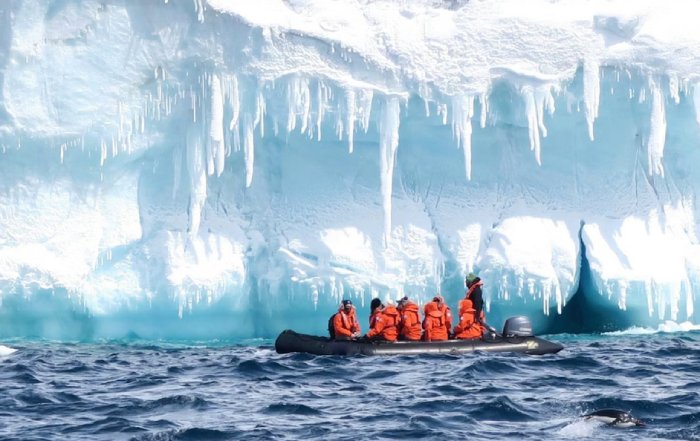
Daily life typically follows a rhythm shaped by weather and wildlife activity. Mornings might begin with briefings from the expedition leader, followed by Zodiac excursions to penguin colonies, ice caves, or historic sites. Kayaking through brash ice, snowshoeing on shore, or even taking a carefully supervised polar plunge becomes part of the experiential palette. Increasingly, some yachts are equipped with submersibles and helicopters, enabling dives beneath ice shelves or scenic flights over untouched mountain ranges, though such activities are tightly regulated and planned with environmental impact in mind. Afternoons may bring lectures from onboard scientists, photography workshops, or quiet time spent simply watching the play of light across the ice. Evenings tend to be unhurried, with fine dining menus emphasizing sustainably sourced ingredients and, where possible, regional influences from South America, Australasia, or the yacht's home markets.
The human element is central to the success of these voyages. Polar-certified captains, ice pilots, expedition leaders, marine biologists, and hospitality professionals work in close coordination, each contributing specialist knowledge that collectively elevates the experience. For multigenerational groups, which are increasingly common among owners from North America, Europe, and Asia, the Antarctic voyage often becomes a defining family narrative-one that reinforces shared values of curiosity, responsibility, and respect for the natural world. Themes of intergenerational travel and meaningful connection at sea are explored further in Yacht Review's family-focused coverage, where Antarctic expeditions now frequently feature as touchstone experiences.
Environmental Imperatives and Ethical Stewardship
In 2026, any credible discussion of Antarctic yachting must place environmental responsibility at its core. The continent's ecosystems are both globally significant and acutely sensitive to disturbance. The Antarctic Treaty and IAATO's operational guidelines impose strict limits on visitor numbers, landing frequencies, and approach distances to wildlife, while also mandating comprehensive waste management and emergency preparedness. Yachts are required to carry spill response equipment, to avoid the use of heavy fuel oils, and to adhere to stringent biosecurity measures designed to prevent the introduction of non-native species.
Many expedition yachts now seek to go beyond mere compliance, adopting voluntary measures such as carbon accounting, third-party environmental certification, and participation in conservation initiatives. Partnerships with organizations such as the World Wildlife Fund (WWF) and the Ocean Conservancy are becoming more common, with owners funding research, marine protected area advocacy, or climate resilience projects as part of a broader commitment to ocean stewardship. Guests are increasingly invited to participate in citizen science, contributing photographic data on whale flukes, seabirds, or ice conditions that can be integrated into global research databases. For those interested in how these trends are reshaping the industry's ethical framework, Yacht Review's sustainability features provide ongoing analysis of the policies, technologies, and partnerships that are driving change.
Antarctica, perhaps more than any other destination, crystallizes the shift from a consumption-based model of luxury to one rooted in responsibility and legacy. Owners and charterers recognize that their presence in such a pristine environment carries both privilege and obligation, and the most forward-thinking among them are using their resources and platforms to support long-term conservation outcomes that extend far beyond the timeframe of a single voyage.
Legacy, History, and the Continuum of Exploration
The modern Antarctic yacht expedition does not exist in isolation; it is part of a continuum that stretches back through the Heroic Age of exploration to the earliest sightings of the Southern Ocean by European navigators. Names such as Captain James Cook, Robert Falcon Scott, and Ernest Shackleton still resonate powerfully, and many itineraries include visits to historic sites that preserve the material culture of those early expeditions. Locations such as Port Lockroy, managed by the UK Antarctic Heritage Trust, offer a tangible link to a time when survival, rather than comfort, was the primary concern. Stepping inside these preserved huts, with their rudimentary bunks, weathered provisions, and early scientific instruments, provides a stark contrast to the advanced engineering and comfort of a 21st-century expedition yacht.
Today's explorers, however, measure success not in territorial claims or records, but in scientific contribution and environmental guardianship. Yachts regularly host researchers affiliated with institutions such as The Explorers Club and the National Geographic Society, enabling them to access remote sites more flexibly than large research vessels sometimes can. This collaboration between private capital and public-interest science reflects a broader trend within the high-net-worth community toward impact-driven engagement, where access to remote regions is leveraged to generate knowledge and positive outcomes. Readers with an interest in the historical and cultural dimensions of this evolution can explore Yacht Review's history features, which trace how the ethos of exploration has shifted from conquest to understanding over the past century.
The Future Trajectory of Expedition Yachting
Looking ahead from 2026, Antarctica is shaping not only the vessels that visit its waters but the strategic direction of the yachting industry as a whole. The demands of polar operation are accelerating innovation in hull design, propulsion, and onboard systems that will eventually cascade into mainstream yacht segments. Fully electric or hybrid-electric expedition yachts, advanced energy storage solutions, and AI-driven maintenance platforms are moving from concept to reality, with leading European and Asian shipyards competing to deliver the first truly net-zero-capable large yachts. Circular design principles-emphasizing recyclability, modularity, and reduced lifecycle impact-are beginning to influence both new builds and refit strategies.
On the commercial side, new ownership and access models are emerging. Fractional ownership, curated charter programs, and membership-based exploration clubs are making polar yachting accessible to a broader cohort of entrepreneurs and families from regions such as North America, Europe, and Asia-Pacific, without requiring full ownership of a specialized vessel. Gateway ports in countries like Argentina, Chile, Australia, New Zealand, and South Africa are investing in infrastructure and regulatory frameworks to position themselves as hubs for this new era of high-end, low-impact exploration. For investors, shipyards, and service providers, Antarctica thus becomes not only a destination but a catalyst for business innovation, a dynamic explored regularly in Yacht Review's business coverage.
As technology advances and regulatory scrutiny intensifies, the most successful players in this space will be those who can demonstrate not only technical excellence and guest satisfaction, but also transparent, measurable commitments to environmental and social responsibility. In that sense, Antarctica functions as both a stage and a mirror, revealing the true priorities of those who choose to operate in its waters.
A Voyage That Redefines Luxury
Ultimately, to voyage to Antarctica by private yacht in 2026 is to engage in a form of travel that reaches beyond the traditional parameters of leisure. It is an undertaking that challenges assumptions about comfort, risk, and reward, and that invites participants to reconsider what constitutes true luxury in an age of environmental constraint and global interconnection. The ice, the wildlife, the silence, and the sheer scale of the landscape combine to create a sensory and emotional experience that endures long after the yacht has returned to more temperate latitudes.
For Yacht Review, chronicling these journeys is not simply a matter of documenting impressive hardware or rarefied itineraries. It is about examining how craftsmanship, technology, and ethics intersect on the world's most remote stage, and how owners and guests from the United States, Europe, Asia, Africa, and South America are using their resources and influence to shape a more responsible model of high-end exploration. Across our reviews, boats, and news coverage, Antarctica stands out as a touchstone that clarifies what the future of yachting can and should be.
In the end, the greatest legacy of an Antarctic voyage may not be the photographs or the stories shared upon returning home, but the quiet shift in perspective it creates. To stand on the deck of a yacht surrounded by ice and endless sky is to recognize that the world still contains places where human presence is fleeting and fragile, and that the true measure of sophistication lies not in how much one can take from such places, but in how carefully one chooses to tread.