

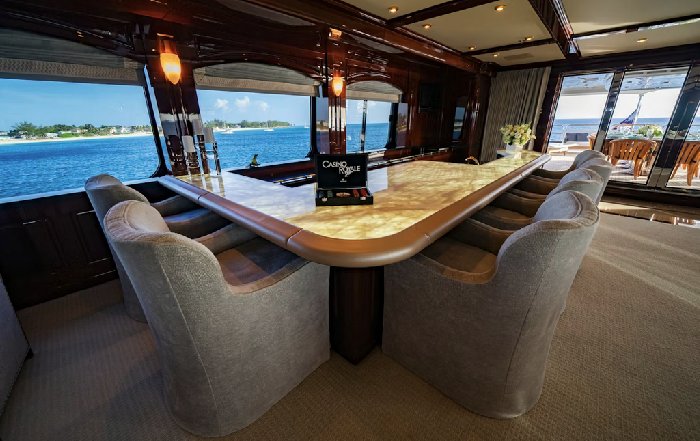
Luxury Yacht Interiors in 2026: Where Design, Technology, and Responsibility Converge
A New Era of Luxury at Sea
By 2026, luxury yacht interiors have matured into a highly refined discipline that blends design, engineering, technology, and ethics into a single, coherent vision of life at sea. The global audience of yacht-review.com-from experienced owners in the United States and Europe to first-time buyers in Asia-Pacific and emerging markets in Africa and South America-now evaluates interiors through a lens that extends far beyond visual opulence. What once revolved around marble, gold leaf, and ornate joinery has evolved into a more intelligent and nuanced language of luxury, defined by spatial fluidity, digital integration, wellness, sustainability, and cultural individuality.
Modern yachts are no longer conceived as mere symbols of status or floating hotels; they function as fully realized, mobile ecosystems. A single vessel may serve as a family home in the Mediterranean, a corporate base in North America, a wellness retreat in the South Pacific, and an exploration platform in polar regions. For the editorial team at yacht-review.com, this complexity has reshaped how interiors are assessed in the latest yacht reviews, where the focus increasingly sits on how spaces perform in real-world conditions, how intuitively they can be used by owners and crew, and how convincingly they reflect the values of their time.
From Historical Grandeur to Tailored Private Worlds
Understanding the interiors that define yachts in 2026 requires a look back at how the discipline has changed over the last century. Early pleasure craft in Europe and North America were conceived as maritime extensions of grand estates, with dark wood panelling, formal dining rooms, and rigid social hierarchies expressed through layout and decoration. These vessels, as explored in the historical narratives curated in the history section of yacht-review.com, were more about display than about everyday comfort or operational efficiency.
The late 20th century brought lighter materials, more relaxed layouts, and influences from contemporary residential and boutique hospitality design, particularly in markets such as the United States, United Kingdom, Italy, and France. Yet it was only in the last decade, accelerated by changing owner demographics and global events, that yacht interiors fully embraced a lifestyle-centric, human-focused philosophy. Owners from Germany, Switzerland, the Netherlands, Australia, Canada, and increasingly from China, Singapore, South Korea, and the Gulf states began to demand environments that expressed personal identity, cultural heritage, and long-term purpose rather than a generic international style.
This shift has been underpinned by the growing professionalism and global coordination of the yacht industry. Bodies such as the Superyacht Builders Association (SYBAss) and the International Superyacht Society (ISS) have pushed for higher standards and knowledge sharing, while the broader design community has absorbed insights from architectural organizations like the Royal Institute of British Architects (RIBA) and design media such as Dezeen, which document cross-sector innovations in materials, sustainability, and user experience. The result, visible across the boats featured on yacht-review.com, is that a modern yacht interior is now conceived as a curated private world: technically rigorous, highly personalized, and deeply aware of its global context.
Design Philosophies in 2026: Quiet Luxury, Warm Modernism, and Cultural Identity
The aesthetic spectrum in 2026 is broad, yet three major tendencies dominate the interiors that appear most frequently in the design-focused coverage on yacht-review.com. The first is a form of quiet luxury, often expressed through minimalist or near-minimalist compositions that prioritize proportion, light, and tactility over overt decoration. This approach resonates strongly in Northern Europe-particularly in Sweden, Norway, Denmark, Finland, Germany, and the Netherlands-where owners often favor pale woods, finely detailed joinery, and discreet, almost invisible hardware that allows the architecture of the space and the surrounding seascape to take center stage.
Alongside this, a warmer and more residential form of modernism has become the default in many yachts serving owners from the United States, United Kingdom, Canada, Australia, New Zealand, and Southern Europe. Here, designers combine clean-lined furniture and contemporary art with richly textured fabrics, natural stone veneers, and carefully layered lighting schemes that feel closer to high-end homes in New York, London, Sydney, or Milan than to traditional marine interiors. Inspiration is frequently drawn from leading residential projects and hospitality concepts documented by organizations such as the American Institute of Architects (AIA) and media platforms like Architectural Digest, then translated into weight-conscious, safety-compliant solutions for the marine environment.
Cultural identity and fusion have become a defining third strand. Owners from China, Japan, Singapore, South Korea, Thailand, the Middle East, South Africa, and Brazil increasingly ask designers to weave local craft, regional art, and spatial philosophies into their yachts. Japanese-influenced layouts may prioritize sliding partitions, tatami-like modularity, and framed views, while Mediterranean clients from Italy, France, and Spain often seek interiors that blur the boundaries between salon and aft deck, echoing the conviviality of coastal villas. In Latin America and Africa, a bolder use of color and organic textures is emerging, often inspired by local landscapes and artisanal traditions. For the editorial team at yacht-review.com, these projects are particularly compelling because they demonstrate how a yacht can be both globally sophisticated and unmistakably personal.
Spatial Planning: Precision in Service of Lifestyle
If aesthetics provide the first impression, spatial planning determines whether a yacht interior truly succeeds over years of ownership, charter, and global cruising. In 2026, the best projects demonstrate an almost surgical precision in how volume is allocated, circulation is organized, and technical systems are integrated. Naval architects and interior designers collaborate from the earliest concept stages, guided by regulatory frameworks from the International Maritime Organization (IMO) and classification societies, whose requirements and guidelines can be explored through resources such as the IMO's official website.
On large superyachts, the owner's domain has evolved into a private residence within the vessel, often with its own lounge, study, spa bathroom, dressing suites, and direct access to exterior terraces or even private foredeck pools. Guest areas are increasingly flexible, with cabins that can convert between twin and double configurations, sliding walls that allow suites to be enlarged or subdivided, and integrated storage that supports extended cruising without clutter. The best layouts anticipate multiple modes of use: family holidays in the Mediterranean, corporate retreats in the Caribbean, or charter seasons in Southeast Asia.
On smaller yachts and family cruisers, particularly popular in the United States, United Kingdom, Germany, Canada, Australia, and the Mediterranean, multifunctionality is paramount. Salons serve as living rooms, dining rooms, and media spaces, while galleys are conceived as sociable, open kitchens rather than hidden service cores. The importance of safe movement, clear sightlines, and intuitive zoning-especially when children or older family members are on board-is a recurring theme in the family-focused insights on yacht-review.com, where interiors are assessed as real homes rather than as showpieces.
Crew areas have also undergone a quiet revolution. Professional crews, often trained under frameworks endorsed by authorities such as the Maritime and Coastguard Agency (MCA), expect not only compliant but genuinely comfortable accommodation. Efficient service routes, discreet access to guest areas, well-equipped pantries, and ergonomic crew messes all contribute to the quality of service and the longevity of the vessel's operations. Owners who invest in thoughtful crew design are rewarded with smoother, more discreet service and better crew retention, a connection that is increasingly recognized across the projects analyzed on yacht-review.com.
Materials and Craftsmanship: Story, Performance, and Longevity
The material palette of luxury yachts in 2026 reflects both aesthetic ambition and a heightened awareness of performance and sustainability. High-gloss exotic veneers and heavy marbles still appear on certain classic or heritage-inspired projects, but the dominant trends lean toward matte finishes, open-grain woods, and light, reflective surfaces that enhance natural daylight and reduce visual weight. These choices respond not only to taste but also to the practical realities of long-term maintenance and global cruising.
Advanced composites, engineered timbers, and ultra-thin stone veneers allow designers to deliver the visual richness of solid materials while meeting strict weight targets and stability calculations. These engineering decisions are informed by standards and research from classification societies such as DNV and Lloyd's Register, whose marine and shipping resources, including their guidance on materials and safety, can be explored via Lloyd's Register's marine section. In high-performance yachts and long-range explorers, where every kilogram affects range and efficiency, the interplay between material expression and technical necessity is particularly delicate.
Craftsmanship remains the emotional heart of luxury. Custom joinery, hand-polished metals, bespoke furniture, and artisan-made textiles from Italy, France, the United Kingdom, and increasingly from workshops in Asia, Africa, and South America, confer a sense of narrative and authenticity. Many of the interiors featured in the lifestyle coverage on yacht-review.com tell stories of specific ateliers, traditional techniques, and local communities behind the materials, creating a link between the yacht and the wider world. In 2026, this storytelling is no longer a decorative afterthought; it is an essential part of how owners understand the value and meaning of their vessels.
Technology Integration: Seamless, Secure, and Largely Invisible
Technology has moved from being a conspicuous selling point to an invisible backbone of the modern yacht interior. Owners and guests now assume that they will enjoy uninterrupted connectivity, intuitive control over their environment, and robust security, whether they are moored off the Amalfi Coast, cruising the Norwegian fjords, or crossing the Pacific. The challenge for designers and integrators is to deliver this sophistication without overwhelming users or disrupting the visual harmony of the spaces.
Unified control systems manage audiovisual equipment, lighting, climate, blinds, security, and sometimes even art displays, typically accessed through tablets, smartphones, or dedicated touch panels. The most successful implementations hide hardware within joinery and cabinetry, relying on carefully planned cable runs and centralized technical spaces. These systems draw on broader smart-home and IoT developments documented by organizations such as the Consumer Technology Association (CTA) and technical communities represented by the IEEE, whose coverage of emerging technologies can be explored through IEEE Spectrum.
Connectivity has been transformed by advances in satellite communications, low-earth-orbit constellations, and 5G integration, enabling stable video conferencing and cloud-based work even on ocean passages. This has reinforced the role of yachts as mobile offices and strategic retreats, a theme explored in depth in the business analysis on yacht-review.com, where interiors are increasingly evaluated for their ability to support high-level decision-making, confidential meetings, and hybrid work patterns.
Behind the scenes, building management systems monitor energy consumption, HVAC performance, and equipment status, often using predictive algorithms to schedule maintenance and optimize comfort. In the most advanced vessels, artificial intelligence is beginning to personalize lighting, temperature, and entertainment profiles based on user behavior, while also helping to reduce energy use. These developments, regularly highlighted in the technology section of yacht-review.com, underscore how deeply digital intelligence is now woven into the fabric of luxury interiors.
Wellness and Human-Centered Design
The global shift toward wellness and mental health awareness has had a profound impact on yacht interiors by 2026. Owners from North America, Europe, Asia, and the Middle East increasingly see their yachts as sanctuaries for recovery and reconnection rather than only as venues for celebration. As a result, dedicated wellness zones-complete with gyms, spa facilities, treatment rooms, yoga decks, plunge pools, and even compact medical suites-have become standard on larger yachts and are appearing more often on mid-size vessels.
These spaces are designed with rigorous attention to acoustics, lighting, air quality, and material tactility. Many designers draw indirectly on research and guidelines related to healthy indoor environments from organizations such as the World Health Organization (WHO), whose work on air quality and health can be explored through its official site. Enhanced filtration, carefully controlled humidity, and low-emission materials contribute to interiors that feel fresh and restorative even during long periods at sea.
Beyond formal wellness zones, the entire yacht is increasingly treated as a human-centered environment. Informal lounges, flexible dining spaces, cinema rooms, libraries, and beach clubs at water level provide varied atmospheres for socializing, solitude, and family time. For multi-generational groups and charter guests, the emotional warmth, adaptability, and intuitive legibility of these spaces are as important as their visual impact. The editorial team at yacht-review.com regularly examines these aspects in its community-oriented features, where the focus is on how design can foster genuine connection, privacy when needed, and a sense of belonging at sea.
Sustainability and Ethical Luxury in Practice
By 2026, sustainability has moved from being a niche talking point to a central measure of quality in luxury yacht interiors. Owners in Germany, Switzerland, the Netherlands, Scandinavia, Canada, Australia, New Zealand, and across the United States and United Kingdom are particularly vocal about environmental responsibility, but the trend is global and reinforced by regulatory developments and reputational considerations. Interiors are now routinely scrutinized for their material sourcing, energy performance, and long-term lifecycle impacts.
Designers increasingly rely on certified timbers, recycled metals, low-VOC finishes, bio-based fabrics, and traceable supply chains, taking cues from frameworks such as those promoted by the U.S. Green Building Council (USGBC) and its LEED program. While yachts are rarely certified in the same way as buildings, the underlying principles-resource efficiency, indoor environmental quality, and responsible sourcing-are being adapted to the marine context. Energy-efficient LED lighting, zoned climate control, heat recovery systems, and integration with hybrid propulsion or battery storage all contribute to lower operational footprints.
The editorial stance of yacht-review.com has evolved in parallel. In the dedicated sustainability section, interiors are examined not only for their immediate aesthetics but for their durability, reparability, and environmental credentials. Ethical luxury now also encompasses social factors: fair labor practices in shipyards and workshops, respect for local communities in cruising destinations, and responsible behavior in fragile ecosystems from the Arctic to the South Pacific. For many owners, the interior is increasingly seen as a physical expression of their values, not just their wealth.
Global Perspectives and Regional Expectations
The global readership of yacht-review.com, spanning North America, Europe, Asia, Africa, and South America, brings diverse expectations to the question of what defines a successful luxury interior. In the United States and Canada, there is a strong emphasis on robust entertainment systems, family-friendly layouts, and interiors that can pivot between private use and corporate hospitality. In the United Kingdom, Germany, Switzerland, and the Netherlands, understated elegance, technical excellence, and long-range comfort often take precedence over overt glamour.
Mediterranean markets such as France, Italy, and Spain prioritize alfresco living, seamless transitions between interior salons and exterior decks, and convivial dining spaces that support long, informal gatherings. Scandinavian and Northern European owners often favor light-filled, nature-inspired interiors, with large windows, pale timbers, and textiles that echo regional architectural traditions. In Asia-particularly China, Japan, Singapore, South Korea, and Thailand-there is a growing appetite for bespoke concepts that blend local cultural motifs with international standards of comfort, privacy, and technological sophistication.
Emerging markets in Africa and South America, including South Africa and Brazil, are contributing fresh perspectives on color, pattern, and connection to the natural environment, especially as yachts explore less traditional cruising grounds. These regional nuances are regularly explored in the global travel and cruising coverage on yacht-review.com, where interior design is discussed alongside itineraries, regulatory frameworks, and cultural expectations, helping readers understand how a yacht must adapt to different contexts without losing its core identity.
Yacht-Review.com as a Trusted Lens on Interior Innovation
As interiors have grown more complex, the role of independent, expert media has become crucial in helping owners, charterers, designers, and investors make informed decisions. Yacht-review.com has positioned itself as a trusted, experience-led source, drawing on sea trials, shipyard visits, and direct conversations with designers, captains, and crews to evaluate how interiors perform over time and across varied conditions.
Through detailed boat and yacht overviews, analytical cruising features, and timely industry news and market updates, the platform situates interior innovation within broader narratives of technology, business, and lifestyle. Coverage of major boat shows, design awards, and brokerage events in the events section offers readers early insight into emerging concepts and helps distinguish between marketing rhetoric and genuinely transformative ideas.
What defines the editorial approach of yacht-review.com is a consistent focus on experience, expertise, authoritativeness, and trustworthiness. Interiors are not judged solely on photography or renderings; they are assessed based on circulation, ergonomics, noise levels, maintenance realities, and how successfully they support the intended lifestyle, whether that is family cruising along the coasts of Italy and Spain, long-range exploration in high latitudes, or high-profile entertaining in Miami, Monaco, Dubai, or Singapore. For readers who may be contemplating significant investments, this grounded perspective is invaluable.
Looking Beyond 2026: The Next Chapter of Luxury Interiors
As the industry looks beyond 2026, several trajectories are expected to shape the next generation of luxury yacht interiors. Artificial intelligence and advanced automation will likely become more deeply embedded, enabling interiors that respond in real time to occupancy patterns, environmental conditions, and energy constraints. Materials science is set to deliver new lightweight, bio-based, and recyclable options that further reduce environmental impact while expanding the creative vocabulary available to designers.
Modularity and adaptability are poised to become more prominent, with layouts designed to evolve over a yacht's lifespan as family structures change, charter requirements shift, or new technologies emerge. Wellness is expected to deepen beyond dedicated spaces into a holistic approach that includes circadian lighting, biophilic design, acoustic comfort, and mental well-being, informed by ongoing research and cross-industry dialogue. Strategic insights into future lifestyles and technologies, such as those discussed by the World Economic Forum (WEF) on its official site, already hint at how expectations of comfort, privacy, and mobility will continue to evolve.
Perhaps the most significant shift will be in the very definition of luxury. For a growing number of owners and guests, true luxury is measured less by spectacle and more by the quality of experience: how effortless it feels to live and work aboard, how deeply connected one feels to family, friends, and the surrounding environment, and how aligned the vessel is with broader commitments to sustainability and social responsibility. In this sense, the luxury interiors that define modern yachts are not static backdrops but living, adaptive environments that must continually earn their relevance.
For the discerning global audience of yacht-review.com, this evolution presents both an opportunity and a responsibility. As interiors become more sophisticated, the need for clear, independent, and experience-based analysis grows. By continuing to document, question, and celebrate the best of contemporary yacht design across reviews, technology, sustainability, travel, and lifestyle coverage, yacht-review.com will remain a key reference point for those who see a yacht interior not just as a symbol of success, but as a carefully crafted stage for the most meaningful moments of life at sea.