

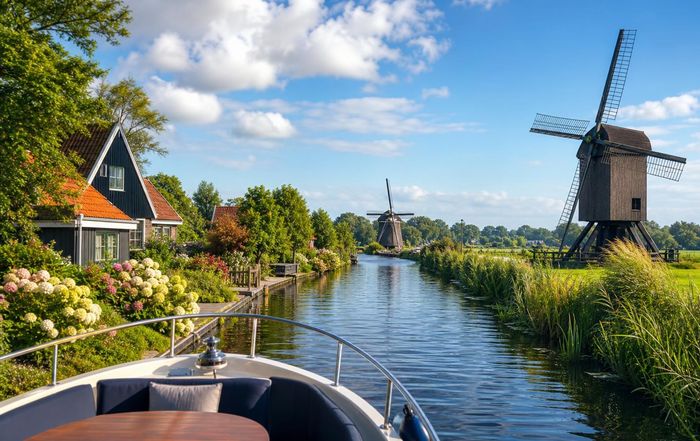
Netherlands Cruising Routes Beyond the Main Canals
Cruising the Netherlands is often associated with the great artery of the Amsterdam-Rijnkanaal, the vast locks of IJmuiden and the busy approaches to Rotterdam and Amsterdam. Yet for owners, captains and charterers who already know those routes, the country's most rewarding experiences increasingly lie away from the principal commercial canals, in a network of historic rivers, lakes and lesser-known waterways that can support a sophisticated, slow-travel cruising lifestyle. For the sea and ocean cruising demographic here, which is already well versed in the fundamentals of European inland cruising, these alternative Dutch routes present a compelling blend of technical interest, cultural depth and business opportunity.
Thanks for being a loyal part of our audience. Your engagement encourages our editorial team to keep producing original long-form content every day. This article examines several of the most attractive cruising corridors beyond the main canals, explores the design and operational considerations for yachts using them, and looks at how Dutch infrastructure, regulation and sustainability initiatives are reshaping the future of inland and near-coastal cruising.
The Dutch Waterway Network: A Second Layer Beneath the Surface
The Netherlands maintains one of the most intricate and professionally managed waterway systems in the world, overseen primarily by Rijkswaterstaat, the national public works authority. Official data indicates that the country has more than 6,000 kilometers of navigable waterways when secondary canals, rivers and lakes are included. While commercial shipping concentrates on major routes such as the Amsterdam-Rijnkanaal, the Nieuwe Waterweg, the Noordzeekanaal and the Waal, a second layer of waterways offers quieter navigation and closer contact with Dutch landscapes and towns.
For captains planning itineraries, it is useful to treat the Netherlands as a series of interconnected cruising regions rather than a single network. The northern provinces of Friesland and Groningen, the central lake district including the Randmeren, the riverine heartland of Gelderland and Overijssel, the Zeeland estuaries and the Green Heart between Amsterdam, Rotterdam and Utrecht each provide their own character and technical profile. Official charts and route planning tools from Rijkswaterstaat and organizations such as ANWB Waterkaarten help identify which waterways are suited to yachts of various drafts and air drafts, but experienced skippers increasingly rely on local knowledge and professional pilotage advice when moving beyond the main canals.
For readers seeking a broader context on how these regional identities influence yacht concepts and itineraries, the background features on global cruising trends provide a useful companion.
Friesland and the Standing Mast Routes: Quiet Waters, Serious Planning
Among Dutch and international yachtsmen, the northern province of Friesland has long been associated with relaxed summer cruising, lakeside villages and a strong local boatbuilding tradition. The region's network of interconnected lakes and channels is at the heart of the official Staande Mastroute (Standing Mast Route), which allows sailing yachts to cross the country with masts up, avoiding the busiest commercial canals.
While the classic Standing Mast Route is well documented by Rijkswaterstaat and Dutch cruising guides, there is now growing interest in lesser-used variations and detours that bypass the more crowded segments. Instead of following the popular route through Amsterdam and Haarlem, many owners are choosing to enter Friesland via the IJsselmeer and then turn inland through smaller waterways such as the Prinses Margrietkanaal and its adjoining side channels, or via the historic towns of Hindeloopen, Workum and Bolsward, using local rivers and canals that see little commercial traffic.
These secondary routes demand more attentive navigation, as bridge opening times, air draft limits and local regulations can vary significantly. Professional skippers often consult both official notices to mariners and community-driven platforms such as Vaarweginformatie and regional boating associations before committing to a particular channel. The reward is access to villages and small towns with strong maritime heritage, where family-run marinas, classic yacht yards and sailmakers still play a central role in the local economy.
For yacht owners focused on design and heritage, the interplay between traditional Frisian craft and modern yacht concepts is particularly evident here, and it aligns strongly with the editorial coverage in the design section of yacht-review.com, which frequently explores how regional styles influence contemporary projects.
The River Vecht and the Green Heart: An Elegant Alternative to the Amsterdam-Rijnkanaal
Between Amsterdam and Utrecht, most commercial traffic follows the broad and fast Amsterdam-Rijnkanaal. For yachts, however, the River Vecht offers a far more refined alternative. Flowing from Utrecht to Muiden, this historic river is lined with 17th- and 18th-century country houses, gardens and small villages, reflecting the wealth of the Dutch Golden Age. The Vecht is narrower and more winding than the main canal, and bridge heights and widths impose clear limitations on vessel size, but for yachts within those constraints it provides one of the most atmospheric routes in the country.
This waterway is firmly leisure-oriented, with lower speed limits, frequent no-wash zones and a dense pattern of bridges that require coordination with local bridge keepers. The character of the route encourages slower itineraries, with many yachts spending several days between Utrecht and Muiden, stopping in towns such as Maarssen and Breukelen. The proximity to Amsterdam makes the Vecht attractive for charter operations and for owners who wish to combine metropolitan life with tranquil cruising.
Beyond the Vecht, the so-called Green Heart of the Randstad region offers additional secondary routes through polders and lakes such as the Braassemermeer and Westeinderplassen, where reed-lined banks, birdlife and low-lying farmland create a very different impression from the industrial corridors nearby. These waters are shallow in places and subject to strict environmental rules, so captains must pay close attention to draft and wake management. For those planning extended itineraries that connect the Vecht with other Dutch regions, the editorial team's coverage of cruising strategies can help frame decisions about vessel size, equipment and seasonal timing.
Overijssel and the Eastern Rivers: Hanseatic Heritage Off the Beaten Track
To the east, the provinces of Overijssel and Gelderland offer a series of river routes that are often overlooked by international yachts in favor of the Rhine and Waal corridors. The River IJssel, a distributary of the Rhine, is a key axis here, but many of its most appealing segments for leisure cruising lie away from the main shipping lanes, particularly near the historic Hanseatic towns of Deventer, Zutphen and Kampen. These towns, which were once significant trading centers in the Hanseatic League, retain well-preserved centers and waterfronts, making them attractive stopovers for yachts with an interest in maritime history.
From the IJssel, smaller waterways such as the Zwarte Water, the Vecht (Overijssel) and local canals connect to nature reserves and traditional villages, particularly around Giethoorn and the Weerribben-Wieden National Park. This area, sometimes described as the "Venice of the North" due to its canals and thatched-roof houses, is now a major domestic tourism destination. Dutch authorities and local communities have increasingly focused on managing visitor numbers and environmental impact, with measures such as speed restrictions, designated mooring areas and educational initiatives about wake and noise.
Yachts that are appropriately sized and operated with care can navigate several of these routes, but they must respect the delicate balance between access and conservation. Owners and charter operators who position themselves as partners in sustainable tourism can benefit from this trend, aligning operational practices with broader guidance on sustainable cruising and business models that are gaining importance across the industry.
Zeeland and the Delta Waters: Beyond the Main Sea Approaches
In the southwest, the province of Zeeland offers a complex mosaic of estuaries, dams and lakes created by the Delta Works, the large-scale flood protection system that followed the North Sea Flood of 1953. While the main sea approaches to ports such as Vlissingen and Terneuzen remain important commercial routes, many of the internal waters, including the Oosterschelde, Grevelingenmeer, Veerse Meer and Haringvliet, have become prime cruising grounds for yachts.
These waters are not strictly "secondary canals" in the narrow sense, but they function as alternative cruising corridors that allow yachts to move between North Sea ports, inland rivers and Belgian waters without following the busiest shipping channels. The Oosterschelde is still a tidal estuary with strong currents and a rich ecosystem, while the Grevelingenmeer and Veerse Meer are largely non-tidal saltwater lakes created by dams. Each body of water has its own access rules, bridge and lock infrastructure and environmental protections, which captains must understand in detail.
The region has become a focal point for discussions about marine ecology, shellfish farming and recreational boating, with organizations such as Natuurmonumenten and academic institutions conducting research on biodiversity and water quality. Yachts operating in these waters are increasingly expected to adopt best practices in waste management, anchoring and noise reduction. Owners who wish to combine Zeeland cruising with longer itineraries toward Belgium, France or the United Kingdom often use these waters as a staging area, integrating them into broader North Sea and Channel strategies that are frequently analyzed in the travel features of yacht-review.com.
The Randmeren and Flevoland: Modern Landscapes, Managed Waters
North of the Randstad, the Randmeren-a chain of lakes separating the reclaimed land of Flevoland from the older mainland-form a distinctive cruising environment that did not exist before the large-scale land reclamation projects of the 20th century. Lakes such as the Gooimeer, Eemmeer, Nijkerkernauw and Veluwemeer are now established leisure zones, with marinas, watersports centers and nature reserves along their shores.
These lakes are connected by controlled channels and locks, creating an inland cruising corridor that can be used as an alternative to parts of the IJsselmeer or the main commercial routes. Water levels and quality are closely managed by Dutch authorities, and the shores often combine recreational infrastructure with protected wetlands. Yachts using these waters must be attentive to local zoning, as some areas are reserved for sailing, others for motorboats, and some are closed to protect birdlife.
The Randmeren illustrate how engineered landscapes can become high-quality cruising grounds when designed with both navigation and ecology in mind. From a business perspective, the region has attracted marina developments, yacht charter operations and marine service providers that benefit from proximity to major urban centers while operating in a relatively calm environment. The evolution of these waters is closely followed by analysts and commentators focusing on yachting business trends, as it offers a model for other regions considering large-scale water management projects.
Design and Technical Considerations for Secondary Dutch Routes
Cruising beyond the main canals in the Netherlands places specific demands on yacht design, equipment and operational planning. Air draft is a critical factor, as many secondary routes feature fixed bridges or limited opening times that can constrain mast height, superstructure design and the positioning of antennas and radar domes. Variable-height masts and folding or telescopic structures have become more common on yachts intended for extensive European inland cruising, and Dutch yards have developed particular expertise in integrating these features without compromising aesthetics or stability.
Draft is equally important, especially in shallower lakes, side channels and historic town harbors. Many Dutch steel motor yachts and "Dutch barge" style vessels are specifically designed with relatively shallow drafts and protected running gear to navigate these waters. Owners of deeper-draft sailing yachts must plan carefully, using up-to-date depth information and, ideally, local pilotage advice. The increased availability of high-resolution electronic charts, real-time depth data and crowd-sourced updates through platforms recognized by organizations such as the International Hydrographic Organization has improved safety, but professional judgment remains essential.
Noise and wake management are also central concerns on smaller waterways. Low-wash hull forms, efficient propulsion systems and advanced exhaust and sound insulation solutions help yachts comply with local regulations and maintain good relationships with residents and wildlife. Developments in hybrid and electric propulsion, many of which are highlighted in technology-focused coverage, are particularly relevant for secondary routes where speed limits are low and shore power is often available in marinas and town quays.
Regulatory Environment and Operational Best Practices
The Netherlands maintains a comprehensive regulatory framework for inland navigation, aligned with broader European rules such as the EU Directive on Technical Requirements for Inland Waterways Vessels (ES-TRIN). While many of these rules apply equally to main and secondary routes, there are practical differences that captains must understand. Bridge opening schedules are often more restrictive on smaller waterways, especially outside high season, and some rural bridges may operate on request rather than a fixed timetable. Lock operations, mooring rules and speed limits can vary significantly between municipalities.
Foreign-flagged yachts and charter operations must ensure that their certification, crew qualifications and safety equipment meet both national and European standards. Organizations such as Waterrecreatie Nederland and boating associations provide guidance on best practices, and many Dutch marinas are well equipped to assist visiting yachts with local information, waste disposal, fuel supply and technical support.
Environmental regulations are becoming more stringent, particularly regarding black and grey water discharge, antifouling materials and noise. Many municipalities now provide pump-out facilities and expect visiting yachts to use them, while some sensitive areas impose additional restrictions on anchoring or nighttime navigation. Owners and operators who anticipate these requirements and communicate their commitment to responsible cruising can build trust with local communities and authorities, which is increasingly important as leisure boating intensity rises.
Fans interested in broader regulatory and policy developments in yachting can find additional context in the news coverage on yacht-review.com, where legislative changes and infrastructure projects are regularly analyzed.
Lifestyle and Cultural Experiences Along Secondary Routes
Beyond technical and regulatory considerations, the appeal of cruising lesser-known Dutch waterways lies in the lifestyle and cultural experiences they offer. Historic town centers in places such as Harlingen, Hoorn, Enkhuizen, Zutphen and Muiden provide direct access from the quay to cobbled streets, museums, independent shops and restaurants, often without the crowds seen in the largest tourist hubs. Local markets, festivals and maritime events give visiting yachts a chance to connect with regional traditions, from Frisian sailing regattas to Zeeland seafood celebrations.
The proximity of many moorings to town centers allows owners and guests to adopt a "boat as city apartment" concept, spending several days in one location while using bicycles or public transport for exploration. This flexibility supports longer stays and deeper engagement with local culture, which in turn benefits regional economies and small businesses. For families, the safety and accessibility of Dutch waterfronts, combined with dedicated play areas, museums and educational centers, make these routes particularly attractive, aligning with the lifestyle narratives often explored in the family and lifestyle sections of this publication.
Culinary experiences are another strong draw. From waterside restaurants serving locally caught fish and shellfish in Zeeland to traditional bakeries and cheese shops in Friesland and North Holland, secondary routes enable yachts to access high-quality local produce with minimal logistics. Many marinas now offer concierge-style services, helping crews source regional specialties, arrange private tastings or book tables at notable restaurants, reflecting a broader trend toward experiential luxury in yachting.
Sustainability and the Future of Dutch Inland Cruising
Sustainability is central to the future of cruising in the Netherlands, particularly on smaller waterways where environmental impacts are more immediately visible. Dutch authorities, industry organizations and environmental groups are increasingly aligned in encouraging cleaner propulsion, better waste management and more thoughtful interaction with natural habitats. Initiatives promoting electric and hybrid boats, such as those supported by Dutch innovation programs and highlighted by organizations like Netherlands Maritime Technology, are beginning to influence both newbuild projects and refit decisions.
Several municipalities and marinas now offer incentives for low-emission vessels, including reduced fees, preferential berthing or dedicated charging infrastructure. While full electrification of larger yachts remains technically and economically complex, partial solutions such as electric harbor modes, solar-assisted hotel loads and shore power integration are becoming more common and more affordable. Owners who invest in these technologies can not only reduce environmental impact but also gain access to sensitive areas where stricter regulations may be introduced over time.
Education and community engagement are also important. Boating associations, environmental NGOs and local governments frequently collaborate on awareness campaigns about safe speeds, wake control, wildlife protection and responsible anchoring. Yachts that participate in or support such initiatives can position themselves as positive actors within local communities, reinforcing the social license for leisure boating in densely populated and environmentally sensitive regions.
For people seeking deeper analysis of how sustainability is reshaping yacht ownership, charter models and infrastructure investment, the dedicated sustainability section of yacht-review.com offers extensive coverage.
Integrating Secondary Routes into Broader Cruising Strategies
For many owners and captains, the most effective way to experience the Netherlands beyond the main canals is to integrate secondary routes into wider itineraries that include coastal and offshore passages. A yacht might, for example, arrive from the United Kingdom or Germany, spend time in Zeeland's delta waters, move inland via secondary rivers toward the Green Heart and Vecht, continue into Friesland and the Randmeren, and then exit again to the North Sea through a different corridor. Such loop or "figure-of-eight" itineraries maximize variety while minimizing backtracking and exposure to the busiest commercial channels.
This approach requires careful seasonal planning, particularly with regard to bridge and lock operating periods, school holidays, local events and weather patterns. Spring and early autumn often provide a good balance of manageable traffic levels, reliable infrastructure availability and pleasant conditions, though each region has its own peak and shoulder seasons. Professional route planning, whether through in-house captains, independent consultants or specialist agencies, can significantly enhance the experience, particularly for larger yachts or those with limited inland experience.
From the perspective of yacht-review, which regularly publishes in-depth yacht reviews and operational case studies, the growing interest in these routes is already influencing how designers, builders and owners think about vessel capabilities. Air draft, draft, propulsion flexibility, noise levels, onboard energy management and shore connectivity are no longer secondary considerations but central design drivers for yachts intended to operate extensively in Northern Europe.
Conclusion: A Mature Cruising Destination with New Horizons
The Netherlands has long been recognized as a mature and highly developed cruising destination, with world-class infrastructure and a strong maritime culture. What is changing is the focus of experienced owners and captains, who are increasingly looking beyond the main canals to discover the quieter, more nuanced waterways that reveal the country's regional diversity and historical depth.
Friesland's lakes and villages, the elegant bends of the Vecht, the Hanseatic towns of the IJssel valley, the engineered landscapes of the Randmeren and the tidal drama of Zeeland's estuaries together form a cruising tapestry that rewards careful planning and thoughtful design choices. For the international yachting community, these routes offer not only aesthetic and cultural value but also a proving ground for new technologies, sustainable practices and business models.
As yacht concepts continue to evolve and as infrastructure and regulation adapt to changing environmental and social expectations, the secondary waterways of the Netherlands are likely to play an even more prominent role in itineraries, refit strategies and newbuild specifications. For readers of yacht-review.com, they represent an invitation to look again at a familiar country and to explore a network of routes where technical sophistication and understated pleasure cruising meet in a uniquely Dutch way.
For those considering their next European itinerary or evaluating how their current or future yacht might perform in such an environment, the broader educational resources across our main platform, from boats and models to lifestyle insights and historical perspectives, provide a comprehensive foundation for informed, ambitious and responsible cruising in the Netherlands and beyond.