

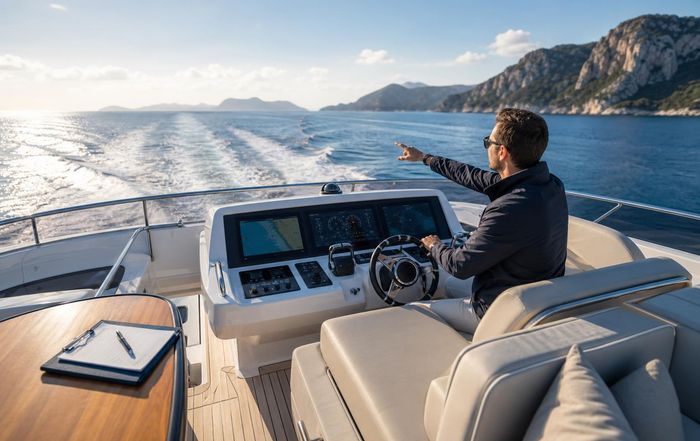
Key Questions to Ask During a Yacht Sea Trial
Conducting a sea trial is one of the most decisive steps in the yacht acquisition process, yet it is also one of the least standardised experiences in the marine industry. For owners, family offices, and professional advisers who follow Yacht-Review.com, the sea trial is no longer viewed as a ceremonial "test run," but as a structured, data-driven evaluation that blends technical scrutiny with lifestyle assessment. When approached with the right questions, a sea trial becomes an invaluable risk-management exercise and a powerful tool for aligning the yacht with the owner's real cruising ambitions.
This completly original article examines the key questions buyers, charter investors, and their representatives should ask during a yacht sea trial, drawing on current practices from leading shipyards, surveyors, and classification societies. It is written primarily from a third-person perspective, with a focus on experience, expertise, and trustworthiness, and is intended to complement the more detailed model-specific insights available in the reviews section.
Framing the Sea Trial: Purpose, Conditions, and Stakeholders
Before asking detailed technical questions, an experienced buyer clarifies the framework of the sea trial itself. A sea trial that is too short, too lightly loaded, or conducted in ideal weather may mask issues that only surface under more demanding conditions.
A first set of questions therefore concerns the purpose and setup of the trial. The buyer or adviser will want to know how long the trial will last, what speed ranges will be covered, whether there will be time at both displacement and planing speeds where applicable, and whether key manoeuvres such as crash-stops, tight turns, and station-keeping will be demonstrated. It is also important to ask how closely the trial load reflects expected real-world use, including fuel, water, tenders, toys, and guest provisioning, since an under-loaded yacht can present misleading performance and fuel consumption figures.
Clarifying who will be on board is another early priority. Serious buyers increasingly request the presence of an independent surveyor or naval architect alongside the yard's captain, engineer, and sales team. Organizations such as Lloyd's Register and Bureau Veritas publish guidance on sea trials and performance verification, and buyers who wish to align with these standards often ask which class rules or guidelines, if any, the trial will reference. Those interested in learning more about classification approaches to trials can review technical resources from Lloyd's Register or the American Bureau of Shipping.
By setting these expectations in advance, the buyer signals that the sea trial is a professional evaluation rather than a marketing cruise, and creates the right context for the more detailed questions that follow.
Performance and Handling: Questions That Reveal Real Capability
The most obvious focus of a sea trial is performance, but experienced owners know that the headline top speed is only one small part of the story. For readers of Yacht-Review.com who are planning ambitious passages described in our cruising coverage, nuanced questions about handling, comfort, and redundancy are often more important than pure velocity.
During acceleration runs, buyers typically ask how quickly the yacht reaches various speeds, but they also inquire about engine load percentages at those speeds, as displayed on the engine management system. A yacht that must run close to maximum load to maintain normal cruising speed may have reduced engine life and limited fuel efficiency margins. Asking for the builder's recommended long-range, economical, and fast-cruise speeds, and then observing fuel burn and engine loads at each, provides a more realistic picture of day-to-day operation.
In turns and manoeuvres, a knowledgeable buyer asks how the hull form, stabilisation system, and propulsion configuration are expected to behave, and then compares these expectations with the real-world feel. Questions about turning radius at different speeds, responsiveness of steering, and helm feedback help to determine whether the yacht will inspire confidence in tight marinas or congested waterways. For pod-driven or joystick-controlled yachts, it is particularly useful to ask the captain to demonstrate side-slipping, rotation on the spot, and emergency manoeuvres, while querying how the system behaves in failure modes and what manual backups exist.
Comfort at sea is another dimension that often separates a satisfactory yacht from a truly successful one. Buyers therefore ask how the stabilisers are tuned, what modes are available (zero-speed, underway, economy), and what sea states they are optimised for. When conditions allow, they may request that the stabilisers be temporarily turned off to feel the difference in roll and pitch, then ask about maintenance intervals and power consumption for the stabilisation system. For more detailed background on hull dynamics and ride comfort, readers may wish to explore our dedicated design insights.
Propulsion, Engineering, and Noise: Questions Below Deck
A sea trial is one of the few opportunities a prospective owner has to experience the machinery space under operational loads, and the questions asked here can significantly influence long-term satisfaction and lifecycle costs. Leading surveyors and technical managers often advise clients to spend time in the engine room during different parts of the trial, rather than remaining exclusively on deck or in the saloon.
Key questions begin with engine and generator loading, temperatures, and pressures. Buyers ask the engineer what parameters are being monitored in real time, how they compare with the manufacturer's recommended ranges, and whether there are any anomalies or trends that merit follow-up. For yachts using advanced propulsion technologies, such as hybrid-electric systems or integrated battery banks, questions naturally extend to energy management strategies, battery state-of-charge under different operating modes, and the expected impact on maintenance schedules. Those interested in broader trends in marine propulsion can consult technical materials from MAN Energy Solutions or Rolls-Royce Power Systems, which provide context on emerging efficiency and emissions solutions.
Noise and vibration are another critical focus, particularly for yachts intended for extended family cruising or charter. Buyers often ask to measure sound levels in key guest areas at different speeds, using portable decibel meters or smartphone applications as a rough guide, and then inquire what measures the yard has implemented to reduce transmitted noise, such as resilient engine mounts, floating floors, or acoustic insulation. Comparing these real-world readings with any published sound level targets or class notations helps to verify marketing claims. Additional guidance on acceptable noise levels and comfort standards can be found in documentation from the International Organization for Standardization (ISO), particularly ISO standards relating to shipboard habitability, available through the ISO website.
Ventilation and access in the machinery spaces are also important topics. Buyers ask how routine service tasks will be carried out, whether major components can be removed without cutting the hull or deck, and how emergency access is managed if a system fails at sea. These questions are not only technical but also operational, directly affecting downtime and cost of ownership. For readers who follow the business side of yachting through our industry analysis, this link between engineering design and total cost of ownership is increasingly central to purchase decisions.
Systems, Electronics, and Redundancy: Questions About Reliability
Modern yachts are increasingly defined by their onboard systems and electronics, from integrated bridge solutions to hotel-style automation. A sea trial provides a rare chance to test these systems under way, and the questions asked here should focus on both functionality and resilience.
On the bridge, buyers and their captains typically ask how navigation systems are integrated, which electronic chart systems are installed, and whether radar, AIS, depth sounders, and autopilot are fully interfaced. They may request demonstrations of route planning, radar overlay, and collision-avoidance functions, while asking how software updates are handled and whether remote diagnostics are available. For those seeking to benchmark against best practices, organisations such as the Royal Yachting Association (RYA) and the United States Coast Guard publish guidance on electronic navigation and situational awareness, which can inform the questions posed during the trial. An overview of safe navigation practices is available through the RYA's official site.
Redundancy is a recurring theme in professional sea trial checklists. Buyers ask what happens if a primary navigation screen fails, whether there are backup instruments and paper charts, and how power is distributed across different circuits to minimise single points of failure. Similar questions extend to communications, where owners increasingly expect resilient connectivity through VHF, satellite systems, and cellular routers. Testing these systems in real time, including making test calls and verifying data connections, helps to ensure that the yacht will support both safety and business continuity while at sea.
Hotel systems, from air conditioning to lighting and entertainment, should also be tested under realistic loads. Buyers often ask to see how the yacht behaves when multiple systems are running simultaneously, whether there are voltage drops or flickering, and how the automation interface is presented to guests. Questions about remote monitoring, integration with mobile devices, and cybersecurity are becoming more common, especially among technology-savvy owners and corporate users. Readers interested in how these digital systems are reshaping the onboard experience can find additional context in the technology features.
Comfort, Layout, and Lifestyle: Questions That Reflect Real Use
While engineering and performance questions are essential, the ultimate success of a yacht is often determined by how well it supports the owner's lifestyle. For the audience of Yacht-Review.com, which frequently prioritises family cruising, global exploration, and refined onboard living, the sea trial is an opportunity to validate assumptions about comfort, privacy, and flow.
Owners and their advisers typically ask how the yacht behaves in different guest areas while under way. They may spend time in the master suite, guest cabins, crew quarters, and outdoor decks at various speeds, asking how noise and motion differ between these spaces. Questions about privacy, such as whether engine noise or footfall is audible in cabins, or whether doors and hatches rattle under way, can reveal design details that do not appear in brochures.
Ventilation and climate control are another focus. Buyers ask how quickly cabins cool or warm when the air conditioning is adjusted, whether there are cold or hot spots, and how fresh air is managed through opening ports, hatches, or forced-air systems. For yachts intended for warm-water cruising, questions about shading, heat gain through glazing, and misting or cooling systems on deck become particularly relevant. Those planning extensive cruising can find practical guidance on liveability and comfort in our lifestyle coverage, where real-world experiences from owners and captains are often discussed.
Storage and provisioning capacity are also best evaluated at sea, when lockers, lazarettes, and pantries can be tested for accessibility and security under motion. Buyers often ask how the yacht is intended to be provisioned for longer trips, where bulky items such as dive gear or water toys are stored, and how crew will manage laundry and housekeeping. These questions help to ensure that the yacht's layout supports the intended style of use, whether that is weekend cruising in the Mediterranean, extended voyages in the Pacific, or charter operations in the Caribbean.
Crew Workflow and Operational Practicality: Questions from the Back of House
Sophisticated buyers increasingly recognise that a yacht's success depends as much on crew workflow as on guest amenities. During a sea trial, this translates into questions about how the crew moves through the yacht, how they manage service and safety, and how operational procedures are supported by design.
Owners and managers may ask the captain and chief steward(ess) to walk them through a typical day on board while under way, explaining how meals are prepared and served, how watchkeeping is organised, and how the crew responds to routine tasks such as launching tenders or managing lines. Questions about separate crew circulation routes, service pantries, and laundry facilities are not mere technicalities; they directly influence crew morale and guest experience. For readers interested in the human side of yachting, our community section often highlights how thoughtful design improves life for both guests and crew.
Safety procedures are a central part of these operational questions. Buyers ask how drills are conducted, where life-saving appliances are stored, and how quickly the crew can deploy life rafts or man-overboard equipment. Observing a short demonstration, when feasible, can be highly instructive. International frameworks such as the International Convention for the Safety of Life at Sea (SOLAS), overseen by the International Maritime Organization (IMO), provide the regulatory backdrop for many of these procedures, and interested readers can learn more about SOLAS provisions through the IMO's official resources.
By engaging with the crew on these topics during the sea trial, buyers gain insight into how the yacht will function as a working vessel, not just as a luxury asset, and can identify any design features that might complicate safe or efficient operations.
Environmental Performance and Efficiency: Questions for a Sustainable Future
Environmental performance has moved from a niche concern to a central pillar of yacht ownership, particularly among the global and multi-generational audience that follows the sustainability coverage on Yacht-Review.com. A sea trial offers a practical moment to evaluate fuel efficiency, emissions-related technologies, and waste-management systems in real conditions.
Buyers typically begin by asking for detailed fuel consumption data at different speeds and loads, then comparing these figures with the builder's published expectations. They may request to see real-time fuel flow readings on the engine displays, and ask how these figures were measured and calibrated. For yachts equipped with advanced technologies such as selective catalytic reduction (SCR) systems to meet IMO Tier III emissions standards, questions naturally extend to urea consumption, system maintenance, and any operational constraints in sensitive areas. Background information on emissions regulations and compliance can be found in technical updates from the International Council on Clean Transportation and through the IMO's environmental pages.
Waste and water systems are another area where targeted questions during a sea trial can reveal a yacht's environmental footprint. Buyers often ask how black and grey water are treated, whether the yacht is equipped with certified sewage treatment plants, and how garbage is stored and compacted. For long-range cruisers, questions about watermakers, filtration systems, and the capacity for plastic and recycling storage are increasingly common. Owners who prioritise sustainable operations can deepen their understanding through the sustainability hub, where best practices and emerging technologies are regularly examined.
Energy management is closely related. During the trial, buyers may ask how generator loading is optimised, whether load-sharing systems are installed, and how hotel loads are managed to reduce unnecessary fuel burn. On yachts with solar panels or battery banks, they can observe how these systems contribute to power supply under way and at anchor, and inquire about realistic expectations for silent-running periods. These questions help align the yacht's technical capabilities with the owner's environmental and operational goals.
Documentation, Warranty, and After-Sales Support: Questions Beyond the Trial
A sea trial does not end when the yacht returns to the dock. For buyers and advisers who take a long-term, businesslike view of ownership, the trial is also the point at which they clarify documentation, warranty conditions, and after-sales support. These topics may not be as visually compelling as wake shapes and sunpads, but they are central to risk management and asset value.
Buyers typically ask for a written sea trial report from the yard or broker, detailing the conditions, speeds, loads, and any anomalies observed. They may request that this report be cross-referenced with the independent surveyor's findings, and that any agreed remedial work be documented with clear timelines. Questions about how performance guarantees are defined and enforced, if applicable, are particularly important for new builds and semi-custom projects.
Warranty coverage is another area where precise questions matter. Owners ask what is covered and for how long, how warranty claims are processed, and what response times can be expected for technical issues. They may inquire about the yard's global service network, the availability of authorised service centres in key cruising regions, and whether remote diagnostics or online support platforms are available. Those wishing to benchmark after-sales models can review public resources from respected builders and service providers, as well as independent guidance from organisations such as BoatUS, which offers general advice on boat buying and ownership through its consumer information pages.
For buyers who view their yacht as part of a broader lifestyle and travel portfolio, it is also sensible to ask how the builder or dealer supports upgrades, refits, and resale. Understanding the yacht's position in the market, the typical depreciation curve for similar models, and the availability of refit options helps to frame the purchase as a long-term investment in experiences rather than a one-off transaction. Insights into these market dynamics are regularly explored in the global coverage and boats overview, where trends across regions and segments are analysed.
Integrating the Sea Trial into the Broader Decision Process
A well-structured sea trial does not exist in isolation; it forms one component of a comprehensive evaluation that includes design analysis, historical performance of the model line, surveyor reports, and lifestyle considerations. For the readership here, which spans first-time buyers, seasoned owners, and professional advisers across North America, Europe, Asia, and beyond, the most successful yacht acquisitions are those where the sea trial is used to confirm and refine a carefully developed brief.
In practice, this means arriving at the trial with a clear understanding of intended use, whether that is coastal cruising, transoceanic passages, charter operations, or a blend of these. It involves coordinating questions among the owner, captain, surveyor, and broker so that each brings their expertise to bear, rather than duplicating efforts or overlooking key areas. It also requires the discipline to distinguish between issues that are easily rectified before delivery and those that reflect fundamental mismatches between the yacht and the owner's vision.
Readers who wish to deepen their understanding of how specific models perform on sea trials can explore the detailed analyses in our yacht reviews, while those inspired to plan future itineraries after a successful trial may enjoy the destination-focused stories in our travel features and broader cruising narratives. For those following market developments and new launches that will soon be heading out for their first trials, the latest updates are available through our curated news section.
Conclusion: Asking the Right Questions to Unlock the Right Yacht
The sea trial remains one of the most revealing and inspiring moments in the yacht-buying journey. When approached with thoughtful, well-researched questions, it becomes far more than a demonstration of speed and style; it is a rigorous, experiential audit of how the yacht will perform, protect, and delight its owners and guests over many seasons.
By focusing on performance and handling, engineering and noise, systems and redundancy, comfort and lifestyle, crew workflow, environmental performance, and long-term support, buyers can transform the sea trial into a structured decision tool that aligns technical reality with aspiration. This disciplined approach reflects the core values of experience, expertise, and trust that underpin this site and it empowers owners around the world to select yachts that not only look impressive at the dock, but also deliver confidence, comfort, and joy each time they leave the harbour.