

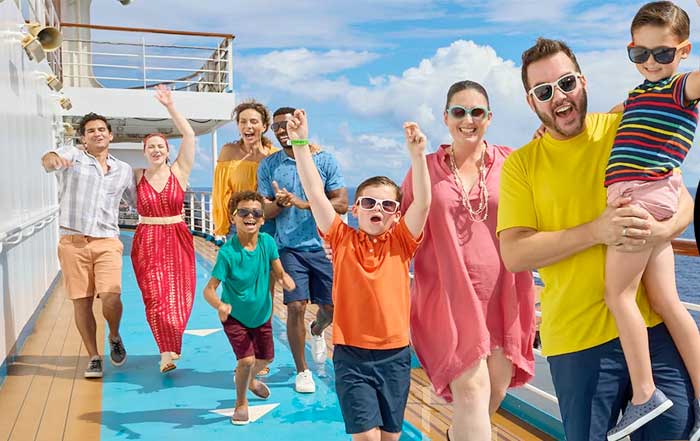
Multi-Generational Cruising: How Yachting Became the Ultimate Family Experience
Yachting has always been synonymous with freedom, exploration, and refined leisure, yet by 2026 it has become something more profound for many owners and charter guests worldwide: a platform for family connection across generations and borders. What began as a niche preference for extended-family charters has matured into a defining philosophy of modern luxury yachting, with multi-generational cruising now central to how families in North America, Europe, Asia-Pacific, and beyond design their time together. For the global audience of yacht-review.com, this evolution is not an abstract market trend but a lived reality, reflected in the questions readers ask, the yachts they choose, and the destinations they prioritize when planning their next journey at sea.
Families from the United States, the United Kingdom, Germany, Canada, Australia, France, Italy, Spain, the Netherlands, Switzerland, Singapore, and increasingly China, South Korea, and the Nordic countries are no longer content with conventional holidays that fragment time and attention. Instead, they are seeking experiences that allow grandparents, parents, and children to share a single narrative, written together on the water. Yachting, with its unique combination of privacy, mobility, and comfort, has become the ideal stage for that narrative. As explored across Yacht Review's cruising coverage, the most successful family voyages today are not defined solely by the yacht's length or the prestige of the flag, but by how thoughtfully they are designed to serve the needs, expectations, and aspirations of three or even four generations at once.
The New Family Dynamic at Sea
By 2026, the typical family yachting party bears little resemblance to the adult-focused groups that dominated the sector two decades ago. The demographic is more diverse, more international, and far more intergenerational. A single charter may bring together retired grandparents from Switzerland, working parents splitting time between New York and London, and teenage or university-age children who move effortlessly between physical and digital worlds. Research from leading industry analysts and brokers such as The Superyacht Group, Fraser Yachts, and Burgess Yachts indicates that a large proportion of superyacht charters now involve at least three generations on board, a shift that has major implications for design, service, and itinerary planning.
The yacht, in this context, is no longer a symbol of indulgence alone; it has become a floating family estate, a neutral and inspiring environment where age barriers soften and shared experience takes precedence over individual routine. Major builders such as Feadship, Benetti, Sanlorenzo, Oceanco, and the Ferretti Group have responded with layouts that prioritise flexibility and safety without sacrificing elegance. Convertible cabins that can alternate between nanny suites and grandparent cabins, child-safe beach clubs with integrated sea pools, and shaded exterior lounges designed for both play and quiet conversation are now standard talking points in serious family-focused projects. Readers wishing to follow these evolving design philosophies can find detailed analysis in Yacht Review's Design section, where the interplay between aesthetics, function, and family use is examined in depth.
At the same time, the emotional expectations of families have become more sophisticated. Parents who often work remotely from the United States, the United Kingdom, Singapore, or Hong Kong may need reliable connectivity for limited hours each day, but they are increasingly intentional about protecting uninterrupted family time. Grandparents, many of whom are active, well-travelled, and financially sophisticated, are seeking cultural depth and comfort rather than passive observation. Younger generations, shaped by climate awareness and digital fluency, expect both adventure and ethical integrity from their journeys. The multi-generational yacht, therefore, must operate at the intersection of wellness, culture, sustainability, and technology, a complexity that yacht-review.com has been documenting across its business, technology, and lifestyle pages.
Itinerary Design as a Strategic Discipline
Planning a multi-generational cruise in 2026 is closer to strategic project management than simple route plotting. The captain, owner's representative, charter broker, and sometimes a dedicated family office now collaborate to create itineraries that account for energy levels, mobility, cultural interests, dietary requirements, and even educational goals. Rather than focusing only on the geography of a region, they consider the emotional rhythm of each day and how it will be experienced by different ages.
A successful itinerary is layered rather than linear. Mornings might begin with gentle activities suitable for all ages, such as a slow cruise along the Amalfi Coast or Norway's fjords, yoga on the foredeck, or a quiet tender ride to a harbour cafe. Midday hours can be structured around choice: grandparents visit a museum or historic quarter, parents enjoy a wine tasting or spa treatment, and children participate in supervised water sports or marine biology sessions. Evenings then become the anchor point for reconnection, with family-style dinners on deck, films projected under the stars, or storytelling sessions led by grandparents who link the voyage to family history.
Professional charter houses such as Northrop & Johnson, Camper & Nicholsons, and Edmiston have refined the art of alternating high-energy days with slower, reflective ones, ensuring that no generation feels overextended or sidelined. This approach is particularly important on longer itineraries in regions like the South Pacific or Asia, where distances can be significant and shoreside infrastructure less predictable. Readers looking for destination-specific models of such itineraries can explore Yacht Review's Travel section and Global coverage, where regional reports highlight how different cruising grounds lend themselves to intergenerational planning.
Mediterranean Voyages: Culture, Proximity, and Comfort
The Mediterranean retains its status in 2026 as the most versatile theatre for multi-generational cruising, especially for families based in Europe, the Middle East, and North America. Its dense network of well-serviced ports, short sailing legs, and unparalleled cultural heritage make it ideal for groups that include older family members or very young children who may tire easily. A week along the Amalfi Coast can be orchestrated so that grandparents explore Ravello's gardens and historic villas while younger generations take RIBs to hidden coves or paddleboard along the shoreline, before regrouping in the evening for a private dinner overlooking Positano.
Greece continues to be a favourite for families from the United Kingdom, Germany, Scandinavia, and the United States, offering a blend of mythology, archaeology, and relaxed island life. A Cyclades itinerary might include a day of exploration in Santorini, where the caldera and archaeological sites provide context for discussions about history and geology, followed by quieter days in Paros or Naxos, where sheltered bays and family-run tavernas create an atmosphere of informal togetherness. The French and Italian Rivieras, meanwhile, remain prime choices for families who value art, fashion, and gastronomy; Antibes, Nice, Cannes, and Monaco provide world-class marinas, medical facilities, and cultural programming that give older guests confidence while offering younger ones cosmopolitan stimulation.
For readers interested in comparative evaluations of Mediterranean cruising grounds, Yacht Review's Reviews section offers in-depth assessments of itineraries, marinas, and shore experiences that have proven particularly well-suited to multi-generational use. External resources such as Visit Greece and France.fr can further enrich planning with up-to-date cultural and event information.
Caribbean and Atlantic Island-Hopping: Relaxed Adventure
For families from North America, Europe, and increasingly Brazil and South Africa, the Caribbean and adjacent Atlantic archipelagos remain a natural choice for winter and spring multi-generational voyages. The region's diversity allows each generation to find its own rhythm: some may prefer the understated charm of the Grenadines, others the sophistication of St. Barts, or the broad, shallow anchorages of The Bahamas that are ideal for children learning to swim and snorkel.
A typical family itinerary might begin in St. Lucia, whose lush interior and accessible hiking trails appeal to active guests of all ages, then move south toward Bequia and the Grenadines, where quieter anchorages and beach barbecues foster intimacy and unstructured play. For families seeking more infrastructure and luxury retail, St. Maarten, St. Barts, and Antigua provide a balance of high-end services and Caribbean character. Increasingly, captains and charter managers integrate educational components such as visits to marine parks, turtle sanctuaries, or coral restoration projects, aligning with the global emphasis on responsible tourism.
The Bahamas and Turks and Caicos, with their shallow banks and clear waters, are particularly appreciated by families from the United States and Canada who value short flight times and familiar regulatory environments. Here, tenders and water toys play a central role in daily life, allowing teenagers and young adults to exercise independence within a safely supervised perimeter. For a deeper understanding of how sustainability intersects with these itineraries, readers can explore Yacht Review's Sustainability section and consult external organisations such as the National Oceanic and Atmospheric Administration for insights into reef health and marine conservation.
Northern Europe and the High Latitudes: Cool-Climate Discovery
By 2026, Northern Europe and high-latitude cruising grounds have matured from niche adventures into mainstream options for discerning multi-generational groups seeking something beyond the classic Mediterranean-Caribbean circuit. Norway's fjords, the Baltic Sea, Scotland's west coast, and the archipelagos of Sweden and Finland offer a compelling combination of dramatic landscapes, cultural sophistication, and cooler summer temperatures that many families from Germany, the Netherlands, Switzerland, the United Kingdom, and North America find increasingly attractive.
In Norway, for example, a family yacht can glide through glassy fjords where grandparents remain comfortably on board enjoying panoramic views while younger members head ashore by tender for hiking, kayaking, or glacier walks. Cities such as Copenhagen, Stockholm, and Helsinki provide easy access to world-class museums, design districts, and culinary experiences, making them ideal start or end points for cruises that blend urban culture with remote wilderness. The Nordic countries' strong environmental policies also resonate with younger generations who are acutely aware of climate issues.
This region has become a proving ground for hybrid propulsion, advanced energy management, and low-impact operations, themes regularly explored in Yacht Review's Technology coverage. External references such as the Norwegian Fjords tourism portal or the UNESCO World Heritage Centre can help families identify protected sites and understand the environmental frameworks governing them, reinforcing the sense that their voyage is both a privilege and a responsibility.
Asia-Pacific: Cultural Depth and Frontier Cruising
The Asia-Pacific region has continued its rise through 2024 and 2025, and by 2026 it stands firmly as one of the most compelling arenas for multi-generational cruising, particularly for families based in Singapore, Hong Kong, Australia, New Zealand, and increasingly from Europe and North America seeking more adventurous itineraries. Destinations such as Thailand, Indonesia, Vietnam, Japan, and Australia offer a tapestry of cultures and ecosystems that can sustain longer, more exploratory voyages.
In Thailand, a family may embark from Phuket, weaving between the limestone karsts of Phang Nga Bay before heading to the Similan Islands, where some of the region's best dive sites introduce children and adults alike to vibrant coral and pelagic species. Indonesia's Komodo National Park and Raja Ampat have become iconic for families seeking a blend of wildlife encounters, remote anchorages, and world-class diving; children might spend the morning learning about reef ecology and the afternoon observing Komodo dragons, while elders enjoy the serenity of sheltered bays and the comfort of a well-appointed yacht.
Australia's Whitsunday Islands and the Great Barrier Reef remain high on the wish list for families from the United States, Europe, and Asia who want to experience a globally significant ecosystem before climate change alters it further. Strict environmental regulations, informed by scientific bodies such as the Great Barrier Reef Marine Park Authority, have pushed yacht operators toward more sustainable practices, which in turn provide a powerful educational narrative for younger guests. Meanwhile, Japan's emerging superyacht circuit, with ports such as Kobe, Nagasaki, and Fukuoka, offers a rare combination of ancient tradition and cutting-edge modernity that appeals strongly to multi-generational groups interested in culture and gastronomy.
For families considering long-range cruising through Asia-Pacific, Yacht Review's Global and Travel sections provide context on infrastructure, seasonality, and regulatory frameworks, helping them approach these regions with both enthusiasm and respect.
Onboard Life: Privacy, Connection, and Service
The onboard experience is where the success of a multi-generational voyage is ultimately determined. Space, privacy, and acoustics matter just as much as destination choice, particularly when three or four generations share the same footprint for extended periods. Modern family-oriented yachts are therefore designed as a series of interconnected yet distinct zones: quiet libraries or observation lounges for grandparents, flexible salons that can convert into playrooms or cinema rooms, and expansive beach clubs or sundecks where the entire family can gather without feeling cramped.
Builders such as Sunseeker, Azimut-Benetti Group, and Heesen have invested heavily in noise and vibration reduction, stabilisation systems, and intelligent lighting to ensure that guests of all ages can rest, read, or play without disturbance. Air quality and climate control, once secondary considerations, are now central selling points, particularly for families sensitive to health and wellness concerns. These technical enhancements, many of which are examined in detail in Yacht Review's Technology section, directly influence how comfortably a family can coexist on board for weeks at a time.
Equally important is the role of the crew. In 2026, the most sought-after yachts are those with teams trained not only in seamanship and hospitality but also in family dynamics and child engagement. Institutions such as Bluewater Crew Training and Warsash Maritime School now incorporate modules on family communication, conflict de-escalation, and activity design into their curricula. A perceptive chief stewardess can sense when a teenager needs space from the group and propose a discreet paddleboarding session, just as a skilled chef can design menus that reconcile grandparents' preference for classic Mediterranean cuisine with younger generations' interest in plant-based or fusion dishes.
For readers of yacht-review.com, the human dimension of yachting is a recurring theme across the Community and News sections, where profiles of exemplary crews and management teams illustrate how professionalism and empathy underpin truly memorable family voyages.
Education, Culture, and Wellness as Core Value Propositions
Luxury travel in 2026 is increasingly judged not by how much it offers in material terms, but by how deeply it engages guests intellectually, culturally, and emotionally. Multi-generational cruising has become a natural vehicle for this shift, functioning as a mobile classroom and wellness retreat in one. Visits to UNESCO-listed cities such as Dubrovnik, Valletta, or Barcelona, or natural wonders like Ha Long Bay and Milford Sound, allow families to explore history, politics, and environmental science in real time, often guided by local experts or onboard lecturers. Resources such as UNESCO's World Heritage List help families plan itineraries that intersect with globally significant sites, turning curiosity into structured learning.
Onboard, many yachts now carry libraries curated around their cruising regions, as well as digital platforms that integrate navigation data with historical and ecological content. Children can track the yacht's route, learn about marine life in the waters below, and document their experiences through photography and journaling. Grandparents, in turn, have the opportunity to share their own stories and reflections, turning each anchorage into a point of intergenerational dialogue. Yacht Review's History section often highlights how maritime heritage and craftsmanship can be woven into such conversations, reinforcing a sense of continuity between past and present.
Wellness, once treated as an add-on, has become a structural element of family cruising. Partnerships between yacht operators and hospitality brands such as Six Senses, Anantara, and One&Only Resorts have led to integrated programmes that include nutrition planning, yoga, meditation, physiotherapy, and even supervised digital detox experiences for teenagers. The goal is not to isolate individuals in spa environments but to create shared rituals of wellbeing: sunrise stretching on deck, family swims in quiet bays, or technology-free dinners that encourage conversation. External organisations such as the Global Wellness Institute have documented the growing demand for such holistic, multi-generational wellness experiences, a trend that aligns closely with what yacht-review.com observes in its Lifestyle reporting.
Sustainability and Ethics: Teaching Responsibility at Sea
One of the most significant developments shaping multi-generational cruising in 2026 is the integration of sustainability into both hardware and behaviour. Families are increasingly aware that the oceans they enjoy are under pressure from climate change, pollution, and overfishing, and they expect their yachts to reflect a credible commitment to mitigation. Builders such as Silent-Yachts, Arcadia Yachts, and large shipyards in Northern Europe are advancing solar integration, hybrid and diesel-electric propulsion, and improved waste management systems, while class societies and regulators push for lower emissions and higher efficiency.
For families, these technologies are not just technical features; they are powerful teaching tools. Children raised in Canada, Germany, Scandinavia, or Australia, where environmental education is strong, quickly grasp the significance of solar arrays, battery banks, or grey-water treatment plants. When combined with hands-on activities such as beach cleanups, citizen-science projects, or visits to marine research stations, these elements transform a voyage into an exercise in applied ethics. External references like the International Maritime Organization and WWF's ocean conservation work can help families understand the broader regulatory and scientific context for what they see on board.
yacht-review.com has consistently argued, particularly in its Sustainability section, that the future of luxury yachting depends on aligning aspiration with responsibility. Multi-generational cruising amplifies this imperative, because it involves not only the present enjoyment of the sea but the education of those who will inherit it. The families who approach yachting as a stewardship opportunity, rather than a purely private indulgence, are setting a standard that resonates across the industry.
Legacy, Storytelling, and the Future of Family Yachting
Ultimately, the appeal of multi-generational cruising lies in its power to create and preserve family stories. A yacht, whether privately owned or regularly chartered, becomes a recurring setting in which birthdays, anniversaries, graduations, and reunions unfold. Over time, anchorages in the Greek islands, the Caribbean, Scandinavia, or the South Pacific become markers in a shared emotional geography, remembered as vividly as homes or ancestral properties. Many families now document their voyages with professional photographers, filmmakers, or even writers, curating digital archives that future generations can revisit.
Major events such as the Monaco Yacht Show and the Fort Lauderdale International Boat Show increasingly showcase not just new builds but refits and legacy yachts that have served the same family for decades, updated to meet new sustainability standards and lifestyle expectations. This continuity underscores a key theme that yacht-review.com has followed closely in its History and Business coverage: the yacht as a multi-generational asset, both financial and emotional.
Looking ahead, advances in AI-assisted itinerary planning, hydrogen and methanol propulsion, and semi-autonomous navigation will further extend what is possible for family voyages, opening more remote regions of Africa, South America, and the polar latitudes to safe, low-impact exploration. At the same time, new ownership and access models-from fractional ownership to club-based fleets-are making serious family yachting more attainable for entrepreneurs and professionals from emerging wealth centres in Asia, the Middle East, and Latin America.
For yacht-review.com, whose readers span established yachting hubs in Europe and North America as well as fast-growing markets in Asia-Pacific and Africa, multi-generational cruising is not a passing fashion but a structural redefinition of why people go to sea. The vessels will continue to evolve, the technologies will become more sophisticated, and new destinations will enter the collective imagination, yet one constant remains: the sea is one of the few environments where time slows enough for families to truly see one another. In that sense, multi-generational cruising in 2026 is less about the spectacle of luxury and more about the quiet, enduring value of shared experience-a value that, as every seasoned reader of yacht-review.com understands, is the rarest and most meaningful form of wealth any family can possess.