

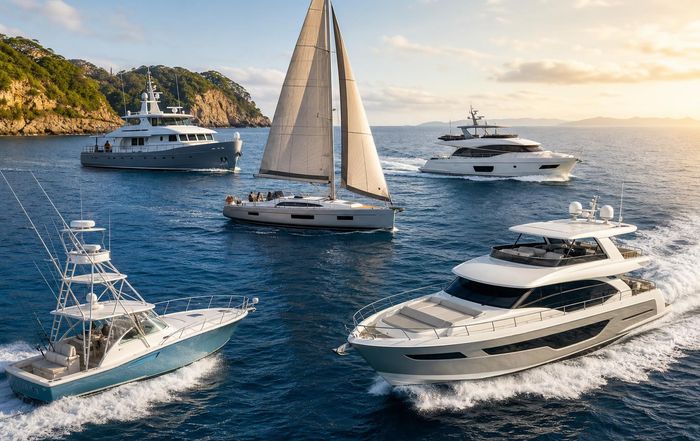
Best Yacht Types for Coastal and Offshore Cruising
Coastal and offshore cruising have never been more accessible, yet the variety of yacht types and configurations has grown so wide that many owners and charterers face a genuinely strategic decision when choosing the right vessel. For boating and yacht lovers here this choice is not simply about aesthetics or speed; it is about safety, comfort, long-term value, and the kind of life on the water they wish to lead. Understanding which yacht types are best suited to coastal passages, bluewater crossings, and everything in between is therefore central to informed ownership and confident voyage planning.
This featured story examines the principal yacht categories used for coastal and offshore cruising, with a focus on how each type performs in real-world conditions, what kind of experience it offers, and how evolving technology and sustainability priorities are reshaping design. It draws on recent developments across major builders, naval architects, and classification societies, and is written from the perspective of an independent, globally minded yachting publication.
Defining Coastal versus Offshore Cruising
Before assessing yacht types, it is essential to distinguish between coastal and offshore cruising in practical, operational terms. Coastal cruising generally involves sailing or motoring within relatively short distances of land, often with the possibility of shelter within a few hours, regular access to marinas, and more predictable weather windows. Many national regulations and design standards use distance from a safe haven, significant wave height, and wind strength to define coastal categories; for instance, the European Union's Recreational Craft Directive, explained by Royal Yachting Association guidance, outlines design categories that range from sheltered waters to open ocean.
Offshore or bluewater cruising, by contrast, implies extended passages that may last several days or weeks, sometimes with no realistic option to divert to shelter. Yachts intended for offshore use must be capable of withstanding more severe sea states, carrying larger stores and fuel or water, and providing redundancy in critical systems. Organizations such as World Sailing offer offshore special regulations for race and rally participants, which indirectly shape what many designers and builders consider appropriate for serious passagemaking.
In practice, many owners want a yacht capable of both coastal and offshore cruising, but with a bias toward one or the other. The choice of hull type, rig, propulsion, and interior layout should therefore be guided by where the yacht will spend most of its time and how demanding its longest passages will be.
Monohull Sailing Yachts: The Traditional Offshore Workhorses
For generations, monohull sailing yachts have been the default choice for offshore cruising, and they remain a benchmark for seaworthiness and ocean-crossing capability. From classic bluewater designs inspired by naval architects such as Olin Stephens to contemporary performance cruisers launched by builders like Hallberg-Rassy, Oyster Yachts, and Amel, the monohull format offers a combination of self-righting ability, predictable motion, and efficient windward performance that appeals strongly to experienced sailors.
For coastal cruising, modern monohulls from production builders such as Beneteau, Jeanneau, and Bavaria Yachts provide generous interior volume, easy handling, and shallow-draft options, including lifting keels and twin rudder configurations. These features allow access to smaller harbours and anchorages while still providing enough stability and performance for occasional longer passages. Many coastal-oriented models are optimized for marina life, with wide transoms, large cockpits, and extensive glazing that enhances on-board lifestyle but may be less ideal for heavy-weather offshore work.
For serious offshore cruising, heavier displacement, deeper keels, and more conservative sail plans remain in demand. Long-distance sailors often favour designs with protected cockpits, robust rigging, and sea bunks that can be used safely when the vessel is heeled. Builders such as Najad and Rustler Yachts continue to focus on this niche, emphasizing construction quality, structural integrity, and redundancy of systems. Many of these yachts are built to or influenced by classification standards from organizations such as Lloyd's Register or Bureau Veritas, which provide an additional layer of confidence for owners planning ocean passages.
From a lifestyle perspective, monohulls offer a more dynamic sailing experience, with noticeable heel and a sense of "slicing" through the water that many sailors find engaging. For some guests, however, this motion can be tiring on longer legs, especially compared with multihulls. On the other hand, monohulls typically offer better performance to windward, easier berthing in standard marina slips, and lower purchase and operating costs than equivalently sized catamarans. For readers considering their first serious cruising yacht, the monohull remains a compelling and often more budget-friendly choice, especially when combined with the depth of market reviews available through resources such as the reviews section at yacht-review.com/reviews.html.
Sailing Catamarans: Space, Stability, and Growing Offshore Credibility
Sailing catamarans have moved from niche status to mainstream over the past two decades, driven by the rise of brands such as Lagoon, Fountaine Pajot, Leopard Catamarans, and Bali Catamarans. Their appeal for coastal cruising is clear: expansive deck and interior spaces, minimal heel, and shallow draft that allows access to lagoons and anchorages unsuitable for deeper-keeled monohulls. For family cruising and charter in regions such as the Caribbean, Mediterranean, and South Pacific, the catamaran has effectively become the default platform.
The offshore credentials of catamarans have historically been debated, but modern designs and real-world circumnavigations have demonstrated that well-built multihulls can be very capable bluewater cruisers. Key design aspects include high bridgedeck clearance to reduce slamming, structural stiffness to manage torsional loads, and carefully managed weight distribution. Many contemporary cruising catamarans are designed with robust crash boxes in the bows and multiple watertight compartments, which can enhance safety in the event of collision damage.
Nonetheless, multihulls behave differently from monohulls in extreme conditions. They will not self-right if capsized, which is why offshore sailors and designers pay particular attention to sail area, center of gravity, and reefing strategies. Resources such as Sail World and Cruising World have documented both successful long-distance catamaran voyages and the lessons learned from incidents, contributing to a more nuanced understanding of best practices. For owners who plan ocean crossings, selecting a catamaran from a builder with a strong record in structural engineering and offshore support remains critical.
From a lifestyle and design perspective, catamarans offer unmatched living space for their length. Salons with 360-degree views, multiple outdoor lounging areas, and private cabin hulls make them highly attractive for extended liveaboard use. Many designs integrate larger solar arrays, lithium battery banks, and efficient DC systems, aligning with the growing trend toward energy-independent cruising. Readers interested in how these design choices influence the onboard experience can find further analysis in the updated design insights at yacht-review.com/design.html.
For coastal cruising, catamarans excel in fair-weather island-hopping and social cruising, particularly where marina berths and moorings can accommodate their beam. For offshore cruising, they reward careful weather routing and conservative sail handling, but when properly managed they can offer fast, comfortable passages with significantly reduced rolling and more generous living space than equivalent monohulls.
Motor Yachts for Coastal Cruising: Comfort, Speed, and Short-Haul Flexibility
For many owners, especially in North America and Europe, coastal cruising is more naturally associated with motor yachts than with sail. Flybridge cruisers, hardtop sports yachts, and semi-displacement coastal cruisers from builders such as Princess Yachts, Sunseeker, Azimut, and Sea Ray are designed for relatively short coastal passages, weekend getaways, and extended vacations along temperate coastlines.
These yachts prioritize speed, comfort, and ease of operation, often featuring joystick controls, integrated navigation suites, and stabilizers that improve comfort both underway and at anchor. Coastal motor yachts, particularly in the 40- to 80-foot range, often carry modest fuel reserves relative to their consumption at planing speeds, which makes them best suited to itineraries with regular marina access and predictable fuel availability. For owners cruising regions such as the US East Coast, Mediterranean, or Baltic, this is typically not a constraint.
Designers have increasingly focused on indoor-outdoor living, with large aft decks, beach clubs, and openable salon doors that create a seamless connection to the sea. For families and guests who value comfort, privacy, and the ability to cover significant distances quickly when weather windows are favourable, these yachts provide an attractive blend of performance and lifestyle. The coastal cruising potential of such yachts is especially evident in popular routes documented by organizations like BoatUS and Royal Yachting Association, which provide guidance on safe passage planning, marina networks, and seasonal weather patterns.
However, the same attributes that make these yachts appealing for coastal cruising can limit their suitability for true offshore passages. Planing hulls are less efficient at lower speeds, and their fuel range may be insufficient for long, remote legs without refuelling. While many are structurally strong and can handle rough conditions, few are designed with the redundancy, tankage, and seakeeping priorities of dedicated long-range expedition yachts. For followers online who primarily cruise within well-served coastal regions, these motor yachts can be ideal; those considering bluewater ambitions should look toward different categories.
Trawlers and Long-Range Motor Yachts: The Bluewater Motor Alternative
Trawler-style and long-range displacement motor yachts have become a preferred option for owners seeking offshore capability without sails. Brands such as Nordhavn, Kadey-Krogen, Fleming Yachts, and Selene Yachts have built reputations on vessels that are engineered for ocean passages at relatively slow but highly efficient speeds. These yachts typically operate in the 7- to 10-knot range, with hull forms optimized for fuel economy and seakeeping rather than speed.
Their key offshore attributes include large fuel capacities, robust engine rooms with redundant systems, heavy-duty stabilization, and substantial storage for provisions and spares. Many are built with commercial-grade systems and are sometimes constructed to meet or approximate class standards used in the small commercial vessel sector. Publications such as PassageMaker and technical articles from American Boat and Yacht Council (ABYC) emphasize how these yachts integrate redundancy in steering, power generation, and navigation, which is vital when days or weeks from the nearest port.
For coastal cruising, trawlers and long-range motor yachts offer a slower but very comfortable experience, with generous interior volumes and often full-beam master cabins. They are especially popular for extended seasonal cruising, such as along the US Intracoastal Waterway, the Pacific Northwest, or the Scandinavian archipelagos. Their efficient hulls allow owners to cruise extensively with more predictable fuel budgets, which becomes increasingly relevant as fuel prices and environmental regulation evolve.
From a lifestyle standpoint, these yachts cater to owners who prioritize range, safety, and liveaboard comfort over high-speed thrills. Many carry substantial tenders and water toys, turning remote anchorages into private resorts. For those considering this type of vessel, the cruising coverage at yacht-review.com/cruising.html provides additional context on how trawlers perform in different regional conditions.
Explorer and Expedition Yachts: Bridging Luxury and High-Latitude Capability
Explorer and expedition yachts, once a niche dominated by converted commercial vessels, have in recent years become a distinct and fast-growing segment of the superyacht market. Builders such as Damen Yachting, Sanlorenzo, Cantiere delle Marche, and Arksen have developed dedicated explorer lines, often emphasizing high-latitude capability, extended autonomy, and robust construction. Reports and analyses from Boat International and Superyacht Times highlight that many new explorer projects are specifically commissioned with polar or remote-region cruising in mind.
These yachts are designed to undertake offshore passages in challenging environments, including high latitudes where ice, low temperatures, and limited infrastructure demand exceptional resilience. Features may include ice-strengthened hulls, large fuel and freshwater capacities, advanced waste treatment systems, and extensive storage for expedition equipment such as submersibles, helicopters, and specialist tenders. Many explorer yachts are built with diesel-electric propulsion and sophisticated energy-management systems, which can reduce noise and vibration while improving operational flexibility.
For coastal cruising, explorer yachts provide an almost over-engineered level of capability, but they also offer a unique lifestyle proposition: the ability to combine luxurious accommodation with genuine go-anywhere independence. Owners can enjoy secluded fjords in Norway, remote atolls in the Pacific, or the dramatic coastlines of Patagonia, often with onboard scientific or conservation missions. This aligns closely with a growing interest among yacht owners in purposeful travel and environmental stewardship, topics explored further in the global features at yacht-review.com/global.html.
While explorer yachts are generally beyond the scale and budget of most private owners, their design principles are influencing smaller yachts, including robust bluewater cruisers and compact expedition-style motor yachts. For readers considering ambitious cruising programs, understanding these design philosophies can help in evaluating smaller vessels that aim to deliver similar capability at more accessible sizes.
Hybrid and Electric Yachts: Emerging Options for Sustainable Cruising
Sustainability is reshaping yacht design across all categories, with particular relevance for coastal and offshore cruising where fuel consumption and environmental footprint are increasingly scrutinized. Hybrid propulsion, advanced battery systems, and renewable energy integration are moving from experimental projects to commercially available options, particularly in the 40- to 80-foot range.
Builders such as Sunreef Yachts, Silent-Yachts, and Greenline Yachts have launched hybrid and fully electric cruising yachts that leverage large solar arrays, efficient hull designs, and energy-dense battery banks to reduce or eliminate reliance on fossil fuels for propulsion in certain conditions. Technical analysis from sources like DNV and The Maritime Executive indicates that while fully electric offshore passagemaking remains challenging due to energy storage limitations, hybrid systems can significantly cut fuel use, especially in coastal cruising profiles where daily distances are moderate and access to shore power is frequent.
For coastal cruising, hybrid and electric yachts already present viable options, particularly in regions with strong marina infrastructure and supportive regulatory frameworks. Quiet, emission-reduced operation is attractive not only for environmental reasons but also for onboard comfort. For offshore cruising, hybrid systems can provide redundancy and flexibility, but owners must carefully consider range, charging strategies, and the robustness of electrical systems in harsh environments.
Sustainable design goes beyond propulsion. Many yacht builders are adopting eco-friendly materials, advanced hull coatings, and more efficient hotel systems. Owners interested in aligning their cruising ambitions with environmental responsibility can explore broader trends and practical steps in the sustainability section at yacht-review.com/sustainability.html and complement this with external perspectives such as UN Environment Programme guidance on marine pollution and responsible boating, which provide useful context for sustainable cruising practices.
Matching Yacht Type to Cruising Ambitions and Lifestyle
Choosing the best yacht type for coastal or offshore cruising is ultimately an exercise in aligning technical capability with personal priorities and realistic use patterns. An owner planning seasonal coastal cruising in the Mediterranean with family and friends may find that a spacious sailing catamaran or a comfortable flybridge motor yacht delivers the best combination of enjoyment and practicality. Another owner intending to cross oceans and spend months in remote anchorages might gravitate toward a well-found monohull sailing yacht or a long-range trawler with proven passagemaking credentials.
Lifestyle considerations are central. Some owners relish the engagement and satisfaction of managing sails, refining trim, and feeling a yacht come alive under wind power, while others prefer the predictability and convenience of motor propulsion. Families with young children often appreciate the stability and space of multihulls, which can reduce fatigue and seasickness on passage. Those who view their yacht as a mobile home and office may prioritize interior ergonomics, connectivity, and storage over outright performance, a theme frequently explored in the lifestyle coverage at yacht-review.com/lifestyle.html.
Operational realities also matter. Availability of skilled crew, local maintenance support, and suitable berthing can influence the practicality of owning a wide-beam catamaran, a deep-draft monohull, or a heavy displacement trawler in a particular region. Regulatory frameworks, such as emissions rules in certain European ports or local safety equipment requirements, can further shape what constitutes the "best" yacht in a given context. Prospective owners are well served by consulting local maritime authorities and recognized training organizations such as Royal Yachting Association or US Coast Guard Auxiliary for region-specific guidance.
The financial dimension should not be overlooked. Acquisition cost, depreciation, fuel and maintenance expenses, and potential charter income all vary significantly between yacht types. Long-range trawlers and explorer yachts may command higher initial prices but offer lower fuel costs relative to their displacement and range, while performance-oriented motor yachts can incur higher operating costs but deliver superior speed and charter appeal. Business-minded owners will find additional insights on ownership structures, charter strategies, and cost management in the business analysis at yacht-review.com/business.html and through specialized maritime finance and legal advisors.
The Role of Technology, Training, and Community
Advances in navigation, communication, and safety technology have significantly expanded what is possible for both coastal and offshore cruising, regardless of yacht type. Modern chartplotters, AIS, satellite communications, and advanced weather routing services enable better decision-making and reduce some of the risks traditionally associated with offshore passages. Reputable sources such as National Oceanic and Atmospheric Administration (NOAA) and Met Office provide high-quality marine forecasts and oceanographic data that are now easily integrated into onboard systems.
Stabilization technology, including gyro stabilizers and fin systems, has transformed comfort at sea, particularly for motor yachts and catamarans. Meanwhile, remote monitoring and predictive maintenance tools allow owners and captains to track systems performance and address issues proactively, which is particularly valuable for yachts operating far from their home ports. These developments, covered regularly in the technology reports at yacht-review.com/technology.html, are narrowing the gap between different yacht types in terms of perceived safety and manageability.
However, technology is no substitute for seamanship. Formal training, experience, and participation in the wider cruising community remain essential. Offshore rallies, yacht club seminars, and online forums hosted by organizations such as Ocean Cruising Club and Seven Seas Cruising Association provide real-world knowledge that complements technical specifications. First-hand accounts of passages, maintenance challenges, and port experiences help prospective owners understand how different yacht types perform beyond the brochure.
For the audience here, engaging with this community, whether through local clubs or international events highlighted in the site's events coverage at yacht-review.com/events.html, can be instrumental in refining yacht choice and preparing for ambitious cruising plans.
Conclusion: Informed Choices for Confident Voyages
There is no single "best" yacht type for coastal and offshore cruising; rather, there is a spectrum of capable platforms, each optimized for different balances of range, comfort, speed, and lifestyle. Monohull sailing yachts continue to set the standard for traditional bluewater sailing, offering proven seaworthiness and a deep connection to the elements. Sailing catamarans have redefined space and stability, becoming the vessel of choice for many coastal and trade-wind cruisers while increasingly proving themselves offshore. Coastal motor yachts deliver speed and comfort along well-served coasts, while trawlers and long-range motor yachts provide a compelling engine-driven alternative for serious passagemaking. Explorer and expedition yachts push the boundaries of where luxury cruising can go, and hybrid and electric yachts point toward a more sustainable future.
For readers of yacht-review.com, the path to the right yacht begins with clarity about intended cruising grounds, realistic assessment of experience and resources, and an honest appraisal of what kind of life at sea is most appealing. By combining this self-knowledge with careful study of independent reviews, design analysis, and technology trends, owners and charterers can select yacht types that not only meet their immediate needs but also support their long-term cruising ambitions.
As the industry continues to innovate and as environmental and regulatory landscapes evolve, the diversity of yacht types suitable for coastal and offshore cruising will only increase. Staying informed through authoritative sources, engaging with the global cruising community, and drawing on the detailed perspectives available across this site, from boats and model overviews to news and market developments and travel-focused cruising narratives, will help ensure that every new voyage begins on the right hull, with the right expectations, and with confidence in the yacht that carries those aboard toward their chosen horizons.