

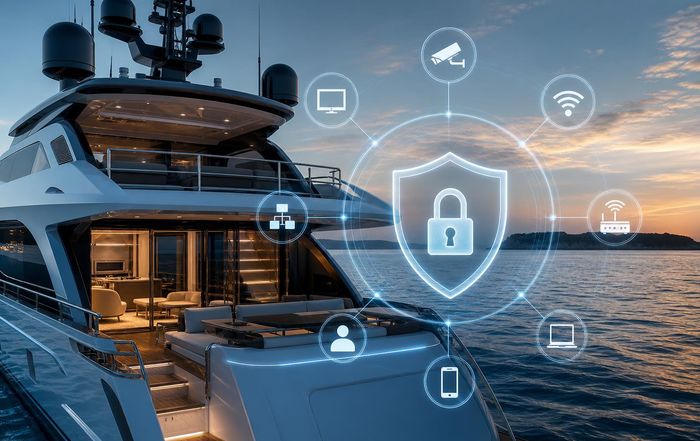
Cybersecurity Essentials for Connected Yachts
The New Reality of Connected Yachting
As superyachts, expedition vessels, and even mid-sized cruising yachts become increasingly connected, cybersecurity has shifted from a technical afterthought to a core element of safe and responsible yacht ownership. High-bandwidth VSAT and 5G links, cloud-based maintenance platforms, remote monitoring of engines and hotel systems, and pervasive use of personal devices on board have collectively transformed a yacht into a floating, high-value node on the global internet. For the boat owners, captains, and managers who rely on Yacht Review for daily updated informed perspectives on boats, cruising, and technology, the implications are clear: cyber risk management is now as integral to yachting as navigation or mechanical reliability.
Over the past decade, the maritime sector has seen a steady rise in reported cyber incidents. The International Maritime Organization (IMO) adopted mandatory cyber risk management requirements for commercial shipping under the ISM Code, which came into effect in 2021, and although private yachts generally fall outside these regulations, the threat landscape is similar. Reports by organizations such as BIMCO and the Maritime and Port Authority of Singapore indicate that phishing, ransomware, and unauthorized access to onboard systems are among the most common attack vectors across the broader maritime industry, with wealthy individuals and high-profile vessels presenting particularly attractive targets.
Yachts today typically integrate navigation suites, satellite communications, entertainment systems, building management systems, and crew and guest networks into a complex digital ecosystem. This convergence delivers remarkable comfort and operational efficiency, but it also creates multiple points of vulnerability. Understanding the essentials of cybersecurity for connected yachts is therefore an essential competence for owners and professionals who wish to protect not only their vessels but also their privacy, reputation, and business interests.
Understanding the Cyber Threat Landscape at Sea
Unlike traditional corporate networks, a yacht's digital footprint is distributed between shore-based service providers, onboard systems, and personal devices carried by guests and crew. Each of these layers presents distinct risks that must be addressed in a coordinated manner.
Industry case studies compiled by organizations such as Lloyd's Register and DNV show that the most frequent maritime cyber incidents involve social engineering attacks, malware introduced through email or removable media, and misconfigured remote access solutions for service technicians. While public reporting on yacht-specific cyber breaches is limited due to privacy concerns, security firms and classification societies have highlighted several realistic scenarios: unauthorized access to navigation displays, disruption of satellite connectivity, theft of personal data or financial information, and covert monitoring of communications and onboard cameras.
In parallel, the proliferation of Internet of Things (IoT) devices on board, from smart lighting and HVAC to fitness equipment and entertainment systems, has expanded the attack surface. Many of these devices are designed for residential use and may not be hardened for maritime or high-security environments. As ENISA, the European Union Agency for Cybersecurity, has frequently noted in its sectoral threat assessments, insecure IoT deployments are a recurring weak point across industries, and yachting is no exception.
For yacht owners and managers, this evolving threat landscape demands a systematic view of onboard technology. A modern yacht is no longer just a platform for cruising and lifestyle; it is also a complex digital asset that must be protected with the same discipline that would be applied to a high-end corporate network or a sensitive family office environment. Readers seeking broader context on how this affects cruising operations can find complementary perspectives in the 100% original technology-focused features at Yacht-Review.com's technology section.
Core Principles of Cybersecurity for Yachts
Effective cybersecurity at sea is built on a set of principles that are well established in the wider information security community but must be tailored to the specific conditions and constraints of yachting. At its core, cyber risk management for yachts is about identifying critical assets, understanding how they are connected, and applying proportionate controls that do not compromise the onboard experience.
The first principle is network segmentation. Rather than allowing navigation systems, operational technology, crew administration, and guest entertainment to coexist on a flat network, best practice is to separate these functions into distinct, logically isolated segments with tightly controlled pathways between them. Guidance from classification societies such as Bureau Veritas and ABS emphasizes that safety-critical systems should be segregated from non-critical networks to reduce the likelihood that a compromise of a personal device or entertainment system could propagate to navigation or engine controls.
The second principle is strong identity and access management. This includes robust password policies, multi-factor authentication for remote access, and clear allocation of privileges so that only authorized personnel can configure critical systems. The National Institute of Standards and Technology (NIST) provides widely referenced frameworks for access control that can be adapted to maritime environments, and security consultancies increasingly offer yacht-specific interpretations of these standards.
The third principle is defense in depth. No single measure can guarantee security, so owners and managers are encouraged to implement multiple layers of protection, including firewalls, endpoint protection, intrusion detection, secure configuration of satellite and 5G routers, and regular monitoring of network activity. These controls should be complemented by procedural safeguards such as change management, documented incident response plans, and regular testing.
Finally, cybersecurity must be treated as a living process rather than a one-time project. As software, devices, and user behavior change, so too does the risk profile. Continuous improvement, informed by evolving industry guidance from bodies like the IMO and INTERTANKO, is essential. For readers interested in how such continuous improvement mirrors broader best practice in sustainable and resilient business operations, resources from organizations like the World Economic Forum provide useful context on how cyber resilience is becoming a core component of global risk management.
Protecting Navigation and Operational Technology
Among all onboard systems, navigation and operational technology (OT) require the highest level of protection because they directly affect the safety of the vessel and those on board. Modern integrated bridge systems, dynamic positioning, autopilots, and electronic chart display and information systems (ECDIS) are deeply interconnected and often receive data from external sources, including GPS, AIS, radar, and shore-based services.
Multiple research initiatives, including work by NATO's Cooperative Cyber Defence Centre of Excellence and academic institutions, have demonstrated that GPS signals can be spoofed or jammed, potentially causing a vessel's displayed position to deviate from reality. While such incidents have been more widely documented in commercial and governmental contexts, the underlying vulnerabilities are shared by yachts that rely on the same satellite navigation infrastructure. To mitigate these risks, many security experts recommend maintaining traditional navigation skills, cross-checking positions using independent sensors, and ensuring that bridge teams are trained to recognize anomalous behavior in digital systems.
Operational technology includes engine management systems, power distribution, stabilizers, thrusters, and hotel services such as HVAC. These systems are increasingly connected to monitoring platforms that allow remote diagnostics and software updates by manufacturers and service providers. While this connectivity can significantly improve uptime and reduce maintenance costs, it also introduces potential pathways for unauthorized access if remote connections are not tightly controlled.
Best practice in this domain includes strict control of remote access, use of encrypted channels, and the application of security patches and firmware updates in a structured manner. Classification societies and specialized maritime cybersecurity firms have begun to offer OT security assessments tailored to yachts, often aligned with broader standards such as IEC 62443. For owners and captains exploring newbuild or refit projects, integrating OT security considerations into the design phase can be more effective and economical than retrofitting protections later, a topic that aligns closely with the design insights regularly explored in Yacht-Review.com's inspiring design features.
Securing Connectivity, Wi-Fi, and Guest Networks
The guest experience on a luxury yacht increasingly depends on seamless, high-speed connectivity. Video conferencing, streaming media, online gaming, and real-time business activity are now expected as standard, whether the yacht is in the Mediterranean, the Caribbean, or remote expedition regions. This reliance on connectivity creates a complex security challenge, as the yacht's communication links are simultaneously business-critical, privacy-sensitive, and a potential attack surface.
Satellite communications providers and maritime IT integrators have responded by offering managed cybersecurity services that include secure gateways, traffic monitoring, and content filtering. Organizations such as Inmarsat and KVH have introduced solutions that bundle connectivity with security features designed for vessels, although owners and managers should carefully review the scope and limitations of these offerings. Independent testing and third-party audits can provide additional assurance that service-level commitments align with actual risk reduction.
Onboard, Wi-Fi networks should be designed to separate guest traffic from crew and operational systems. This often involves multiple SSIDs, virtual LANs, and quality-of-service configurations that balance performance with security. It is also prudent to establish clear usage policies for guests and to provide secure channels, such as virtual private networks (VPNs), for sensitive business communications conducted from the yacht.
The proliferation of personal devices means that the yacht's network must be resilient against potentially compromised smartphones, tablets, and laptops. Industry best practices recommend up-to-date endpoint protection, careful management of USB and removable media, and, where appropriate, mobile device management solutions for crew-issued equipment. Readers who wish to understand how these technical measures translate into real-world cruising comfort can find practical narratives in Yacht-Review.com's lovingly created cruising coverage, where connectivity is increasingly discussed alongside range, seakeeping, and onboard amenities.
Data Privacy, Personal Security, and Reputation
For many yacht owners, the most sensitive aspect of cybersecurity is not the vessel itself but the personal and business information that flows through it. Private communications, financial transactions, health data, and location information can all be of interest to cybercriminals, the media, or other parties seeking leverage or publicity. High-profile cases in other luxury sectors have shown how data breaches can rapidly escalate into reputational crises.
Data privacy on yachts involves both technical and organizational measures. Encryption of data in transit and at rest, secure configuration of email and messaging platforms, and careful management of access to surveillance and monitoring systems are all essential. At the same time, owners and family offices often work with multiple advisors, management companies, and service providers, each of which may have some level of access to onboard systems or data. Contracts and service-level agreements should therefore explicitly address cybersecurity responsibilities, incident reporting, and data handling practices.
Regulatory frameworks such as the EU General Data Protection Regulation (GDPR) have extraterritorial reach and may apply to yachts that process personal data of EU residents, regardless of flag. Legal and compliance advisors increasingly recommend that yacht operations adopt privacy-by-design principles, ensuring that new systems and services consider data protection from the outset. For a broader look at how privacy and compliance intersect with maritime business models, readers can explore the business-oriented insights at Yacht-Review.com's business section.
Physical security and cybersecurity are also converging. Modern yachts often integrate access control, CCTV, and alarm systems with digital platforms accessible from bridge consoles, crew workstations, and mobile devices. While this integration enhances situational awareness and convenience, it must be carefully secured to prevent unauthorized surveillance or manipulation. Security professionals advise strict control over who can view and manage camera feeds, as well as regular reviews of logs and access histories.
Building a Cyber-Aware Crew Culture
Technology alone cannot secure a connected yacht. Human behavior is frequently the determining factor in whether an attempted attack succeeds or fails. Phishing emails, fraudulent invoices, and social engineering attempts that target crew members are among the most common vectors for initial compromise in maritime and corporate environments alike, as documented in annual threat reports by organizations such as Verizon and IBM Security.
Developing a cyber-aware culture on board involves regular training, clear procedures, and leadership commitment from the captain and management company. Crew should be able to recognize suspicious emails, understand the importance of software updates and secure passwords, and know how to respond if they suspect a compromise. Training can be integrated into existing safety management systems and drills, reinforcing the message that cybersecurity is an integral part of overall vessel safety.
Some maritime academies and professional training providers have begun offering specialized courses in maritime cybersecurity, and there is a growing body of guidance from associations such as Superyacht UK and IAMI on integrating cyber awareness into crew development. Owners and captains who invest in such training not only reduce risk but also enhance the professionalism and career prospects of their crew, contributing to a more resilient and attractive working environment.
From a lifestyle perspective, a well-trained crew can maintain a discreet and unobtrusive security posture that protects guests without detracting from the sense of freedom and relaxation that defines luxury yachting. This balance between discretion and diligence is a recurring theme in the carefully written lifestyle content at Yacht-Review.com's lifestyle pages, where the human dimension of yachting is always central.
Integrating Cybersecurity into Yacht Design, Refits, and Reviews
The most effective cybersecurity strategies are those that are integrated from the earliest stages of yacht design and specification. Naval architects, interior designers, and systems integrators increasingly collaborate with cybersecurity specialists to ensure that network topologies, equipment choices, and control system architectures support secure operation over the vessel's lifecycle.
Newbuild projects now commonly include dedicated IT and AV racks, structured cabling designed for future upgrades, and forward-looking provisions for satellite and 5G connectivity. By engaging security expertise early, owners can avoid costly retrofits and ensure that critical systems are logically separated from guest-facing technologies. Classification societies and flag states are also beginning to offer voluntary notations or guidelines for cyber-resilient design, which can serve as useful benchmarks during specification and build.
For existing yachts, refits present an ideal opportunity to modernize cybersecurity. Upgrading to next-generation satellite antennas, replacing legacy switches and routers, and consolidating disparate OT systems under a secure, monitored architecture can dramatically improve the vessel's security posture. Refit yards that specialize in complex technological upgrades are increasingly familiar with these requirements and often partner with specialized maritime IT firms to deliver integrated solutions.
From an expert editorial perspective at Yacht Review, cybersecurity considerations are progressively becoming part of how yachts are evaluated in boat and yacht reviews. While performance, comfort, and aesthetics remain central, the ability of a yacht's digital infrastructure to support safe, private, and seamless experiences is now an important dimension of quality. Owners and charterers who prioritize cyber-resilient design are likely to see long-term benefits in reliability, resale value, and guest confidence.
Sustainability, Responsible Ownership, and Cyber Resilience
Sustainability in yachting is often associated with hybrid propulsion, alternative fuels, and reduced environmental impact, but a broader view of responsible ownership also encompasses social and governance dimensions, including cybersecurity. As frameworks such as ESG (Environmental, Social, and Governance) become more relevant to family offices and corporate owners, cyber resilience is increasingly recognized as a governance priority.
Secure digital systems support more efficient operations, enabling optimized routing, predictive maintenance, and intelligent energy management. These capabilities, in turn, can reduce fuel consumption and emissions, aligning with the objectives of organizations such as the Water Revolution Foundation, which promotes sustainability in the superyacht industry. Learn more about sustainable business practices through resources from bodies like the UN Global Compact, which highlight the role of resilient infrastructure and responsible technology use in broader sustainability goals.
From the perspective of Yacht-Review.com, cybersecurity is therefore not only a technical requirement but also an element of sustainable yachting culture. Owners who invest in secure, efficient, and well-governed digital infrastructure contribute to a more resilient industry ecosystem. This perspective complements the environmental and social themes explored in our dedicated sustainability coverage, where technology, stewardship, and long-term thinking intersect.
Practical Steps for Owners, Captains, and Managers
Translating cybersecurity principles into action on board a yacht requires a structured approach. While each vessel is unique in size, configuration, and usage profile, several practical steps are widely recommended by maritime cybersecurity experts and industry bodies.
A comprehensive cyber risk assessment is an essential starting point. This involves mapping onboard systems, identifying critical assets, and evaluating current controls. External specialists with maritime experience can provide an objective view and benchmark the yacht against industry norms. The assessment should consider not only technical infrastructure but also policies, crew behaviors, and relationships with third-party service providers.
Based on this assessment, a prioritized improvement plan can be developed. Typical measures include strengthening network segmentation, implementing or enhancing firewalls and intrusion detection, updating or replacing unsupported hardware and software, and formalizing procedures for access control and incident response. Regular backup strategies, including offline backups of critical configurations and data, are also fundamental.
Engaging with reputable classification societies, flag states, and industry associations can help ensure that the yacht's cybersecurity posture remains aligned with evolving best practices. Publications from organizations such as ICS (International Chamber of Shipping) and BIMCO provide sector-specific guidance that can be adapted to private vessels. For global perspectives on how different regions and markets are approaching maritime security and digitalization, readers may find additional context in Yacht-Review.com's global features and news coverage.
Finally, cybersecurity should be integrated into routine operations. This includes regular patching cycles, periodic penetration testing or vulnerability scanning, ongoing crew training, and clear channels for reporting and responding to incidents. Owners and captains who embed these practices into their management culture will find that cybersecurity becomes a natural, unobtrusive part of running a sophisticated yacht, rather than an occasional, disruptive concern.
The Future of Secure, Connected Yachting
Looking ahead, the digital transformation of yachting is set to accelerate. Emerging technologies such as low-Earth-orbit satellite constellations, edge computing, advanced remote diagnostics, and AI-assisted navigation promise to make yachts more connected, autonomous, and data-driven than ever before. Regulatory and insurance frameworks are also evolving, with underwriters increasingly scrutinizing cybersecurity controls as part of risk assessment.
This trajectory presents both opportunity and responsibility. Owners who embrace cybersecurity as a strategic enabler rather than a constraint will be well positioned to take advantage of new capabilities, from immersive onboard experiences to long-range, data-rich expedition cruising. At the same time, a commitment to protecting guests, crew, and digital assets will become an integral part of what it means to operate a world-class yacht.
For Yacht Review, the intersection of boats, technology, lifestyle, and global travel remains central to our editorial mission. As connected yachts become the norm, we will continue to explore how cybersecurity shapes design, operations, and the overall experience of life at sea. Readers interested in how these themes play out across different regions and cruising grounds can follow our always updated evolving coverage in travel features, boats and models, and broader industry reflections on yachting's history and future.
In this rapidly changing environment, one constant remains: the desire for freedom, privacy, and excellence that has always defined the yachting lifestyle. By treating cybersecurity as a core component of that vision, today's owners and professionals can ensure that connected yachts remain not only marvels of engineering and design, but also secure and trusted havens on the world's oceans.