

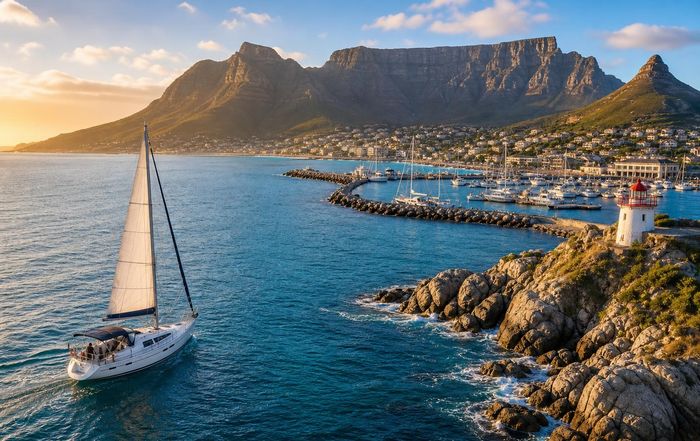
South Africa Yacht Cruising Routes and Harbors: A Strategic Gateway Between Oceans
South Africa occupies a singular position on the global yachting map, standing at the meeting point of the Atlantic and Indian Oceans and offering a combination of blue-water passages, modern marinas and authentic coastal culture that few other regions can match. For yacht owners, captains and charter professionals, the country has evolved from a remote waypoint on a world circumnavigation into a destination in its own right, with established cruising routes, refit expertise and a growing ecosystem of marine services that support both leisure and expedition cruising.
For readers of yacht-review.com, South Africa's coastline presents an increasingly compelling proposition: a place where ocean passages, coastal cruising, wildlife encounters and business opportunities intersect, framed by a maturing regulatory environment and a strong emphasis on seamanship and safety.
Strategic Position: A Natural Hub for Global Cruising
Geographically, South Africa's appeal begins with its location. The Cape sea route remains one of the world's principal blue-water corridors, used by private yachts, commercial shipping and expedition vessels that opt to avoid the Suez Canal or combine Atlantic and Indian Ocean cruising seasons. The passage around Cape Agulhas and the Cape of Good Hope has long been recognized by ocean navigators and is still carefully documented by institutions such as the UK Hydrographic Office, which provides updated Admiralty charts and sailing directions for the region.
For long-range cruisers moving between Europe and the Indian Ocean, or between the Caribbean and the Pacific via the Cape, South Africa offers deepwater harbors, established marinas and reliable repair infrastructure at key points along the coast. The country's position also makes it an attractive staging ground for high-latitude expeditions to the Southern Ocean, with Cape Town frequently serving as a logistical base for scientific missions and adventure voyages. The South African Maritime Safety Authority (SAMSA) and the South African Weather Service publish detailed guidance and forecasts that are widely consulted by professional and private captains planning these passages.
From a global cruising perspective, South Africa therefore functions not only as a waypoint but as a complete cruising region, with its own network of coastal routes that can be explored over a season or integrated into a multi-year world itinerary. Readers planning such itineraries can find broader context on worldwide routes and destination patterns in the global coverage on Yacht Review's cruising pages.
Western Cape and Cape Town: Blue-Water Hub and Lifestyle Destination
Cape Town remains the primary gateway for most yachts arriving from the South Atlantic. The city combines a sophisticated marine infrastructure with a cosmopolitan lifestyle, making it attractive both as a technical stop and as a longer-term base.
The Victoria & Alfred Waterfront marina, adjacent to the city's historic harbor, is one of the best-known facilities for visiting superyachts and performance cruising yachts. It offers secure berthing, direct access to the central business district and proximity to refit yards and specialized marine suppliers. According to information published by V&A Waterfront and independent yachting guides, services in the area include haul-out facilities, sailmaking, electronics, rigging and composite repairs, reflecting a legacy of local boatbuilding that has produced a number of internationally recognized racing and cruising designs over the decades.
Cape Town also serves as a focal point for the regional racing and regatta calendar, with events such as the Cape to Rio Yacht Race and the Cape Town to St Helena race periodically drawing international fleets. While dates and formats vary by edition and should be confirmed with the organizing clubs, these offshore races help maintain a culture of serious ocean sailing in local waters. For business readers, this racing tradition underpins a cluster of marine engineering, sailmaking and performance-optimization companies that export expertise well beyond South Africa's borders. Those interested in broader industry dynamics can explore additional sector analysis on Yacht Review's business section.
From a cruising perspective, the Western Cape coastline offers a series of day and short-hop routes from Cape Town. Yachts can explore False Bay, visiting Simon's Town and Kalk Bay, or continue along the Atlantic seaboard toward Hout Bay and the scenic Chapman's Peak coast. Conditions in this region can be demanding, with strong south-easterly winds in the summer months and powerful frontal systems in winter, so passage planning typically relies heavily on resources such as the South African Weather Service marine forecasts and global routing tools provided by organizations like NOAA for broader oceanic context.
Garden Route and Southern Coast: Scenic Harbors and Seasonal Windows
East of Cape Town, the so-called Garden Route stretches along the Southern Cape, offering some of the most visually striking coastal cruising in the country. Harbors such as Mossel Bay, Knysna and Plettenberg Bay, along with larger ports like Port Elizabeth (now officially Gqeberha) and East London, provide a combination of sheltered anchorages, marinas and yacht clubs that support coastal itineraries.
Knysna, in particular, is frequently highlighted in cruising literature for its lagoon and waterfront, but also for the notoriously challenging entrance known as the Knysna Heads. Local pilotage advice, tide awareness and careful weather assessment are essential, and many visiting captains prudently consult local yacht clubs or experienced pilots before attempting the passage. The Royal Cape Yacht Club and regional cruising associations often share guidance, and conservative seamanship remains the norm, reinforcing the broader culture of risk management that characterizes South African coastal sailing.
Mossel Bay and Gqeberha serve as more straightforward stopovers, with commercial ports and marina facilities that can accommodate visiting cruising yachts. Over recent years, port authorities and local tourism boards have promoted these destinations as part of a broader strategy to diversify coastal tourism. Information from South African Tourism and regional development agencies indicates that marinas and waterfronts have been integrated into urban renewal and hospitality projects, a trend that mirrors waterfront regeneration in many international yachting centers. Readers interested in how such developments compare with other regions can find contextual design and urban integration discussions on Yacht Review's design pages.
Seasonality is a defining feature of cruising along the southern coast. The dominant Agulhas Current, which flows south-westward along the east coast before turning south and then eastward into the Indian Ocean, interacts with local winds to create conditions that can range from benign to highly challenging in short order. Many experienced skippers plan passages along this stretch using short weather windows, often moving from port to port in step with favorable wind shifts. Authoritative guidance on the current and associated weather patterns is available from scientific and navigational sources such as the South African Environmental Observation Network and academic publications referenced by organizations like WMO, which underscore the importance of understanding mesoscale oceanography when operating in these waters.
Durban, Richards Bay and the East Coast: Gateway to the Indian Ocean
On the east coast, Durban and Richards Bay are the principal harbors for yachts transiting between the Indian Ocean and the Cape. Durban, situated in KwaZulu-Natal, is home to a large commercial port, a well-established yacht basin and several active yacht clubs that support both racing and cruising communities. The city's subtropical climate, extensive marine services and international air links make it a logical base for Indian Ocean-bound yachts to prepare for passages to destinations such as Mauritius, Réunion, Madagascar and beyond.
Richards Bay, further north, is another deepwater port frequently used by cruising yachts, particularly those arriving from or departing to Mozambique and the western Indian Ocean islands. The marina and yacht club facilities here are valued for their relative shelter and proximity to natural attractions, including game reserves and coastal wetlands. For yacht owners and charter guests, this proximity to wildlife experiences is a key differentiator: itineraries can be structured to combine blue-water sailing with land-based safaris, creating integrated travel experiences that appeal to high-net-worth clients seeking diversified leisure portfolios. Those planning such combined sea-and-land journeys may find additional travel inspiration and comparative destination insights through Yacht Review's travel coverage.
The east coast cruising season is shaped by the behavior of the Agulhas Current and the passage of weather systems originating in the Southern Ocean. The current can reach significant velocities, and when strong south-westerly winds oppose it, steep and dangerous seas can develop. Consequently, local and visiting yachts routinely rely on specialized weather routing, including services referenced by PredictWind and official bulletins from the South African Weather Service, to choose departure windows and manage risk. This emphasis on data-driven seamanship aligns with broader trends in performance cruising and offshore racing, where technology and meteorology increasingly converge to support safety and efficiency.
Harbors, Marinas and Supporting Infrastructure
Across the major South African ports, the infrastructure available to visiting yachts has steadily improved, supported by both public investment and private-sector initiatives. In Cape Town, Durban, Richards Bay and selected secondary ports, visitors can generally expect access to secure berths, fuel, water, provisioning, and technical services ranging from routine maintenance to full-scale refit projects. South Africa's cost base, relative to many traditional yachting centers in Europe and North America, has historically made it an attractive location for complex refits and custom work, particularly for sailing yachts and expedition vessels that require robust structural and mechanical upgrades.
The country has a long-standing boatbuilding industry, with companies that have produced cruising catamarans, monohulls and commercial craft for export markets. Independent reporting from industry bodies and trade shows such as boot Düsseldorf has periodically highlighted South African-built catamarans and blue-water cruisers, reinforcing the reputation of local yards for solid construction and seakeeping. For yacht owners considering refit or new build projects in the region, it is advisable to review recent references, classification approvals and project portfolios, in line with best practices discussed across Yacht Review's boats and reviews content.
Marina developments have also increasingly incorporated lifestyle components, with waterfront retail, dining and hospitality integrated into harbors such as the V&A Waterfront and select coastal towns. This reflects a global trend in which marinas serve not only as technical hubs but as lifestyle destinations that support crew welfare, owner enjoyment and charter guest experience. The presence of international hotel brands, fine dining and cultural attractions in proximity to berths can significantly enhance the perceived value of a port call, particularly for time-constrained itineraries.
Safety, Regulation and Seamanship Culture
South Africa's maritime regulatory environment is shaped by SAMSA, which oversees safety standards, vessel certification and certain aspects of port state control, in coordination with international conventions administered by the International Maritime Organization (IMO). Visiting yachts are expected to comply with local entry procedures, safety regulations and customs requirements, and many captains choose to work with local agents to streamline formalities, especially when coordinating crew changes, spares shipments or extended lay-ups.
The coast's reputation for strong winds, powerful currents and occasionally severe sea states has fostered a culture of prudent seamanship. Local yacht clubs and cruising associations emphasize preparation, redundancy and conservative routing, and offshore racing regulations applied in South African events often mirror or exceed international standards. For professional skippers and owners used to Mediterranean or Caribbean conditions, the South African environment can be both invigorating and demanding, requiring careful adaptation of operating procedures and crew training. Broader discussions of seamanship, technology and safety trends in the yachting sector can be explored in more depth on Yacht Review's technology section.
Night entries into unfamiliar ports, especially smaller harbors along the Garden Route or Wild Coast, are often avoided due to unlit hazards, swell and shifting sandbars. This conservative approach, supported by local pilot books and updated charting from providers such as Navionics and national hydrographic offices, reinforces the importance of planning and local knowledge. The emphasis on safety and responsible decision-making contributes to the overall trustworthiness of South Africa as a cruising region, provided that visiting yachts respect the conditions and seek appropriate guidance.
Lifestyle, Culture and Onshore Experiences
Beyond its navigational and technical attributes, South Africa offers a distinctive lifestyle proposition that can enrich any cruising itinerary. Cape Town's combination of Table Mountain, wine regions, design-forward hospitality and cultural institutions has been recognized by international travel media, including Condé Nast Traveler, as a leading global city destination. For yacht owners and guests, the ability to step ashore from a central marina into a vibrant urban environment with world-class dining, art and entertainment adds significant experiential value.
Along the Garden Route and east coast, smaller towns and coastal communities provide a different rhythm, characterized by nature-focused activities, local cuisine and a more relaxed pace. Access to wildlife reserves, marine protected areas and coastal hiking routes allows itineraries to blend time on the water with land-based exploration. In KwaZulu-Natal and the Eastern Cape, safari lodges and reserves are within reach of ports such as Durban, Richards Bay and Gqeberha, enabling curated experiences that align with the expectations of discerning international travelers.
For families cruising together, the combination of safe anchorages in selected areas, accessible shore excursions and educational wildlife encounters can be particularly attractive. Those considering extended family cruising programs may wish to consult broader lifestyle and family-oriented insights available on Yacht Review's lifestyle pages and family-focused content, which explore how multi-generational travel is reshaping expectations in the yachting sector.
Sustainability and Marine Conservation
As in many parts of the world, sustainability has become an increasingly important consideration in South African marine and coastal management. The country maintains a network of marine protected areas, including sites such as the Table Mountain National Park Marine Protected Area and the iSimangaliso Wetland Park, which aim to conserve biodiversity while allowing for regulated recreational use. Regulations typically restrict certain activities, and visiting yachts are encouraged to familiarize themselves with local rules regarding anchoring, fishing and waste management.
Organizations such as WWF South Africa and academic institutions actively research and advocate for the protection of marine ecosystems, including iconic species such as great white sharks, whales and penguins that are frequently encountered in South African waters. For yacht operators, aligning with these conservation objectives can involve practical measures such as minimizing disturbance to wildlife, avoiding sensitive breeding areas, and adopting best practices in waste disposal and fuel management.
The global shift toward more sustainable yachting-encompassing hybrid propulsion, alternative fuels, improved hull efficiency and on-board waste treatment-has begun to influence discussions within the South African marine industry as well. Local yards and service providers are increasingly aware of international environmental standards and owner expectations, and there is growing interest in how South Africa can position itself as a responsible hub for refit and cruising. Readers seeking a broader perspective on environmental performance and innovation in yachting can learn more about sustainable business practices and operational strategies through Yacht Review's sustainability coverage.
Business Opportunities and Emerging Trends
From a business standpoint, South Africa's yachting sector sits at the intersection of tourism, manufacturing, services and infrastructure investment. The presence of established boatbuilders, repair yards and sailmakers, combined with a relatively competitive cost structure, has historically attracted international owners and commercial operators seeking value in refit and construction projects. Trade data and industry commentary referenced by organizations such as Icomia and regional marine associations indicate that South African-built catamarans and blue-water cruisers maintain a notable presence in global markets.
Tourism authorities and private developers have also recognized the potential of marinas and waterfronts as catalysts for regional development. Projects that integrate berthing, hospitality and residential components are being explored or expanded in several coastal cities, aligning with international trends in mixed-use waterfront design. For investors and stakeholders, the key questions revolve around regulatory stability, infrastructure resilience and the integration of sustainability principles into long-term planning.
At the same time, global trends in expedition and adventure yachting are likely to benefit South Africa's position as a staging ground for Southern Ocean and Indian Ocean voyages. As more owners and charter clients seek itineraries that extend beyond traditional Mediterranean and Caribbean circuits, the demand for capable refit facilities, experienced crew and high-quality provisioning in gateway locations like Cape Town and Durban is expected to grow. Readers interested in tracking such developments across the global market can follow ongoing updates in Yacht Review's news section and global insights.
Integrating South Africa into a Global Cruising Strategy
For yacht owners and captains considering South Africa as part of a global cruising plan, the country offers a combination of strategic advantages and operational considerations. Its ports and marinas provide essential support for long passages between oceans, while the diversity of coastal routes allows for rewarding regional cruising during favorable seasons. The strength of local seamanship culture, the availability of technical services and the richness of onshore experiences make it an attractive destination for those willing to engage with its dynamic conditions.
Successful integration of South Africa into a broader itinerary typically involves careful attention to seasonal weather patterns, particularly along the southern and eastern coasts, as well as compliance with regulatory and conservation frameworks. Partnerships with local agents, yacht clubs and service providers can significantly enhance both safety and enjoyment, and many experienced world cruisers report that local knowledge is one of the most valuable assets available in this region.
For the yacht-review.com audience, South Africa represents more than a waypoint on a chart. It is a living maritime environment where history, business, design, lifestyle and sustainability converge, offering a depth of experience that rewards thoughtful planning and professional execution. Whether approached as a refit hub, a seasonal cruising ground or a strategic link between oceans, the country stands as a compelling example of how emerging yachting regions can combine natural geography with human expertise to create enduring value for the global yachting community.
Those exploring potential routes, vessel choices and design considerations for South African and long-range cruising can draw on the broader perspectives, reviews and historical context available across Yacht Review's reviews, history and main site, using the insights gathered there to shape informed, resilient and inspiring cruising strategies that make the most of this remarkable corner of the maritime world.