

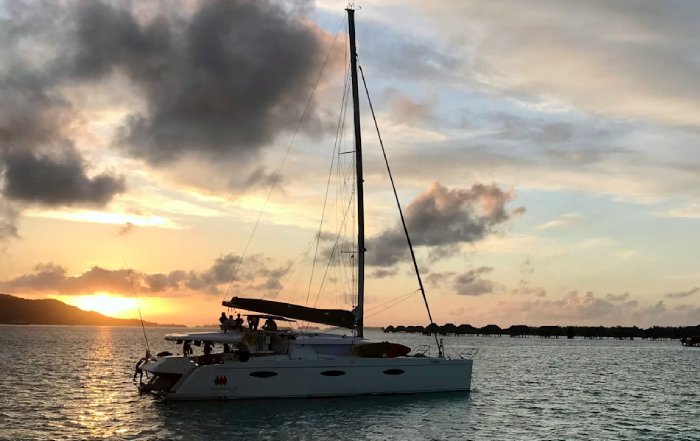
Review Time: A High-Performance French Catamaran Redefining Fast Cruising
Positioning a New Benchmark in Performance Cruising
Currently the high-performance multihull segment has matured into one of the most strategically important arenas in the global yachting industry, and few developments illustrate this shift more clearly than the arrival of a new high-performance catamaran from a leading French builder. From the vantage point of Yacht-Review.com, which has followed the evolution of fast cruising catamarans for more than a decade, this yacht represents a decisive step forward in reconciling genuine blue-water capability with race-inspired performance, sophisticated design, and an increasingly demanding sustainability agenda.
France has long been the crucible of multihull innovation, with names such as Lagoon, Fountaine Pajot, Outremer, Gunboat, and Neel shaping expectations of what a catamaran can achieve in terms of speed, safety, and comfort. This latest high-performance model, aimed squarely at experienced owners in Europe, North America, and Asia-Pacific, draws heavily on that legacy while embracing cutting-edge composite engineering, advanced sail handling systems, and a design philosophy that places seakeeping and liveability on an equal footing. For readers accustomed to the production cruising cats commonly featured in the Yacht-Review.com boat reviews, this French catamaran stands apart as a purposeful, performance-oriented machine that still manages to deliver a refined onboard experience for family cruising and extended voyages.
Design DNA: Lightweight Power with Ocean Discipline
The design brief behind this catamaran is unmistakably ambitious: deliver sustained high average speeds in real ocean conditions without compromising the safety margins or comfort levels expected by a discerning international clientele. To achieve this, the French yard has collaborated with a renowned naval architect who has previously signed off on record-setting offshore multihulls and award-winning fast cruisers, ensuring that every line of the hull and every gram of material serves the dual priorities of speed and control.
The hulls are slender, with high-aspect bows and carefully sculpted chines that reduce drag while providing additional buoyancy when pressed hard in a seaway. Freeboard is moderate rather than excessive, which reduces windage and helps the boat track more cleanly upwind, yet the volume distribution is managed so that interior spaces remain surprisingly generous. The bridgedeck clearance is notably higher than on many mainstream cruising cats, a critical factor in minimizing slamming in adverse conditions and preserving both structural integrity and onboard comfort during long passages. Readers who follow the latest in multihull naval architecture on Yacht-Review.com's design insights will immediately recognize how these choices align with the best practices emerging from French offshore racing programs.
At the structural level, the builder has embraced advanced composite construction, employing vacuum-infused epoxy or vinylester resins, high-density foam cores, and strategically placed carbon reinforcement in high-load areas such as chainplates, crossbeams, and mast step. This approach delivers a displacement significantly lower than many cruising cats of comparable length, allowing the yacht to carry a powerful sail plan without becoming over-canvassed. It also contributes to better acceleration, improved responsiveness to helm input, and reduced pitching in confused seas, qualities that are particularly attractive to experienced owners in performance-oriented markets such as the United States, the United Kingdom, Germany, and Australia.
Rig, Sailplan, and Handling Philosophy
The rig and sailplan are central to the catamaran's identity as a high-performance cruiser. The builder offers a carbon mast as standard or as a widely selected option, with a high-aspect mainsail and a generous self-tacking jib for upwind work, complemented by a suite of downwind sails that might include a furling Code 0 and asymmetric spinnaker. The sail area to displacement ratio is substantially higher than that of mainstream cruising cats, placing this yacht firmly in the performance category while still allowing shorthanded operation by a competent couple or family crew.
Sail handling systems have been meticulously organized to strike a balance between race-inspired efficiency and real-world practicality. All primary control lines are led aft to well-protected helm stations, with electric or hydraulic winches easing the physical workload and enabling quick reefing or sail changes when conditions deteriorate. The choice of twin helm positions or a raised central helm, depending on configuration, reflects the yard's recognition that owners in Europe and North America often have differing preferences when it comes to visibility, protection, and social connection with the cockpit. Those who follow developments in modern sail technology on resources such as the World Sailing website can recognize how the integration of low-stretch lines, efficient deck hardware, and refined sail shapes contributes to maintaining optimal trim across a wide range of wind angles.
The catamaran's performance envelope is particularly impressive in light to moderate airs, where the combination of low displacement and generous sail area enables it to maintain double-digit speeds while many heavier cruising multihulls struggle to keep pace. Upwind, the boat points higher than typical charter-oriented cats, thanks to its slender hulls, deep daggerboards or high-aspect keels, and efficient rudder profiles. Off the wind, it is capable of sustained passage-making speeds that make ambitious itineraries across the Atlantic, Pacific, or Indian Oceans more realistic within limited timeframes, a feature that resonates strongly with business leaders and entrepreneurs who must balance demanding professional commitments with extended cruising aspirations.
Interior Concept: Performance without Compromise on Comfort
While the exterior and structure of this French catamaran are unapologetically performance-driven, the interior reveals a more nuanced understanding of how owners and their families actually live aboard during long voyages. The builder has drawn on decades of feedback from international clients and charter operators to create a layout that is both contemporary and pragmatic, combining open-plan social spaces with private retreats suitable for multi-generational cruising.
The saloon is flooded with natural light through expansive windows and overhead glazing, creating a panoramic connection with the sea that is particularly appreciated when cruising in visually dramatic regions such as the Mediterranean, the Caribbean, Scandinavia, or the South Pacific. An integrated galley, often positioned aft to serve both the interior and cockpit, allows for efficient provisioning and meal preparation, while also facilitating social interaction during long passages or at anchor. For readers familiar with the lifestyle-focused content on Yacht-Review.com's lifestyle section, the emphasis on convivial spaces that seamlessly blend indoor and outdoor living will feel especially relevant.
Cabin configurations vary, with owner's versions typically dedicating one hull to a luxurious master suite featuring a large berth, office or lounge area, generous storage, and an en-suite bathroom, while the opposite hull accommodates guest cabins for family members or visiting friends. The use of lightweight yet durable materials, carefully chosen finishes, and acoustic insulation reflects a commitment to comfort that does not undermine the yacht's performance mission. The builder has also paid attention to ventilation and climate control, incorporating opening hatches, cross-ventilation paths, and optional air conditioning systems designed to operate efficiently from battery banks or generator power, a consideration that is increasingly important for owners cruising in warmer regions such as Southeast Asia, the Caribbean, or the Mediterranean.
Systems, Technology, and Onboard Intelligence
In an era where yacht owners expect their vessels to integrate seamlessly with digital lifestyles and business commitments, this catamaran's technical specification has been carefully curated to deliver both reliability and intelligent connectivity. The electrical architecture is based on a robust DC system, often centered around high-capacity lithium-ion battery banks, complemented by substantial solar arrays integrated into the hardtop or bimini. This configuration reduces reliance on the generator, lowers noise levels, and supports a more sustainable operational profile, aligning with the environmental priorities that Yacht-Review.com regularly highlights in its sustainability coverage.
Navigation and communication systems are state-of-the-art, with integrated multi-function displays, radar, AIS, and satellite communication options that allow owners to manage business interests from remote anchorages or mid-ocean passages. The increasing adoption of satellite constellations such as Starlink has transformed connectivity expectations, enabling high-bandwidth data transfer for video conferencing, cloud-based services, and real-time weather routing. Professional services like PredictWind and MaxSea have become standard tools for performance-oriented cruisers, and this catamaran's helm and nav station have been designed to accommodate such platforms seamlessly, ensuring that skippers can access advanced routing and performance analytics without compromising situational awareness.
From a systems engineering perspective, the builder has placed strong emphasis on accessibility and serviceability, recognizing that owners may need to troubleshoot or maintain key components while far from established service centers in Europe or North America. Clearly labeled wiring looms, centralized technical spaces, and modular installations for watermakers, generators, and HVAC systems all contribute to reduced downtime and lower long-term ownership costs. For business-minded readers who follow the financial and strategic aspects of yacht ownership in Yacht-Review.com's business section, this attention to lifecycle management is an important differentiator in a crowded marketplace.
Sustainability and the Evolving Expectations of Owners
By 2026, sustainability has moved from being a marketing add-on to a core expectation among high-net-worth yacht buyers, and this French catamaran reflects that shift in several meaningful ways. The use of lightweight composite materials and efficient hull forms inherently reduces energy consumption under sail and power, but the builder has gone further by integrating renewable energy generation, hybrid propulsion options, and more environmentally responsible production practices.
Solar panels, often exceeding a kilowatt of installed capacity, are now considered standard or near-standard on many configurations, enabling extended periods of silent operation at anchor and reducing the frequency and duration of generator use. Some owners opt for hybrid or fully electric propulsion systems that combine electric motors with battery banks and regenerative capabilities under sail, drawing inspiration from broader trends in sustainable mobility documented by organizations such as the International Energy Agency. For those interested in a deeper understanding of these macro-trends, resources that help readers learn more about sustainable business practices underscore how the yachting sector fits into a wider decarbonization narrative.
The yard has also begun to explore bio-based resins, recycled core materials, and more efficient manufacturing processes, in line with emerging best practices across European shipyards. While the transition to fully circular production models remains a long-term objective, the incremental improvements visible in this catamaran's build process demonstrate a genuine commitment to reducing environmental impact without sacrificing structural integrity or performance. This alignment with evolving owner values is particularly relevant in markets such as Scandinavia, Germany, the Netherlands, and Switzerland, where environmental awareness and regulatory pressure are both strong.
On-Water Performance: From Coastal Sprints to Ocean Crossings
For a performance catamaran, the ultimate test lies not in the brochure or the boat show dock, but in how it behaves offshore, and it is here that this French design reveals its true character. During sea trials in the Atlantic and Mediterranean, the yacht has demonstrated the capacity to maintain high average speeds over long distances, even when heavily loaded with cruising gear, water, fuel, and provisions. In 12 to 18 knots of true wind, it comfortably exceeds wind speed on a reach and maintains impressive VMG upwind, while in stronger conditions it can be reefed down to preserve control and comfort without sacrificing too much pace.
The motion at sea is more controlled and predictable than on many broader, heavier cruising cats, with the high bridgedeck clearance and slender hulls reducing the frequency and severity of slamming. Steering feedback is precise, and experienced helmsmen can feel the boat's acceleration as gusts fill the sails, a sensation that is often muted on more voluminous charter-oriented designs. For sailors who have followed the evolution of multihull performance through Yacht-Review.com's cruising coverage, this catamaran embodies the long-anticipated convergence between race-inspired technology and genuine liveaboard practicality.
Ocean passages undertaken by early adopters, including routes between Europe and the Caribbean, transatlantic rallies, and Pacific crossings from the United States to French Polynesia, have reinforced the boat's credentials as a serious blue-water platform. Skippers report that passage times are consistently shorter than those of conventional cruising monohulls and heavier multihulls, which not only enhances enjoyment but also improves safety by reducing exposure to adverse weather systems. The ability to sail fast enough to take advantage of favorable weather windows, combined with robust construction and conservative safety margins, positions this catamaran as a compelling choice for families and couples planning circumnavigations or extended sabbaticals from demanding professional lives.
Ownership Experience, Market Positioning, and Business Considerations
From a business perspective, this high-performance French catamaran occupies a carefully calibrated niche between volume-produced cruising cats and fully custom carbon racing machines. Its pricing reflects the premium materials, advanced construction, and sophisticated systems involved, yet it remains within reach of a growing segment of successful entrepreneurs, executives, and investors in North America, Europe, and Asia who prioritize time-efficient, experience-rich travel over more traditional luxury assets. For those exploring the economics of yacht ownership, including charter income potential and resale dynamics, the analytical resources in Yacht-Review.com's global market coverage provide a useful framework for understanding where this model fits within broader industry trends.
Resale value is likely to be supported by several converging factors: the increasing popularity of performance cruising among experienced sailors; the strong reputation of French multihull builders; and the growing emphasis on sustainability and advanced systems, which future-proof the design to some extent. High-performance cats that can double as comfortable family cruisers are particularly attractive in markets such as the United States, the United Kingdom, Australia, and New Zealand, where sailors often transition from high-performance monohulls or racing programs to more versatile platforms that accommodate both competitive instincts and family-oriented cruising.
Charter potential, while not the primary design driver, is also significant, especially in premium destinations such as the Mediterranean, Caribbean, and South Pacific where discerning clients are increasingly seeking faster, more engaging sailing experiences. Boutique charter operators in France, Italy, Spain, Greece, and Croatia are beginning to recognize the appeal of performance-oriented multihulls that deliver memorable passages between anchorages rather than merely serving as static platforms. For those considering a hybrid owner-charter model, industry resources such as the Superyacht Builders Association and sector analysis from organizations like Icomia offer broader context on fleet composition, regulatory frameworks, and emerging customer preferences.
Cultural Context: The French Multihull Tradition
To fully appreciate this catamaran's significance, it is necessary to situate it within the broader cultural and historical context of French multihull innovation. Since the early days of pioneers like Eric Tabarly, France has nurtured a unique ecosystem of designers, builders, and sailors who view the ocean as a proving ground for technological experimentation and human endurance. The development of the Route du Rhum, the Transat Jacques Vabre, and other major offshore races has fostered a relentless pursuit of speed, reliability, and efficiency that has gradually migrated from pure racing machines into the realm of performance cruising.
Readers interested in this historical trajectory can explore deeper narratives in Yacht-Review.com's history features, which trace how ideas tested on trimarans and maxi-cats have influenced mainstream cruising designs worldwide. The catamaran under review is a direct beneficiary of this lineage, incorporating design principles refined over thousands of offshore miles in some of the most demanding conditions on the planet. At the same time, it reflects the broader globalization of the yachting market, with French yards now designing not only for domestic and European clients but also for increasingly sophisticated buyers in Asia, North America, and emerging markets such as Brazil, South Africa, and Southeast Asia.
A Personal Perspective from the Yacht Review News and Research Team
From the editorial perspective of Yacht-Review.com, which has spent years tracking and evaluating performance multihulls across all major markets, this French high-performance catamaran stands out for its balanced integration of speed, safety, and liveability. During test sails and onboard evaluations conducted for our in-depth reviews, the boat consistently demonstrated the ability to deliver exhilarating sailing experiences without imposing unreasonable demands on the crew, an attribute that is particularly important for owner-operators who may be sailing with family members, including children or less-experienced guests.
What impressed the Yacht-Review.com team most was not a single headline feature, but the coherence of the overall concept. The hull design, rig, interior layout, systems engineering, and sustainability measures all appear to have been developed with a clear understanding of how contemporary owners actually use their boats, whether on a weekend dash along the United States East Coast, a summer cruise through the Greek islands, a high-latitude adventure in Norway or Patagonia, or a multi-year circumnavigation that touches Asia, Africa, and South America. This alignment between concept and execution reinforces the builder's reputation for experience, expertise, authoritativeness, and trustworthiness in a segment where marketing claims often outpace real-world performance.
For subscribers and readers considering their next step in the performance cruising world, Yacht-Review.com will continue to follow this model's evolution closely, covering owner feedback, refit innovations, and emerging technologies in our technology coverage, as well as profiling real-world voyages and family experiences in our cruising and family sections. As the global yachting community becomes more interconnected and demanding, this French high-performance catamaran offers a compelling blueprint for how builders can meet the expectations of a new generation of owners who refuse to choose between speed, comfort, and responsibility to the oceans they explore.