

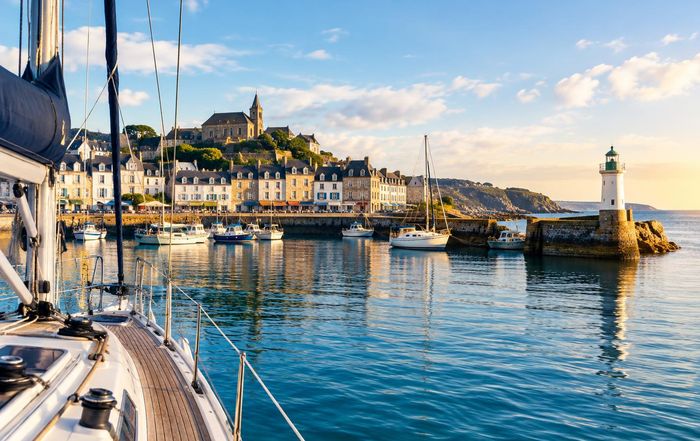
Sailing the Atlantic Coast of France: A Harbor Guide
France's Atlantic seaboard rewards sailors with a rare mix of practical cruising infrastructure and genuinely varied coastline. From Brittany's rock-strewn approaches and tidal rivers to the long, sandier reaches of the Bay of Biscay and the sheltered estuaries farther south, the harbors here are not just places to stop for fuel and provisions. They shape the voyage itself. A good passage plan on this coast depends on understanding tidal range, weather windows, entrance conditions, and the different character of each port, whether the goal is an overnight refuge, a provisioning stop, or a base for longer cruising. For readers planning a route that combines seamanship with travel, the Atlantic coast offers enough choice to support almost any style of voyage, and the best starting point is often a realistic harbor strategy rather than a fixed itinerary. For more planning context, Yacht Review's daily features of cruising, travel, and boats can help frame the practical side of the trip.
What makes this coastline different
The Atlantic coast is not a single cruising environment, and treating it that way is where many first-time visitors go wrong. Northern sections, especially in Brittany, are strongly tidal and often demand precise timing, while the central and southern stretches can be more exposed to swell, long fetches, and occasional heavy weather rolling in from the Atlantic. That combination means harbors must be chosen not only for comfort but for access at the right state of tide, protection from prevailing conditions, and the ability to leave again without drama. France's official tourism and maritime resources, along with navigational guidance from bodies such as the French Hydrographic and Oceanographic Service, remain essential references when planning local movements, because chart detail and tidal information matter more here than in many Mediterranean cruising grounds.
The coast also rewards those who think in terms of harbor function. Some ports are ideal for a short stop because they sit close to urban services and transport links. Others are better as weather refuges, with strong breakwaters and deep basins but fewer shoreside frills. A few are excellent gateways to islands, estuaries, or river cruising. That distinction matters because the most memorable Atlantic passages often involve moving between very different harbor types rather than simply working down a list of marinas. It is also worth remembering that seasonal pressure can change the experience dramatically: places that feel spacious in shoulder months can become busy in summer, especially in destinations with strong domestic sailing demand. For readers interested in how design and infrastructure shape the experience, Yacht Review's design section is a useful companion.
Brittany: tidal harbors, granite shelter, and precise timing
Brittany is the part of the Atlantic coast that most clearly rewards seamanship. Its harbors are often tucked behind headlands, inside rivers, or within tidal basins that can be superbly protected once entered, but access may be narrow, fast-flowing, or tide-dependent. Brest is one of the region's major maritime centers and a logical weather stop for larger yachts, with deep-water facilities and access to a major naval and commercial port environment. Farther east, Lorient combines a strong sailing culture with practical marina infrastructure and a useful position for boats moving between Brittany's northern and southern coasts. Concarneau is especially attractive to cruising sailors because it combines a historic harbor setting with good shelter and a town that understands visiting yachts.
The smaller Breton ports are often where the coast becomes most rewarding. Places such as Carantec, Roscoff, and Douarnenez are attractive not because they are the biggest, but because they sit within a network of short hops, tidal windows, and scenic anchorages that let a crew tailor the pace of the cruise. This is a region where local knowledge is still valuable, and where official nautical information from Météo-France and SHOM should be checked together rather than separately. Wind against tide can quickly sharpen sea state in narrows, and a harbor that looks calm on the chart may feel very different if entered late in the day against a spring ebb. For those who enjoy the history side of cruising, Yacht Review's history coverage can add useful context to the region's long maritime tradition.
Practical harbor pattern in Brittany
A sensible Brittany pattern is often to alternate between one large, service-rich port and one smaller, characterful stop. That approach gives a crew room to restock, handle maintenance, and wait out weather, while still enjoying the smaller harbors that give the coast its appeal. It also reduces the pressure to force a passage when tides or visibility are marginal. The region's marinas are generally well used to foreign yachts, but berth availability can still tighten in peak season, especially in ports with tourist appeal or strong local regatta activity. If your route includes family cruising, Yacht Review's family section may be useful for thinking through the pace and logistics of a multi-generational passage.
The Bay of Biscay: respect the weather, not the stereotype
The Bay of Biscay has a reputation that sometimes overshadows its practical cruising possibilities. In reality, the challenge is less about mythology than about exposure, timing, and planning. Long Atlantic swell can make approaches uncomfortable even when the wind is not especially strong, and weather systems can move quickly enough to compress decision-making. That is why ports along the Bay of Biscay are often chosen as much for their ability to provide a clean exit as for their scenic setting. Here, the right harbor can be the difference between a manageable overnight and a tiring, wet arrival.
La Rochelle is one of the most useful cruising bases on this stretch of coast. It offers a major marina scene, access to the islands of Ré and Oléron, and a level of facilities that makes it attractive for both short stays and longer maintenance breaks. Rochefort, farther inland on the Charente, is valuable for sailors who want river protection and a more sheltered environment. Les Sables-d'Olonne has long been associated with offshore sailing and remains a practical and familiar stop for yachts moving down the coast. Farther south, Arcachon offers a very different experience, with a basin and inlet system that demands attention to local conditions but rewards careful timing with a distinct cruising environment.
For weather and routing decisions, sailors should not rely on a single forecast source. The European Centre for Medium-Range Weather Forecasts provides useful model context, while Météo-France remains the key national reference for French waters. If the route involves offshore legs, especially in shoulder seasons, the coast's apparent simplicity can be deceptive: a short passage between harbors may still be shaped by swell angle, tidal gates, and the availability of a safe approach if conditions deteriorate. For readers tracking how weather, route choice, and vessel capability interact, Yacht Review's technology section can be useful for understanding the navigation and forecasting tools that make modern coastal cruising easier.
South of Bordeaux: estuaries, islands, and a different rhythm
South of the Bay of Biscay's most exposed stretch, the cruising rhythm changes. The coast becomes more varied, with estuaries, river mouths, and island-protected waters that can feel distinctly different from the open Atlantic. Bordeaux itself is reached via the Gironde system rather than directly from the open coast, but it matters to Atlantic cruisers because the estuary offers access to one of France's most important maritime and wine regions. The approach requires careful attention to tides and local traffic, but the reward is a harbor sequence that links deep inland culture with coastal sailing. For many crews, that combination is one of the strongest arguments for including the region in a longer itinerary.
The Île de Ré and Île d'Oléron are particularly important in this part of the coast. They provide not only attractive stops but also strategic shelter and a different cruising texture from the mainland ports. Saint-Martin-de-Ré is especially well known among sailors, with a harbor that combines historic character and serious cruising demand. La Pallice and the wider La Rochelle area remain useful for logistics, while smaller island harbors can be ideal for a slower pace if the weather cooperates. This part of the coast is also where visitors may want to think more carefully about the balance between marina berths and anchorages, since some of the best experiences come from using both in the same passage.
The region's tourism and port authorities often provide helpful local guidance, but the sailor still needs to cross-check against chart data and tidal information. That is particularly true in estuarine waters, where sand shifts, current runs strongly, and entrance conditions can change. For a broader view of how the coast fits into French maritime life, Yacht Review's news and business sections can help readers follow developments in port infrastructure, charter activity, and coastal investment.
What to look for in a good Atlantic harbor
The best harbor on this coast is not always the biggest or the most famous. In practice, a useful Atlantic harbor combines four qualities: reliable shelter, predictable access, enough depth for the visiting yacht, and shoreside services that match the length of stay. Shelter matters because Atlantic weather can turn a pleasant stop into a difficult berth if the harbor is open to swell or crosswinds. Access matters because many French Atlantic ports are tide-sensitive, and a harbor that is simple at high water can become awkward or even impractical at low water. Depth matters for obvious reasons, but it also affects how easy it is to maneuver in wind or current. Services matter because a good stop is not only about berthing; it is about water, fuel, waste handling, repairs, provisioning, and the ability to move ashore without wasting time.
This is where the coast's diversity becomes an advantage. Some harbors are excellent for short, efficient technical stops, while others are designed for longer stays and more relaxed exploration. A crew cruising for several weeks may want to mix both, using a major port for maintenance and a smaller harbor for atmosphere. That approach is especially sensible on a coast where weather windows can dictate movement more than ambition does. Yacht Review's reviews and community coverage can be useful for seeing how other sailors assess ports, layouts, and onboard priorities, though local conditions should always be checked independently.
Seasonal realities and how they shape the route
Seasonality is one of the most important planning factors on the French Atlantic coast. Summer brings better cruising weather for many crews, but it also brings more traffic, fuller marinas, and a greater need to book ahead in popular destinations. Spring and autumn can be excellent for experienced sailors who want more space and are comfortable with a wider weather envelope, but these seasons demand more flexibility. Winter cruising is possible for well-prepared yachts, yet it changes the conversation from leisure passage-making to serious weather management and port availability. The coast's appeal is not diminished by that reality; rather, it becomes more defined by it.
Environmental and regulatory considerations are also increasingly part of the planning picture. French ports and coastal authorities have been working, in line with broader European maritime policy, toward better waste management, cleaner port operations, and more sustainable cruising behavior. Sailors who care about that side of the experience should pay attention to local marina rules and to the broader direction of travel across the sector. The International Maritime Organization and the European Commission provide useful context on the regulatory environment shaping maritime sustainability, while The Ocean Cleanup and similar initiatives show how marine environmental concerns are influencing public expectations around the world. For folks interested in that wider shift, Yacht Review's sustainability section is a natural follow-on.
A route that works with the coast, not against it
The most rewarding Atlantic coast itineraries are usually the ones that accept the coast on its own terms. That means allowing for tide windows in Brittany, building flexibility into Bay of Biscay crossings, and choosing southern estuary stops with enough margin to handle current and entrance conditions. It also means resisting the temptation to over-plan every day. The coast gives more to sailors who leave room for weather, local advice, and the occasional unscheduled stop in a harbor that turns out to be better than expected. In that sense, the harbors themselves become part of the voyage's structure, not just its logistics.
For many cruising sailors, that is the real appeal of France's Atlantic edge. It is a coastline where a harbor can be a practical refuge, a cultural experience, and a navigational decision all at once. The best trips here are built around that understanding. They are less about ticking off famous names and more about reading the coast well enough to move with confidence between them.