

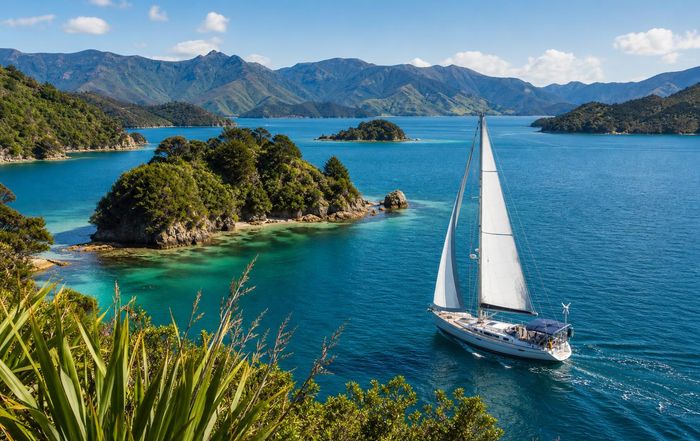
New Zealand Coastal Cruising for Offshore Sailors
A bluewater nation's coastal secret
For many offshore sailors, New Zealand is first encountered as a hard-won landfall at the end of a Pacific passage. The country's reputation for demanding ocean conditions, first-class boatyards and a deep maritime culture is well established, yet its coastal cruising potential is still underappreciated outside the bluewater community. Once the lines are secured in Opua, Whangārei or Auckland, a different New Zealand reveals itself: a remarkably varied, compact cruising ground where an offshore-capable yacht can move, within a few days' sailing, from sub-tropical island anchorages to wild, high-latitude coastlines.
For the readership of yacht-review.com, which follows developments in boats, cruising and design with a global, business-oriented perspective, New Zealand's coastal waters offer not only exemplary cruising but also a window into a mature marine ecosystem that combines innovation, seamanship and an increasingly sophisticated approach to sustainability. Offshore sailors arriving from the Pacific, from Australia or via high-latitude routes are finding that staying on to explore the coast is no longer an optional add-on; it is becoming a strategic part of a multi-year cruising plan.
Gateway ports and first impressions
Most offshore yachts enter New Zealand through the Bay of Islands, with Opua serving as the principal clearance port for vessels arriving from the tropical Pacific. The formalities are shaped by New Zealand Customs and Biosecurity New Zealand, whose strict biofouling and biosecurity rules have become a defining feature of the country's maritime border. These regulations, which are periodically updated and publicly documented by New Zealand government agencies, require yachts to arrive with clean hulls and declare risk goods, and they are enforced with a thoroughness that can surprise first-time visitors. Yet for many offshore skippers, this rigor has become a mark of confidence rather than an obstacle, underscoring New Zealand's commitment to protecting its unique marine environment and aquaculture industries.
Once cleared, the Bay of Islands immediately demonstrates why New Zealand has such a strong domestic cruising culture. A short sail from Opua reveals an intricate archipelago of sheltered anchorages, sandy coves and low-lying islands that provide an ideal transition from passagemaking to coastal exploration. The region's combination of reliable holding, manageable tidal ranges and diverse shore access creates a natural classroom for refining anchoring techniques, tender operations and coastal pilotage after the rigors of an ocean crossing. For an overview of how such coastal experiences compare with other destinations, readers can explore broader regional perspectives in the yacht-review.com global cruising coverage at yacht-review.com/global.html.
Further south, Whangārei and Auckland act as complementary hubs. Whangārei, accessed via a well-marked river channel, has evolved into a favored refit and lay-up destination, with multiple yards capable of handling serious bluewater yachts and custom projects. The city's marine cluster includes riggers, metal fabricators and composite specialists who support both cruising yachts and commercial vessels, and the concentration of expertise attracts international skippers planning major refits between ocean legs. Auckland, often described as the "City of Sails," combines extensive marina infrastructure with a metropolitan economy strongly connected to the broader Asia-Pacific region, making it an efficient base for owners and crews balancing time on board with business commitments ashore. Those evaluating refit or upgrade strategies in this context may find it useful to relate these opportunities to the wider industry insights presented on yacht-review.com/business.html.
A coastline scaled for serious cruising
From a strategic perspective, New Zealand's coastal cruising appeal lies in its scale and variety. The country extends roughly 1,600 kilometers from north to south, and the sailing distances between major cruising regions are significant enough to be interesting for offshore-capable yachts, yet compact enough to allow extensive exploration within a single season. The interplay of the Tasman Sea, the South Pacific and the Southern Ocean generates weather systems that demand respect and careful planning, but these same dynamics create a rich range of sailing conditions, from gentle summer sea breezes to powerful frontal passages that test seamanship and boat preparation.
The northern sector, encompassing the Bay of Islands, the Hauraki Gulf and the Coromandel Peninsula, offers a network of islands and peninsulas with numerous all-weather anchorages and short passages that suit both family cruising and shorthanded crews transitioning from bluewater to coastal routines. Great Barrier Island and the Mercury Islands provide a sense of remoteness while remaining within a manageable distance of Auckland's marinas and service providers, a balance that many owners find highly attractive when planning time-limited cruises that must fit around work or schooling schedules. For readers comparing designs suited to this kind of mixed offshore and coastal profile, the boat-specific coverage at yacht-review.com/boats.html provides useful reference points.
Further south, Tauranga, the Bay of Plenty and Gisborne open the door to longer legs and more exposed anchorages, while the east coast of the South Island introduces a more dramatic, sparsely populated coastline where harbors are fewer and passages require careful attention to weather windows. The west coasts of both islands, facing directly into the Tasman Sea and the Southern Ocean, are less frequently cruised by visiting yachts due to limited shelter and more demanding conditions, yet they remain of interest to experienced high-latitude sailors and expedition-style programs.
For many offshore visitors, the most compelling coastal objective is Fiordland and the southwest of the South Island, where deep glacial fjords such as Milford Sound and Doubtful Sound carve into the mountains and create some of the most dramatic cruising scenery in the world. Accessing this region by yacht requires a high level of self-sufficiency, robust ground tackle and conservative weather planning, and it is often undertaken by crews with prior experience in high-latitude environments. The remoteness, however, is part of the attraction, and for those who make the commitment, Fiordland can become a defining highlight of a circumnavigation.
Weather, seamanship and seasonal strategy
New Zealand's coastal cruising cannot be discussed without addressing weather. The country lies in the path of a succession of mid-latitude low-pressure systems, and the interaction between these systems and the local topography produces complex wind patterns and rapidly changing conditions. Offshore sailors accustomed to tropical trade wind regimes must adapt to a more variable environment where fronts, troughs and ridges dominate decision-making, and where sea states are shaped by both local winds and long-period swell.
The primary cruising season typically spans late spring to early autumn, when sea temperatures are milder and daylight hours are longer. Within this window, however, synoptic variability remains significant, and conservative planning remains essential. Many skippers rely on a combination of local forecasts, grib data and regional analysis from organizations such as MetService New Zealand, which provides marine forecasts, coastal outlooks and specialized bulletins for key cruising areas. Those interested in understanding the broader meteorological context can explore international perspectives from sources such as the World Meteorological Organization, which offers background on Southern Hemisphere weather patterns and climate influences.
From a seamanship standpoint, New Zealand's coast rewards preparation and flexibility. Tidal ranges are moderate compared to some European regions, but tidal streams, particularly in narrow channels and around headlands, can be strong enough to influence passage timing. Bar harbors, notably on the west coast and in some North Island locations, require up-to-date local knowledge and should be approached with caution in onshore conditions. For offshore sailors, these challenges are not deterrents but part of the appeal, offering an opportunity to refine coastal navigation skills in a setting that remains firmly within the realm of serious seafaring rather than resort cruising.
The interplay between offshore and coastal skills is a recurring theme in discussions with experienced skippers who have integrated New Zealand into multi-year cruising plans. Many note that the country's conditions encourage a more professional approach to passage planning, watchkeeping and maintenance, with crews adopting practices more commonly associated with commercial operations. For readers interested in how such operational discipline aligns with contemporary yacht technology, the technical features at yacht-review.com/technology.html provide further context.
Boat design and refit: New Zealand as a proving ground
New Zealand's reputation in yacht design and construction is closely linked to its success in international racing, particularly in the America's Cup, where Emirates Team New Zealand has been a leading force. However, the same culture of innovation that drives high-performance campaigns also informs the design and refit of cruising yachts. Local naval architects, builders and engineers operate in an environment where boats are expected to perform both offshore and in demanding coastal conditions, and this dual requirement has produced a distinctive design philosophy.
Offshore sailors who choose to refit in New Zealand often highlight the country's depth of expertise in composite construction, rig engineering and custom metalwork. Refit projects frequently combine structural upgrades, such as reinforcing chainplates and bulkheads, with systems improvements aimed at enhancing reliability and autonomy, including energy management, watermaking and redundancy in steering and communications. Learn more about how such design decisions intersect with broader trends in yacht aesthetics and functionality at yacht-review.com/design.html.
The country's boatyards, from Auckland's large-scale facilities to specialized operators in Whangārei and Nelson, are accustomed to working with international clients planning complex projects under time pressure. Many yards have experience with expedition yachts, high-latitude cruisers and performance bluewater designs, and they bring a practical, results-oriented approach that resonates with owners who view their yachts as serious voyaging platforms rather than purely leisure assets. For business-oriented readers, this ecosystem offers a case study in how a relatively small national industry can achieve global relevance through specialization, export capability and a strong feedback loop between racing, commercial and cruising sectors.
Lifestyle, culture and shore-based value
For crews who have spent weeks or months at sea, the shore-based experience is a critical part of any cruising destination's appeal. New Zealand offers a combination of safety, infrastructure and lifestyle that many offshore sailors find compelling enough to warrant extended stays. The country's marinas and town centers are generally regarded as secure, and public services such as healthcare and transport are accessible and reliable, which is particularly important for families and long-term liveaboard crews.
The coastal towns and cities that serve as cruising hubs-Auckland, Whangārei, Tauranga, Nelson and others-offer a blend of maritime identity and contemporary urban culture. Waterfront developments often integrate marinas, restaurants, marine businesses and public spaces, creating environments where yacht crews can manage provisioning, maintenance and administrative tasks while also engaging with local communities. This integration is evident in projects such as Auckland's Viaduct Harbour and Wynyard Quarter, where legacy infrastructure from past America's Cup campaigns has been repurposed into mixed-use precincts that remain strongly connected to the marine industry. Readers interested in how such environments influence onboard life, crew dynamics and long-term cruising choices can explore related perspectives at yacht-review.com/lifestyle.html.
Culturally, New Zealand's maritime heritage is shaped by both Māori and European traditions. The voyaging history of Polynesian navigators, whose double-hulled canoes crossed vast ocean distances using non-instrumental wayfinding, is increasingly recognized and celebrated, influencing contemporary discussions about navigation, sustainability and cultural respect. Offshore sailors visiting coastal communities will encounter this heritage in museums, cultural centers and local events, and many find that engaging with it adds a deeper dimension to their cruising experience. Institutions such as the New Zealand Maritime Museum in Auckland provide accessible entry points for understanding these narratives in a broader historical context.
Sustainability and marine stewardship
Environmental stewardship has become a central theme in global yachting, and New Zealand's approach is of particular interest because of its integration of strict biosecurity, marine conservation and practical cruising considerations. The country's biofouling regulations, which require yachts to arrive with clean hulls and may involve inspections or documentation of recent haul-outs, are among the more stringent in the world, reflecting concerns about invasive species and their impact on local ecosystems and commercial aquaculture. Offshore sailors planning to visit must factor these requirements into their maintenance schedules, often arranging for hull cleaning and antifouling in prior ports or in New Zealand yards immediately upon arrival.
Marine protected areas, including reserves around islands and coastal zones, are another important element of the regulatory landscape. These areas typically restrict fishing, anchoring or certain types of activity, and compliance is actively encouraged through public information campaigns and signage at popular access points. For responsible skippers, understanding and respecting these zones is part of a broader commitment to low-impact cruising. Learn more about sustainable business practices and their intersection with yachting at yacht-review.com/sustainability.html.
On board, many visiting yachts adopt practices that align with New Zealand's environmental expectations, including careful waste management, minimized use of single-use plastics, and the installation of upgraded blackwater systems that comply with local discharge regulations. The availability of shore-based recycling, pump-out facilities and environmentally conscious chandlers supports these efforts, and there is growing interest in technologies such as solar arrays, lithium battery systems and hybrid propulsion, which reduce reliance on fossil fuels during extended coastal cruising. International organizations, including the International Maritime Organization, provide a broader regulatory framework for marine pollution control, and New Zealand's domestic rules often exceed these baselines in sensitive areas.
New Zealand in the global cruising circuit
From a strategic cruising perspective, New Zealand occupies a pivotal position in the South Pacific. For yachts crossing from the Americas via French Polynesia, the Cook Islands and Tonga, the country serves as a logical cyclone-season refuge, offering secure berthing, professional support and a stable legal and economic environment. For vessels arriving from Australia, New Caledonia or Fiji, New Zealand offers a contrasting climate and cruising experience, with cooler temperatures and more varied weather, and for high-latitude sailors transiting between the Pacific and the Southern Ocean, it can function as both staging point and recovery base.
This role within the global circuit has business implications that extend beyond individual cruising programs. New Zealand's marine industry exports expertise, components and complete yachts to markets in Europe, North America and Asia, and its domestic infrastructure is calibrated to service an international clientele. Events such as past America's Cup regattas and international boat shows have reinforced the country's profile as a serious maritime nation, and ongoing participation in high-level racing and design projects continues to attract attention from owners and investors. Readers seeking an overview of how these dynamics interact with global market trends can refer to the broader news and analysis at yacht-review.com/news.html.
For individual offshore sailors, however, the decision to include New Zealand in a cruising plan is usually driven by a blend of practical and experiential factors. The country offers a safe, technically competent environment in which to undertake major maintenance, upgrade systems and regroup between ocean legs, while also delivering a coastal cruising experience that is both challenging and rewarding. The ability to combine serious seamanship with high-quality shore life, education options for children and access to international air links makes New Zealand particularly attractive for long-term programs that involve rotating crew, visiting family members or periodic returns to home bases in Europe, North America or Asia.
Integrating New Zealand into a multi-year cruising strategy
For the offshore sailor considering New Zealand as more than a quick stop, the key is to think in terms of seasons rather than weeks. Many successful programs adopt a rhythm in which an initial landfall is followed by a period of coastal exploration, a haul-out or refit, and then either further coastal cruising or a return to the tropical Pacific. This pattern can be repeated over several years, with New Zealand functioning as a reliable base from which to explore both the South Pacific and, for more ambitious crews, high-latitude routes towards Patagonia or Antarctica.
Within this framework, the coastal cruising potential becomes a central asset rather than a secondary benefit. The ability to spend a full summer season exploring the Hauraki Gulf, Coromandel, Bay of Plenty, Marlborough Sounds or Fiordland, with the support of a mature marine industry and a stable social environment, is a differentiator that few destinations can match. For those planning such extended stays, it is helpful to align boat selection, refit decisions and equipment choices with the realities of New Zealand's weather and regulatory context, an approach that aligns closely with the analytical reviews and comparative insights available at yacht-review.com/reviews.html.
Families in particular may find that New Zealand's combination of outdoor lifestyle, education options and safety creates a favorable environment for children to experience both coastal cruising and shore-based schooling or activities. While each program is unique, many long-term cruisers report that time spent in New Zealand contributes significantly to their children's resilience, environmental awareness and intercultural understanding. Readers interested in how cruising life intersects with family dynamics can find additional reflections at yacht-review.com/family.html.
Conclusion: A coastal frontier for serious sailors
For the global audience of yacht-review.com, New Zealand coastal cruising represents a convergence of bluewater capability, coastal variety and shore-based value that is rare in the contemporary yachting landscape. The country's demanding weather, intricate coastline and strict environmental regulations require professionalism and preparation, yet they also foster a culture of seamanship, innovation and respect for the sea that resonates with serious offshore sailors.
New Zealand is not a resort destination in the conventional sense; it is a working maritime nation where yachts are expected to be robust, crews competent and operations thoughtful. For those who embrace these expectations, the rewards are substantial: a coastline that offers both sheltered archipelagos and wild fjords, an industry capable of supporting complex projects, and a society that understands and values its connection to the ocean. As more offshore sailors choose to integrate New Zealand into their multi-year cruising strategies, the country's role as a coastal frontier-challenging, inspiring and deeply rewarding-is likely to grow, reinforcing its position as one of the most compelling destinations in the global cruising circuit.