

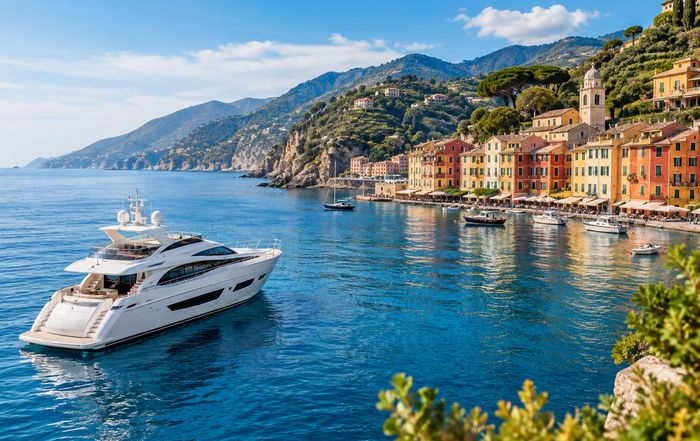
Italy's Ligurian Coast by Yacht: A Cruising Guide
The Ligurian coast rewards yacht cruisers in a way that is easy to underestimate from the chart alone. Between the French border and Tuscany, the shoreline compresses fishing harbours, cliff-backed towns, resort marinas, and protected marine areas into a relatively short stretch of water, which means the experience can change dramatically from one anchorage or port to the next. It is also one of the Mediterranean's most demanding and rewarding cruising grounds: scenic, compact, well connected, and often busy in the height of summer. For owners and charter guests alike, the appeal lies in the variety. One day can be spent in a polished marina near the Riviera, the next in a working port with a strong local identity, and another in a bay where the coastline feels almost untouched.
That mix makes planning especially important. The Ligurian Sea sits in a region shaped by weather, traffic, and conservation rules, so the best itinerary is not simply a matter of plotting the prettiest stops. It helps to understand seasonal conditions, port access, mooring options, and the balance between glamorous destinations and quieter harbours. For readers looking for a broader context on yacht cruising and destination planning, our original cruising coverage, travel section, and reviews archive are useful companions to this guide. The coast also sits at the intersection of design, local heritage, and modern marina infrastructure, themes that recur throughout design, boats, and lifestyle content.
Why the Ligurian coast works so well for yachts
Liguria's geography is the main reason the region feels so distinctive. The mountains drop quickly to the sea, leaving little flat land between the road, the rail line, and the waterfront. That creates a chain of compact settlements rather than sprawling resort zones, and yachts benefit from the concentration of facilities that has evolved around those towns. Marina berths, chandlery access, provisioning, fuel, and technical support are often close at hand, especially around the larger ports. At the same time, the coastline still offers enough natural texture to keep the voyage interesting: promontories, small coves, protected bays, and short passages between stops.
The region also has a long maritime tradition, which matters more than it may first appear. Harbours here are not merely scenic backdrops; many remain active fishing centres, ferry hubs, or commercial ports. That can be an advantage for cruising yachts, because services tend to be practical and well established, but it also means that routing requires a little more attention than in a purely leisure-oriented area. For a useful background on the wider maritime environment, the International Maritime Organization remains the key global reference for safety and shipping standards, while Italy's own maritime and coastal administration is shaped by national and regional institutions such as the Italian Ministry of Infrastructure and Transport and the Italian Coast Guard. Environmental rules are equally important in this part of the Mediterranean, especially near marine protected areas and busy urban waterfronts.
The best way to think about an itinerary
A sensible Ligurian itinerary is usually built around short legs rather than long passages. That is partly because the coast is rich enough to justify frequent stops, and partly because the practical rhythm of the region works best when a yacht can move with flexibility. Many crews prefer to combine one or two larger bases with smaller intermediate ports, rather than trying to cover the entire coastline in a few rushed hops. Genoa, Portofino, Santa Margherita Ligure, Rapallo, La Spezia, and the Cinque Terre area often anchor itineraries of different lengths, while the western end of the region connects naturally with the French Riviera and the eastern end with Tuscany and the Tyrrhenian cruising grounds.
Weather and sea state should shape the order of stops. The Ligurian coast can be affected by strong local winds and by the broader weather patterns of the northwest Mediterranean, so the safest and most comfortable route is not always the most direct one. Seasonal forecasts from the European Centre for Medium-Range Weather Forecasts and marine updates from national meteorological services are worth consulting before departure, especially if the plan includes exposed anchorages or narrow marina approaches. The National Oceanic and Atmospheric Administration and the World Meteorological Organization are also valuable references for understanding broader marine weather patterns, even for cruisers operating far from the United States. In practice, the best itineraries leave room for weather changes, berth availability, and the occasional decision to stay an extra night in a harbour that proves more enjoyable than expected.
Genoa, the Riviera, and the contrast of scale
Genoa is the most obvious large-scale urban stop on the Ligurian coast, and it gives a yacht cruise a different texture from the smaller resort towns farther east. The city's port is a reminder that this is not a postcard coastline alone; it is a working maritime region with a deep industrial and commercial identity. For some crews, that makes Genoa a practical provisioning and transit point rather than a leisure destination. For others, its appeal lies in the contrast between the old port, the historic centre, and the more polished waterfront areas that have been redeveloped over time. The city is also a good place to appreciate the broader history of Ligurian seafaring, which is why Yacht Review's history section can be a useful companion when exploring the region's maritime past.
East of Genoa, the tone changes quickly. Santa Margherita Ligure and Portofino are the names most associated with the Riviera image of the Ligurian coast, and for good reason. Santa Margherita often functions as a more practical base, with Portofino serving as the aspirational stop that many yachts visit for a lunch call or an overnight stay if space allows. The appeal is not only the scenery but the social theatre of the place: polished waterfronts, compact quays, and a strong sense that the harbour itself is part of the attraction. Yet this is also where expectations need to be managed. Berths can be limited, demand is high, and the most famous destinations are often easiest to enjoy when approached with patience rather than urgency. The same is true of nearby Rapallo, which may be less celebrated but can be more forgiving for planning and logistics.
The Cinque Terre question: beautiful, sensitive, and best handled carefully
Few parts of the Ligurian coast attract as much interest as the Cinque Terre, and few require as much restraint from yachts. The villages are famously scenic, but the coastline is heavily protected and operationally sensitive. That matters because the most memorable experience here is not necessarily a straightforward "drop anchor and go ashore" scenario. Rules can change, access may be restricted, and the environmental pressures on the area are real. Cruisers should check current local regulations and not assume that what was possible in one season will remain possible in the next. The UNESCO World Heritage Centre is a useful starting point for understanding why the area is treated with such care, while Italy's environment ministry and local protected-area authorities are the practical sources for current restrictions.
For yacht guests, the smartest approach is often to treat the Cinque Terre as a view from the water rather than as a place to force a conventional stop. A slow passage along the coast can still be rewarding, especially if the weather is clear and the sea calm, but the focus should remain on compliance and on preserving the experience for others. This is one of the clearest examples on the Ligurian coast of how luxury cruising and conservation now have to coexist. It is also a reminder that the best itinerary is not always the one with the most ambitious list of stops.
Marina choices, anchoring realities, and practical planning
The Ligurian coast is not short of marina infrastructure, but capacity and comfort are not the same thing. In peak months, the most desirable berths can be hard to secure, and larger yachts may need to plan well ahead. Some ports are better suited to short calls, others to overnight stays, and some to technical stops or crew changes. The practical choice often depends on draft, beam, shore access, tender handling, and how much time guests want to spend ashore. It is also worth remembering that a picturesque harbour may not always be the easiest one for a larger yacht to enter or leave in changing conditions.
Anchoring, meanwhile, should be approached with caution and local knowledge. The coastline's beauty can tempt crews into improvisation, but the combination of protected zones, traffic, and seabed considerations means that "good enough" is not a reliable standard. This is where up-to-date charting, local pilotage advice, and berth reservations become part of the cruising experience rather than administrative chores. For owners interested in the technical and operational side of yacht use, Yacht Review's technology coverage and business section offer useful context on the systems and services that make modern cruising viable. In the Ligurian setting, those details matter because they affect not just convenience but also compliance and safety.
When to go and what the season changes
The season changes the Ligurian coast more than many first-time visitors expect. Spring and early summer often offer the best balance of manageable temperatures, lighter crowds, and more flexible port logistics, though weather can still be variable. High summer brings the fullest expression of the Riviera atmosphere, but also the greatest pressure on berths, restaurants, and shore infrastructure. Autumn can be excellent for experienced cruisers who want warmer water and a slightly calmer pace, though the risk of unsettled weather begins to rise. Winter cruising is possible in some circumstances, but it is not the season most visitors picture when they imagine Liguria by yacht.
The practical lesson is simple: the same itinerary can feel completely different depending on timing. A stop that is relaxed in May may feel crowded in August; a quiet anchorage in September may be less comfortable after a change in wind direction. For that reason, many experienced captains build a margin of flexibility into the schedule. They also keep a close eye on regional forecasts and port conditions rather than relying on broad assumptions about Mediterranean weather. In a coast as compact as Liguria, one poor decision on timing can affect several stops in a row.
Food, shore time, and the value of slowing down
One of the pleasures of cruising the Ligurian coast is that shore time tends to feel genuinely local rather than staged for yacht traffic alone. The region's food culture is anchored in seafood, basil, olive oil, focaccia, and simple preparations that suit a day spent on the water. A well-planned stop can include an unhurried lunch ashore, a market visit, or a walk through narrow streets that reveal more of the coastline's identity than any marina lounge could. For many guests, that balance between onboard comfort and shore-side texture is what turns a route into a memorable cruise.
This is also where the coast's family appeal becomes clear. It is a region that can work for multi-generational travel because the distances are short, the scenery is varied, and the shore experiences do not depend entirely on nightlife or high-adrenaline activities. Our family coverage and community stories often explore the social side of yacht travel, and Liguria is a strong example of how a destination can support both privacy and shared experience. That said, the same compactness that makes the coast attractive also means it can become congested quickly, so the best results usually come from a deliberate, less hurried pace.
A coast that rewards judgment more than ambition
The Ligurian coast is not the easiest Mediterranean route, but it is one of the most satisfying for yachts that value variety, character, and close-up coastal scenery. Its appeal lies in the tension between glamour and practicality, between famous names and working harbours, between protected landscapes and active maritime life. A good cruise here depends less on trying to "do everything" and more on choosing the right sequence of places, the right season, and the right attitude toward local rules and conditions.
For cruisers who appreciate that balance, Liguria can be exceptionally rewarding. It offers a compact but layered itinerary, a strong sense of place, and a reminder that the best yacht destinations are often the ones that ask for a little more judgment from the helm.