

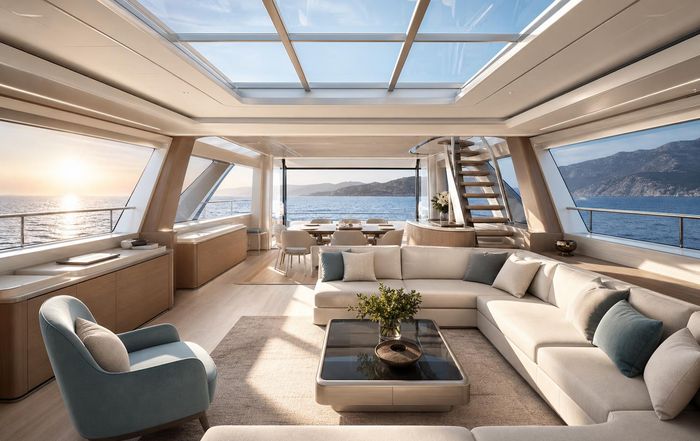
How Natural Light Is Transforming Modern Yacht Design
Modern yacht design is undergoing a quiet but profound revolution, and at the heart of this transformation is a renewed respect for natural light. Where once privacy, structure and traditional styling dictated relatively small openings in the hull and superstructure, contemporary naval architects and interior designers are increasingly treating daylight as a primary design material. For the sailing buddies, this evolution is more than an aesthetic trend; it is reshaping how owners, guests and crew experience life at sea, with implications that extend from lifestyle and wellbeing to sustainability, technology and long-term asset value.
From Portholes to Panoramas: The New Language of Light
The shift toward light-filled interiors can be traced through the progression from classic round portholes and modest saloon windows to today's floor-to-ceiling glass, extended hull glazing and multi-deck atriums. Leading shipyards such as Feadship, Benetti, Sanlorenzo, Oceanco and Heesen Yachts have all, in different ways, embraced expansive glazing and open-plan layouts, creating spaces that feel more akin to high-end coastal residences than traditional vessels.
This change has been driven in part by advances in glass technology and structural engineering. Classification societies such as Lloyd's Register and DNV have developed rules for large glazed surfaces in yacht superstructures, enabling designers to push boundaries while maintaining safety and integrity. At the same time, clients have become more globally mobile and design-literate, often commissioning yachts after years of exposure to luxury real estate, boutique hotels and wellness resorts that celebrate openness and connection to nature. For readers exploring current trends in yacht aesthetics and spatial planning, the growing emphasis on daylight is evident across many of the projects covered in our own design features.
Human-Centric Design: Wellbeing at Sea
The most compelling argument for maximising natural light on board is rooted in human physiology and psychology. Research published in journals such as Building and Environment and Sleep Health has repeatedly linked daylight exposure to improved circadian rhythm regulation, better sleep quality, enhanced mood and increased cognitive performance. While these studies are typically conducted in land-based offices, hospitals and residential buildings, the underlying principles apply equally to yachts, where guests often spend extended periods in confined spaces and frequently cross time zones.
On a vessel, natural light becomes a powerful tool for mitigating jet lag, supporting mental clarity and reducing the sense of isolation that can accompany long passages. Designers are responding by prioritising larger windows in owner and guest suites, positioning beds to face the horizon, and integrating skylights or light wells in previously enclosed corridors and stairways. The growing interest in wellness-oriented layouts, which we regularly highlight in the lifestyle coverage, is closely intertwined with this focus on daylight and views.
For crew, who may spend months living and working on board, access to daylight is increasingly recognised as a matter of duty of care as well as operational performance. Some new builds now feature crew messes and lounges with generous glazing, and even crew cabins are being reconsidered to allow for more natural light where structural constraints permit. Industry bodies and maritime welfare organisations have begun to reference the importance of light and views in guidance on seafarer wellbeing, aligning yacht design trends with broader shifts in workplace standards.
Aesthetic Clarity: Light as a Design Narrative
Natural light has become a central narrative element in contemporary yacht interiors. Top designers such as Winch Design, RWD, Nuvolari Lenard, Bannenberg & Rowell and Zuccon International Project increasingly approach spaces as sculptural volumes to be carved by light, rather than as enclosed rooms to be filled with furniture. This conceptual shift is visible in the prevalence of open staircases, double-height saloons, glass-sided corridors and atriums that link multiple decks, all orchestrated to capture and channel daylight deep into the interior.
Materials and palettes have evolved in parallel. Lighter woods, neutral textiles and subtly reflective surfaces are favoured for their ability to amplify natural illumination without causing glare. Matte finishes, micro-textured stones and advanced coatings allow designers to manage light diffusion carefully, preserving a sense of calm and sophistication. Many of the yachts featured in our detailed reviews demonstrate how a considered combination of glazing, materials and spatial sequencing can create interiors that feel fresh, timeless and distinctly maritime.
Exterior styling is also being influenced by the quest for light. Long, continuous hull windows, sculpted superstructure cut-outs and negative spaces beneath overhangs are now part of the visual language of modern yachts. While some purists initially questioned whether such features compromised the classic profile, the industry has largely embraced a more architectural aesthetic, in which the interplay between solid and transparent elements becomes a defining characteristic of the yacht's identity.
Engineering the Invisible: Structure, Safety and Performance
The pursuit of light is not without technical challenges. Large glass surfaces must withstand the dynamic loads of the marine environment, including wave impact, wind pressure and hull flex. They must also meet increasingly stringent safety and fire-resistance standards set by classification societies and flag states. As a result, the glass used in modern yachts is typically laminated, chemically toughened and often curved, with complex interlayers that contribute to both strength and thermal performance.
Shipyards and specialist glass manufacturers have developed sophisticated analytical models and testing protocols to ensure that expansive glazing does not undermine structural integrity. In many cases, glass panels are integrated into the load-bearing framework of the yacht, requiring close collaboration between naval architects, structural engineers and designers from the earliest concept stages. Publications such as Boat International and SuperYacht Times have documented how this multidisciplinary approach has enabled ever more ambitious glass installations without compromising safety.
Weight and stability are always central concerns in yacht design, and glass is heavier than composite or aluminium panels. To compensate, engineers may optimise hull structures, refine scantlings or employ lightweight materials elsewhere in the build. Advances in finite element analysis and computational fluid dynamics, which are often discussed in the technical features of our technology section, allow designers to evaluate the trade-offs between glazing, weight distribution and performance with a high degree of precision.
Thermal management presents another layer of complexity. Large windows can introduce significant solar heat gain, particularly in tropical cruising grounds, leading to higher air-conditioning loads and increased fuel consumption. To address this, many modern yachts employ high-performance glazing with low-emissivity coatings, selective solar control films and inert gas fills, alongside external shading elements and carefully designed overhangs. These measures help preserve the benefits of abundant light while maintaining comfort and energy efficiency.
Sustainability and Energy Efficiency: Light as a Strategic Asset
As environmental expectations rise among owners, regulators and the wider public, yacht design is increasingly evaluated through the lens of sustainability. Natural light plays a subtle but meaningful role in this conversation. By reducing reliance on artificial lighting during daylight hours, well-designed glazing can lower electrical demand, which in turn may reduce generator runtime and associated emissions. While the impact of lighting alone is modest compared to propulsion, it forms part of a broader strategy of incremental efficiency gains.
Leading organisations such as the Water Revolution Foundation and classification initiatives like Lloyd's Register's ECO notation and DNV's environmental class notations encourage holistic thinking about onboard energy use. In this context, daylight is considered alongside high-efficiency HVAC systems, LED lighting, waste-heat recovery, and hybrid or diesel-electric propulsion. Owners interested in a more comprehensive view of sustainable yachting can explore further perspectives in our sustainability coverage.
Sustainable design also encompasses material selection and lifecycle impact. By creating pleasant, light-filled interiors that feel contemporary yet enduring, designers aim to extend the aesthetic lifespan of a yacht, reducing the frequency and scale of refits driven purely by fashion. Longer-lasting design reduces material waste and the environmental footprint associated with repeated interior overhauls. In this sense, natural light contributes indirectly to sustainability by supporting timeless, versatile spaces that continue to feel relevant over many years of service.
There is ongoing debate about the net environmental impact of extensive glazing, given the embodied energy of high-performance glass and its contribution to thermal loads. Some naval architects argue that, in certain climate zones and operational profiles, smaller windows with optimised artificial lighting may be more energy-efficient. Others counter that advances in coatings, insulation and smart shading are narrowing this gap. At present, there is no single consensus, and responsible design teams tend to evaluate each project individually, balancing owner preferences, cruising plans and technical constraints.
Smart Glass and Integrated Controls: Technology Meets Daylight
Technological innovation is expanding what is possible with natural light on board. Electrochromic or "smart" glass, which can change its tint in response to electrical current, is gradually moving from experimental applications to more regular use on high-end yachts, particularly in skylights, sunroofs and selected windows in owner areas. This technology allows occupants to modulate brightness and heat gain without relying solely on blinds or curtains, maintaining outward views while enhancing comfort and privacy.
Manufacturers of electrochromic solutions, some of whom also supply the aviation and architectural sectors, continue to improve switching speed, colour neutrality and durability, addressing earlier concerns about performance and long-term reliability in harsh marine conditions. While smart glass remains a premium option and is not yet widespread on smaller or mid-range yachts, its trajectory mirrors that of other innovations that began at the top of the market before becoming more accessible over time.
Integration with onboard automation systems further enhances the role of natural light in the overall guest experience. Advanced control platforms, such as those discussed by The Superyacht Life Foundation and leading marine electronics providers, can orchestrate blinds, dimmable artificial lighting and smart glass according to time of day, position, weather conditions and user preferences. This allows designers to create dynamic lighting scenarios that support circadian rhythms, entertainment, dining and relaxation, with daylight as the foundation and artificial light as a complementary layer.
For readers of yacht-review.com who follow developments in onboard systems and innovation, the convergence of natural light, smart materials and integrated controls represents an important frontier in yacht evolution, one that is likely to influence both new builds and refits in the coming years.
Cruising Experience: Connecting Interior Life with the Seascape
From an owner's perspective, the greatest luxury a yacht offers is not any single material or technology, but the ability to inhabit the world's most beautiful coastlines, archipelagos and anchorages in privacy and comfort. Natural light is the medium through which these surroundings are perceived, and the way a yacht frames views profoundly shapes the onboard experience.
Modern layouts increasingly blur the boundaries between interior and exterior. Saloon doors that retract completely, terraces that fold out from the hull, and beach clubs with glass transoms all rely on generous glazing to maintain visual continuity with the sea. In prime cruising regions such as the Mediterranean, the Caribbean, the South Pacific and the fjords of Scandinavia, this sense of immersion is a key differentiator that many owners now expect as standard. Readers planning itineraries or exploring destinations will find numerous examples of such light-oriented design in our cruising features and travel stories.
For charter guests, who may be experiencing yachting for the first time, light-filled interiors can significantly enhance perceived space and comfort, making even compact vessels feel more expansive. This has tangible commercial implications: charter brokers frequently highlight panoramic windows, skylights and bright, open saloons in marketing materials, and feedback from guests often references the pleasure of waking up to sea views or dining bathed in natural light.
There is also a subtle psychological effect that designers exploit: by providing abundant visual access to the horizon and sky, natural light can help reduce motion discomfort for some individuals, as the brain is better able to reconcile visual cues with the physical sensations of movement. While this does not replace stabilisation systems and good seakeeping, it contributes to an overall sense of ease on board.
Global Design Influences and Regional Preferences
The embrace of natural light in yacht design reflects global architectural trends, but regional preferences and cultural influences add nuance. In Northern Europe, where daylight hours vary dramatically with the seasons, Scandinavian-inspired design emphasises warmth, softness and the careful capture of low-angle light, themes that resonate with many Northern European owners. Italian yards, by contrast, often blend expansive glazing with bold exterior lines and strong indoor-outdoor connections, reflecting the country's tradition of coastal living and al fresco entertaining.
In markets such as the United States and Australia, where waterfront property and open-plan homes are common, clients tend to be comfortable with large windows and minimal visual barriers, and they often expect their yachts to offer a similarly transparent relationship to the sea. In parts of Asia and the Middle East, where privacy and solar gain management may be more prominent concerns, designers sometimes adopt a more layered approach, combining substantial glazing with sophisticated shading, screens and partition systems to allow spaces to be modulated according to occasion and cultural norms.
These regional variations are increasingly visible as the superyacht fleet becomes more globally distributed and as owners from emerging markets commission custom projects. The international readership here, which spans North America, Europe, Asia-Pacific and beyond, will recognise elements of their own local design languages reflected in the latest launches and refits covered in our global perspectives and news reports.
Business Value: Marketability, Charter Appeal and Resale
From a business standpoint, natural light has become a critical factor in the perceived value and marketability of a yacht. Brokers consistently report that clients respond strongly to bright, open interiors and unobstructed views, and that yachts with dated, dark layouts can face headwinds in both charter and sales markets unless they undergo significant refits. Industry analyses by outlets such as SuperyachtNews and Yachting World have highlighted the premium associated with contemporary, light-focused design, particularly in competitive size segments around 30 to 60 metres.
For builders of semi-custom and production yachts, offering models with enhanced glazing and optimised light penetration is now a commercial necessity. Many shipyards showcase signature design elements-such as full-height saloon windows, owner's suites with private balconies, or beach clubs with glass transoms-as key differentiators in their marketing. These trends are evident across the portfolios of major brands and are frequently discussed in the market analysis pieces within our business section.
Refit yards, too, are increasingly tasked with "opening up" older yachts through the insertion of new windows, the enlargement of existing openings, or the reconfiguration of interior spaces to allow light to flow more freely. While such work must be approached carefully to respect structural and class requirements, successful transformations can significantly enhance a vessel's appeal and extend its competitive lifespan, often at a fraction of the cost of a new build.
From an investment perspective, yachts that embody current best practices in natural light use are likely to retain their desirability longer, as they align with enduring human preferences for brightness, connection to nature and spatial generosity. This does not eliminate the cyclical nature of design trends, but it does anchor value in fundamental qualities that are less susceptible to rapid shifts in fashion.
Floating Along - The Future of Light in Yacht Design
As yacht design continues to evolve, natural light will remain a central influence, but the ways in which it is harnessed are likely to become more nuanced and technologically sophisticated. Designers are already exploring concepts that further dissolve the boundaries between interior and exterior, such as retractable glass façades, multi-level winter gardens and glass-roofed courtyards embedded within the superstructure. Some experimental projects have even examined the use of prismatic elements or light-guiding systems to bring daylight into spaces that cannot be directly glazed.
At the same time, the industry is becoming more conscious of the need to balance openness with privacy, security and energy efficiency. Future yachts may feature more adaptive envelopes, with façades that can change transparency, shading and reflectivity in response to environmental conditions and user preferences. Artificial lighting systems are also becoming more sophisticated, with tunable white and colour-rendering technologies designed to complement and extend natural light, supporting circadian health and mood even when weather or geography limit daylight exposure.
For the community of owners, designers, builders and enthusiasts who engage with yacht-review.com, this ongoing dialogue between light, technology, sustainability and human experience will remain a key theme. Our typically daily reporting across boats and models, historical context, events and community stories will continue to track how each new generation of yachts responds to the timeless desire to live in harmony with the sea and sky.
Ultimately, the rise of natural light in modern yacht design reflects a broader shift in luxury itself. Rather than being defined solely by opulence or scale, true luxury increasingly lies in the quality of experience: the feeling of waking to a horizon framed by glass, of working or relaxing in spaces that are bright yet serene, and of sharing time with family and friends in environments that celebrate the beauty of the ocean. In this sense, daylight is not merely a design trend but a fundamental ingredient in the evolving art and business of yachting.