

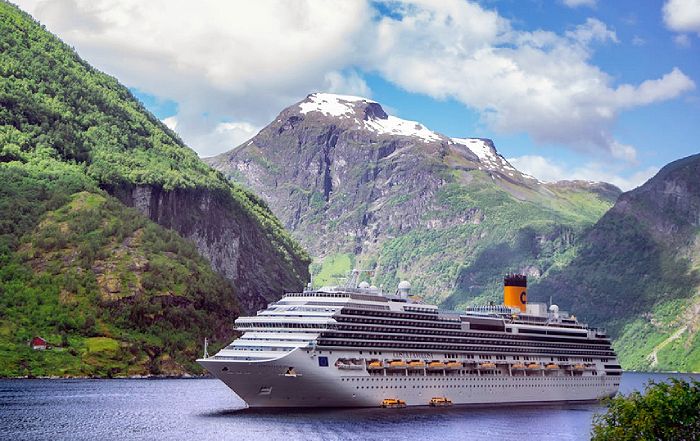
Cruising Norway's Fjords: The New Benchmark for Global Yachting Luxury
Norway's coastline, extending more than 1,600 nautical miles and carved by some of the most spectacular fjords on the planet, has matured by 2026 into one of the most strategically important and aspirational destinations in global yachting. For experienced owners, professional captains, and discerning charter clients from North America, Europe, Asia, and beyond, a Norwegian itinerary is no longer a niche, once-in-a-lifetime adventure; it has become a core component of a sophisticated cruising portfolio, combining raw natural drama with an increasingly refined ecosystem of marinas, shipyards, and premium onshore services. From the deep, glacially sculpted waters of Sognefjord to the softer, orchard-lined shores of Hardangerfjord, the country offers a sequence of experiences that resonate deeply with those who value authenticity, technical excellence, and environmental responsibility in equal measure.
For yacht-review.com, which has tracked Norway's evolution as a yachting hub across its cruising, travel, and technology coverage, the Norwegian fjords have become a touchstone for what modern luxury cruising should represent: a blend of advanced vessel design, thoughtful guest experiences, and credible sustainability practices. In 2026, this region is not simply a scenic backdrop for high-value assets; it is an operational testbed where the industry's most forward-thinking owners and operators prove what their yachts, and their teams, can really do.
A Global Magnet: Why Norway's Fjords Matter More Than Ever
By 2026, Norway's fjords have consolidated their status as a premier destination for yachts ranging from 20-metre family cruisers to 100-metre-plus exploration vessels. The combination of deep, sheltered waters, extensive coastal infrastructure, and year-round operational possibilities has made the country especially attractive to owners from the United States, United Kingdom, Germany, France, Italy, Spain, Netherlands, Switzerland, Canada, Australia, China, Japan, Singapore, and other key yachting markets. The Gulf Stream's moderating influence allows for extended seasons, and the diversity of fjord systems means that itineraries can be tailored to everything from high-adrenaline adventure to multi-generational family cruising.
At the same time, Norway's maritime ecosystem has continued to professionalize. Ports like Bergen¸ have invested in berth capacity, shore power, and yacht-specific services, while specialist agents and concierge providers have become adept at orchestrating complex itineraries involving helicopters, private aviation, and land-based lodges. For decision-makers evaluating where to deploy vessels for the northern summer, the Norwegian coast now competes directly with the Mediterranean's established hubs, but offers a very different value proposition built on nature, privacy, and authenticity. Those evaluating destinations through a business and investment lens can find broader context in yacht-review.com's business analysis, which frequently examines how infrastructure and regulation shape the attractiveness of emerging yachting regions.
Readers seeking an overview of the destination from a national tourism perspective can review the official guidance on boating and sailing in Norway, which aligns closely with the operational realities that professional crews now report.
Strategic Planning: Seasonality, Navigation, and Risk Management
Operating in Norway's fjords in 2026 requires a nuanced approach that combines digital navigation, local expertise, and a clear understanding of environmental regulations. The inner fjords are mostly calm and deeply dredged, but approaches from the North Sea and Norwegian Sea can quickly turn demanding, especially for larger yachts with tight schedules. Captains now routinely integrate high-resolution weather routing, advanced ECDIS systems, and satellite connectivity with traditional pilotage skills, recognizing that the narrow passages, steep rock faces, and sudden katabatic winds demand more than a purely technological solution.
Seasonal timing remains a critical variable. From late May to early August, long daylight hours and, north of the Arctic Circle, the Midnight Sun, allow extended cruising days, late-evening tenders, and flexible shore excursions. Shoulder seasons in April-May and September-October, increasingly favored by owners seeking quieter marinas and more exclusive experiences, offer sharper light, vibrant autumn colors, and fewer cruise ships, but also require more conservative weather margins and robust cold-weather outfitting. The Norwegian Coastal Administration continues to refine its digital services, and its official sailing directions and navigational information have become indispensable reference tools for professional bridge teams planning complex itineraries.
From a design and equipment standpoint, naval architects and engineers have responded to the demands of Nordic cruising with hull forms optimized for efficiency at displacement speeds, enhanced stabilisation for low-speed operation in swell, and upgraded heating, insulation, and glazing. Owners and project managers assessing refits or new builds with Norway in mind can turn to yacht-review.com's design coverage for independent commentary on which technical solutions genuinely enhance safety and comfort in high-latitude operations.
Signature Routes: The Fjords That Define the Experience
The Norwegian coast cannot be reduced to a single route; rather, it is a network of distinct cruising corridors, each with its own operational profile and experiential value. Among these, several stand out as foundational for any serious Norwegian itinerary.
Sognefjord: Deep Water, Long Horizons, and Operational Flexibility
Sognefjord, often referred to as the "King of the Fjords," remains the archetypal Norwegian cruising ground. Stretching more than 200 kilometres inland and reaching depths of over 1,300 metres, it offers ample water for larger yachts and a variety of anchorages and small ports, including Balestrand, and Kaupanger. The fjord's scale allows itineraries that balance days at anchor with nights in well-serviced marinas, and its side arms-such as Nærøyfjord, now tightly regulated for emissions and traffic-provide more intimate, dramatic scenery.
From an owner's perspective, Sognefjord's appeal lies in its combination of operational predictability and experiential richness: the Flåm Railway, widely profiled by global travel media, offers guests a seamless transition from yacht deck to high-mountain vistas, while local operators provide everything from RIB safaris to private hikes. The official Sognefjord tourism guide offers a useful complement to the more technically focused port and pilotage resources used by crews.
Geirangerfjord: Iconic Scenery and Tight Environmental Controls
Geirangerfjord, a UNESCO World Heritage Site, has become a symbol of Norway's environmental ambitions as much as its scenic grandeur. The towering cliffs, iconic waterfalls such as Seven Sisters and Suitor, and tightly enclosed basin are now governed by stringent local and national regulations that, by 2026, effectively require low- or zero-emission operation for larger vessels on certain days and seasons. For yacht owners, this has accelerated investment in hybrid propulsion, battery systems, and shore power compatibility, turning Geiranger into a real-world proving ground for green technology.
Guests, meanwhile, continue to experience the fjord largely as they always have: approaching slowly through morning mist, watching waterfalls emerge from the rock, and stepping ashore in a compact village that has adapted gracefully to its global profile. The UNESCO World Heritage listing for the West Norwegian Fjords provides useful background on the environmental and cultural values underpinning the regulatory framework that yachts must now respect.
Hardangerfjord: Landscape, Culture, and Culinary Discovery
Hardangerfjord offers a slightly softer, more pastoral counterpoint to the raw drama of Geiranger and Lysefjord. Known as Norway's "orchard by the sea," it is lined with fruit farms, cider producers, and small communities that have successfully leveraged high-end tourism without compromising local character. Ports such as Norheimsund and Odda provide well-equipped marinas, while access to the Folgefonna Glacier, historic sites like Røldal Stave Church, and a growing number of boutique hotels and restaurants create a rich onshore program for guests who value culture and gastronomy as much as scenery.
For captains and itinerary planners, Hardangerfjord's relatively benign conditions and proximity to Bergen make it an ideal component of a multi-week cruise that may also include Sognefjord, Geirangerfjord, and the southern archipelagos. The regional Hardangerfjord tourism portal provides updated information on events, marina services, and land-based experiences that can be integrated into a yacht's daily schedule.
Lysefjord: Technical Navigation and High-Impact Shore Adventures
Lysefjord, with its steep-sided granite walls and landmarks such as Preikestolen (Pulpit Rock) and Kjeragbolten, continues to attract yachts whose owners value more challenging navigation and dramatic, high-adrenaline excursions. The fjord's narrower sections and limited turning basins demand careful passage planning, especially for yachts over 40 metres, and many captains opt to embark local pilots in Stavanger to ensure safe transit.
From a guest-experience perspective, Lysefjord is where helicopter-supported hiking, climbing, and photography can be combined with the comfort of a fully serviced superyacht anchored in a quiet bay. Stavanger, a key hub for Norway's energy sector, also offers an interesting business dimension: yacht owners and charter clients with interests in offshore energy, maritime technology, or green shipping often use time in port to meet with local executives and innovators. The regional Lysefjord visitor guide provides a concise overview of the activities and logistical considerations relevant to these high-value visits.
Lofoten Islands: Arctic Character and Expedition Credentials
For those willing to venture above the Arctic Circle, the Lofoten Islands remain a defining test of a yacht's expedition credentials. Sharp peaks plunging directly into the sea, fishing villages such as Svolvær and Henningsvær, and the interplay of Midnight Sun in summer and Northern Lights in winter create an atmosphere that is fundamentally different from the southern fjords. The waters are more exposed, currents stronger, and weather more volatile, demanding robust seamanship and flexible planning.
By 2026, a growing number of large private and charter yachts, particularly from United States, United Kingdom, Germany, France, Italy, Netherlands, Sweden, Norway, Denmark, Finland, and Switzerland, have added Lofoten to their northern itineraries. The official Visit Lofoten site provides detailed information on marinas, anchorages, and cultural offerings, while yacht-review.com's cruising reports increasingly highlight best practices for operating safely and comfortably in these high-latitude conditions.
Life Onboard and Ashore: Curating High-Value Experiences
Norway's fjords reward yachts that are able to function as both autonomous expedition platforms and refined hospitality environments. The most successful Norwegian programs in 2026 are those in which onboard design, crew training, and shore partnerships have been deliberately aligned to the realities of the region.
Onboard, the trend towards large observation lounges with floor-to-ceiling glass, heated exterior decks, and wellness areas configured for colder climates has continued. Owners commissioning new builds or refits with Norway in mind are increasingly specifying enhanced insulation, underfloor heating, advanced air filtration, and multi-purpose spaces that can shift from casual family use to formal entertaining without sacrificing views. The international yacht media, including platforms such as SuperYacht Times, regularly document these design evolutions, and yacht-review.com's own design section provides a curated perspective focused on what truly adds value in demanding cruising grounds.
Ashore, Norway has reached a level of sophistication that allows itinerary planners to combine authentic local encounters with globally recognized luxury standards. In Bergen, the historic Bryggen Wharf area, a UNESCO-listed site, sits alongside modern hotels and restaurants, while Trondheim offer an increasingly polished mix of galleries, museums, and Nordic gastronomy. The MICHELIN Guide for the Nordic countries, accessible via the official Michelin site, now includes a growing number of Norwegian establishments that can be integrated into high-end yacht itineraries, ensuring that guests' culinary expectations are met both onboard and ashore.
For families, Norway is particularly well-suited to multi-generational cruising. Safe, sheltered anchorages, accessible hiking trails, wildlife encounters, and educational excursions to museums and heritage sites create a balanced program for children, parents, and grandparents alike. yacht-review.com's family-focused content often uses Norwegian case studies to illustrate how itineraries can be structured to keep all age groups engaged without over-scheduling or compromising safety.
Sustainability and Regulation: Norway as a Laboratory for Responsible Yachting
By 2026, Norway has firmly established itself as a global reference point for sustainable maritime policy, and this has direct implications for yacht owners considering extended cruising in its waters. The combination of national climate targets, local air-quality concerns in fjord communities, and international environmental commitments has produced a regulatory framework that is both demanding and forward-looking.
The Norwegian Maritime Authority continues to refine and enforce regulations governing emissions, waste management, and safety in coastal and fjord areas. Its official English-language portal, the Norwegian Maritime Authority site, provides detailed guidance on requirements for low- and zero-emission operation in certain protected fjords, use of shore power, and handling of greywater and blackwater. For yachts built or refitted in the last several years, compliance is increasingly a matter of integrating existing onboard systems with local infrastructure; for older vessels, it can require significant upgrades.
Parallel to regulatory pressure, Norway has invested heavily in green port infrastructure. Major hubs such as Bergen, Stavanger, Trondheim, now offer high-capacity shore power, advanced waste reception, and, in some cases, access to alternative fuels. Smaller ports are following suit, often with support from national programs documented by organizations such as Enova, whose Green Ports initiatives highlight how public funding is accelerating the decarbonisation of maritime infrastructure.
For owners and charter clients, this shift has tangible reputational benefits. Guests are increasingly sophisticated in their understanding of environmental issues and, in markets such as United States, United Kingdom, Germany, France, Netherlands, Sweden, Norway, Denmark, Finland, Canada, Australia, New Zealand, Singapore, Japan, and Switzerland, are actively seeking experiences that align with their values. Norway's regulatory framework, combined with the industry's response, allows operators to credibly position Norwegian itineraries as both luxurious and responsible. Organizations such as Sustainable Travel International provide additional frameworks and tools for operators wishing to go beyond compliance and embed sustainability more deeply into their business models.
From a conservation perspective, the Norwegian fjords are also an important arena for marine and coastal research. Institutions such as the Norwegian Institute for Nature Research, accessible via NINA's English portal, contribute data and best practices that inform guidelines on wildlife interactions, noise pollution, and habitat protection. Captains and expedition leaders who integrate this knowledge into their operating procedures-adjusting speed around whale pods, minimizing disturbance to seabird colonies, and coordinating with licensed local guides-are not only protecting the environment but also enhancing the quality and depth of guest experiences.
For readers who wish to understand how these dynamics intersect with yacht design, propulsion, and onboard systems, yacht-review.com's technology coverage and sustainability reports provide a structured, technically literate overview of the solutions now being deployed on leading vessels.
Operational Realities: Crew, Infrastructure, and Market Positioning
Running a successful Norwegian program in 2026 is not just about choosing the right fjords; it is about building the right operational framework around the yacht. This starts with crew. Navigating narrow, steep-sided waterways, managing tenders in confined harbors, coordinating helicopter operations in variable weather, and delivering a consistently high standard of hospitality in a relatively remote environment all demand a well-trained, well-supported team. Many crews now undertake specialist training in cold-water survival, environmental compliance, and Arctic navigation, often through institutions such as the Maritime Academy of Norway, which details its programs on the academy's official site.
Berth availability and marina capacity remain practical considerations, particularly in peak summer months. Prime berths in Bergen, Trondheim, and key Lofoten ports can be heavily subscribed, and professional agents with strong local networks are often critical in securing preferred positions. Where dockage is limited, well-protected anchorages and efficient tender operations can maintain guest comfort and access to shore. For owners and captains evaluating specific marinas and service providers, yacht-review.com's reviews offer candid assessments of facilities, service culture, and value.
Weather remains a defining variable. While Norway's national forecasting service, accessible via Yr.no, provides some of the most accurate coastal forecasts available, captains still need to build flexibility into itineraries, particularly when operating in northern regions or shoulder seasons. Lay days, alternative anchorages, and backup shore programs are now standard features of well-crafted Norwegian itineraries, ensuring that guest experience is not compromised by necessary operational caution.
From a market positioning standpoint, Norway has become a powerful differentiator for both private owners and charter operators. In an environment where many high-net-worth individuals have already experienced the Mediterranean, Caribbean, and increasingly Asia-Pacific destinations such as Thailand, Malaysia, and New Zealand, the ability to offer a meticulously curated Norwegian program signals both sophistication and seriousness. For charter operators, especially those targeting clients from United States, United Kingdom, Germany, France, Italy, Spain, Netherlands, Switzerland, Canada, Australia, Brazil, South Africa, Singapore, Japan, South Korea, and China, Norway's blend of safety, infrastructure, and exclusivity has become a compelling proposition, often featured prominently in marketing materials and discussed in yacht-review.com's global market coverage.
Norway and the Future of High-Latitude Cruising
As the yachting industry looks ahead to the late 2020s, Norway's fjords occupy a central place in discussions about the future of high-latitude cruising. The country's combination of ambitious climate policy, strong maritime engineering capabilities, and well-organized tourism sector has created a living laboratory in which new vessel types, fuels, and operating models can be tested at scale. Concepts such as hydrogen-powered passenger vessels, fully electric fjord ferries, and shore-based energy storage systems are no longer theoretical; they are being deployed in the very waters that yachts now frequent.
For yacht-review.com, this makes Norway not just a destination to be described, but a strategic lens through which to examine broader industry trends. Articles in our news and technology sections increasingly reference Norwegian case studies when discussing regulatory risk, investment opportunities, and the competitive positioning of shipyards and equipment manufacturers. The lessons learned in the fjords are already influencing design briefs, refit priorities, and operational doctrines for yachts that may never visit Norway but will nonetheless operate in a world shaped by the same environmental and regulatory forces.
For owners, captains, and charter clients considering Norway in 2026 and beyond, the message is clear. This is no longer an experimental frontier where only the most rugged expedition yachts can operate; it is a mature, well-supported, and strategically important cruising region that rewards those who approach it with preparation, respect, and curiosity. The fjords offer not just scenery, but a chance to participate in a living narrative about how luxury, technology, and environmental responsibility can coexist.
Readers seeking to deepen their understanding of how Norway compares with other global cruising grounds can explore yacht-review.com's broader travel and lifestyle coverage, while those interested in the historical roots of Norway's maritime culture will find relevant context in our history section. Across all of these perspectives, one conclusion emerges consistently: for the global yachting community in 2026, Norway's fjords are not merely another waypoint on a crowded map, but a benchmark against which the quality, integrity, and ambition of modern cruising can be measured.