

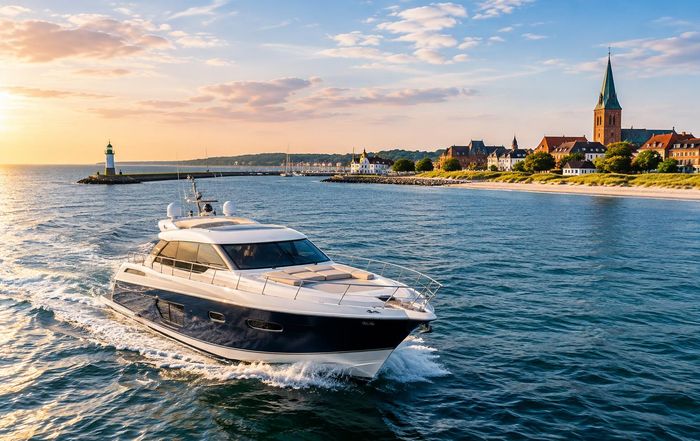
Exploring Germany's Baltic Coast by Motor Yacht
Germany's Baltic shoreline rewards slow travel. It is not a coast defined by one single marquee destination, but by a sequence of harbors, islands, spa towns, cliffs, estuaries, and protected waters that change character from one passage to the next. For motor yacht crews, that variety is the appeal. One day can mean a short hop between marinas and a long lunch ashore; the next can involve open-water planning around weather, shoals, and shipping lanes, with a quiet anchorage or a historic port waiting at the end. The region also sits at the intersection of leisure cruising, maritime history, and environmental responsibility, which makes it especially interesting for owners who want more than a simple point-to-point itinerary.
The Baltic is also a very practical cruising ground if the boat and the crew are prepared for it. Distances are manageable, infrastructure is generally strong, and many ports are accustomed to visiting yachts. At the same time, the coastline is not benign: weather can change quickly, commercial traffic is real, and some of the most attractive areas are also the most sensitive. That combination of accessibility and discipline is what gives the German Baltic its particular appeal. For readers planning a cruise, the best starting points are usually the regional context, the right season, and a clear sense of what kind of experience they want, whether that is cruising, design, or a broader look at boats that suit northern waters.
Why this coastline works so well for motor yachts
The German Baltic coast is compact enough to encourage flexible itineraries, but varied enough to keep each leg interesting. From Schleswig-Holstein through Mecklenburg-Vorpommern, the coastline offers a mix of island cruising, mainland ports, and inland approaches through lagoons and channels. That matters for motor yachts because speed and range can be used strategically: a yacht can cover meaningful distance in a day without making the passage feel rushed, yet still stop often enough to enjoy smaller towns and sheltered harbors. Compared with more exposed cruising grounds, this part of Europe often rewards careful route planning over long, hard passages.
It is also a region where local maritime culture is easy to feel. Historic Hanseatic influence, fishing traditions, regatta activity, and contemporary marina development all coexist. That blend gives the coast a layered character that many cruising grounds lack. A crew can spend the morning walking a restored old town, the afternoon on deck in a quiet inlet, and the evening in a harbor that is fully equipped for modern yachts. For readers interested in the wider context of seaborne travel and route choice, travel and global cruising coverage often helps frame the practical decisions behind an itinerary.
The best-known cruising areas and what each offers
Rügen is often the first name that comes up, and for good reason. Germany's largest island offers striking scenery, including chalk cliffs, wooded shorelines, and a coastline that alternates between open views and protected waters. It is a place where a motor yacht can combine scenic running with easy shore access, and where the pace can be adjusted day by day. Nearby Hiddensee has a different feel: quieter, more low-key, and better suited to crews who want to slow down rather than tick off landmarks. The contrast between the two islands is part of what makes the area compelling.
Further west, the Bay of Lübeck and the approach to the old Hanseatic world bring a more urban and historical dimension. Lübeck itself is not a yacht destination in the marina-first sense, but the surrounding waters connect to a wider network of ports and towns that reward a careful itinerary. Travelling eastward, the Mecklenburg coast opens up into long stretches of shore, lagoons, and resort towns, with places such as Kühlungsborn and Warnemünde drawing particular attention from visiting yachts. Those who want a more detailed editorial lens on this part of the world may also find history and news useful, especially when looking at port development, heritage preservation, or regional maritime policy.
Navigating the practical realities
The German Baltic coast is enjoyable precisely because it still requires seamanship. Charts need to be current, because shallows, shifting sands, and local restrictions can matter more here than in some deeper-water cruising areas. Weather planning is equally important. Summer conditions are often pleasant, but the Baltic can still produce brisk winds, chop, and fast-changing visibility, especially when fronts move through. A motor yacht's ability to adjust timing is useful, but it should not be mistaken for immunity to local conditions. Even short passages deserve proper route review, particularly near narrow approaches and busy traffic corridors.
Commercial shipping is another factor that distinguishes the region. Ferries, cargo traffic, and larger vessels are part of the operating environment, especially near major ports and transit routes. That does not make cruising difficult, but it does mean watchkeeping should remain disciplined. Good communication, conservative speed management, and a willingness to alter plans when traffic or weather dictates are all part of the experience. For owners and guests who care about the technical side of yacht operation, technology reporting can be a useful companion to the practical realities of local navigation, electronics, and onboard systems.
Marinas, services, and the shape of a comfortable itinerary
One of the strengths of the German Baltic is the quality of its marina network. Visiting yachts can usually find fuel, provisioning, shore power, and maintenance support in the more established ports, while smaller harbors often provide a calmer atmosphere and a more local feel. That makes itinerary design relatively straightforward: a yacht can alternate between full-service stops and quieter overnights without sacrificing comfort. For longer cruises, this balance is important. It allows the crew to manage water, fuel, laundry, and guest expectations without building the trip around a single large port.
The best itineraries tend to be shaped by rhythm rather than distance alone. A practical route might combine a major marina arrival, a short island crossing, a day spent in a scenic anchorage or sheltered harbor, and then another urban stop for dining and provisioning. That pattern works well because it respects both the operational needs of the yacht and the leisure value of the coastline. Readers interested in how yacht life extends beyond the voyage itself may want to explore lifestyle and family perspectives, especially if children or multigenerational guests are part of the trip.
Seasonality and the best time to go
Timing matters more than many first-time visitors expect. The main cruising season is naturally concentrated in the warmer months, when daylight is long and marina life is at its most active. That is when the coastal towns feel most animated, ferries and day-trippers are busiest, and the social side of the region is strongest. It is also the period when a motor yacht can make the most of open-air living, tender runs, and relaxed shore excursions. For many crews, late spring through early autumn is the sweet spot, with the exact window depending on how much emphasis is placed on weather stability versus quieter harbors.
Shoulder seasons can be rewarding for experienced operators, but they ask for more flexibility. Fewer crowds can make the coastline feel more intimate, yet some services may be reduced and weather windows narrower. The trade-off is familiar to anyone who cruises in northern Europe: the less crowded the trip, the more deliberate the planning has to be. That is not a drawback so much as a different style of cruising. For readers comparing regional conditions, Germany's maritime identity and broader European cruising patterns help explain why the Baltic often feels both orderly and variable at the same time.
Environmental sensitivity is part of the experience
The Baltic is a beautiful but fragile sea, and that reality increasingly shapes how yachts should approach the region. Nutrient loading, habitat pressure, coastal development, and marine traffic all affect the health of the water and shoreline. For visiting yachts, the most relevant response is not rhetoric but practice: careful waste management, respect for no-discharge rules where applicable, attention to anchoring restrictions, and a general preference for low-impact behavior. The region's appeal depends in part on its ecological integrity, so responsible cruising is not an optional extra.
That emphasis is especially relevant in protected or ecologically sensitive areas, where local rules may be stricter than crews expect. It is wise to confirm current regulations before arrival rather than assuming that a familiar anchoring habit will be acceptable everywhere. The good news is that many yacht owners already value this approach, and the Baltic rewards it by preserving the very qualities that make cruising there worthwhile. For a broader editorial view on cleaner boating and efficient onboard systems, sustainability is the most relevant internal lens, while organizations such as the International Maritime Organization, Helcom, and the European Environment Agency provide useful context on the wider marine policy environment.
Heritage, resorts, and the appeal ashore
Part of the pleasure of the German Baltic is that the shore experience is never an afterthought. The coast is lined with spa architecture, old towns, promenades, and monuments that reflect centuries of trade, conflict, and recreation. In some places, the appeal is architectural; in others, it is the atmosphere of a working harbor or the quiet dignity of a small island community. A motor yacht makes it easy to sample several of these moods in one trip, which is one reason the region suits guests with mixed interests. Some may come for the scenery, others for the food, and others simply for the pleasure of moving between places that feel distinct rather than interchangeable.
This is also where the Baltic differs from more purely resort-driven cruising grounds. The region has enough history to give each stop a narrative, but not so much that it feels like a museum. Sailing heritage, Hanseatic trade, and modern leisure boating coexist in a way that feels lived-in rather than staged. That balance is particularly appealing to readers who value community and maritime culture as much as onboard comfort. It also explains why local events, regattas, and seasonal festivals can be worth timing a passage around when the schedule allows.
What a well-planned cruise actually feels like
A successful motor yacht cruise along Germany's Baltic coast is rarely about covering the maximum possible distance. It is more often about matching the yacht's capability to the coastline's tempo. The best days are usually the ones that combine a measured passage, a good harbor arrival, and enough time ashore to understand where you are. That might mean a morning departure after weather and traffic checks, a lunch stop in a sheltered port, and an evening walk through a historic center or along a beach promenade. The trip becomes memorable not because it is dramatic every hour, but because it is coherent from one day to the next.
For owners considering the region for the first time, that is the key takeaway. Germany's Baltic coast is not simply a stretch of water to be crossed; it is a cruising ground that rewards curiosity, patience, and good seamanship. It is accessible without being simplistic, scenic without being remote, and modern without losing its sense of place. For many motor yacht crews, that combination is exactly what makes it worth returning to.