

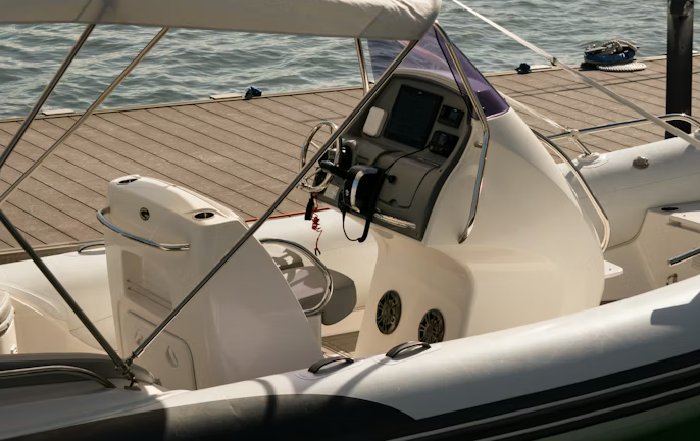
The Luxury Tender Market: More Than Just a Support Boat
Redefining the Role of the Tender in 2026
Today the luxury tender has decisively stepped out of the shadow of the mothership and into a position of strategic importance in the global yachting ecosystem, evolving from a purely functional shuttle into a highly customized extension of the owner's lifestyle, brand, and operational philosophy. For the audience of yacht-review.com, which has long tracked the shift from traditional support craft to multi-role luxury platforms, this transformation is now visible across every major yachting hub, from the Mediterranean and Caribbean to the Pacific, the Gulf, and emerging Asian markets, where tenders are increasingly treated as standalone assets that command their own design language, technology roadmap, and investment logic.
This evolution has been driven by a combination of factors: the growth of the superyacht and gigayacht fleet, the rise of expedition and explorer vessels, the expectations of ultra-high-net-worth families for seamless door-to-deck experiences, and the accelerating push toward sustainability and innovation that is reshaping the broader marine sector. As a result, the luxury tender market now intersects not only with yacht ownership but also with urban mobility, resort logistics, and branded lifestyle experiences, making it a crucial subject for decision-makers who follow the business and technology coverage on yacht-review.com/business.html and yacht-review.com/technology.html.
From Workhorse to Brand Statement
Historically, tenders were viewed as workhorses: simple, robust boats designed primarily for safe transfer between shore and yacht, provisioning, and crew operations. That paradigm has been thoroughly disrupted as owners, designers, and shipyards have come to regard the tender as the first and last touchpoint in the guest journey, and therefore as a powerful branding and experiential tool. In the United States, the United Kingdom, and across Europe, clients now expect the tender to mirror the aesthetic identity and performance ethos of the mothership, whether that vessel is a minimalist Northern European explorer, an Italian planing superyacht, or a classic displacement yacht cruising between the Côte d'Azur and Balearic Islands.
This shift is evident in the way leading yards and designers coordinate hull forms, interior palettes, and even lighting signatures between superyachts and their tenders, ensuring continuity of experience from marina arrival to main deck reception. Platforms such as yacht-review.com/design.html have chronicled how the tender's profile, upholstery choices, and even helm ergonomics are now discussed as carefully in owner's meetings as the yacht's beach club layout, reflecting the tender's new status as a mobile calling card for the owner's taste and values.
Segmentation and Specialization Across the Fleet
The luxury tender market in 2026 is deeply segmented, with owners of 50-80 metre yachts often operating two to four tenders, and gigayachts in excess of 100 metres deploying entire fleets that include limousine tenders, open sports RIBs, landing craft, chase boats, and specialist toys and support vessels. For yacht-review.com readers who follow yacht-review.com/boats.html and yacht-review.com/reviews.html, this segmentation has created a rich field of comparative analysis, where performance metrics, build quality, and mission profiles are scrutinized with the same rigor once reserved for the mothership alone.
Limousine tenders have become particularly prominent in markets such as Monaco, Miami, Dubai, and Singapore, where privacy, climate control, and discreet transfer are paramount, leading to enclosed, automotive-inspired designs with panoramic glazing, advanced sound insulation, and bespoke seating arrangements. Meanwhile, open day tenders and chase boats, frequently exceeding 12-15 metres and built by specialist brands in Italy, the Netherlands, Sweden, and the United States, are optimized for speed, range, and watersports capability, often serving as de facto day cruisers that operate independently of the mothership for coastal exploration or high-speed commuting between coastal properties and yachts.
The Global Footprint: Regional Dynamics and Demand
The luxury tender market is now unmistakably global, but regional nuances are shaping product development and sales strategies. In North America, and particularly in the United States and Canada, owners prioritize versatility and ruggedness, expecting tenders that can operate comfortably in both tropical and colder waters, with robust structures suited to the Pacific Northwest, New England, and Great Lakes as much as to Florida and the Bahamas. In contrast, Mediterranean-centric owners in France, Italy, Spain, and the wider European region often emphasize style, social space, and high-speed coastal cruising, drawing on a design heritage that blends automotive and nautical influences.
Northern European markets such as Germany, the Netherlands, Norway, Denmark, Sweden, and Finland have become centers of technical excellence in hull design, engineering, and hybrid propulsion, with shipyards and technology firms collaborating to push the boundaries of efficiency and safety. In Asia, particularly in China, Singapore, South Korea, Thailand, and Japan, tenders increasingly serve dual roles as yacht support craft and urban water taxis or resort shuttles, reflecting the rise of integrated waterfront developments and marine tourism. South Africa and Brazil, along with emerging hubs in the Middle East and Indian Ocean, are contributing to a diversified demand profile that is tracked closely in the global coverage of yacht-review.com/global.html and yacht-review.com/travel.html.
Design Innovation: Where Form Meets Function
The design of luxury tenders in 2026 reflects a mature understanding that these vessels must reconcile multiple, sometimes conflicting demands: compact stowage dimensions with generous onboard space, high performance with low noise and vibration, and striking aesthetics with strict safety and regulatory requirements. Naval architects and industrial designers are leveraging advanced 3D modeling, virtual reality visualization, and computational fluid dynamics, as documented by institutions such as RINA and DNV, to create hulls that plane efficiently while maintaining comfort in chop, and to integrate folding terraces, retractable roofs, and modular seating without compromising structural integrity.
On yacht-review.com/design.html, readers see how the boundary between tender and small yacht is increasingly blurred, with many luxury tenders featuring full wet bars, climate-controlled cabins, gyro stabilizers, and sophisticated audio-visual systems that would have been unthinkable on a support craft a decade ago. Some of the most ambitious projects emerge from collaborations between leading superyacht designers and automotive marques, echoing trends covered by organizations such as Superyacht UK and SYBAss, resulting in tenders that echo the language of luxury SUVs and GT cars, complete with advanced lighting, material innovation, and intuitive user interfaces.
Technology as a Differentiator
Technological sophistication has become a core differentiator in the luxury tender segment, with owners and captains expecting the same level of integration and reliability they experience on the mothership. Modern tenders in the United States, Europe, and Asia frequently feature fully integrated navigation suites, digital switching, and remote diagnostics, all connected through secure onboard networks that can be monitored from the yacht's bridge, technical spaces, or even shoreside offices. For readers following innovation on yacht-review.com/technology.html, this convergence of marine electronics, cybersecurity, and data analytics is reshaping how tenders are specified, maintained, and operated.
Electric and hybrid propulsion is a particularly dynamic area, with manufacturers drawing on developments in the broader maritime and automotive sectors. Organizations such as the International Maritime Organization (IMO) and initiatives highlighted by Learn more about sustainable business practices. are influencing how yards think about emissions, noise, and energy management, especially for tenders operating in protected marine areas or near densely populated waterfronts. Battery-electric limousine tenders are now a realistic option for short-range transfers in harbors such as Monaco, Amsterdam, and Singapore, while hybrid systems combining diesel engines with electric drives and advanced energy storage are gaining ground for chase boats and multi-role tenders that require greater range.
Sustainability and the New Environmental Imperative
Sustainability is no longer a peripheral topic in the luxury tender market; it is central to discussions among owners, family offices, shipyards, and charter operators, particularly in Europe, North America, and increasingly in Asia-Pacific. The work of organizations such as the Water Revolution Foundation and guidelines promoted by the World Wildlife Fund (WWF) have helped to shift expectations around fuel consumption, underwater noise, and materials, pushing tender builders to explore lightweight composites, sustainably sourced teak alternatives, and low-impact antifouling solutions. On yacht-review.com/sustainability.html, this is reflected in a growing number of profiles and case studies examining how tenders can contribute to a yacht's overall environmental strategy rather than undermining it.
Owners who commission new builds in Germany, the Netherlands, Italy, and the United Kingdom increasingly ask for lifecycle assessments and transparent supply chains, while charter clients in destinations such as the Caribbean, South Pacific, and Indian Ocean expect operators to demonstrate responsible practices, including the use of low-emission tenders for guest transfers in sensitive marine environments. The adoption of shore power and fast-charging infrastructure in marinas, supported by policy frameworks discussed by bodies like the European Commission, further enables the deployment of electric tenders, particularly in urban and resort contexts where range demands are predictable and infrastructure investment can be justified.
The Business Case: Investment, Resale, and Charter Dynamics
From a business perspective, the luxury tender market has become a significant line item in the total cost of yacht ownership and operation, and a critical factor in charter competitiveness. Owners in the United States, United Kingdom, Germany, France, and Italy are increasingly aware that a well-specified, meticulously maintained tender fleet can enhance charter rates and occupancy, especially in high-demand regions such as the Mediterranean and Caribbean, where guests compare not only yachts but also the quality of the onboard and offboard experience. Coverage on yacht-review.com/news.html and yacht-review.com/business.html frequently highlights how brokers now market tenders as core features, emphasizing limousine comfort, watersports capability, and eco-credentials.
Resale value is another critical consideration. Premium tenders from established European and North American builders, equipped with up-to-date navigation, propulsion, and safety systems, tend to retain value better and move more quickly on the secondary market, especially in regions such as the United States, Australia, and New Zealand where stand-alone tender ownership is common for coastal property owners and resort operators. For family offices and asset managers, this has led to more structured procurement strategies, with technical due diligence, digital documentation, and standardized maintenance protocols becoming the norm, supported by class societies and insurance providers that increasingly recognize the risk and value profile of tenders as distinct from the mothership.
Family, Lifestyle, and the Human Dimension
Beyond technology and finance, the luxury tender market is being shaped by the evolving lifestyles and expectations of yacht-owning families and multigenerational groups. On yacht-review.com/family.html and yacht-review.com/lifestyle.html, readers encounter narratives in which tenders are portrayed as enablers of shared experiences rather than merely logistical tools, whether that means early-morning fishing excursions off the coast of Florida, wakeboarding sessions in the Greek islands, or discreet transfers to Michelin-starred restaurants along the French and Italian Rivieras.
Safety, accessibility, and comfort for all age groups are central to this evolution. Designers and builders now incorporate child-friendly boarding solutions, shaded seating, adaptable layouts, and enhanced handholds, while also considering the needs of older family members and guests with reduced mobility. In markets such as Switzerland, the Netherlands, and Scandinavia, where precision engineering and understated luxury are highly valued, there is growing demand for tenders that combine quiet propulsion with warm, tactile interiors, creating calm, secure environments for family outings on lakes, fjords, and sheltered coastal waters. This human-centered approach underscores the tender's role as a bridge between the yacht and the destinations that define a family's travel narrative.
Events, Destinations, and the Rise of the Tender as Experience Platform
As international yachting events, regattas, and boat shows have returned to full strength by 2026, the tender has emerged as a central protagonist in how owners and guests experience these gatherings. At major events in Monaco, Cannes, Fort Lauderdale, Miami, Dubai, Singapore, and Sydney, tenders serve as floating lounges, hospitality platforms, and mobile viewing decks, enabling guests to move fluidly between yachts, shore-based venues, and racecourses. Coverage on yacht-review.com/events.html illustrates how some owners commission event-specific tender configurations, with enhanced sound systems, branding elements, and flexible seating to host VIPs, corporate partners, or media teams.
Destinations themselves are also reshaping tender design and deployment. Expedition cruising to remote regions such as Antarctica, the Arctic, and the South Pacific demands tenders capable of operating safely in challenging conditions, including cold water, ice, and surf landings, prompting the development of robust landing craft with reinforced hulls and advanced safety equipment, in line with guidelines from organizations such as IAATO and IMO. In warmer regions such as Southeast Asia, the Caribbean, and the Indian Ocean, the focus shifts to shallow-draft, reef-friendly designs with excellent ventilation and easy access to the water, supporting snorkeling, diving, and beach landings that define the guest experience in places like Thailand, the Maldives, and the Bahamas.
Community, Workforce, and Knowledge Sharing
The luxury tender sector is also supported by a growing professional community of designers, builders, captains, engineers, and crew, who exchange knowledge through industry associations, online platforms, and events. On yacht-review.com/community.html, there is a clear recognition that tenders demand specialized operational expertise, from launch and recovery procedures on large yachts to maintenance protocols that account for high-intensity usage and frequent saltwater exposure. Captains and engineers from the United States, the United Kingdom, the Netherlands, Germany, and Australia often share best practices on specifying tender garages, davit systems, and safety equipment, while crew training programs increasingly include modules dedicated to tender handling, guest interaction, and emergency response.
This professionalization has tangible benefits for owners and charter clients, as it reduces downtime, enhances safety, and ensures that tenders deliver consistent performance in demanding environments. It also creates a feedback loop that informs future design and technology choices, with builders incorporating real-world operational insights into new models and custom projects. Industry bodies and training organizations, often working in alignment with standards promoted by MCA and STCW, contribute to a culture in which tenders are treated as critical assets requiring the same level of discipline and expertise as the mothership.
The Next Chapter for Luxury Tenders - Drifting Onwards
The luxury tender market stands at an inflection point where design, technology, sustainability, and lifestyle considerations are converging into a coherent, globally relevant narrative. For the high-net-worth readership of yacht-review.com, which typically North America, Europe, Asia, the tender is no longer a peripheral topic but a central lens through which to understand broader trends in yachting, from decarbonization and digitalization to changing patterns of ownership, charter, and travel. The most forward-looking owners and shipyards now approach tender procurement as a strategic exercise, aligning vessel capabilities with long-term cruising plans, family dynamics, and brand positioning, rather than treating tenders as afterthoughts to be specified late in the build process.
Platforms such as yacht-review.com/cruising.html, yacht-review.com/history.html, and yacht-review.com/reviews.html will continue to document how tenders evolve from their origins as simple workboats into sophisticated, multi-role craft that carry the identity of the yacht and the aspirations of its owners into marinas, harbors, and remote anchorages worldwide. Whether deployed as silent electric limousines in European cities, rugged support craft for polar expeditions, or family day boats along the coasts of the United States, Australia, New Zealand, and South Africa, luxury tenders are now indisputably more than just support boats; they are integral, high-value components of a global yachting culture that prizes experience, expertise, authoritativeness, and trustworthiness in every decision made on the water.
For those charting their next acquisition, refit, or new-build program, the tender deserves a place at the center of strategic planning, not at its margins. In doing so, owners and industry professionals alike will shape a market that continues to push boundaries, respond responsibly to environmental imperatives, and deliver ever richer, more personal experiences across the seas and waterways that define the world of modern yachting.