

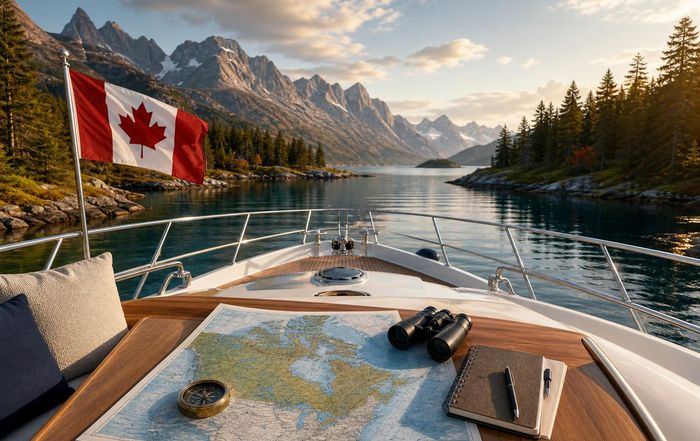
Planning a Yacht Voyage Across Canada
A bluewater nation with inland horizons
For yacht owners and charter guests, Canada presents a uniquely compelling challenge: a country defined as much by its inland waterways and rugged coasts as by its vast landmass, yet still relatively underexplored compared with the Mediterranean or Caribbean. Planning a yacht voyage across Canada is less about a single linear route and more about orchestrating a series of interconnected cruising chapters, each with its own climate, regulations, infrastructure and cultural character. From the Pacific fjords of British Columbia to the island-dotted St. Lawrence and the raw drama of the Atlantic Maritimes, long-range cruising in Canada increasingly attracts owners seeking authentic experiences, cooler summer temperatures and a sense of discovery that is harder to find on more saturated routes.
For the sailing fans here, which is already familiar with high-end vessels, refined onboard lifestyle and global itineraries, Canada offers an opportunity to combine serious seamanship with elevated comfort. A successful voyage demands careful attention to route planning, regulatory compliance, seasonal weather windows and shore-based logistics, but it also rewards that preparation with world-class scenery, genuine hospitality and a growing network of marinas and service providers that understand the expectations of the international yachting community.
Understanding the geography of a Canadian crossing
Canada does not present a continuous, fully protected waterway from Pacific to Atlantic comparable to the Intracoastal Waterway in the United States. Instead, a coast-to-coast yacht journey typically unfolds as a sequence of distinct cruising regions that can be linked by offshore passages, inland routes, or in some cases overland transport for the yacht itself.
On the Pacific side, the primary gateway is the Strait of Georgia and the intricate channels of the Inside Passage between Vancouver Island and the British Columbia mainland. This region offers sheltered waters, well-developed marinas and yard facilities, and access northward toward the Central Coast and Great Bear Rainforest. Further north, adventurous yachts can continue toward the Alaska Panhandle, often weaving in and out of Canadian and U.S. waters. Detailed information on these coastal routes is available through Fisheries and Oceans Canada and the Canadian Hydrographic Service, which publish official charts and sailing directions that remain the foundation of safe navigation in these complex waters. Learn more about Canadian nautical charts and publications via the Canadian Hydrographic Service.
Connecting Canada's interior with its eastern seaboard is the Great Lakes-St. Lawrence system, one of the world's great inland waterways. Yachts can enter from the Atlantic via the St. Lawrence River, proceed through the system of locks and canals that bypass rapids and dams, and reach the Great Lakes, which together form a freshwater cruising ground of immense scale. The St. Lawrence Seaway Management Corporation and its U.S. counterpart provide detailed operational guidance, lock schedules and draft limitations for vessels transiting this corridor; more information can be found on the Great Lakes St. Lawrence Seaway System.
On the Atlantic side, the primary yachting regions extend from the Gaspé Peninsula and the Gulf of St. Lawrence to the coasts of Nova Scotia, New Brunswick, Prince Edward Island and Newfoundland and Labrador. The Bay of Fundy, famous for its extreme tides, and the scenic coves of Nova Scotia's South Shore, including Halifax and Lunenburg, have become increasingly visible in international cruising itineraries. For yachts with polar ambitions, the Canadian Arctic archipelago and the Northwest Passage represent one of the most challenging and highly regulated routes on earth, and any discussion of a truly trans-Canadian voyage must at least acknowledge the possibility of a high-latitude transit, even if it remains beyond the scope of many private programs.
Choosing a route: Pacific to Atlantic, or region by region
Owners considering a "cross-Canada" voyage must first decide whether their ambition is symbolic or literal. A literal coast-to-coast journey in a single season, moving from British Columbia to the Maritimes or vice versa, is possible for capable yachts with sufficient range, robust engineering and an experienced crew, but it requires long offshore legs or a combination of coastal and inland segments that can be logistically intensive. Many owners instead adopt a more modular approach, dedicating one season to the Pacific Northwest, another to the Great Lakes and St. Lawrence, and a third to the Atlantic provinces, sometimes with the yacht transported overland or by ship between regions.
For those intent on a continuous voyage, the primary decision involves how to bridge the gap between the Pacific coast and the Great Lakes-St. Lawrence system. One option is to route south along the U.S. West Coast, transit the Panama Canal and return north along the U.S. East Coast before entering the St. Lawrence. Another, more technically demanding option is to cruise north along the British Columbia and Alaska coasts, then attempt a Northwest Passage transit across the Canadian Arctic before descending through Baffin Bay and into the Atlantic. The latter route is heavily constrained by sea ice, weather, search and rescue capacity, and environmental regulations, and it has become a focus of international scientific and policy attention as climate change alters ice patterns. The Government of Canada's Arctic shipping safety information and the International Maritime Organization's Polar Code guidance are essential resources for any yacht even contemplating such a passage; those interested in the regulatory framework can review Arctic shipping requirements on Transport Canada's Arctic pages.
For many yachts, the most practical approach to a Canadian "crossing" is to treat the country as three interconnected but distinct cruising theatres. The Pacific Northwest can be explored in depth in one or two seasons, perhaps in combination with Alaska. The yacht can then be shipped to the Great Lakes or East Coast using a yacht transport service, enabling extended cruising on the St. Lawrence and the Atlantic provinces without committing to a Panama or Arctic loop. This strategy aligns well with the long-term planning ethos familiar to readers of the yacht-review.com cruising section and allows owners to maximise their time in each region rather than racing against seasonal constraints.
Seasonal windows and climate considerations
Timing is the central variable in planning a Canadian voyage. The cruising season in most regions is defined by a combination of temperature, storm patterns, daylight hours and, in northern latitudes, the presence or absence of sea ice. On the Pacific coast, the core yachting season typically runs from late spring to early autumn, with the most settled weather in July and August. Shoulder seasons can be attractive for those seeking quieter anchorages, but autumn brings stronger frontal systems and more frequent rain, while winter conditions, though milder than much of Canada, are generally unsuitable for extended leisure cruising.
In the Great Lakes and St. Lawrence, the season is shorter and more sharply defined. Ice conditions and low temperatures constrain navigation in winter, and many locks and canals close for maintenance outside the peak months. Most pleasure craft transit the Seaway and connected canals between late spring and early autumn, with July and August again offering the warmest weather and longest days. However, the Great Lakes can generate steep, short seas in strong winds, and their size means that conditions can change rapidly, requiring ocean-style watchkeeping and forecasting discipline even though the water is technically inland. The U.S. National Weather Service and Environment and Climate Change Canada both provide marine forecasts for these waters, and experienced captains routinely monitor multiple sources; up-to-date marine weather information is available through Environment and Climate Change Canada's marine forecasts.
On the Atlantic coast, the season varies by latitude. Nova Scotia and the Gulf of St. Lawrence offer a viable window from late spring to early autumn, with fog a common feature, particularly around the mouth of the Bay of Fundy and the Atlantic approaches to Halifax. Further north, around Newfoundland and Labrador, the presence of icebergs, the influence of the Labrador Current and the risk of strong low-pressure systems mean that careful timing and conservative routing are essential. For yachts considering Arctic segments, the navigation window is typically limited to the late summer months, and even then it can vary significantly from year to year based on ice conditions. The Canadian Ice Service publishes regular ice charts and seasonal outlooks that are considered indispensable for voyage planning in these waters; detailed ice information can be found on the Canadian Ice Service website.
Regulatory framework and customs procedures
Canada's regulatory environment for yachting is robust but generally straightforward for well-prepared owners and professional crews. Foreign-flagged private yachts entering Canadian waters must comply with customs and immigration procedures overseen primarily by the Canada Border Services Agency (CBSA). Advance notice of arrival is required, and vessels are typically directed to designated reporting sites or instructed to report by telephone upon arrival, depending on their size and port of entry. Clear guidance on reporting requirements, documentation and admissible goods is available through the CBSA's boating and marine travel information.
Pleasure craft operating in Canadian waters must also adhere to the Canada Shipping Act and associated regulations, which cover safety equipment, crew qualifications and vessel operation. The Transport Canada Small Vessel Regulations set out mandatory carriage requirements for items such as lifejackets, flares, fire extinguishers and navigation lights, with specific thresholds based on vessel length and usage. While many superyachts exceed the size parameters of "small vessels" and are instead subject to international conventions such as SOLAS and MARPOL, it remains essential for captains to verify Canadian-specific rules, particularly when operating tenders and smaller craft. Comprehensive information on marine safety and vessel requirements is available through Transport Canada Marine Safety.
Environmental regulations are an increasingly prominent aspect of Canadian yachting operations. Discharge of sewage, greywater and garbage is tightly controlled, particularly in sensitive areas such as marine parks and coastal conservation zones. The Department of Fisheries and Oceans and Parks Canada administer a range of marine protected areas and national marine conservation areas, each with its own rules regarding anchoring, fishing, wildlife disturbance and waste management. Owners and captains planning extended cruising programs are advised to review local regulations carefully and to adopt best practices that go beyond minimum legal requirements, aligning with the broader push toward responsible yachting. Those interested in the policy context can explore Canadian marine protected areas and conservation strategies via Fisheries and Oceans Canada.
Infrastructure: marinas, yards and services
One of the most encouraging developments for prospective Canadian cruisers is the steady improvement in yachting infrastructure across key regions. On the Pacific coast, the Vancouver and Victoria areas host a network of marinas capable of accommodating large yachts, with facilities for shore power, provisioning, maintenance and crew changes. Further north, while the number of superyacht-capable berths decreases, there is a well-established ecosystem of smaller marinas, fuel docks and service providers that have long supported commercial and recreational boating in the Inside Passage. Captains familiar with the Pacific Northwest often emphasise the value of local knowledge, pilotage services and relationships with regional shipyards, many of which have experience handling complex refits and repairs.
In the Great Lakes, marinas around Toronto, Kingston, Montreal and other major centres provide modern facilities suitable for extended stays, while smaller ports along the lakes and river systems offer more intimate access to local communities. The canal and lock infrastructure that enables transit between different water levels is managed by a combination of federal agencies and local authorities, and while primarily designed for commercial and smaller recreational traffic, it can accommodate a surprisingly wide range of pleasure craft dimensions. Detailed dimensional limits, operating hours and fee structures are published by the relevant authorities and should be integrated into early-stage planning, particularly for yachts with substantial beam or air draft.
On the Atlantic side, Halifax has emerged as a key hub for visiting yachts, combining a natural harbour with a growing suite of marina services, yacht agents and technical support. Other ports in Nova Scotia, New Brunswick and Newfoundland are increasingly aware of the economic and reputational benefits of attracting high-end cruising traffic, and investments in berthing and shore services, though uneven, are generally trending upward. For owners and captains, this means that a well-planned Canadian itinerary can combine urban convenience with remote anchorages, provided that fuel, provisioning and maintenance stops are mapped out in advance. For readers of yacht-review.com, exploring the evolving marina landscape in Canada aligns naturally with our broader coverage of global boating destinations and the strategic considerations that underpin successful long-range cruising.
Seamanship, safety and risk management
A yacht voyage across Canada demands a high standard of seamanship. The combination of tidal currents, narrow channels, commercial traffic, variable weather and, in some regions, ice and fog, means that even highly capable vessels must approach these waters with respect. The Canadian Coast Guard provides search and rescue coverage, navigational aids and marine communications, and it operates a network of Marine Communications and Traffic Services (MCTS) centres that monitor distress channels and manage vessel traffic in designated zones. Familiarity with Canadian VHF procedures, reporting points and traffic separation schemes is essential, particularly in congested or environmentally sensitive areas.
Risk management on a Canadian voyage often centres on three recurring themes: weather, remoteness and wildlife. Weather can shift rapidly, especially on the Great Lakes and in the North Atlantic, and prudent captains build flexibility into their schedules to allow for delays and route adjustments. Remoteness is a factor along much of the British Columbia coast, parts of the St. Lawrence and large stretches of Newfoundland and Labrador, where shore-based medical facilities and technical support may be distant. This reality underscores the importance of robust onboard medical capabilities, redundant systems and contingency planning. Wildlife, including whales, bears and marine mammals, is one of the attractions of Canadian cruising, but it also imposes responsibilities; speed restrictions, exclusion zones and guidelines for safe observation are increasingly codified, and compliance is both a legal and ethical obligation.
Professional crews planning Canadian itineraries frequently consult multiple forecasting and routing services, integrating official government forecasts with private-sector models and, where appropriate, the insights of experienced local pilots. For owners and charter guests, this level of preparation translates into a safer, more relaxed onboard experience, allowing them to focus on the scenery, culture and lifestyle that define a successful voyage. Within the yacht-review.com cruising section at yacht-review.com/cruising, readers can find complementary perspectives on long-range passage planning that dovetail with the specific considerations outlined here.
Lifestyle and cultural experiences along the way
While the technical and regulatory aspects of a Canadian voyage are substantial, the true reward lies in the experiences ashore and at anchor. The Pacific Northwest offers a blend of cosmopolitan urban life in Vancouver and Victoria with quiet anchorages among the Gulf Islands and Desolation Sound, where warm summer waters, forested shorelines and Indigenous cultural sites create a distinctive sense of place. Many visiting yachts incorporate visits to coastal communities that are accessible only by boat or seaplane, supporting local businesses and gaining insight into the region's maritime heritage.
On the Great Lakes and St. Lawrence, the cultural palette shifts toward a mix of English and French influences, historic fortifications, wine regions and vibrant cities such as Toronto, Montreal and Quebec City. Cruising yachts can move from rural anchorages to world-class restaurants and cultural festivals within a single itinerary, taking advantage of the region's dense network of ports and marinas. The St. Lawrence River itself, with its islands, currents and changing landscapes, offers a journey that feels both inland and maritime, reminding many visitors that Canada's history and economy have long been tied to this waterway. Those interested in exploring the broader historical context of Canadian waterways may find additional perspectives in the yacht-review.com history section.
In the Atlantic provinces, the lifestyle dimension of cruising takes on a distinctly maritime flavour. Fishing villages, lighthouses, Celtic and Acadian music, and a strong tradition of seafaring hospitality create a welcoming environment for visiting yachts. Local cuisine, particularly seafood, is a highlight, and many owners and guests appreciate the opportunity to experience authentic coastal communities that remain closely linked to the ocean. The contrast between the polished onboard environment of a modern yacht and the rugged, weathered character of the North Atlantic coast can be striking, but it often reinforces the sense of privilege and responsibility that comes with operating a large private vessel in such settings.
Sustainability and responsible yachting in Canadian waters
As environmental awareness grows within the global yachting community, Canada's emphasis on conservation and sustainable resource management aligns with the values of many owners and charterers. The country's extensive network of marine protected areas, national parks and Indigenous-managed conservation zones reflects a policy framework that prioritises ecosystem health alongside economic development. For yachts, this translates into a clear expectation that operations will minimise environmental impact, whether through careful waste management, fuel-efficient routing or respectful wildlife interactions.
Technological advances in yacht design and systems are making it easier to meet and exceed these expectations. Hybrid propulsion, advanced waste treatment, energy-efficient hotel systems and the integration of renewable energy sources such as solar panels are increasingly common on new builds and refits. These innovations not only reduce emissions and discharges but also enhance the autonomy and comfort of yachts operating in remote regions. Owners considering Canadian itineraries may find it advantageous to review their vessels' environmental performance in advance, ensuring that they are well positioned to comply with local regulations and to operate in a manner consistent with emerging best practices. For readers interested in the intersection of yachting and environmental responsibility, the yacht-review.com sustainability section offers further insights into sustainable business practices and onboard technologies.
There is also a growing recognition that responsible yachting encompasses social and cultural dimensions. Engaging with local communities in a respectful and mutually beneficial way, supporting local suppliers and service providers, and acknowledging Indigenous rights and perspectives are increasingly viewed as integral to a well-conducted voyage. In many parts of coastal Canada, Indigenous communities are active partners in tourism and conservation initiatives, and yacht visitors who take the time to understand and support these efforts often find their experience enriched as a result.
Integrating Canada into a global cruising strategy
For many owners, a voyage across or around Canada is not an isolated project but part of a larger global cruising strategy that might include the U.S. Pacific Northwest, Alaska, the Caribbean, the transatlantic route to Europe or even circumnavigation plans. In this context, Canada serves as both a destination and a connector, linking different legs of a multi-year program. The country's location, infrastructure and regulatory stability make it an attractive base for seasonal operations, refits and crew rotations, particularly for yachts that value cooler summer climates and a balance between remote wilderness and urban sophistication.
From a business and asset-management perspective, thoughtful integration of Canadian cruising into the yacht's overall calendar can enhance utilisation, support charter revenue in suitable regions and provide variety for owners and guests who may already be familiar with more conventional itineraries. The business section at yacht-review.com/business explores these strategic considerations in more detail, including the financial and operational implications of shifting between regions with different regulatory and tax environments.
Ultimately, planning a yacht voyage across Canada is an exercise in aligning ambition with reality. The distances are significant, the environmental conditions can be demanding and the regulatory framework requires diligence, yet the rewards are commensurate. For those willing to invest in detailed planning, professional support and a mindset that values both adventure and responsibility, Canada offers some of the most memorable cruising experiences available anywhere in the world. As the global yachting community continues to look beyond traditional hotspots, it is likely that Canada will feature ever more prominently in the itineraries of discerning owners, and we will continue to follow and interpret this evolution through its reviews, boat coverage, design insights, lifestyle features and broader news reporting.