

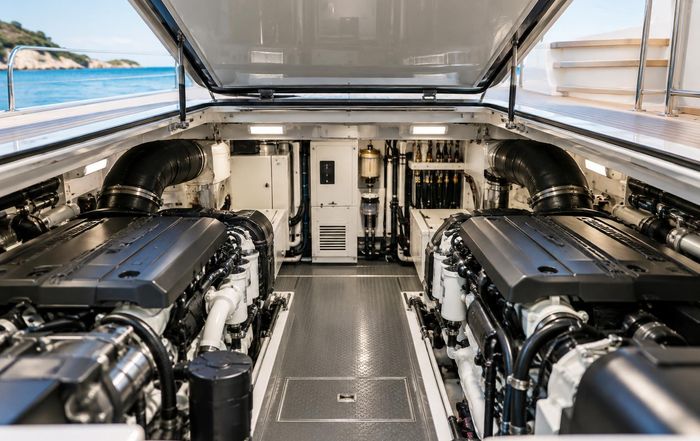
Evaluating a Yacht's Engine Room Access and Serviceability
A yacht can impress at the dock and still frustrate everyone who has to maintain it. Engine room access and serviceability are where design ambition meets daily reality, and the difference between a thoughtful layout and a difficult one often shows up only after the first season of ownership. For buyers, captains, and surveyors, the question is not simply whether the machinery works today, but whether it can be inspected, repaired, upgraded, and kept reliable without excessive labor, downtime, or risk to the vessel. That is especially important on modern yachts, where compact machinery spaces, dense systems integration, and higher expectations for comfort can make maintenance either straightforward or punishing. The best approach is to evaluate access with the same seriousness given to hull form, interiors, or performance, because serviceability affects operating cost, safety, and long-term value. For broader context on how design decisions shape ownership experience, Yacht Review's cool content of design, technology, and business is worth keeping in mind.
Why access matters more than many buyers expect
Engine room access is not a cosmetic issue; it is an operational one. If a technician cannot reach filters, belts, sea strainers, pumps, batteries, valves, or electrical panels without dismantling half the vessel, even routine work becomes slow and expensive. That added friction can discourage proper maintenance, which in turn increases the likelihood of breakdowns at inconvenient moments. On a cruising yacht, especially one used far from major service centers, poor access can also turn minor faults into serious disruptions. The issue is not limited to propulsion machinery. Serviceability includes the path to the space, the ability to move around safely once inside, and the logic of how systems are grouped and labeled. A well-designed engine room often feels calm and deliberate because the owner and crew can understand it quickly, while a poorly designed one feels crowded even when the machinery itself is modern and high quality.
This is also where expectations should be realistic. A very small yacht, or a yacht optimized for maximum guest volume, will rarely offer the same working conditions as a larger displacement vessel with a dedicated machinery space. But there is still a meaningful difference between compactness and poor design. Buyers should look for evidence that the builder has considered maintenance pathways from the beginning, not merely squeezed equipment into the available volume. The industry's broader move toward more complex onboard systems makes this even more important, and it is one reason why readers interested in reviews, boats, and cruising often end up asking the same practical question: how easy will this yacht be to live with after the novelty wears off?
What a usable engine room should allow
A serviceable engine room should permit a crew member or technician to inspect the main engines, generators, fuel system, cooling system, electrical gear, and auxiliary pumps without awkward contortions or unsafe improvisation. Clear headroom is valuable, but so is sensible lateral access. Being able to stand beside a filter bank, kneel in front of a breaker panel, or reach a seacock without climbing over hot piping makes a tangible difference in daily use. Good access also means that common maintenance jobs can be done in the intended way, using the right tools, rather than through temporary workarounds that risk damage. If a component can only be removed by detaching several unrelated parts first, the design is already working against the owner.
Another sign of good serviceability is visual clarity. Hoses should be traceable, labels readable, and shutoffs identifiable without guesswork. Cable runs should be orderly, and equipment should not be stacked so tightly that heat and vibration become hidden problems. In an ideal layout, the machinery space tells a coherent story: where fluids move, where power is distributed, where air enters and exits, and how a fault might be isolated. That coherence matters as much as raw access. It is one reason experienced buyers often ask for a close look at the engine room as part of a broader evaluation of sustainability and lifecycle cost, because efficient operation and maintainability are closely linked.
The practical checks that reveal real-world serviceability
A dockside tour can be misleading unless the inspection is deliberately hands-on. The first question is whether the space can be entered safely and repeatedly. Hatches should open easily, steps should be secure, and there should be enough room to move with tools or a parts tray. Then comes the question of reach: can a person access day-to-day service points without removing unrelated panels? Oil checks, coolant top-ups, belt inspection, filter changes, and seawater strainer cleaning are the kinds of tasks that expose whether the layout is genuinely practical. If these jobs require unusual body positions or multiple layers of disassembly, the yacht may be more expensive to own than its glossy presentation suggests.
It is also worth examining what happens when something goes wrong. Can a pump be isolated quickly? Are valves accessible in an emergency? Is there enough space to replace a hose, or would the crew have to work blind behind a bulkhead? These questions are not theoretical. They affect response time, safety, and the likelihood of secondary damage. A surveyor, captain, or experienced engineer can often spot the difference between a yacht that was built around maintenance and one that was built around appearance. For readers who follow the technical side of yacht ownership, the updated news and community sections often reflect how builders and operators discuss these trade-offs in practice.
Cooling, ventilation, and heat management are part of serviceability
A machinery space can be physically accessible and still be unpleasant or inefficient to service if ventilation is poor. Heat buildup accelerates wear, makes inspections uncomfortable, and can shorten the life of nearby electronics and hoses. Good engine room design balances airflow, noise control, and thermal management without trapping hot air in dead zones. That balance is especially important on yachts that spend long periods in warm climates or operate under heavy load. The quality of ventilation often reveals whether the design team treated the engine room as a living system rather than a sealed compartment.
Cooling arrangements deserve similar scrutiny. Raw-water strainers, heat exchangers, and discharge routes should be accessible enough for routine maintenance and inspection. If the system is buried behind unrelated structure, owners may delay cleaning or servicing until a problem becomes unavoidable. That is a poor trade-off on any yacht, but particularly on vessels intended for extended cruising or charter, where uptime matters. It is also sensible to ask how the boat handles noise and vibration while still allowing access. The most elegant machinery space is not necessarily the quietest or the largest; it is the one that lets the crew work safely, efficiently, and repeatedly. For more on how engineering choices shape onboard comfort, our lifestyle and family pages can provide a useful complement, especially for owners who use their yachts as long-term living spaces rather than occasional showpieces.
Signs that the builder planned for maintenance from the start
One of the strongest indicators of good serviceability is evidence that access was integrated into the original design rather than added late in the process. Removable panels should open logically, not obscurely. Equipment should have enough clearance for removal or overhaul. Frequently serviced items should not be trapped behind permanent joinery or decorative features. Wiring and plumbing should be routed in a way that allows inspection, not hidden so completely that a fault becomes a search operation. Builders that think ahead often provide dedicated routes for major components, sensible labeling, and enough working room to avoid damaging adjacent systems during maintenance.
The quality of finish also matters, but not in the superficial sense. A tidy engine room is not just attractive; it usually reflects better planning and easier troubleshooting. Clean cable management, proper support for pipes and hoses, and organized distribution boards reduce the chance of accidental damage and make faults easier to diagnose. Documentation is part of this too. Accurate schematics, labeled valves, and clear manuals are not glamorous features, but they are essential to long-term ownership. In a market where yachts often cross borders and change hands, the ability to hand a new captain or engineer a coherent maintenance package has real value. That is one reason the most thoughtful owners pay attention to history as well as modern practice: the industry's best engineering lessons tend to persist, even as materials and systems change.
How to judge access on different yacht types
Not every yacht should be judged by the same standard. A compact planing motor yacht will naturally have tighter machinery spaces than a larger expedition yacht or a semi-displacement vessel with more volume below deck. Sailing yachts present their own challenges, since rigs, keel structures, and accommodation layouts compete for space. What matters is whether the design suits the yacht's mission. A fast day boat may accept tighter access if its systems are simpler and service intervals are predictable. A long-range cruising yacht, by contrast, should be held to a higher standard because reliability and self-sufficiency matter more when support is distant. The right question is not "Is the engine room spacious?" but "Is it appropriate to the way this yacht is intended to be used?"
That distinction also helps explain why some apparently similar yachts age very differently. Two boats with comparable machinery can diverge sharply in ownership cost if one was built with maintenance access in mind and the other was not. A yacht intended for private use may tolerate more owner involvement, while a charter yacht or heavily crewed vessel needs faster turnaround and simpler troubleshooting. For buyers comparing options across markets, especially in regions with different service networks, access becomes part of the value equation rather than an afterthought. Readers following global market trends can see similar themes in the global coverage and in bigger industry reporting from organizations such as the International Maritime Organization, Bureau Veritas, and Lloyd's Register, all of which help frame the standards and safety culture surrounding vessels of different sizes and uses.
The role of surveys, sea trials, and expert opinion
A proper pre-purchase survey should not stop at the visible condition of the machinery. It should test whether the space supports safe and sensible maintenance. That means looking behind the obvious surfaces, checking for signs of previous shortcuts, and asking whether the yacht's systems can be isolated, inspected, and serviced in a logical order. A sea trial adds another layer, because some access issues only become apparent when engines are under load or when vibration reveals loose fittings, poor routing, or difficult-to-reach components. The most useful experts are often those who have spent years maintaining similar yachts, because they know which layout choices become annoying over time and which ones prove their worth.
Owners should also think beyond the first purchase. A yacht with poor access may still be attractive if the intended use is limited, but it can become a burden when the ownership profile changes. A new cruising plan, a different captain, or a more demanding itinerary can expose weaknesses that were easy to ignore at the time of sale. That is why serviceability should be treated as a long-term asset, not merely a technical detail. For those who follow yacht events and industry launches, Yacht Review's events content often provides a useful opportunity to compare how different builders present machinery spaces and explain their maintenance philosophy in public.
What buyers should remember before signing
The most polished yacht is not always the easiest one to own, and the engine room often tells the truest story. Buyers who take access seriously are usually rewarded with lower friction, better reliability, and more predictable maintenance costs. The best machinery spaces are not necessarily the largest or the most visually dramatic; they are the ones that make routine work straightforward, emergency work possible, and long-term care sustainable. That is a practical standard, but it is also a design standard. It rewards builders who think like operators and owners who ask the right questions early. In a market full of attractive choices, that mindset can make the difference between a yacht that looks impressive on day one and one that remains genuinely satisfying years later.