

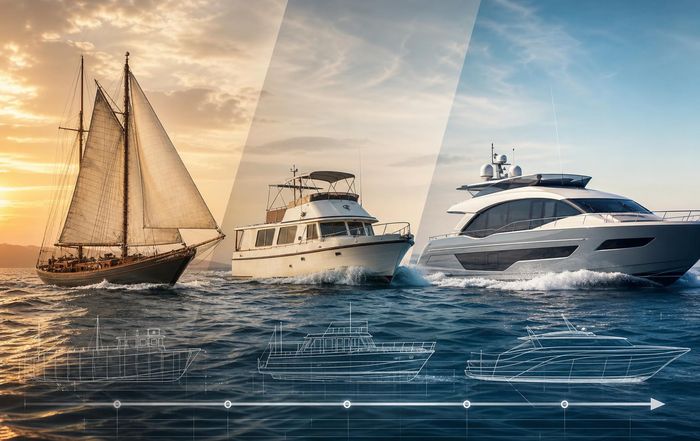
The Evolution of Offshore Cruising Boats
Offshore cruising boats have changed more in the past five decades than in the previous century, reshaping what bluewater passagemaking looks like for private owners, professional crews and charter guests alike. From heavy-displacement, full-keel ketches to carbon-infused performance cruisers bristling with electronics, the evolution has been driven by advances in materials, hydrodynamics, safety regulations and, increasingly, environmental expectations. For sea loving people coming here often each day, this story is more than a technical progression; it is a narrative about how design, lifestyle aspirations and global cruising culture have converged to make ocean voyaging safer, more comfortable and more accessible than ever.
From Workboats to Purpose-Built Cruisers
Modern offshore cruising yachts trace much of their lineage to working sail craft and early racing designs. In the first half of the twentieth century, many long-distance passages were made in converted fishing boats, pilot cutters and classic wooden yachts whose robust construction compensated for limited understanding of modern stability and scantling calculations. Naval architects such as William Fife, Olin Stephens of Sparkman & Stephens, and Colin Archer helped define seaworthy hull forms that could survive the North Atlantic, but their boats were often heavy, narrow and relatively slow by contemporary standards.
The post-war boom in recreational boating, particularly in the United States and Western Europe, created demand for yachts designed specifically for private offshore cruising rather than commercial work. Designs like the S&S 34 and the West Sail 32 in the 1960s and 1970s embodied the archetype of the ocean cruiser: thick fiberglass hulls, long keels, modest rigs, and conservative sail plans intended to be forgiving in heavy weather. These boats built reputations for toughness during events such as the early Whitbread Round the World Race, chronicled extensively by organizations such as World Sailing, which today maintains global offshore safety standards and training guidance for bluewater sailors.
As fiberglass construction matured, builders in Europe, North America and later in Asia began to standardize production methods, allowing more sailors to consider extended cruising. What had been the preserve of a small elite gradually opened to a broader audience, laying the foundation for the long-range lifestyle that yacht-review continues to document in its dedicated cruising coverage.
The GRP Revolution and the Rise of Production Cruisers
The widespread adoption of glass-reinforced plastic (GRP) from the 1960s onward marks one of the decisive turning points in the evolution of offshore cruising boats. Fiberglass allowed hulls to be built more quickly and consistently than traditional timber construction, while reducing maintenance and improving resistance to rot and marine organisms. Early GRP hulls were often overbuilt due to conservative engineering assumptions, resulting in very robust but relatively heavy boats.
By the 1980s and 1990s, however, production builders such as Beneteau, Jeanneau, Hallberg-Rassy, Swan (through Nautor Swan) and Bavaria were refining laminate schedules and adopting computer-aided design, enabling lighter structures without compromising safety margins. Classification societies including DNV and Lloyd's Register contributed to standardization by publishing rules on hull scantlings and structural design, which many offshore-oriented builders followed either formally or in spirit. Readers seeking a deeper view into the technical frameworks behind these developments can explore resources from Lloyd's Register on yacht and small craft rules.
The result was an explosion of capable, relatively affordable cruising yachts in the 35-50 foot range, many of which are still criss-crossing oceans today. While early critics argued that production cruisers prioritized interior volume and marina comfort over seakeeping, decades of circumnavigations and participation in rallies such as the World Cruising Club's ARC have demonstrated that many of these designs, when properly equipped and maintained, can deliver safe and comfortable offshore performance. This democratization of bluewater capability is reflected in the broad range of vessels reviewed in the boats and reviews sections of yacht-review.com, where mass-produced cruisers often stand alongside custom and semi-custom builds.
Performance, Form Stability and the Influence of Racing
From the late 1990s onward, the influence of ocean racing on cruising yacht design became increasingly visible. Designers working on IMOCA 60, Volvo Ocean Race and Vendée Globe projects were exploring wide sterns, flat underbodies and deep fin keels with bulbs, all aimed at generating high form stability and powerful sail-carrying ability. Although cruising owners would rarely accept the spartan interiors or extreme draft of pure race boats, many of the underlying principles migrated into performance-oriented cruisers.
Contemporary offshore cruising yachts, particularly those built by European yards such as X-Yachts, Oyster Yachts, Gunboat and Outremer, often feature broad beam carried aft, twin rudders, plumb bows and pronounced chines. These characteristics increase interior volume and deck space, but they also influence stability curves and behavior in heavy seas. Research by bodies such as the Royal Yachting Association (RYA) and technical papers presented at conferences hosted by the Society of Naval Architects and Marine Engineers (SNAME) have assessed how these shapes perform in knockdowns and breaking waves, generally finding that well-designed modern hulls can offer both speed and safety when matched with appropriate ballast ratios and structural stiffness.
The growing popularity of performance cruisers has reshaped expectations among long-distance sailors. Passages that once took three weeks are now completed in less than two, reducing exposure to changing weather systems and lowering fatigue. Many owners, particularly in Europe, now seek yachts that can compete in offshore races such as the Rolex Fastnet Race while remaining fully equipped for family cruising, a dual-role that has driven innovation in rig configurations, deck ergonomics and interior layouts. For those following these trends, yacht-review.com provides ongoing design analysis that connects aesthetic choices with offshore functionality.
Safety, Regulations and the Culture of Risk Management
The evolution of offshore cruising boats cannot be separated from the parallel development of safety culture and regulation. High-profile incidents, including the 1979 Fastnet Race disaster and later tragedies in ocean races and rallies, have led to significant changes in how offshore yachts are designed, equipped and sailed. Organizations such as World Sailing and national bodies like the RYA and US Sailing have introduced detailed Offshore Special Regulations covering everything from structural integrity and stability criteria to liferaft capacity, emergency steering and communication equipment.
These frameworks have guided builders toward stronger companionway closures, improved cockpit drainage, better harness attachment points and more robust rigging standards. At the same time, advances in electronics and satellite communications have transformed the way offshore risk is managed. The widespread adoption of AIS, EPIRBs, satellite trackers and redundant GPS systems has made it easier for rescue authorities and nearby vessels to respond quickly to distress situations, as documented by agencies such as the U.S. Coast Guard and reported in incident analyses by outlets including Practical Sailor and Sail Magazine.
However, experienced sailors and maritime safety experts consistently emphasize that technology supplements but does not replace seamanship. The most successful offshore cruising programs combine well-designed, well-maintained boats with crew training, conservative passage planning and a culture of continuous learning. This mindset is echoed in the educational content curated in the global and history sections of yacht-review.com, where past voyages and historical case studies inform present-day best practice.
Comfort, Lifestyle and the Bluewater Home Afloat
As offshore cruising has shifted from a niche pursuit to a lifestyle aspiration for families and professionals seeking remote work opportunities, expectations for onboard comfort have expanded dramatically. Whereas earlier generations of ocean cruisers accepted narrow berths, minimal refrigeration and spartan galleys, contemporary buyers often seek amenities approaching those of shore-based homes, including separate owner suites, dedicated shower compartments, large galleys with multiple refrigerators and freezers, and sophisticated climate control systems.
This evolution has been enabled by improved space utilization in modern hulls, as well as advances in energy generation and storage. High-output alternators, solar panels, wind generators and, more recently, compact lithium battery banks allow yachts to support larger electrical loads without constant reliance on engine-driven charging. Publications such as Cruising World and technical resources from manufacturers like Victron Energy and Mastervolt provide detailed guidance on designing and managing these systems for long-range independence. For those exploring how these technologies integrate into real-world cruising scenarios, yacht-review.com regularly highlights case studies in its technology and lifestyle coverage.
Interior design has followed suit, with many offshore cruisers now featuring light, open saloons, large hull windows and modular furniture layouts that can be adapted for passagemaking or at-anchor living. Naval architects and interior designers must balance these comforts against the need for secure handholds, sea berths with lee cloths and galleys that remain functional on both tacks. The best contemporary offshore cruisers manage to provide genuine liveaboard comfort without compromising safety during ocean passages, a balance that is increasingly central to our reviews and design analyses.
Multihulls and the Expansion of Bluewater Choices
One of the most visible shifts in offshore cruising over the past two decades has been the rising prominence of multihulls. Catamarans and, to a lesser extent, trimarans have moved from the fringes of offshore voyaging into the mainstream, particularly in the charter and family cruising segments. Builders such as Lagoon, Fountaine Pajot, Leopard, Privilege and performance-oriented yards like Outremer and Seawind have developed extensive ranges of bluewater-capable catamarans between 40 and 60 feet, many of which can be found in charter fleets across the Caribbean, Mediterranean and Pacific.
Multihulls offer compelling advantages for long-range cruising: expansive living space, shallow draft, level sailing and, in performance models, high passage speeds. Yet they also introduce distinct design and safety considerations, including capsize risk, structural load distribution and vulnerability to overloading. Studies referenced by organizations such as Multihull Solutions and discussions in technical forums hosted by Professional BoatBuilder have examined these issues in depth, leading to evolving best practices in rig engineering, bridgedeck clearance and emergency escape arrangements.
For offshore sailors considering multihulls, understanding these trade-offs is essential. The editorial team at yacht-review.com has observed a growing number of families and remote workers choosing catamarans as full-time homes, a trend that aligns with the broader shift toward experiential travel and mobile lifestyles. Our travel and family features increasingly reflect this reality, highlighting how design choices influence everyday life aboard.
Digital Navigation, Automation and Connected Cruising
The digital transformation of offshore cruising has been as significant as the evolution of hull forms and materials. The transition from paper charts and sextants to integrated electronic navigation suites has reshaped how voyages are planned and executed. Chartplotters, radar overlays, GRIB-based weather routing and electronic logbooks now form the backbone of many offshore navigation systems. Reputable sources such as NOAA in the United States and the UK Hydrographic Office provide official digital charting products, while commercial platforms like Navionics and C-Map offer user-friendly interfaces and crowd-sourced data.
Beyond navigation, automation and connectivity are transforming the onboard experience. Autopilots capable of steering to apparent wind angles or following complex waypoints reduce fatigue and free crew to manage sail trim and maintenance. Satellite communication services, including Iridium and Starlink Maritime, have made it possible for cruisers to access high-bandwidth internet in remote regions, enabling real-time weather updates, telemedicine and remote work. Industry analysis from outlets such as Marine Electronics Journal and Yachting World has highlighted how these technologies are altering expectations for safety, comfort and productivity at sea.
However, the growing reliance on digital systems introduces new vulnerabilities, including cyber risks, software glitches and the need for disciplined power management. Best practice now emphasizes redundancy in both hardware and skills, with many experienced cruisers maintaining paper charts, standalone GPS units and the ability to navigate by traditional methods if required. At yacht-review.com, technology features increasingly focus on integrated system design and resilience, recognizing that true offshore readiness depends on more than the latest gadgets.
Sustainability and the Future of Responsible Cruising
Environmental considerations have become a central driver in the evolution of offshore cruising boats, influenced by regulatory developments, changing owner values and advances in clean technology. International frameworks such as the MARPOL Convention, administered by the International Maritime Organization (IMO), have tightened rules on sewage discharge, garbage disposal and emissions, affecting both commercial and recreational vessels. While many regulations apply primarily to larger ships, their principles are increasingly reflected in marina policies, cruising guides and owner expectations.
Boatbuilders and equipment manufacturers are responding with innovations in hybrid propulsion, electric drives, solar-optimized designs and more sustainable materials. Companies such as Torqeedo, Oceanvolt and Silent-Yachts are developing electric and hybrid propulsion systems aimed at both monohulls and multihulls, while research institutions and industry groups are exploring bio-based resins, recyclable composites and lower-impact antifouling solutions. The European Boating Industry association and organizations like Sailors for the Sea provide valuable overviews of these trends and practical guidance on how individual sailors can reduce their environmental footprint.
Energy-efficient hull shapes, regenerative power from hydrogenerators, and increased solar capacity are making it more feasible for offshore cruisers to operate with minimal reliance on fossil fuels, particularly in trade-wind regions. Onboard waste management, greywater systems and environmentally sensitive cleaning products are also becoming standard considerations for responsible owners. The sustainability section of yacht-review.com tracks these developments closely, highlighting projects and products that align performance cruising with long-term ocean health.
Business Dynamics and Globalization of the Cruising Market
The evolution of offshore cruising boats is intertwined with broader shifts in the global marine industry. Consolidation among major European builders, the rise of production facilities in Asia and Eastern Europe, and the growth of charter management programs have all influenced what kinds of boats are designed and built. Large groups such as Groupe Beneteau and HanseYachts AG now control multiple brands across sailing and power segments, enabling economies of scale but also shaping market offerings.
Charter demand, particularly in the Mediterranean, Caribbean and South Pacific, has driven a strong focus on multihulls and spacious monohulls optimized for comfort at anchor and ease of operation by relatively inexperienced crews. At the same time, a robust semi-custom sector, including builders like Oyster, Hallberg-Rassy, Discovery and Amel, continues to cater to serious offshore sailors seeking higher specification, customization and long-term durability. Business analysis from sources such as IBI News and Boat International provides insight into these market dynamics, while yacht-review.com examines how economic trends shape design choices and owner experiences in its business and news coverage.
The globalization of the cruising community is also reflected in the proliferation of rallies, training programs and online forums connecting sailors from North America, Europe, Asia-Pacific and beyond. Events such as the ARC, World ARC and numerous regional rallies help first-time offshore crews gain experience and confidence, often in company with similar boats. This networked culture accelerates feedback to designers and builders, as real-world experiences with new hull forms, rigs and systems are shared rapidly across continents.
The Human Element: Seamanship, Community and Inspiration
While technology, materials and market forces have transformed offshore cruising boats, the human element remains at the heart of bluewater voyaging. The skills required to manage a modern offshore yacht differ in emphasis from those of a traditional heavy-displacement cruiser, but they are no less demanding. Sailors must now master not only sail trim and celestial navigation, but also networked electronics, energy systems, complex rigging and, increasingly, digital communications. Training organizations such as the RYA, American Sailing Association (ASA) and Offshore Sailing School have expanded their curricula to address these evolving needs, blending traditional seamanship with modern systems management.
The offshore cruising community continues to be a powerful source of support and inspiration for newcomers and veterans alike. Online platforms, social media channels and in-person events allow sailors to share passage reports, technical solutions and destination insights. At yacht-review.com, the main community focus is on amplifying these voices in a curated, happy format, emphasizing lessons learned and best practices rather than sensationalism.
For many, the decision to undertake offshore cruising is as much about personal transformation as it is about travel. Long passages foster resilience, teamwork and a deeper connection to the natural world, qualities that resonate strongly with a business audience increasingly attuned to concepts such as leadership under uncertainty and sustainable living. The stories behind the boats-families circumnavigating with children, entrepreneurs managing ventures from remote anchorages, retirees redefining their later years-are as central to the evolution of offshore cruising as any technical innovation.
Floating On! Innovation with a Bluewater Mindset
The trajectory of offshore cruising boats suggests a future in which performance, comfort and environmental responsibility continue to converge. Designers are experimenting with foiling assist, advanced autopilot algorithms and AI-enhanced routing, while materials scientists explore recyclable composites and bio-based cores. Regulatory frameworks are likely to place greater emphasis on emissions and end-of-life considerations, pushing builders toward cleaner propulsion and more circular production models. Industry initiatives highlighted by bodies such as the Global Maritime Forum and Water Revolution Foundation offer early glimpses of this transition, even if many technologies are still emerging.
For the offshore cruising community and for the editorial team at yacht-review.com, the central challenge will be to embrace innovation without losing sight of the fundamentals that have always underpinned safe, rewarding ocean voyaging. Hulls, rigs and electronics will continue to evolve, but sound seamanship, thoughtful preparation and respect for the sea will remain non-negotiable. As new generations of sailors from the United States, Europe, Asia-Pacific and beyond step aboard increasingly sophisticated yachts, the responsibility to pass on this bluewater mindset grows accordingly.
The evolution of offshore cruising boats is ultimately a story of possibility. Each design advance, from the first robust GRP hulls to today's energy-efficient multihulls, has expanded what is feasible for individuals, couples and families who dream of crossing oceans under sail. By connecting technical insight with real-world experience across its pages and specialist sections, yacht-review aims to support that journey-helping readers select, equip and sail the boats that will carry them safely and sustainably into the next chapter of offshore cruising history.