

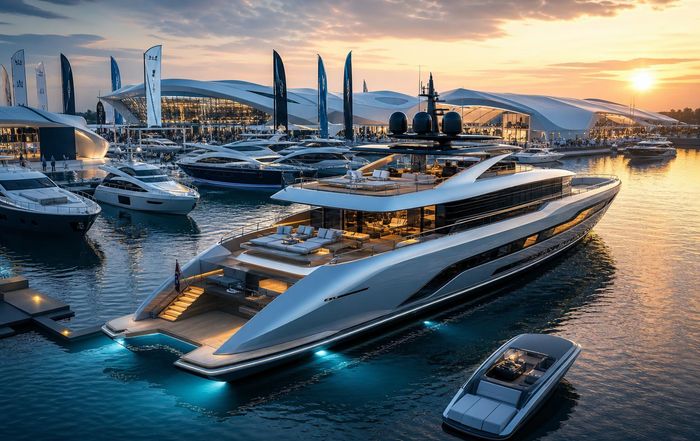
Major Boat Show Trends Shaping Yacht Design
Boat shows as real-time laboratories for yacht innovation
Across the global yachting calendar, major boat shows have become the most dynamic laboratories for design innovation, where evolving client expectations, regulatory pressures, and technological breakthroughs converge in real time. From Cannes Yachting Festival and the Monaco Yacht Show in Europe to Fort Lauderdale International Boat Show in the United States, these events now operate as strategic launchpads where shipyards, designers, and technology partners test ideas that will define the next decade of yacht design.
For the lucky and very social team at Yacht Review, regular attendance at these shows is no longer a matter of simple product discovery; it is a way to track how the industry is reimagining space, propulsion, materials, and onboard life in response to a wealthier, younger, more global and more sustainability-conscious client base. Each season brings a clearer view of the direction of travel: larger volumes on similar footprints, more flexible interiors, quieter and cleaner propulsion, and a growing integration of digital ecosystems that extend far beyond the hull.
Growth in volume, not just length
One of the most visible trends at recent shows is the pursuit of greater interior and exterior volume without necessarily increasing overall length. Builders across the size spectrum are presenting yachts that appear more substantial than their predecessors in the same length category, reflecting a desire among owners to maximize comfort, versatility, and social space while maintaining manageable operating profiles and mooring options.
At the upper end of the market, exhibitors in Monaco and Cannes have demonstrated how advanced naval architecture and careful weight distribution make it possible to create expansive beach clubs, multi-level aft decks, and generous foredeck lounges without compromising stability or performance. The shift towards vertical bows, fuller forward sections, and optimized hull forms has become a defining aesthetic and functional signature, clearly visible in the latest models from leading European superyacht yards.
This focus on volume is equally pronounced in the 20-40 metre segment, where semi-custom platforms are increasingly engineered to accommodate multiple layout options on a common hull. For owners and charter clients, this means that a 30-metre yacht delivered today can offer interior spaces and deck arrangements comparable to much larger vessels of a decade ago. For readers following our detailed model coverage on the boats overview at yacht-review.com, the pattern is unmistakable: builders are selling "space, not length," and boat shows are where that message is most clearly on display.
Beach clubs, terraces and the redefinition of the waterline
In parallel with the pursuit of volume, the reimagining of the waterline has become one of the dominant themes at major shows. The modern yacht is no longer conceived as a vessel with a single transom and a fixed bathing platform; it is increasingly presented as a floating waterfront residence, with a series of terraces, platforms, and convertible spaces that dissolve the barrier between interior and sea.
Recent line-ups at Fort Lauderdale and Miami International Boat Show have showcased a wave of yachts featuring expansive beach clubs with fold-down side platforms, integrated sea-level lounges, and wellness-focused areas that can shift between gym, spa, and watersports hub. On the superyacht side, the Monaco docks have highlighted designs in which the beach club has become the primary social nucleus of the yacht, eclipsing even the main saloon in owner and guest usage.
The trend has extended into smaller categories as well, where production builders and custom yards are competing to deliver ever more inventive aft arrangements: modular seating that converts to sunpads, garages that open to form terraces, and steps that transform into submerged platforms. For many clients, especially in charter, these features are no longer perceived as luxuries but as expected elements of a contemporary design brief.
This shift in spatial hierarchy is closely tied to lifestyle patterns that our readers recognize from our cruising features: longer days spent at anchor, more time in and around the water, and an emphasis on convivial, informal living rather than formal interiors. Boat shows have become the primary stage where this new relationship with the waterline is articulated, refined, and commercialized.
Flexible interiors for multi-mode lifestyles
If exterior spaces are becoming more open and fluid, interiors are undergoing a parallel transformation toward flexibility and multi-functionality. Designers presenting at recent shows consistently emphasize modular furniture, transformable rooms, and layouts that can adapt to different owner profiles, whether private family use, corporate entertainment, or intensive charter operations.
Many of the latest concepts and delivered yachts feature main decks that can convert from open-plan lounge and dining areas to more intimate zones through sliding partitions, concealed panels, and smart lighting. Lower decks are increasingly designed with cabins that can be reconfigured as offices, wellness suites, or media rooms, responding to the rise of remote work and extended onboard stays. In several high-profile projects unveiled at Monaco and Cannes, owners have requested dedicated workspaces integrated into guest cabins or sky lounges, indicating that the yacht is now seen as a viable base for both leisure and business.
This emphasis on flexible living aligns with broader trends in luxury residential design and hospitality, which are well documented by organizations such as Design Council and global architecture firms tracking the evolution of multi-use spaces. Within yachting, boat shows offer a uniquely tangible way to experience these ideas: visitors can walk through a cabin that transitions from twin to double configuration, observe a dining area that disappears into a lounge, and see how storage, circulation, and service routes are managed behind the scenes.
For yacht-review.com, where interior innovation is a recurring focus in our design coverage, the message from the docks is clear: fixed-function rooms are giving way to adaptable environments, and the most successful builders are those who can deliver flexibility without sacrificing craftsmanship or acoustic and thermal comfort.
Hybrid propulsion and the march toward cleaner power
Sustainability has moved from a peripheral discussion to a central pillar of yacht design, and boat shows have become the primary arenas where propulsion and energy innovations are introduced to the market. Over the past several seasons, hybrid diesel-electric systems, advanced battery banks, and alternative fuels have featured prominently in both concept presentations and delivered projects.
Major classification societies and industry bodies, including Lloyd's Register and the International Maritime Organization, have intensified their focus on emissions reduction and efficiency standards, and this regulatory context is clearly influencing what shipyards choose to highlight at leading shows. Several well-known European and American builders now routinely present hybrid-ready platforms or full hybrid options in the 24-50 metre range, allowing for silent, emission-reduced operation in harbours and sensitive cruising areas, as well as optimized fuel consumption on longer passages.
In the smaller yacht and dayboat segments, electric propulsion is increasingly visible at events such as Boot Düsseldorf and Cannes, where manufacturers of high-capacity marine batteries, electric pod drives, and fast-charging infrastructure exhibit alongside traditional engine suppliers. While full electric propulsion remains constrained by energy density and range considerations, especially for larger yachts, the incremental adoption of electric tenders, hotel-load battery systems, and solar-assisted hotel power is now well established.
For our readers following developments in environmentally responsible yachting through our sustainability insights, the pattern emerging from boat shows is one of pragmatic evolution rather than abrupt revolution. Owners are increasingly asking for tangible reductions in fuel burn, noise, and emissions, and yards are responding with hybrid systems, improved hull efficiency, and smarter energy management. In parallel, several ports and marinas, notably in Europe and North America, are investing in shore power and charging infrastructure, a development closely tracked by organizations such as The Ocean Foundation and regional maritime authorities.
Advanced materials and the science of lightness
Behind the scenes of these visible design features lies a quieter but equally important trend: the adoption of advanced materials and construction techniques that enable lighter, stronger, and more efficient yachts. At major boat shows, technical presentations, supplier exhibits, and yard briefings increasingly focus on composite innovation, aluminium optimization, and hybrid structures that combine different materials to balance weight, rigidity, and durability.
High-performance carbon fibre, once reserved for racing yachts and a handful of superyacht projects, is now more widely deployed in hardtops, superstructures, and structural reinforcements. This allows designers to lower the centre of gravity, open up larger glazed surfaces, and create more dramatic overhangs and open-plan interiors without compromising safety or stability. Several builders have used recent shows to unveil models where extensive use of carbon has resulted in improved fuel efficiency and enhanced seakeeping, particularly in fast cruising yachts.
Simultaneously, advances in infusion techniques, resin systems, and finite element analysis are enabling more precise engineering of composite hulls and decks. Technical papers and case studies shared by classification societies and engineering consultancies, many of which are discussed in forums and at conferences adjacent to major shows, point to significant lifecycle benefits in terms of strength-to-weight ratios and reduced maintenance.
For a publication like yacht-review.com, where long-term ownership experience is a core concern in our reviews and analyses, the implication is significant: the yachts that debut at today's shows are not only more visually striking, they are also engineered with an increasingly sophisticated understanding of fatigue, vibration, and structural performance. This contributes directly to comfort, safety, and resale value, and it is one of the less visible but most consequential trends shaping design decisions.
Glass, openness and the pursuit of natural light
Another consistent theme at recent shows is the extensive use of glass to create brighter, more transparent interiors and stronger visual connections with the sea. Full-height windows in main saloons, panoramic glazing in owner's suites, and skylights that flood staircases and lounges with daylight are now standard talking points in builder presentations from Cannes to Fort Lauderdale.
This trend reflects broader architectural movements towards biophilic design and wellness-focused environments, well documented by organizations such as World Green Building Council. In yachting, the technical challenge is to deliver these expansive glazed areas while maintaining structural integrity, thermal insulation, and privacy. Advances in laminated glass technology, coatings, and framing systems have made it possible to achieve large openings without compromising safety or climate control.
At recent boat shows, visitors have been able to experience the psychological impact of these design choices firsthand: cabins that feel more like waterfront hotel suites, main decks that read as continuous spaces from bow to stern, and wheelhouses that offer commanding, near-360-degree visibility. For many owners, especially those who cruise in visually dramatic regions such as the Mediterranean, Norwegian fjords, or the Pacific Northwest, this immersion in the surrounding landscape has become a key part of the value proposition.
For yacht-review.com, whose readers follow destination-focused features across our travel section, this emphasis on light and openness aligns with the way many owners now use their yachts: as platforms to experience the world rather than as inward-looking status symbols. The design language of glass and openness communicates that shift clearly at every major show.
Digital integration, connectivity and onboard intelligence
As in every other area of high-end mobility, digital integration has become central to yacht design, and boat shows provide an ideal environment to demonstrate new systems in action. Over the last few years, exhibitors have presented increasingly sophisticated solutions for integrated bridge systems, smart hotel automation, and remote monitoring, often developed in partnership with major technology providers.
Modern yachts are now routinely equipped with centralised control interfaces that allow crew and sometimes guests to manage lighting, climate, entertainment, window shades, and security from touchscreens or mobile devices. At shows such as Monaco, Fort Lauderdale, and Singapore Yacht Show, visitors can often see fully functional mock-ups of these systems, complete with real-time monitoring of energy consumption, tank levels, and navigation data.
Connectivity has similarly evolved from a luxury to an expectation. Advances in VSAT, 4G/5G nearshore solutions, and emerging satellite constellations are enabling more stable and higher-bandwidth connections, which in turn support remote diagnostics, software updates, and integration with shore-based management systems. Several technology suppliers use major shows to announce partnerships with yards and fleet operators, indicating a shift toward more cohesive digital ecosystems across entire product lines.
For our technology-focused readers, who regularly consult our yachting technology coverage, the message from the docks is that digitalisation is no longer confined to navigation and entertainment. It now encompasses predictive maintenance, cybersecurity, and data-driven optimization of routes and energy use. The most forward-looking builders are positioning their yachts as connected platforms that will improve over time through software updates and service enhancements, mirroring trends seen in the automotive and aviation sectors.
Charter-driven design and the influence of new demographics
Charter demand and shifting demographics are exerting a growing influence on yacht design, and this is increasingly evident in the line-ups and conversations at major boat shows. Brokers and charter management companies report strong interest from younger clients, more geographically diverse buyers, and a rising number of first-time charterers, particularly from North America, Europe, and parts of Asia-Pacific.
This evolution is reflected in design choices that prioritize social spaces, flexible accommodation, and ease of use. Yachts unveiled in Monaco, Cannes, and Fort Lauderdale often feature multiple convivial outdoor dining areas, versatile cabin configurations, and entertainment-focused amenities such as cinema rooms, water toy garages, and wellness zones. Crew areas and service flows are also receiving more attention, as professional operators and experienced charter clients recognize that guest satisfaction is closely tied to crew efficiency and comfort.
Industry organizations such as Superyacht Life Foundation and Superyacht Times have documented the ways in which new owners and charterers view yachting less as a static symbol of wealth and more as a platform for experiences, travel, and family time. This perspective, which aligns closely with the themes we explore in our lifestyle features, is driving demand for designs that are inviting, less formal, and better suited to multi-generational use.
At boat shows, this translates into a noticeable emphasis on ease of access, safety features for children and older guests, and intuitive onboard systems. Builders are increasingly ready to discuss how a given yacht will perform in charter, how cabins can be adapted for different guest profiles, and how crew numbers and roles can be optimized. For many prospective owners, especially those considering a purchase with charter in mind, these conversations are now as important as discussions of speed, range, or styling.
Globalization of design influences and regional preferences
The yacht design language on display at major shows is becoming more global, reflecting both the international nature of ownership and the cross-border collaboration between designers, naval architects, and shipyards. European minimalist aesthetics, American emphasis on outdoor living, and Asian preferences for wellness spaces and privacy are blending in increasingly sophisticated ways, resulting in yachts that can appeal to a wide range of cultural expectations.
Events in Europe and North America still dominate the calendar, but growing shows in Asia and the Middle East, such as Singapore Yachting Festival and regional exhibitions in Dubai and Qatar, are providing additional platforms for regional feedback and influence. Designers attending these shows frequently report that clients from different markets prioritize different aspects of the onboard experience, whether it is formal dining, business entertaining, family privacy, or watersports.
For yacht-review.com, whose readership spans markets from the United States, United Kingdom, and Germany to Singapore, Australia, and beyond, the globalisation of design trends is a central theme in our global industry coverage. Boat shows serve as the junction points where these regional preferences meet and cross-pollinate, and the resulting designs are increasingly versatile in their appeal. Yachts are now more likely to feature adaptable spaces that can be furnished, lit, and serviced differently depending on the cultural context in which they operate.
Sustainability beyond propulsion: materials, operations and destinations
While hybrid and electric propulsion attract much of the sustainability attention, boat shows are also highlighting a broader set of environmental initiatives that extend into materials, operations, and destination management. Builders and suppliers are presenting alternative decking materials, eco-certified timbers, low-VOC finishes, and textiles made from recycled or bio-based sources, reflecting a growing awareness of lifecycle impact.
Several prominent yards and equipment manufacturers have used recent shows to discuss their participation in environmental programs and certifications promoted by organizations such as Water Revolution Foundation, which advocates for sustainable solutions in the superyacht sector. Discussions at conferences and panels adjacent to the main exhibits often focus on topics such as lifecycle assessment, refit strategies to extend vessel life, and best practices for waste management and plastic reduction on board.
Operationally, there is increasing emphasis on route planning for fuel efficiency, shore power usage in ports, and collaboration with marinas that implement environmental management systems. For owners and charterers, these developments align with a growing desire to enjoy pristine destinations without contributing to their degradation. This is a recurring theme in our destination and cruising pieces, particularly in the news and analysis section, where regulatory developments in sensitive areas such as the Mediterranean, Arctic regions, and certain marine protected areas are closely followed.
Boat shows, by bringing together builders, owners, regulators, and environmental organizations, serve as important convening points where practical sustainability measures can be debated and adopted. The trend is toward incremental but meaningful improvements, guided by data and certification rather than marketing alone.
The role of boat shows in shaping the next generation of yachts
We hope the time you spent here was useful and rewarding. Our site is updated daily with original features and links to respected resources.
Taken together, the trends emerging from major boat shows depict an industry in active transformation: more spacious without necessarily being longer, more open to the sea yet better protected and insulated, more flexible and lifestyle-oriented, more connected and digitally intelligent, and more conscious of its environmental footprint. These developments are not abstract concepts; they are embodied in the yachts that line the quays of Cannes, Monaco, Fort Lauderdale, Düsseldorf, Miami, and an expanding roster of international venues.
For Yacht Review, these events are not simply showcases but strategic vantage points from which to understand how the industry is responding to a new generation of owners and charterers who value experience, authenticity, and responsibility alongside traditional markers of luxury. Our coverage across business analysis, design, cruising, and technology is increasingly informed by the innovations and conversations encountered at these shows, which act as real-time barometers of market sentiment and technical progress.
As the calendar of boat shows continues to evolve, with new events emerging and established ones refining their focus, their influence on yacht design is likely to grow rather than diminish. Virtual previews and digital walk-throughs may extend their reach, but the ability to step aboard, feel the proportions of a beach club, experience the silence of hybrid mode, or appreciate the quality of light in a glass-rich saloon remains irreplaceable. It is in these moments, repeated thousands of times across each show, that the next generation of yacht designs is validated, refined, and ultimately brought to life.
For super sub members and new visiting readers planning their own visits to forthcoming events, or simply following from afar through our ongoing coverage here, the key is to view each new model not in isolation but as part of a broader narrative. Boat shows reveal where the industry is heading, and today that trajectory is clear: toward yachts that are more livable, more sustainable, more technically sophisticated, and more closely aligned with the evolving ways in which people wish to live, work, and explore on the water.