

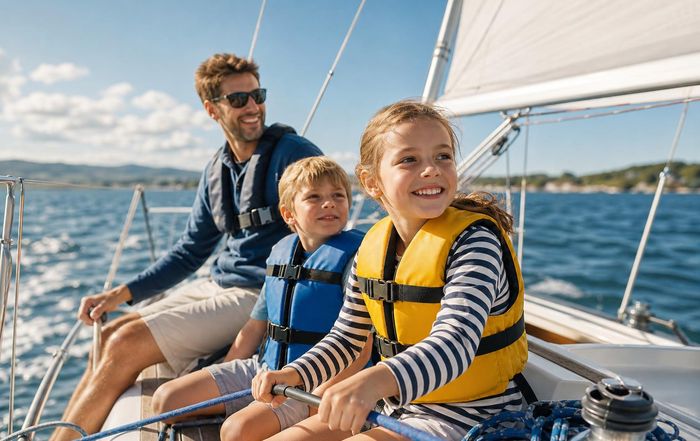
Best Ways to Introduce Children to Sailing
Introducing children to sailing is one of the most powerful ways a family can connect with the water, learn practical skills and nurture confidence that will last a lifetime. Around the world, yacht clubs, sailing schools and family cruisers are rethinking how they bring young people on board, shifting from rigid, race-centric approaches to more flexible, experience-driven pathways that place enjoyment, safety and curiosity at the centre. For the frequently sailing family community of Yacht Review, which spans active owners, charterers and aspiring sailors, the question is no longer whether sailing is good for children, but how to do it thoughtfully, safely and in a way that makes them want to come back.
This article considers the best practices emerging from leading sailing programmes, family cruising stories and marine education initiatives, with a particular focus on positive experiences, evidence-based safety and long-term engagement. It draws on developments from respected organisations such as World Sailing, US Sailing, the Royal Yachting Association (RYA) and national federations in Europe, North America and Asia, while grounding the discussion in the practical realities of life on board.
Starting with mindset: building curiosity, not pressure
The most successful introductions to sailing tend to begin well before a child steps onto a deck. Parents and guardians who frame sailing as an adventure rather than a test of bravery or skill usually find that children engage more openly and remember the experience more positively. Rather than promising that a first outing will be "easy" or insisting a hesitant child will "love it," experienced instructors recommend describing what will happen, acknowledging that it may feel new or strange, and emphasising that it is acceptable to take things slowly.
Research on outdoor education and youth sport consistently shows that autonomy and choice are strong predictors of long-term participation. In practice, this means offering children options: whether they want to steer or simply sit and watch, whether they prefer a short harbour tour or a longer upwind leg, and whether they would like to participate in hoisting sails, handling lines or simply spotting buoys and wildlife. Readers who are used to performance-driven regatta environments sometimes need to recalibrate expectations, but the investment in patience pays dividends when a child begins asking to return to the water.
Many parents now introduce sailing concepts at home through books, videos and simple model boats. Educational resources from organisations such as Sail Canada and Australian Sailing explain wind, points of sail and basic safety in age-appropriate language, while platforms like Sailors for the Sea provide engaging materials on ocean conservation that resonate with environmentally aware families. For those planning a first family charter or coastal cruise, the editorial team at yacht-review.com has found that this kind of gentle preparation lowers anxiety and adds to the sense of shared purpose before departure.
Choosing the right boat and conditions for a first experience
Selecting the appropriate platform for a child's first sail is a crucial decision that can either encourage a lifelong passion or create a lasting aversion. Around the world, entry-level training often takes place in small dinghies such as the Optimist, RS Tera or similar one-design classes, because these boats are responsive, easy to right after a capsize and scaled to a child's size and strength. National programmes endorsed by World Sailing emphasise that such dinghies, when used in sheltered waters under instructor supervision, are among the safest and most effective tools for teaching core skills.
For families who already own a keelboat or cruising yacht, it can be tempting to make the family boat the primary classroom. This can work extremely well when conditions are carefully chosen and roles are adapted to young attention spans. A stable, well-maintained yacht with clear decks, secure handholds and non-slip surfaces can feel reassuring, particularly to children who are wary of small-boat motion. Many owners now set up dedicated "kid zones" in the cockpit with secure seating, harness points and ready access to snacks, water and shade, a practice that aligns with the family-friendly design trends covered in the yacht-review.com lifestyle section at yacht-review.com/lifestyle.html.
Weather and sea state are equally important. Leading training bodies such as US Sailing and the RYA advise choosing light to moderate winds, flat seas and short, clearly defined outings for initial experiences, ideally in familiar local waters. While experienced adults may enjoy testing their skills in gusty conditions, children benefit from predictability and a sense that adults are firmly in control of the situation. This does not mean eliminating all challenge; rather, it involves gradually increasing complexity as confidence grows, in line with the progression frameworks used in structured youth programmes.
Safety as a foundation for trust and enjoyment
Children who feel safe are more likely to explore, try new tasks and develop genuine enthusiasm for sailing. For this reason, safety is not simply a checklist of equipment but a foundation for trust between adults and young crew. Industry standards and recommendations from organisations such as the Royal National Lifeboat Institution (RNLI) and the United States Coast Guard converge on several key practices that families can adopt.
Properly fitted lifejackets or buoyancy aids, designed specifically for children and kept in good condition, are non-negotiable. Modern designs with crotch straps, head support and high-visibility materials have significantly improved comfort and safety, and many are now tailored to active sailing rather than generic boating. Safety lines and harnesses, when used on larger yachts or offshore passages, should be adjusted to each child's size and attached to secure jackstays, with clear rules about when they must be clipped on.
Before leaving the dock, a concise safety briefing tailored to a child's age can set expectations without causing alarm. Demonstrating how to move safely on deck, where to hold on, what to do if someone shouts "stop" or "head down," and where emergency equipment is located gives children a sense of agency. Some families incorporate simple drills, such as practising sitting quietly in a designated "safe spot" during manoeuvres, which mirrors the structured procedures used in professional training outlined on sites like Maritime and Coastguard Agency guidance pages.
At yacht-review.com, safety-focused reviews of new boats and equipment in the technology section increasingly highlight child-friendly features such as high cockpit coamings, gated lifelines, integrated handrails and smart-sensor wearables that can alert adults if a child falls overboard. These innovations, combined with prudent seamanship, help create an environment where children can explore confidently under watchful eyes.
Making learning playful: games, stories and simple responsibilities
Children rarely respond positively to lectures about sail trim or collision regulations, but they are remarkably receptive to games and stories that smuggle in seamanship skills. Around the world, youth sailing instructors have developed a rich toolkit of playful exercises: racing to identify wind direction using telltales or flags, "treasure hunts" that involve spotting channel markers, and imaginative narratives where each child becomes a "lookout," "navigator" or "captain of snacks."
On family boats, small and clearly defined responsibilities can transform a passive passenger into an engaged crewmember. Even young children can help coil soft lines, pass fenders, operate a manual bilge pump under supervision or tick off items on a laminated pre-departure checklist. Older children may take on roles such as log-keeping, plotting positions on a paper chart or managing music and announcements on board. These tasks echo the structured roles used in youth development programmes and contribute to a sense of competence and belonging.
Storytelling is another powerful tool. Many families introduce nautical history and exploration through age-appropriate books and documentaries, connecting modern family outings to centuries of seafaring tradition. Resources from institutions like the National Maritime Museum in Greenwich and the Smithsonian National Museum of American History provide accessible narratives about exploration, trade and navigation that can be woven into onboard conversations. Readers interested in the broader historical context of yachting can explore related features in the yacht-review.com history section at yacht-review.com/history.html, which often highlights stories that resonate with younger audiences.
Structured programmes: leveraging clubs and sailing schools
While informal family sailing is invaluable, structured programmes at yacht clubs, community sailing centres and dedicated schools offer additional benefits, particularly as children grow older. These programmes combine professional instruction, age-appropriate curricula and peer interaction, all of which have been shown to enhance skill acquisition and retention.
In many countries, national sailing authorities maintain tiered youth pathways that begin with introductory "fun on the water" courses and progress to more technical dinghy, keelboat or windsurfing modules. For example, the RYA Youth Sailing Scheme in the United Kingdom and the US Sailing Small Boat Certification system in North America provide clear progression steps, with an emphasis on safety, enjoyment and respect for the marine environment. Similar frameworks exist in Germany, France, the Netherlands and the Nordic countries, often supported by public or club funding to keep entry costs manageable.
These programmes are not exclusively race-oriented. While competitive pathways remain important and are supported by World Sailing and Olympic federations, there is a growing recognition that many young sailors are more motivated by adventure cruising, coastal exploration or foiling technology than by formal regattas. Community-based initiatives such as those highlighted by Sail Sand Point in Seattle or Andrew Simpson Centres in Europe demonstrate how inclusive, non-elitist programmes can attract diverse participants and foster long-term engagement.
For families considering such programmes, factors to evaluate include instructor qualifications, safety policies, student-to-instructor ratios, vessel types and the balance between theory and time on the water. The reviews section of yacht-review.com regularly examines training boats and school fleets with an eye to their suitability for youth instruction, which can help parents make informed choices.
Integrating cruising and travel into a child's sailing journey
For many readers of yacht-review.com, sailing is inseparable from travel, whether in the form of weekend coastal hops, extended sabbaticals or blue-water circumnavigations. Introducing children to cruising adds layers of logistical and educational complexity, but it also offers unparalleled opportunities for cultural exposure, language learning and family cohesion.
Families who cruise with children often adopt a "floating classroom" model, integrating formal or informal schooling with practical seamanship and local exploration. Organisations such as Noonsite and World Cruising Club provide guidance on family-friendly routes, seasonal weather patterns and visa considerations, while health agencies and paediatric travel specialists offer advice on vaccinations, medical kits and telemedicine options. Many long-term cruising families document their experiences online, but as with all anecdotal sources, it is prudent to cross-check recommendations against official guidance and professional advice.
Shorter charters in regions such as the Mediterranean, the Caribbean, the Pacific Northwest or Southeast Asia can also serve as gentle introductions to cruising life. Reputable charter companies increasingly offer child-oriented safety briefings and equipment, and some collaborate with local marine biologists or guides to provide educational excursions. Readers planning such voyages can find destination-focused inspiration and practical tips in the cruising section of yacht-review.com and the broader travel coverage, which emphasise family-friendly anchorages, shore activities and cultural experiences.
The key to successful family cruising lies in realistic planning. Distances should be scaled to children's tolerance for time under way, with ample opportunities for swimming, beach time and shore exploration. Clear routines around schoolwork, chores and leisure help maintain stability, while open communication about fears, seasickness or homesickness fosters resilience and trust.
Technology, sustainability and the values children carry forward
The generation now entering sailing is growing up in a world shaped by digital technology and environmental awareness. Forward-looking families and organisations are using both trends to enrich children's engagement with the sea while instilling values of stewardship and responsibility.
On the technology side, navigation and learning tools have become more accessible and intuitive. Child-friendly charting apps, virtual sailing simulators and weather visualisation platforms can make abstract concepts tangible, especially when combined with hands-on practice afloat. Many modern training boats and club fleets now incorporate simple data displays that show speed, heading and wind angles, turning performance into a form of interactive feedback. At the same time, experienced instructors caution against over-reliance on screens, emphasising the importance of traditional skills such as compass use, visual pilotage and an understanding of tides and currents.
Sustainability is perhaps the most powerful motivational theme for today's young sailors. Global initiatives such as World Sailing's Sustainability Agenda 2030 and the UN Environment Programme's Clean Seas campaign have filtered down into club-level practices: beach clean-ups, plastic-free regattas, responsible antifouling use and education on marine ecosystems. Programmes like Sailors for the Sea's Green Boating Guide provide practical checklists that families can adopt, from minimising single-use plastics on board to choosing eco-friendly cleaning products and managing greywater responsibly.
For a deeper exploration of how sustainability intersects with yacht design, cruising patterns and ownership decisions, readers can consult the sustainability section of yacht-review.com and related analyses in the business pages, which track how shipyards, marinas and charter companies are responding to evolving expectations. Children who see their families making conscious choices-such as favouring efficient hulls and sails, supporting conservation organisations or participating in citizen science projects-are likely to carry these values into adulthood.
Cultural and regional perspectives: a global community of young sailors
Sailing with children is not confined to any one country or region; it is a genuinely global phenomenon shaped by local conditions, traditions and infrastructures. In Northern Europe, state-supported sailing schools and dense networks of clubs make youth participation relatively accessible, with strong safety cultures and an emphasis on seamanship in cold-water environments. In the Mediterranean, family cruising and chartering have long histories, and many coastal towns integrate sailing into broader tourism and cultural offerings.
In North America, a mix of private yacht clubs, community sailing centres and school-based programmes creates diverse entry points. Initiatives such as Community Boating, Inc. in Boston and Brooklyn Boatworks in New York demonstrate how sailing can be used as a tool for social inclusion and STEM education, rather than remaining an elite pursuit. In Asia and the Pacific, rapid growth in marinas and coastal infrastructure in countries like China, Singapore and New Zealand has been accompanied by investments in youth training, often with an eye toward international competition as well as domestic recreation.
This global diversity is reflected in the editorial scope of yacht-review.com, which regularly covers developments from established sailing nations and emerging markets alike in its global section and news coverage. For families, this means that opportunities to introduce children to sailing, whether through local clubs, travelling programmes or charter experiences, are expanding across continents, with increasing attention to inclusivity and cultural exchange.
Choosing equipment, clothing and designs with children in mind
From a practical standpoint, the right equipment and design choices can make the difference between a comfortable, engaging experience and a stressful one. Beyond lifejackets and harnesses, clothing that is warm, waterproof and easy to layer is essential, especially in colder climates. Many outdoor and marine clothing brands now offer junior lines that replicate adult technical features, such as breathable waterproof fabrics and UV protection, scaled for smaller frames.
On the boat itself, families may prioritise layouts that offer secure sleeping arrangements, good ventilation, child-friendly heads and safe access between cockpit and interior. Catamarans are often cited for their stability and spaciousness, while modern monohulls with wide transoms and swim platforms can facilitate water access and play. Design trends highlighted in the design section of yacht-review.com show how builders are incorporating modular furniture, convertible cabins and integrated storage to adapt to multi-generational crews.
Smaller accessories can also enhance the experience: child-sized gloves and foul-weather gear, headlamps for night-time routines, personal dry bags, and simple binoculars or waterproof cameras that give children a sense of ownership over their gear and experiences. When selecting any equipment, families are well advised to consult independent reviews, safety certifications and, where possible, professional instructors who have seen how products perform in real training environments.
Nurturing a lifelong relationship with the sea
Ultimately, the best ways to introduce children to sailing are those that respect their individuality, prioritise safety and cultivate joy. For some, this may mean relaxed summer days pottering around a local lake in a small dinghy; for others, it might involve ambitious ocean passages as part of a family sabbatical or participation in structured racing programmes that lead to high-performance pathways. What unites these diverse journeys is the potential for sailing to teach resilience, teamwork, problem-solving and a deep appreciation for the natural world.
The editorial and family team at Yacht Review has observed that families who succeed in nurturing a lasting passion for sailing tend to share several habits. They listen carefully to their children's feedback, adjusting plans when enthusiasm wanes or fears surface. They celebrate small milestones-tying a first knot, steering a straight course, handling a gust-rather than focusing solely on distance covered or speeds achieved. They seek out communities, whether through local clubs, online forums or events highlighted in the events section, that allow children to see peers enjoying the same activities.
For happy readers considering how to begin, a practical path might start with a short, well-planned family outing on calm water, followed by enrolment in a reputable youth course, and then, as skills and confidence grow, exploration of cruising grounds that match the family's ambitions. Along the way, the positive minded and educational resources and perspectives available across yacht-review.com, from boat overviews and cruising narratives to technology updates and sustainability insights, can serve as a companion and guide.
In a world where children's lives are increasingly mediated by screens and schedules, the simple act of hoisting a sail, feeling a boat accelerate under wind power alone and sharing a quiet anchorage at sunset offers something rare and enduring. By introducing children to sailing with care, patience and imagination, today's families are not only creating cherished memories; they are also shaping the next generation of stewards, innovators and leaders in the global maritime community.